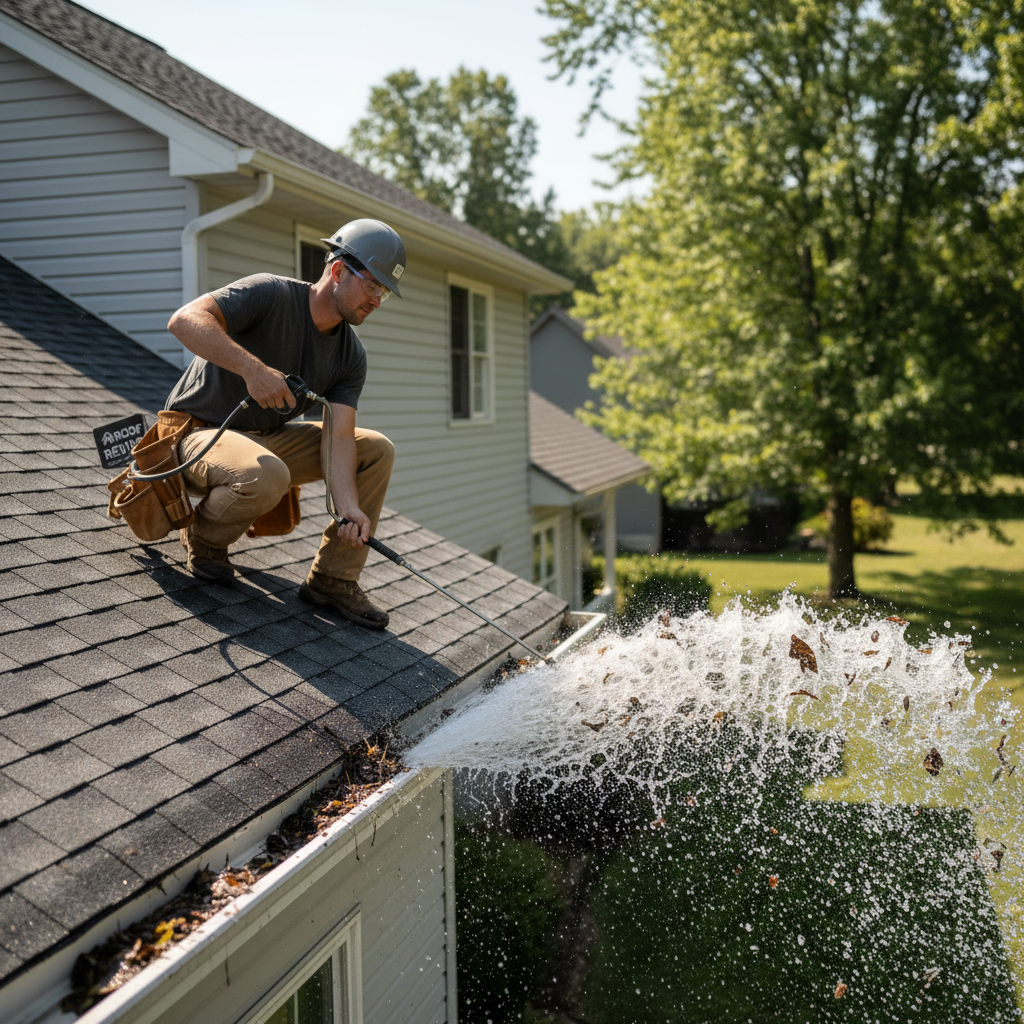
Are roof cleaning chemicals safe for your plants and pets? They can be, but only if the mix stays controlled and the runoff gets managed.
What determines “safe” isn’t a vague promise like biodegradable or plant-safe, roof cleaning chemicals safety comes down to specifics. It’s what’s used on the roof and where it ends up once it leaves the shingles. In Wilmington’s breezy, rainy conditions, overspray and gutter-to-downspout discharge can concentrate a roof-wash solution like a funnel dumping into a single bucket right where your shrubs, garden beds, and dog’s usual path are (roof cleaning runoff safety). This guide explains what crews typically spray in a roof soft wash and where it goes. It covers the three exposure pathways that matter most and the questions that reveal whether a contractor has a real protection plan or just reassurance.
What’s Actually Used in Roof Soft Washing

Industry references often cite about 1% to 6% sodium hypochlorite at the roof surface for sodium hypochlorite roof cleaning safety. At that range, “safe” starts looking less like a label and more like runoff control.
Most “roof soft washing” on asphalt shingles means a diluted sodium hypochlorite solution (think pool chlorine from The Home Depot aisle) mixed with a surfactant so it clings long enough to kill algae and loosen grime, then rinsed and left to weather-clear. In practice, crews apply about 1% to 6% sodium hypochlorite at the roof surface at low pressure.
Here’s the part people miss: roofs typically get a hotter mix than siding. Pretending otherwise is just wishful thinking. So if a contractor reassures you that their house-wash mix is “plant-safe,” don’t assume the roof mix is the same product or the same strength. Labels like “biodegradable” don’t protect plants or pets.
Soft washing is designed to kill algae and organic staining without the shingle damage that can come from high-pressure washing. Read more in our article: Soft Wash Roof Cleaning It’s the concentration that ends up on the ground via overspray and, especially, downspout runoff, if you don’t want to nuke my plants.
The Three Exposure Pathways That Matter
After the job, the only browned shrubs are often the ones sitting under downspouts. The roof chemistry did its job, but the yard got the concentrated dose.
| Exposure pathway | How exposure happens | Highest-risk spots | What to ask/confirm |
|---|---|---|---|
| Plant contact burn (overspray and downspout discharge) | Drift/overspray lands on leaves; runoff concentrates at discharge points | Downspout outlets; mulched beds where an outlet “daylights” | Where each downspout will discharge; whether they’ll pre-wet plants and keep rinsing during/after application |
| Pet exposure (paws and licking residues) | Pets walk through wet grass/splash zones, then lick paws or rub on low shrubs | Drip line paths; around downspouts; low shrubs in splash zones | How long pets should stay off the yard after the final rinse and dry time guidance |
| Well-water concern (runoff pathways) | Wash water migrates via slope/soil and pooling; single discharge points worsen travel | Areas where runoff flows toward the wellhead; pooling spots upslope/near well area | Whether any discharge or pooling sits near or upslope of the well area, and what runoff-diversion plan will make sure we’re not poisoning the well |
Your Yard’s Highest-Risk Zones (Gutters, Downspouts, Wind)

You can do everything “right” and still lose a bed of plants if one downspout turns the whole job into a single chemical pour right at the roots. The risk usually concentrates at the discharge points, not across the whole yard.
If you want to protect plants, pets, and anything near your well, don’t treat your yard like one big “spill zone.” It doesn’t spread evenly across the property. Instead, it gathers and releases at a few predictable spots. Most damage reports trace back to one or two hotspots, not an unknown drift issue.
The #1 zone to focus on is the gutter-and-downspout system because it turns a thin film on the roof into a force-fed discharge at ground level, roof bleach runoff landscaping is where damage usually starts. As an example, the first few minutes after application (and the first real rinse) can send the strongest runoff to a single bed where a downspout daylights, especially if that outlet sits in mulch that holds liquid against roots.
The other zone people underestimate is wind. On breezy coastal days, even low-pressure application can drift onto foundation plantings like salt spray off the beach and into a neighbor’s side yard (roof cleaning overspray plants). Before the crew starts, walk the perimeter and flag these specific risk points
-
Each downspout outlet: Where does it dump, and what’s within 3 to 6 feet (shrubs, vegetable beds, pet routes, crawlspace vents)?
-
Any “first-flush” pooling spot: Low areas where water already puddles during hard rain will also collect wash water.
-
Wind-facing beds and property lines: Ask what wind speed they won’t spray in, because “low pressure” doesn’t prevent drift.
On many homes, the easiest way to prevent landscape damage is to control where downspouts discharge before any solution ever hits the roof. Read more in our article: Protect Landscaping Siding Windows
Questions to Ask a Wilmington Roof-Cleaning Crew

You get a very different outcome when the crew can name their mix, their wind cutoff, and exactly where each downspout will discharge. Specific answers now help prevent problems later.
Don’t accept “we’ve never had a problem” as a safety plan, even if you found them on Nextdoor. You’re hiring them to manage where the mix goes. Anything less is unacceptable.
Ask these (how to protect plants during roof cleaning) and listen for specific, jobsite-level answers
-
“What’s the roof mix strength at application?” (Roof treatments often run hotter than siding; ask for the approximate % sodium hypochlorite or how they set their ratio.)
-
“What’s your plant-protection routine before, during, and after?” You want to hear pre-wet, active rinsing throughout, and a final rinse, not just “we’ll cover things.”
-
“What wind speed is your cutoff for spraying?” Coastal breezes cause drift even at low pressure; they should have a number, not a shrug.
-
“How will you handle downspout runoff at each outlet?” For example: temporary extensions/diversion, spreading discharge, extra dilution at the outlets, and keeping it out of sensitive beds.
-
“How long should pets stay off the yard after you’re done rinsing?” (how to protect pets during roof cleaning) A clear window (often roughly 30 to 60 minutes after rinsing) beats vague guidance like “once it dries.”
When to Choose Bleach-Free or Bio-Based Options

If your landscaping is tight to the house or your dog basically lives in the grass, reducing the harshness of what can end up at ground level buys peace of mind. Sometimes the clean roof is easy, and the real win is a yard that looks untouched afterward.
Choose bleach-free or bio-based options when your real goal is risk reduction at the ground rather than fastest visible change on the roof, and that tradeoff can be worth the squeeze as a green roof cleaning solution. If downspouts drain into sensitive landscaping or pets spend time in the yard, lowering chlorine strength at discharge points reduces leaf-burn and paw-exposure risk.
The tradeoff is you usually give up “instant” results. It’s more like slow-cooking than microwaving, and sometimes it costs you a one-visit outcome. By way of example, a bio-based treatment may need longer dwell time or a follow-up application. If a contractor promises bleach-free and same-day transformation, you should push back because chemistry doesn’t let you have both.
Bleach-free treatments can still be effective, but the real value is often lower risk of irritation for kids and pets at ground level after the rinse. Read more in our article: Greensoy Safe Kids Pets
FAQ
How Long Should You Keep Pets Off The Yard After A Roof Soft Wash?
Plan on keeping pets inside until the crew has finished their final rinse, then give the yard about 30 to 60 minutes to dry out. The main risk is paws picking up residue in splash zones and then licking.
What If I Have Vegetable Beds Or Herbs Near A Downspout?
Treat that area like a no-go zone for roof-wash runoff: ask the crew to divert or extend the downspout discharge so it doesn’t dump into the bed, and have them pre-wet and rinse heavily around it. Don’t rely on “plant-safe” labels here, because roof mixes often run stronger than what people use for siding.
My Wellhead Is In The Yard, Should I Cancel The Cleaning?
Not automatically, but you should control the runoff: if any downspout discharge or pooling carries water toward the well area, you need a different runoff plan before anyone sprays (roof cleaning near well precautions). You’re not just judging the chemical, you’re judging whether your property layout lets that water migrate where you don’t want it.
Why Does It Matter If Runoff Goes Toward A Storm Drain?
Because chlorine-bearing runoff can stress aquatic life and storm drains often discharge directly to creeks without treatment (roof cleaning environmental impact). You want the crew to keep discharge on your property where it can dilute and dissipate, not channel it into the street.
What Does “Results In 30 To 90 Days” Mean?
It usually means the treatment kills the algae quickly, but the dark staining lightens gradually as rain and normal weather rinse away dead growth. If someone promises a bleach-free process and instant, dramatic change on day one, you should press for the exact method and what they’ll do if the roof doesn’t clear right away.
Roof not getting any younger? Contact us or call 703-673-6301 to find out where you stand.For Wilmington-area roofs, our soft wash roof cleaning in Wilmington takes the whole job off your hands, free quote first.