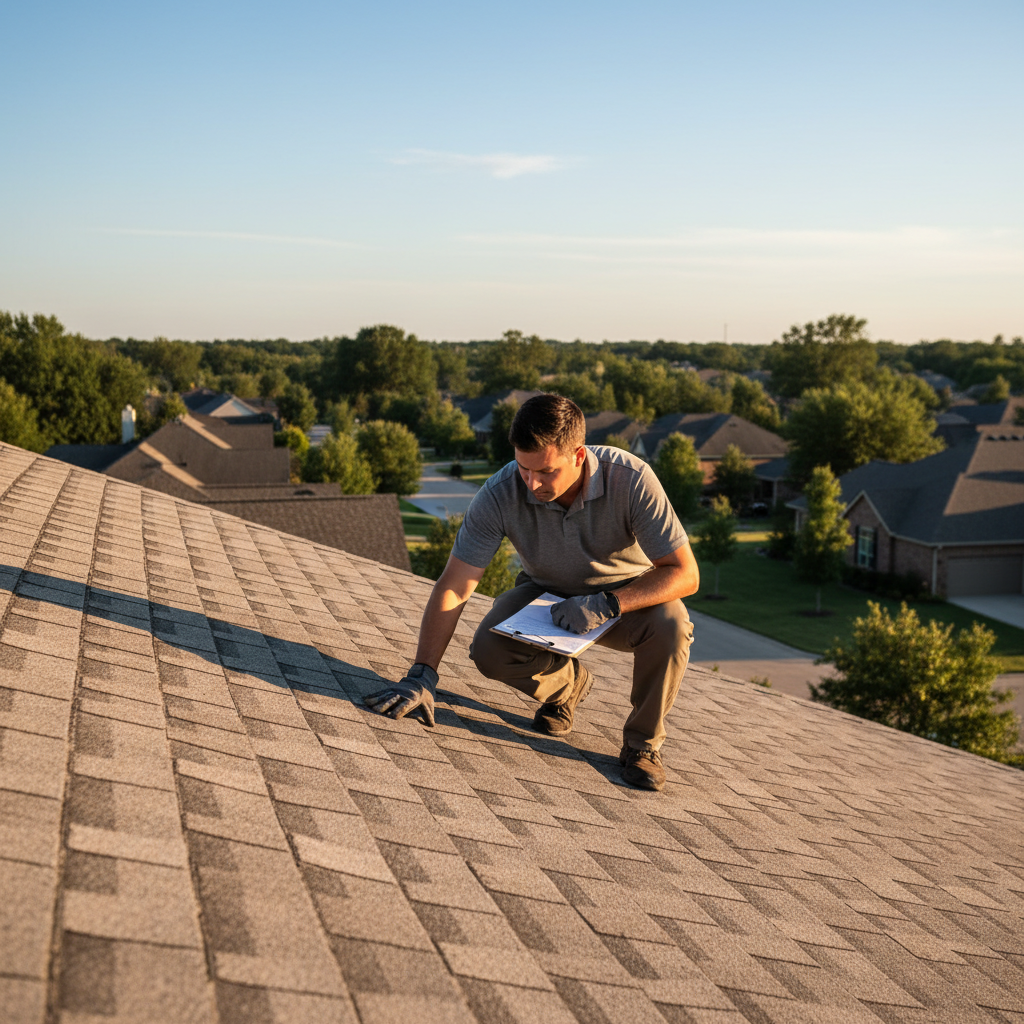
You’re looking at a lifted tab or a fresh ceiling stain after a coastal storm, and you want one thing: a clean way to stop water and buy time. The problem is that asphalt shingles aren’t meant to be “sealed” like a driveway, and the wrong product or the wrong approach can trap moisture, create a mess, and still not touch the real entry point.
This guide shows you what sealing roof shingles means on a modern shingle system, why Wilmington-area conditions like wind-driven rain make leaks harder to diagnose, and how to tell the difference between smart spot sealing (re-bonding a specific tab) and risky film-forming coatings.
What It Means to Seal Asphalt Shingles

When you search for sealing roof shingles, it can sound like a normal maintenance step, like sealing a driveway. Asphalt shingles don’t work that way. Most modern shingles are designed to self-seal: they leave the factory with an adhesive strip that bonds the shingle tabs together once the roof warms up in the sun (see the Building America Solution Center overview of asphalt shingle roofs). That bond helps with wind resistance and keeps tabs from lifting, which is why “sealing” is already built into how the roof is supposed to function.
So when you add sealant yourself, you’re not completing an unsealed roof. What you’re doing is a short-term stabilization move. You’re usually doing situational hand-sealing, meaning a small, targeted re-bonding where the factory strip didn’t activate or has let go, like re-bedding a loose shingle tab the way you’d snug a cleat before the wind kicks up. For example, a tab that keeps flapping after a storm or a single edge that won’t lie flat can justify a careful dab of compatible roofing cement under the tab.
If what you’re considering is applying a roof coating for shingles over large areas or rolling on a product to “waterproof” the whole roof, that’s a different category entirely, and it can change how the shingle system sheds water and dries. The practical takeaway: before you buy anything, force yourself to answer one question: Are you trying to re-attach a few specific tabs, or are you trying to make an aging roof act like a sealed membrane? Those are two different problems, and they don’t get the same solution.
Why Coastal NC Roofs Fail Sooner
You patch the obvious spot, the stain dries out, and you think you’re done. Then the next sideways rain proves the entry point was somewhere else.
In coastal North Carolina, your shingle roof maintenance plan can’t just assume “wet,” because it gets wind-driven rain, and no, a Nextdoor-approved quick fix is not a diagnosis. A hard storm off the Atlantic can push water up and sideways under shingle edges, especially when tabs lift for even a moment. That’s why a leak stain in a bedroom can come from an entry point several feet upslope, and why sealing the first suspicious crack you see often changes nothing.
Humidity adds a different kind of stress: algae and organic buildup hold moisture on the shingle surface, which speeds granule loss and makes shingles run hotter. For instance, a shaded north-facing slope in Wilmington can look streaky and “tired” years before the sunny side, even if the roof is the same age.
Salt air and daily temperature swings stack on top of that. They add up fast.
After major wind events, lifted tabs and displaced shingles can let water travel upslope and show up as an interior stain far from the real entry point. Read more in our article: Roof Problems After Hurricane Salt speeds corrosion on exposed metal (fasteners and flashing edges), and thermal cycling works shingles loose over time. When the root cause is lifting behavior or a failing flashing joint, more sealer just masks it temporarily.
Roof Shingle Rejuvenation, Coating, or Adhesive?
A homeowner grabs a bucket labeled “roof sealer,” rolls it on like paint, and feels relief until the next hot week turns the roof into a sticky dust magnet. The trouble started when one problem got treated with the wrong category of product.
A lot of the confusion around sealing roof shingles comes from comparing products that aren’t trying to do the same job. Case in point: you see a lifted tab and a small ceiling stain, so you grab a “roof sealer” that promises waterproofing. Sometimes it slows the drip briefly. You might also smear a film across shingles that were designed to shed and dry, not behave like a continuous membrane. You don’t have a “best product” problem, you have a category problem, and the wrong category is just nickel-and-diming you with the wrong tool for the toolbox.
| Category | Best use case | Apply where | Primary risk / limitation | Quick checkpoint question |
|---|---|---|---|---|
| Adhesive (hand-sealing / re-bonding) | Re-attach a specific lifted tab/edge when the factory self-seal didn’t activate or has let go | Small, targeted spots under an individual tab/edge | Won’t solve system leaks; excess product can create mess and complicate repairs | “Am I gluing down a specific tab, not painting the roof?” |
| Coating (film-forming roof coatings) | Create a new surface layer over a broader area | Broad areas (a roof “layer”) | Can change how shingles shed water and dry; may conflict with manufacturer guidance/warranty | “What does it do to moisture movement, and does my warranty allow it?” |
| Rejuvenator (bio-based treatment) | Restore flexibility in aging shingles to potentially extend service life | Field shingles (as a treatment, not a membrane) | Doesn’t fix flashing failures, rotten decking, or an active leak path; claims depend on testing | “What testing supports the claim, and what does it not fix?” |
When Sealing Roof Shingles Is the Wrong Move
You save time and money when you recognize a system problem early and stop trying to glue your way out of it. The fastest path to a real fix is often admitting when sealing is only hiding the symptom.
Use sealant only for a single, defined re-bonding job on a tab that should already be adhered. It’s the wrong move when the roof has a system problem, because “making it stick” won’t stop water that’s traveling under layers or entering at transitions. If you keep reaching for another tube of goop, you’ll often buy mess, not time, and I’ll say it plainly: a BBB badge does not make a shingle coating a real repair.
Skip sealing or coating and pivot to a real repair plan if you see any of these red flags: widespread granule loss or curling/brittle shingles or leaks that trace to flashing areas (chimney or valleys). In coastal NC, wind-driven rain punishes those details. A smear-on fix can even make later repairs harder or interfere with how the roof sheds and dries.
When a “quick dab” turns into repeated spot fixes, the bigger risk is turning a small issue into hidden damage or a repair that gets more expensive later. Read more in our article: Small Roof Repair Risks
The One Framework to Extend Roof Life

Two neighbors can have the same ceiling stain and need totally different next steps. The difference is whether you’re buying weeks, buying years, or just paying for delay.
Start with your time goal, then match it to reality: what’s failing (a few lifted tabs vs flashing), your best guess at remaining service life (years, not months), and your home’s moisture risk (coastal wind-driven rain and shade). Think triage, not wishful thinking, and be ready to bite the bullet if the system is failing. If the problem is localized and the roof still has life, you’re in targeted repair territory; if the field shingles are aging but intact, vetted rejuvenation may buy time; if failures are widespread or structural, you’re in replacement territory.
Then sanity-check your warranty tolerance and budget horizon. Be honest about both. If warranty coverage matters or moisture trapping is a risk, don’t try to coat the roof into acting like a different system.
If You Only Need Targeted Sealing
Targeted sealing makes sense when you’re restoring a single, specific bond that the roof was designed to have in the first place. Think small and local: a couple of tabs that won’t stay down after a wind event, an edge that never heat-activated after a cool-season repair, or a minor delamination where the tab is intact but not sticking. In those cases, you’re using adhesive as a re-bonding tool, not as waterproofing.
A durable spot fix has to do more than “feel sticky,” and if HGTV makes it look effortless, that’s exactly why you should be skeptical. You need three things to be true: the shingle itself is still in decent shape (not brittle or curled), the area you’re bonding is clean and dry enough to actually adhere, and the tab can lie flat once reattached so wind-driven rain can’t keep prying it open. If you’re tempted to solve uncertainty by applying more sealer, stop, because excess goop often becomes the problem instead of the cure.
As an example, if you can lift a single tab and see the factory adhesive strip that’s failed to grab, that’s a reasonable hand-seal scenario. If you’re chasing a stain inside and you can’t point to one specific loose tab or edge, you’re no longer in “targeted sealing” territory. You’re guessing.
How to Vet a Shingle Rejuvenation Service
If you can’t get clear documentation, you’re one signature away from paying for a feel-good treatment that does nothing for your actual failure point. The marketing is easy; the proof is where most offers fall apart.
If you’re considering a bio-based rejuvenator or roof shingle sealing service, treat it like hiring a roof professional, not buying a miracle spray. “Eco-friendly” can mean anything from a low-odor carrier to a true bio-based formula with meaningful VOC and runoff controls. And “independently tested” only helps you if the testing matches your roof’s reality: sun, salt air, algae, and wind-driven rain. If you can’t connect the claim to a document, you’re buying marketing, and the whole pitch is a patch job at best, not evidence you’d put on the table like a trial exhibit.
Ask for proof you can actually evaluate, then decide if it applies to your roof. For instance, a Wilmington homeowner comparing roof rejuvenation Wilmington NC options with a shaded north slope and visible algae needs to know whether the service includes gentle cleaning first. They also need to know how they prevent overspray onto siding and landscaping. You also want to know what the treatment won’t fix, because it won’t replace bad flashing or stop an active leak path.
Use questions like these to get clear answers:
-
Testing: What third-party testing supports life-extension claims, and can you share the report or certification number?
-
Warranty: What’s covered (materials, labor, retreatment), what voids it, and does it affect my shingle manufacturer warranty?
-
Process: Do you clean first, how do you protect gutters/plants, and what weather window do you require for application?
-
Eligibility: What roof conditions disqualify me (brittle shingles, exposed mat, widespread granule loss, active leaks, soft decking)?
FAQ: Sealing Roof Shingles
Will Sealing a Few Shingles Stop a Leak?
Sometimes, but only if the leak is actually coming from that specific lifted tab or small, identifiable entry point. In real homes, water often enters upslope and travels under layers, so sealing the first “suspicious” spot you see can do nothing even if it looks like the obvious fix.
Can Sealing or Coating Shingles Void My Warranty?
It can, depending on your shingle manufacturer or what you apply. Before you put any aftermarket product on the roof, check your warranty language or call the manufacturer, because some applications can be treated as an unapproved modification to the roof system, and an Angi profile will not change that.
Is DIY Hand-Sealing Worth Doing?
DIY can make sense for a truly small, dry, clean, re-bonding job, like one or two tabs that won’t stay down after a wind event. Once the job turns into spreading product over more area, you’re usually trading short-term comfort for cleanup and harder repairs later.
How Long Does Targeted Sealing Usually Last?
If the shingle is still in decent condition and you’re reattaching a tab that should’ve been sealed in the first place, it can last for years, but it’s not a reset button on an aging roof. If the underlying issue is brittle shingles, failing flashing, or worn underlayment, sealing usually buys little time. It just delays the real fix.
When’s the Best Time of Year to Seal Roof Shingles in Coastal NC?
Pick a warm, dry stretch so surfaces are actually dry and the shingle can lie flat and stay bonded, not a humid day right before a rain cycle. If you can’t get a predictable dry window, pause and shift to diagnosis or professional repair instead of gambling on adhesion.
If you’re still not sure where the water is getting in, a professional inspection can confirm whether the issue is a lifted tab, flashing, or moisture traveling under layers. Read more in our article: Roof Inspection Wilmington Nc
Roof not getting any younger? Contact us or call 703-673-6301 to find out where you stand.Before spending on any fix, our free roof inspection in Wilmington tells you whether you need one at all.