You’re probably searching for eco friendly roofing because you want a roof choice you can defend for decades, not just on install day. But “eco friendly” gets thrown around so loosely that it’s easy to miss what drives impact on a real home in coastal North Carolina: how much heat your roof pushes into the house and what happens when the roof finally comes off.
This guide sets the order that matters most. Wilmington weather decides the rest. You’ll learn when restoring or rejuvenating an aging asphalt shingle roof is the greener move and how to choose a lower-impact replacement if your roof has crossed into true failure. Along the way, you’ll see why “recyclable shingles” doesn’t mean “recycled,” and how specs like solar reflectance can cut heat gain, like closing the blinds on a blazing porch, without a dramatic change to your home’s look.
The Hidden Footprint: Tear-Off Waste

Most “eco friendly roofing” advice skips the dirtiest moment: the tear-off—a key reality for sustainable roofing. The EPA estimates the U.S. generates about 11 million tons of asphalt shingle waste per year, and if it isn’t headed to a real facility you can verify, “recyclable” is just a label because landfilling is still the most common outcome.
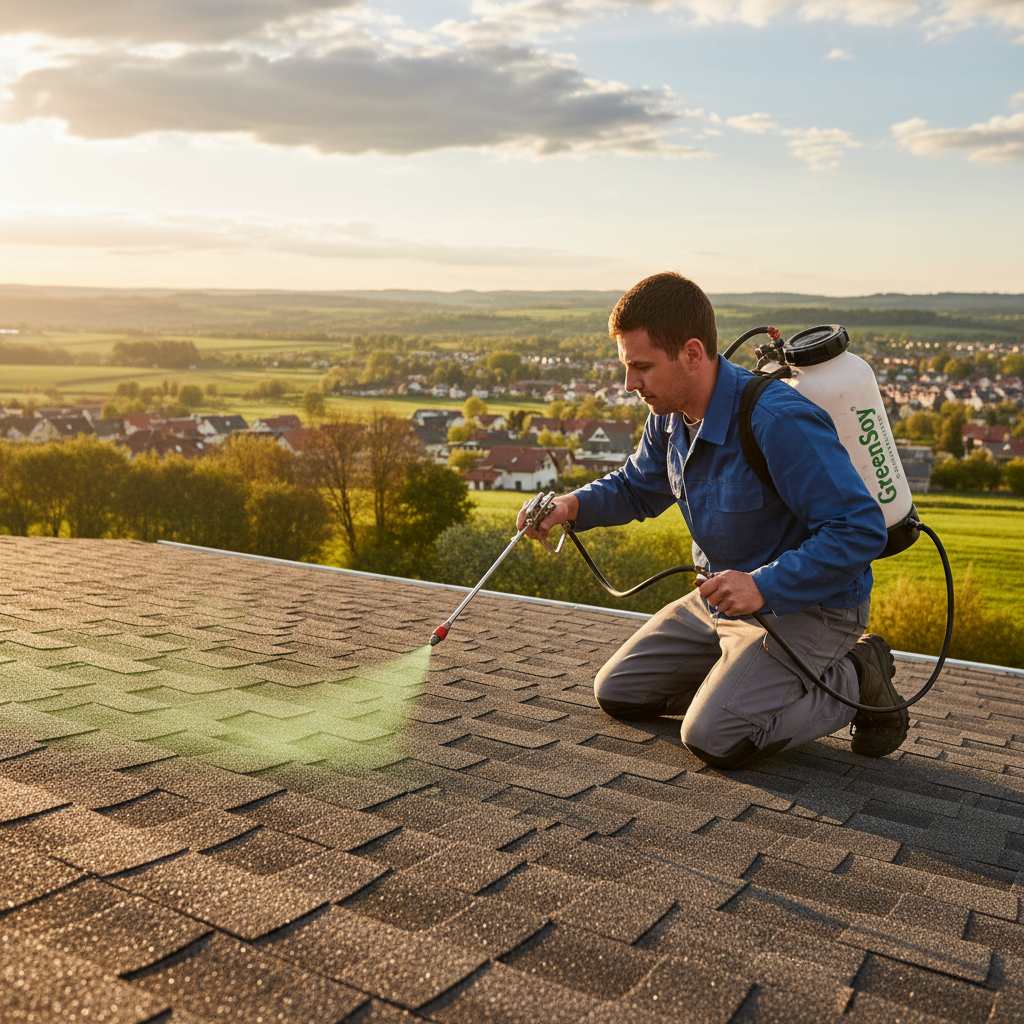
So for many Wilmington-area homes with aging shingles, the greener move is to keep the existing roof in place longer, as long as it’s still sound. If a qualified inspection says you can safely restore or rejuvenate now, you don’t just save money and disruption; you also keep thousands of pounds out of the waste stream.
Define “Eco Friendly Roofing” for Your Home
-
Operational impact: how much heat the roof shoves inside, like a sun-baked car roof (energy efficient roofing starts here)
-
Service life: how long you can keep material out of a dumpster if you do our homework
-
End-of-life outcome: what actually happens when the roof finally comes off
-
Reflectance rating (solar reflectance/albedo)
-
Realistic years added (if restoring), put in writing
-
Disposal or recycling path they will actually use
Your Decision Framework: Roof Replacement vs Restoration
Choose wrong and you can end up paying twice: once for a “safe” tear-off you didn’t need, or later for repairs after a delay that let water get into the deck.
The decision isn’t “what’s the greenest material,” it’s whether your current roof is a good candidate to keep out of a dumpster without buying yourself a leak problem. Treating replacement as the responsible default is a bad habit. It is the fastest way to buy maximum disruption and maximum waste while the roof still has years left.
Start with a simple gate: Is the roof fundamentally sound? In coastal North Carolina, wind-driven rain turns small weaknesses into interior damage fast, so you want a contractor to separate “surface aging” (often restorable) from “system failure” (replace), the same way you’d use the Better Business Bureau (BBB) to separate a solid contractor from a headache. For example, a roof with uniform granule loss and a few seal-strip issues might be a restoration conversation, while widespread brittle cracking or recurring active leaks usually isn’t.
A professional inspection is often the fastest way to confirm whether you’re dealing with surface aging you can address or true system failure that demands replacement. Read more in our article: [Roof Inspection Wilmington Nc]
| Lens | Restore / rejuvenate: what to evaluate | Replace: what to evaluate |
|---|---|---|
| Condition & leak risk | Confirm no active/recurring leaks; issues are surface aging, not system failure | Replace when failure is widespread (brittle cracking, recurring leaks, multiple layers, soft spots) |
| Credible life added | Years added the contractor will put in writing, backed by evidence | Expected service life for the chosen system, installed to coastal standards |
| Disruption | Often one-day service; minimal debris/landscaping impact | Multi-day tear-off; dumpsters, noise, nail cleanup, debris control |
| Cost over time | Cost per year of life added (not just invoice total) | Cost per year of expected service life (including tear-off/disposal) |
| Waste avoided | Material kept on the house by delaying tear-off | Confirm disposal/recycling path actually used (not just “recyclable”) |
| Coastal resilience | Sealing, edge details, and repairability before small damage spreads | Wind rating/installation standard, flashing details, and material/finish suited to salt air |
When Restoration Is The Greener Move
Restoration is only the greener move when it reliably buys you time to extend roof life without increasing leak risk. If you “play it safe” by defaulting to tear-off, you can create the most waste-heavy outcome on a roof that still had years of service left. But if you restore a roof that’s already failing as a system, you may just delay the replacement while inviting hidden deck damage, insulation saturation, and mold.
Signs Your Roof Is A Real Candidate
You’re usually in the sweet spot when the roof’s problems look like surface aging, not water intrusion, like weathered paint on a porch instead of rot in the decking. As an example, many coastal North Carolina asphalt roofs hit a stage where they look tired from sun or salt air, yet they still shed water correctly. In that window, cleaning, sealing, or a rejuvenation treatment can make environmental sense because you avoid the dumpster and keep the existing materials in service.
Red Flags That Push You Toward Replacement
A restoration pitch stops being “eco friendly roofing” the moment it becomes a bandage over active failure. Case in point: recurring leaks around flashing or brittle cracking across large areas. Multiple existing layers often belong here too, because they complicate fastening, ventilation, and reliable repair.
Practically, kick the tires by asking the contractor to show you the call in plain evidence: labeled photos of any lifted shingles and any signs of chronic moisture (stained decking in the attic or damp insulation). If they can’t explain why the roof is sound enough to keep, you don’t have a restoration decision yet.
What Proof to Demand From Rejuvenation

A homeowner gets a confident “5 to 10 more years” pitch at the kitchen table, but when they ask for test reports and warranty language, the paperwork suddenly gets fuzzy.
Rejuvenation only counts as eco friendly roofing if it measurably extends service life without adding risk (asphalt shingle rejuvenation included); otherwise it’s wishful thinking, so validate it like Consumer Reports would: proof, not promises. For instance, if a salesperson says “we add 5–10 years” but can’t show testing or a real warranty, you’re one storm season away from paying for a full tear-off anyway.
Ask for three things in writing: independent testing (look for third-party lab results like PRI-referenced reports), measurable performance claims (example metrics you can verify include improved granule retention), and clear warranty terms (length, what’s excluded, and whether it’s transferable). If they can’t produce those documents quickly, it isn’t sustainability.
Third-party testing and clear warranty language are the two easiest places to spot whether a rejuvenation claim is evidence-based or just sales talk. Read more in our article: [Roof Rejuvenation Documentation] It is a story.
If You Must Replace: The Lowest-Impact Options
In 2022, asphalt mixture producers diverted about 4.2% of an EPA-cited asphalt shingle waste total via RAS use, so betting your sustainability plan on “recyclable” alone is usually a losing hand.
Once your roof is in true system failure, the lowest-impact choice is usually the one you can install correctly and keep in service longest. It’s the option you can install correctly in coastal wind and rain and that you won’t be forced to tear off again too soon.
First, treat solar reflectance (albedo) as a real performance spec, not a marketing adjective. The EPA flags reflectance as the key cool-roof metric, and the U.S. DOE notes cool asphalt shingles can cost about the same as conventional shingles, which flips the usual “green equals pricey” story. For example, if you like the look and price point of shingles, choosing a cool-colored shingle with documented reflectance can reduce attic and ceiling heat load without changing the whole roof system.
Second, if you want to move the needle on lifetime waste, reflective metal roofing can be a strong replacement path because durability can reduce how often you repeat the tear-off cycle. In a coastal setting, the make-or-break detail is corrosion and wind performance. You want a coastal-rated finish, a high-wind install approach, and flashing details that don’t become the first rust spot in the chain.
Before you sign, get quotes that spell out published reflectance values and the wind rating or installation standard in writing. That’s how you keep replacement “eco” in a way that survives Wilmington weather.
Salt air can accelerate corrosion at fasteners, cut edges, and flashing details long before the panels themselves look “old.” Read more in our article: [Salt Air Roof Rust]
Coastal NC Constraints That Change The Answer
Dial in the details and you can stay watertight through wind-driven rain while keeping long-term impact low.
In coastal North Carolina, “eco friendly roofing” lives or dies on weather, not intentions. Wind-driven rain means small detailing failures (lifted shingles or sloppy flashing) turn into wet decking fast, so you can’t call a choice sustainable if it increases leak risk just to avoid a tear-off.
Salt air and humidity also punish shortcuts, so salt air roof protection matters. Metal can be a long-life, low-waste option, but only if you pick a coastal-rated finish and installation details that won’t corrode at fasteners and edges. Meanwhile algae and grime make roofs look “old” early, so build a maintenance cadence you’ll actually follow, such as periodic gentle cleaning, so you don’t replace a structurally sound roof because it looks bad.
Finally, HOA rules can narrow your options, and ignoring them is how people end up arguing on Nextdoor instead of getting a roof approved. Before you fall in love with a “green” material or color, get the approval constraints in writing and then ask your contractor to show how the proposal holds up to local wind and salt exposure.
Eco Friendly Roofing: Your Shortlist
If your goal is genuinely eco friendly roofing Wilmington NC homeowners can trust, don’t default to replacement just because the roof looks tired; use a good, better, best mindset that prioritizes keeping shingles out of the dumpster and heat out of the attic. Start with what keeps material out of a dumpster without buying yourself leak risk.
If the roof is fundamentally sound, restore/rejuvenate now (with documented third-party testing and clear warranty terms) to delay tear-off. If it’s a true system failure, replace with either cool-colored asphalt shingles (published reflectance and familiar look) or reflective metal (coastal-rated finish and high-wind install details) to reduce heat gain and repeat tear-offs.
FAQ
Does Eco Friendly Roofing Always Cost More?
Not always. The U.S. Department of Energy notes cool asphalt shingles can cost about the same as conventional shingles, so you can often improve reflectance without paying a “green premium.”
How Much Life Can Roof Rejuvenation Realistically Add?
On the right roof, some providers claim 5+ years per treatment, but the real determinant is whether you treat before advanced cracking, active leaks, or widespread mat exposure. You should only count years a contractor will put in writing, tied to documented testing and a clear warranty.
How Disruptive Is Restoration Compared With Replacement?
Restoration or rejuvenation can often happen in a single day with far less noise and debris than a full tear-off. If you need replacement, plan for dumpsters, nail cleanup, and multiple days of driveway and yard disruption.
If Shingles Are “Recyclable,” Won’t They Just Get Recycled?
Not necessarily. Real-world diversion remains limited in many areas, so “recyclable” often means “could be recycled,” not “will be,” unless your contractor can name the facility and the disposal path they use.
Do Cool Roofs Actually Pay Off In Coastal North Carolina?
They can, because the EPA points to solar reflectance (albedo) as the key cool-roof metric, and higher reflectance can cut heat gain into your attic. The payoff depends on your roof color and sun exposure, so ask for published reflectance values, not vague “cool roof” marketing.
Roof not getting any younger? Contact us or call 703-673-6301 to find out where you stand.Skip the ladder. Our free Wilmington roof inspection and report does the checking and you keep the report.