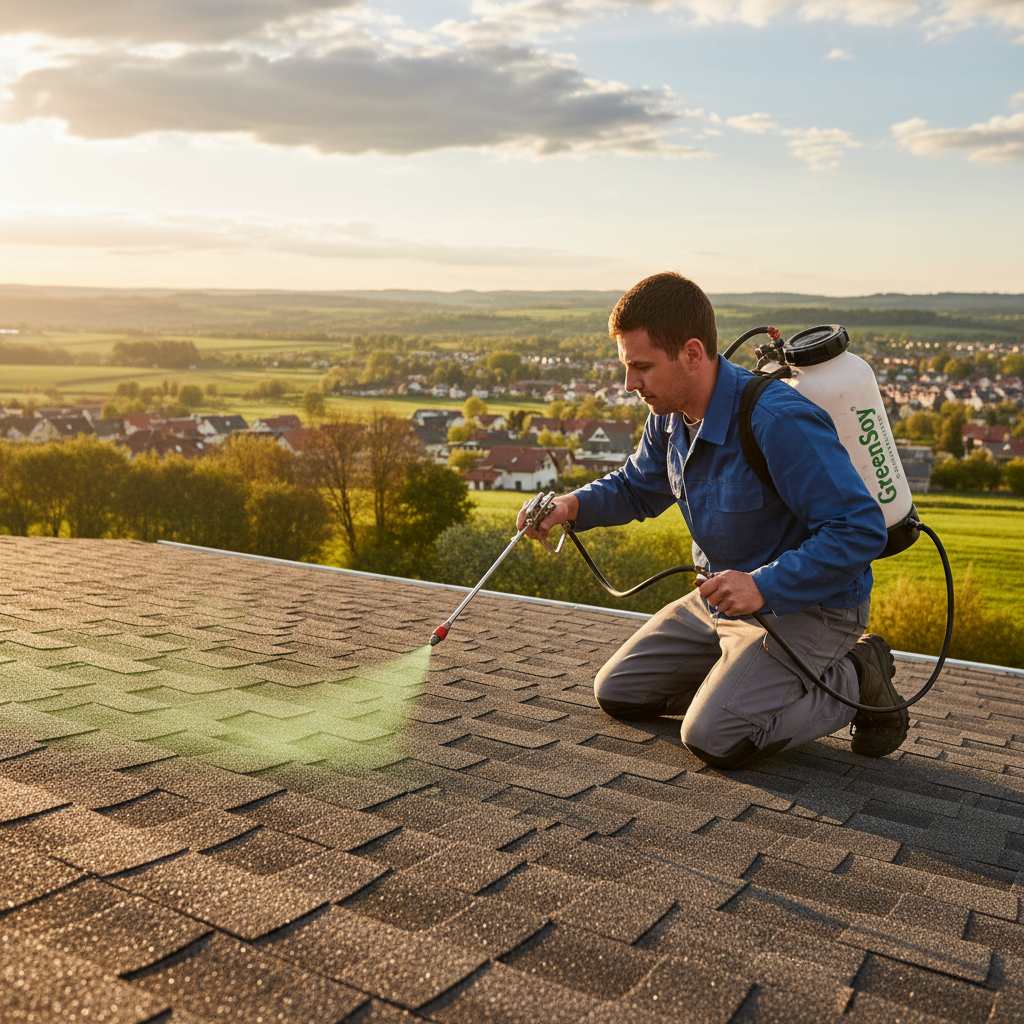
Eco friendly roof repair means fixing the failure point and extending roof life with minimal tear-off. It’s eco-friendly when you avoid repeat leaks that lead to rotten decking and dumpsters.
If you’re in coastal North Carolina, this matters even more because humidity and wind-driven rain can turn a small vent-boot or flashing issue into widespread damage fast. In this guide, you’ll learn how to tell if your roof is even a candidate for repair or restoration and how to verify claims so you don’t pay for a coating or “green” upgrade that only delays a bigger replacement. You’ll also see how to sanity-check performance with real documentation, like ENERGY STAR reflectance listings for cool-roof products and testing that uses aged shingles, so you can choose the lowest-waste path that actually holds up.
What “Eco-Friendly” Should Mean Here

If you’re repairing an aging asphalt shingle roof near the Carolina coast, “eco-friendly” shouldn’t primarily mean “reflects more sun.” The lowest-impact choice is usually the one that keeps a sound roof out of the dumpster and prevents the next avoidable tear-off, especially when leaks can turn into rotten decking.
That means you’ll get more environmental value (and often more financial value) by prioritizing durability and repairability over headline claims. That tradeoff is worth the squeeze. Case in point: a reflective “cool roof” coating or product can be a legitimate efficiency upgrade, but it won’t rescue an unsound roof or bad flashing. On a compromised substrate, a coating is only a short delay. Then you’re forced into a bigger, messier replacement.
To keep “eco-friendly” grounded in outcomes, use three filters when you compare options and contractors: (1) Landfill avoidance through life extension (targeted repairs and sealing failure points), (2) Durability in your real failure zones (penetrations and valleys, not just the field of shingles), and (3) Verified performance, not vibes. For example, ENERGY STAR maintains product lists that include measurable fields like initial and aged solar reflectance, and credible rejuvenation claims tend to cite testing on aged shingles plus accelerated weathering or ASTM-style performance metrics.
A practical gut-check: if a pitch starts and ends with energy-bill savings, you’re probably being sold the wrong definition of “eco-friendly” for a 10 to 25-year-old shingle roof.
In practice, a lot of “eco-friendly” failures happen when a small, fixable leak is ignored until moisture spreads into the decking and forces a larger tear-off. Read more in our article: Small Roof Repair Risks
The Non-Negotiable: Is Your Roof a Candidate?
Miss this gate and you can do everything “right” on paper and still end up paying twice. The fastest way to turn an eco-friendly plan into a dumpster is to treat a moisture or decking problem like it’s just a surface issue.
Eco-friendly roof repair only counts if the roof is still structurally sound. Restoring, coating, or rejuvenating a roof that’s failing at the deck or holding attic moisture usually hides damage, accelerates rot, and turns a manageable fix into a full tear-off.
Use this as a pass/fail gate before you get sold on any product or process, because hoping otherwise is a bad bet. As an example, on a coastal North Carolina home, a small leak around a plumbing vent boot can be straightforward, but if that leak has been feeding damp decking through a humid summer, the wood can soften and spread damage. At that point, the greenest move is the one that stops the decay, even if it means replacing more material now.
A roof is typically a reasonable candidate for repair or restoration when these are true:
-
The decking is solid: no widespread soft spots, sagging lines, or “spongy” areas when a pro walks the roof.
-
Leaks are limited and explainable: a known flashing/boot/valley issue, not mystery staining in multiple rooms.
-
Shingle failure isn’t widespread: you’re not seeing broad brittleness, heavy granule loss, curling, or cracking across most slopes.
-
You don’t have a moisture/ventilation red flag: persistent attic dampness, moldy sheathing, or compressed/wet insulation that suggests the roof assembly can’t dry.
If a contractor can’t show you photos and plain-language notes for these points and basics like Better Business Bureau (BBB) ratings for local contractors, you’re being asked to trust a treatment more than the roof system underneath it.
A structured inspection with photos of decking, penetrations, and flashing is one of the fastest ways to confirm whether repair or restoration is realistic before you buy any “green” add-on. Read more in our article: Roof Candidate Check
Your Eco-Friendly Roof Repair Options
Once your roof passes the “candidate” gate, pressure-test the plan like it’s roof triage, not a paint job. Your real decision isn’t “green or not.” It’s which intervention stops the leak cycle and extends service life with the least tear-off. If a contractor only offers one path (usually a coating or a full replacement), you’re not seeing the full menu.
Your main options usually fall into these buckets for eco friendly roof coating decisions:
-
Targeted repairs: flashing/boot/valley fixes and localized shingle replacement at known failure points.
-
Maintenance cleaning: algae/moss control and debris management to slow wear (especially in shaded, humid areas).
-
Rejuvenation treatments: products aimed at improving flexibility in aged shingles when the roof is still structurally sound.
-
Reflective or “cool roof” coatings/products: efficiency-focused layers or materials that depend on a sound substrate.
-
Partial replacement: replacing a failing slope or area while preserving the rest to reduce waste versus full tear-off.
A Decision Framework for Eco Friendly Roof Repair
A neighbor hires the lowest-waste “green” option, but the leak comes back after the first big storm because the real failure point was never rebuilt. A simple grading rubric up front is what keeps you from buying the most convincing promise instead of the right fix.
When you compare “eco-friendly” roof repair options, you’ll get better answers if you grade each option the same way instead of chasing whichever claim sounds greenest, because that is how homeowners get fleeced. In practice, waste comes from paying for work that ignores the root problem and still ends in tear-off a year or two later, so check claims against something concrete like Owens Corning asphalt shingle warranty/spec sheets. For instance, if your leak traces back to a plumbing vent boot or a solar mount penetration, a treatment that doesn’t explicitly include flashing and detailing work might look low-impact on paper but increase the odds of a bigger tear-off.
| Lens | What to ask | What to look for |
|---|---|---|
| Measurable outcome | What will change that you can verify? | Leak test passes after flashing is rebuilt; photos show replaced decking is dry/solid; for cool-roof products, third-party fields like initial and aged solar reflectance (ENERGY STAR lists these). |
| Risk of masking a problem | Does this depend on everything underneath being perfect? | Coatings/surface treatments can’t fix an unsound substrate; risk increases if the contractor can’t document roof soundness first. |
| Realistic lifespan gain | How many years, and under what conditions? | A bounded range tied to conditions (e.g., shingles still flexible; penetrations maintained), not a vague “extends roof life.” |
| Warranty and coverage clarity | What is covered (materials, labor, leaks) and for how long? | Coverage that includes your failure zones (vents, valleys, chimneys) rather than excluding them. |
| True environmental tradeoff | What waste and repeat work are you likely to avoid? | Fewer dumpsters, fewer repeat truck rolls, and fewer surprise decking replacements; adding material now can still be lower-impact if it prevents repeat tear-offs later. |
How to verify “eco” and “works” claims

One lab-testing example in the rejuvenation category uses 15-year-old shingles and a 1,500-hour accelerated weathering protocol to simulate years of exposure. If a pitch can’t point to documentation with that level of specificity, you’re being asked to trust marketing more than performance.
If you want eco-friendly and durable, don’t let “green” language stand in for proof. Get it in writing. For cool-roof claims, have the contractor pull up the exact product on the official ENERGY STAR cool roofs guidance and cite the initial and aged solar reflectance values, not brochure language. For rejuvenation or restoration claims, push for test evidence that matches your reality: results on aged shingles plus accelerated weathering, and ideally independent lab work tied to recognized standards (you’ll often hear ASTM or PRI-style testing).
On the “eco” side, look for checkable labels (like USDA BioPreferred) and explicit chemistry exclusions (such as “no PFAS”). If they can’t show documentation, you’re buying marketing, not outcomes, and you’re left without a paper trail when it fails.
What This Looks Like in Coastal NC
On the Wilmington coast, “eco friendly roof repair” often comes down to one unglamorous truth: moisture and storms punish small detailing mistakes faster than they do inland. With humid air and wind-driven rain, small issues at vent boots or step flashing can soak decking within a season. If you treat eco-friendly as a product choice instead of a failure-prevention choice, you can spend money twice and still end up doing the tear-off you were trying to avoid, which is a miserable way to learn.
To illustrate this, think about the roof zones that get hit the hardest here: north-facing slopes that stay damp and grow algae and every penetration that sees wind gusts and rain pushed sideways. Add salt air and you also get faster corrosion on exposed metal components, which can undermine flashing edges and fasteners long before the shingles look “that bad” from the yard.
Practically, this should change how you use the framework when you vet a proposal: you want proof that the contractor is solving your repeat-failure risk, not just making the roof look newer, and a roof inspection Wilmington NC report (from a pre-purchase inspection or annual maintenance check) can give you a baseline to compare against. Ask for specifics on coastal failure zones (penetrations, valleys, flashing transitions), how they’ll verify the deck stays dry, and their post-storm check cadence since small leaks escalate faster here.
After a coastal storm, wind-driven rain can reveal lifted shingles, compromised flashing, and new leak paths that weren’t obvious beforehand. Read more in our article: Roof Problems After Hurricane
Choosing a Contractor Without Greenwashing
You get a clean scope, photo documentation of the failure points, and product IDs you can verify, and the whole decision gets simpler fast. With the right contractor, you stop guessing which “eco” upgrade is real and start buying repairs you can actually audit.
Don’t shop for a “green” roofer. Look for someone who can diagnose the failure zone precisely. You want a contractor who documents roof soundness, fixes the failure, and backs up any product claims with verifiable IDs and listings. If their pitch leans on energy-bill savings or vague “eco” language before they’ve shown you deck and flashing conditions, you’re shopping a slogan, not a repair plan.
Ask each bidder for the same items, then shop it around: photo notes of decking/penetrations and the exact failure point; a written scope that names what gets rebuilt (boots and step flashing) and what gets replaced; and the exact product IDs for any coating/cool-roof/rejuvenation claim (plus the third-party listing or certification they’re relying on). If they won’t put that in writing, your bids aren’t comparable.
FAQ
What Does Eco-Friendly Roof Repair Usually Cost in Coastal NC?
Most homeowners see ballparks from a few hundred to a few thousand dollars for targeted fixes (boots and flashing), while larger scopes like partial-slope work or coating systems can run several thousand to five figures. You’ll get a truer number if you ask for a written scope that separates leak-source repairs from any add-on “eco” product.
How Long Will a Repair or Restoration Actually Last?
A good repair lasts as long as the underlying failure zone stays sound, so details like vent boots and step flashing matter more than a broad promise. Ask the contractor to put an expected range in writing and list the conditions, like “annual checks” or “post-storm inspection,” so you’re not buying an unlimited-life claim.
When Should You Schedule This Around Hurricane Season?
If you’re inside the peak storm window, prioritize stopping active leaks and tightening the obvious failure points first, then plan bigger restoration work for a calmer stretch of weather. Don’t wait for a “perfect time” if you’re already seeing staining or drip marks, because a small leak can turn into decking replacement fast in coastal humidity.
Will Insurance Cover Eco-Friendly Roof Repair, and How Do Warranties Work?
Insurance coverage usually depends on the cause (sudden storm damage vs. wear-and-tear), not whether the approach is eco-friendly, so document everything with photos and keep invoices and scope notes. For warranties, ask what’s covered (materials, labor, leaks) and whether penetrations and flashing zones are included, since that’s where many “it’s not covered” surprises live.
Do Coatings or Treatments Hide Problems?
They can if you use them as a substitute for fixing the substrate, flashing, or moisture issues underneath, which is why “prove the deck is sound” has to come first. If the contractor won’t show you roof-deck and penetration condition photos before recommending a coating, treat that as a stop sign.
What Maintenance Keeps the Repair Eco-Friendly Over Time?
Plan on a simple cadence: post-storm checks, keeping valleys and gutters clear, and periodic attention to algae-prone shaded slopes so you’re not trapping moisture on the roof surface. The point is to prevent the next repair, because repeat failures are what turn a “low-impact” choice into a dumpster and a tear-off.
Roof not getting any younger? Contact us or call 703-673-6301 to find out where you stand.Skip the ladder. Our free Wilmington roof inspection and report does the checking and you keep the report.