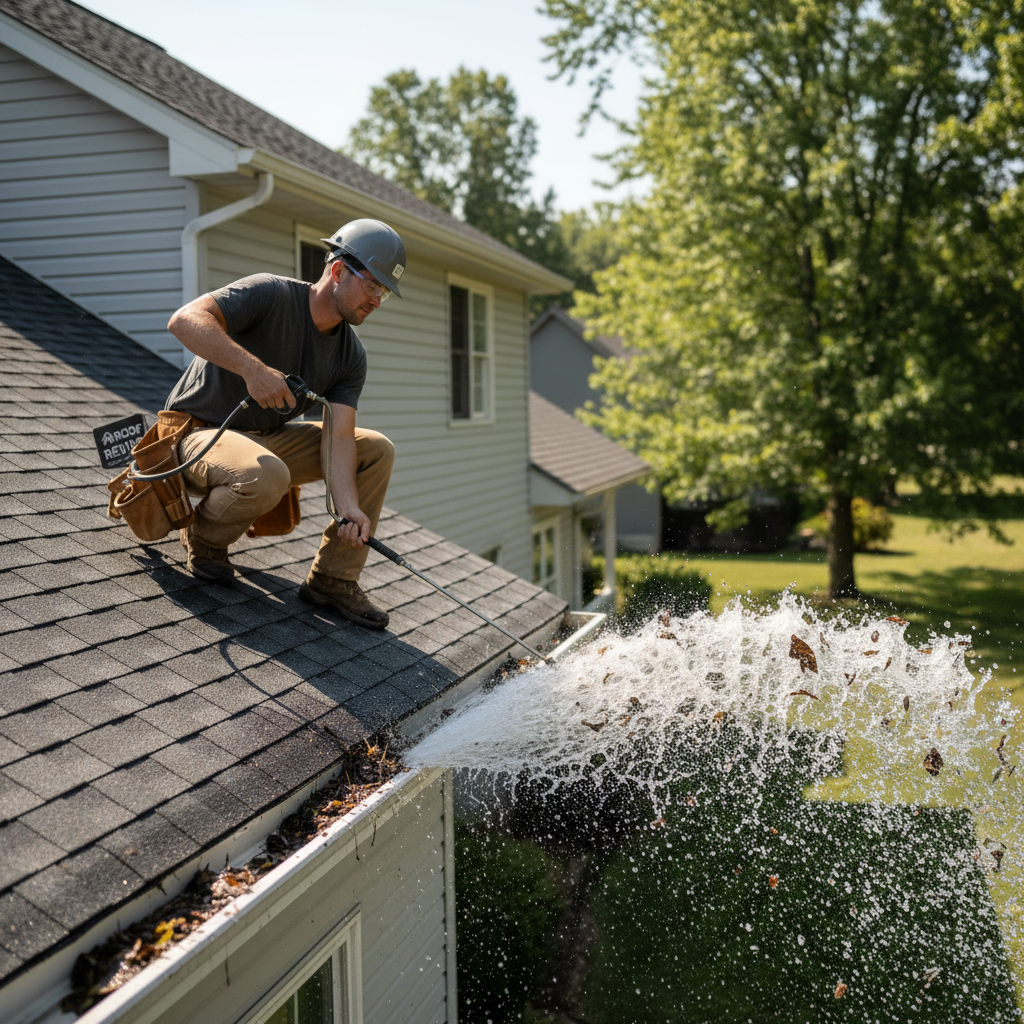
You should expect steady pump noise and a lot of wet runoff. You should not expect a whole lotta racket or piles of debris. Most of the “mess” is controlled water, cleaner, and gutter overflow, not the dump-trailer kind of shingles and nails.
If you’re in Wilmington’s coastal winds or your lot sits close to neighbors, that mess can feel bigger fast, especially with overspray-prone coatings or a crew that’s moving too fast. This guide breaks down the day’s noise pattern and where the water and grime end up, so disruption stays manageable instead of costly.
What you’ll hear, hour by hour

If you’re scheduling around a meeting, a nap, or an anxious dog, roof cleaning noise is easy to anticipate. Once you know the loud windows, it’s less of a surprise and more like steady background sound.
In the first 30 to 60 minutes, expect setup noise: a truck idling and ladders clanking, plus short bursts as they test a pump or sprayer, classic roof cleaning pump noise. After that, most roof cleaning is a steady “engine/pump running” hum with crew footsteps overhead, not constant impact noise (consistent with soft-wash roof cleaning being pump-driven rather than impact-heavy). If you’re bracing for nonstop banging, you’re picturing a tear-off, not a soft-wash day.
Mid-job, you’ll hear on-and-off bursts when they move zones or do targeted rinsing. Near the end, noise spikes for a short stretch as they rinse and pack hoses.
Soft-wash roof cleaning is typically pump-driven, so the sound is more like steady equipment hum than impact noise. Read more in our article: Noise While Working
What Makes the “Mess” (Wet Runoff vs Debris)
Most roof cleaning mess comes from where water and product travel, not from piles of shingles. With roof soft wash Wilmington NC jobs, expect wet siding and gutter/downspout runoff, plus a brief chlorine smell during the dwell window. Anything that looks like “hose it down and call it good” is sloppy, and Angi-style checklists exist for a reason.
With spray-applied coatings, the mess risk shifts to overspray drift, so you’ll see more masking and covering (cars, windows, outdoor furniture) when it’s windy (a common risk noted with spray-applied roof systems). The debris-and-nails nightmare mainly belongs to full replacement, where tear-off creates falling material and cleanup becomes a magnet sweep problem (tear-off is also where dumpsters and falling debris typically enter the picture).
Runoff and overspray control usually comes down to protecting gutters, siding, and nearby windows before chemicals and rinse water start moving. Read more in our article: Protect Gutters Windows Siding
How to prep your home in 30 minutes

A homeowner clears the driveway and cracks a gate before the crew arrives, and the hoses stay off the flowerbeds all day. Ten minutes of roof cleaning prep is often the difference between a smooth job and a slow, messy workaround.
You don’t need to “jobsite-proof” your whole property in and out in a day. You need roof cleaning runoff control for anything likely to get hit by runoff and overspray. Clear a straight access path so the crew doesn’t reroute hoses through beds or squeeze past obstacles. Case in point: the difference between a clean day and a frustrating one is often whether cars and hoses had a clear path.
Do this in order
A quick pre-wet and rinse plan can reduce the risk of chemical spotting on plants and helps keep pets and kids out of the splash zone. Read more in our article: Treatment Safe Pets Plants
-
Move vehicles and clear access: Park cars away from the house (and downwind if it’s breezy), leave the driveway open, and unlock gates so hoses don’t get dragged through beds.
-
Pets and kids: Bring them inside or out of the yard for the whole job window; close dog doors and tell the crew where they are.
-
Plants in the drip line: Give shrubs and beds right under the eaves a quick pre-wet, and pull back anything potted that you’d be upset to see splashed (this matches common softwashing guidance to pre-wet landscaping in the drip-line area).
-
Windows and outdoor items: Shut windows, bring in cushions/toys, and cover grills or patio furniture near downspouts.
-
Coastal-lot specifics: If you’re near Wrightsville Sound or Carolina Beach, assume wind shifts; point out delicate landscaping and ask where runoff will discharge so it doesn’t flood sandy walkways or wash onto a neighbor’s drive, basic coastal roof maintenance.
When to reschedule for lower disruption
Push through a windy or rainy day, and the “quick clean” can turn into extra masking and runoff that doesn’t stay where you want it. Disruption drops when you pick a day that doesn’t turn containment into the main task.
Reschedule if conditions turn “setup-heavy” or “containment-hard”: steady wind (overspray and drift) or heavy rain (runoff you can’t keep in check). If you ignore this, you are basically volunteering for Nextdoor neighborhood posts.
| Reschedule trigger | Disruption risk | Ask the crew |
|---|---|---|
| Steady wind | Overspray/drift; more masking/containment | “What wind speed is your cutoff today?” |
| Heavy rain | Runoff is harder to control; more gutter overflow | “Where will runoff discharge?” |
| Extreme heat + full sun | Faster drying; more rinsing; more water through gutters | “Will you do extra rinsing today, or let dwell do the work?” |
| Thick algae buildup / tight lot / delicate landscaping | Mess risk shifts from nuisance to collateral damage | “What extra protection or rinsing will you do?” |
If algae is heavy or the lot is tight, moving the date can keep a minor nuisance from becoming avoidable collateral.
Ask what wind speed is their cutoff and where runoff will discharge, then confirm whether they’ll add rinsing or let dwell do the work.
Roof not getting any younger? Contact us or call 703-673-6301 to find out where you stand.Rather than rent equipment, book our roof cleaning service in Wilmington and let the crew bring the right pressure and chemistry.