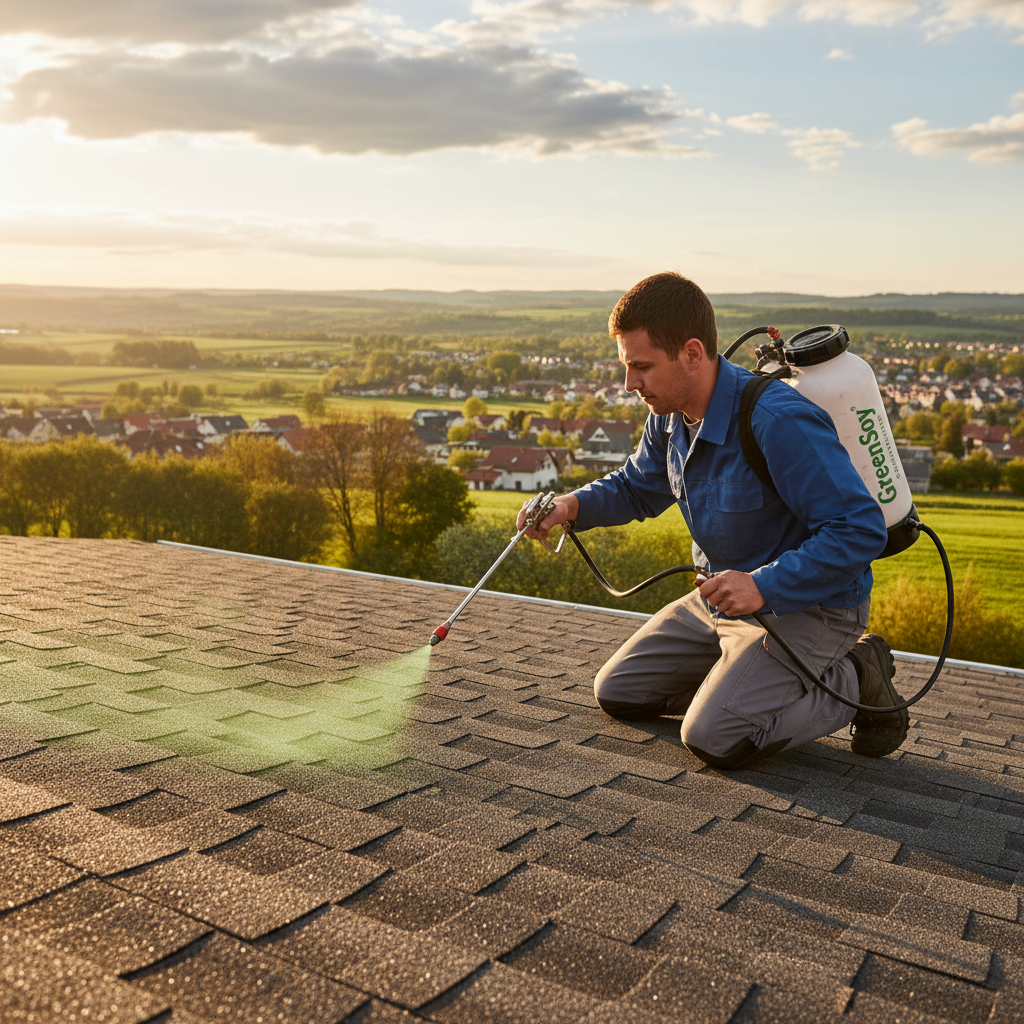
You’re not just asking what’s in the spray. You’re asking where it goes after wind or the next rain.
In most cases, a GreenSoy-style roof rejuvenation can be done without harming landscaping or pets as long as overspray and runoff stay put, a belt-and-suspenders approach that keeps the stuff from trickling through your yard like coffee through a filter. And yes, you should plan for at least some temporary odor. Some providers claim “odor-free” (for example, Fresh Roof Tulsa’s FAQ describes a GreenSoy-based application as completely odor-free), but many homeowners notice a low smell that fades in a couple of days.
Roof rejuvenation safety in practice

“Plant-based” and “non-toxic” sound reassuring, but they can be a whole lotta nothing if drift and runoff can travel on application day. Safe, in a yard-and-pets sense, means you prevent fresh material from landing on leaves or soaking soil at drip lines.
Think in pathways you can control. Consumer Reports home improvement guidance says much the same thing. If you can keep pets and kids’ gear out of the splash zone, “safe” starts to mean something. If you keep runoff off sensitive plantings until surfaces dry, it stays real.
Most pet and plant problems come from access during the wet window, so the dry-time rule matters more than the marketing label. Read more in our article: Greensoy Safe Kids Pets
Pet and Yard Prep Checklist
You book the treatment, go about your day, and nobody has to chase a dog away from the drip line or scrub mystery residue off patio cushions afterward—basic landscaping protection during roof treatment. The difference is a few small moves made before the sprayer comes out.
Even with a bio-based spray, the main way you get into trouble is treating it like a paint job, when it’s really more like setting up cones around a wet cement pour. A little staging keeps fresh material off leaves and out of places pets lick. It also reduces the chance you spend the next day explaining an odd smell.
A clean setup and rinse plan can prevent overspray from drying on patios, siding, and high-contact outdoor surfaces. Read more in our article: Prepare Driveway Yard
| Prep step | What it prevents | When to do it |
|---|---|---|
| Bring pets inside; keep them in (or on leash away from the home’s drip line) until surfaces are fully dry—when can pets go outside after roof treatment depends on that dry time. | Licking, rolling in, or tracking fresh material. | Before crew arrives → until fully dry. |
| Move anything a pet mouths or you touch barefoot (water bowls, toys, beds, hoses, kids’ items, grills, patio cushions). | Contaminating high-contact items and surfaces. | Before spraying begins. |
| Close gates and tell the crew where pets usually slip out, especially in windy yards. | Accidental pet access to the splash/drip zone. | Before spraying begins. |
| Cover sensitive plantings under eaves (new sod edges, vegetable beds, tender ornamentals) or pre-rinse foliage with plain water; rinse again if you notice mist drift. | Mist drift onto leaves and fresh material settling on foliage. | Before spraying; again if drift is noticed. |
| Avoid irrigation the day of treatment; don’t schedule right before a soaking rain if you can help it for roof treatment runoff safety. | Runoff moving into soil at drip lines and garden beds. | Day of treatment; during scheduling. |
| If you see overspray on hard surfaces, rinse it off promptly with water while it’s still fresh. | Residue on patios/walkways that can be tracked or contacted. | Immediately after noticing overspray. |
Will Roof Rejuvenation Leave a Smell?
Plan on a temporary odor, even with GreenSoy-style rejuvenators. Some providers market their formula as “odor-free,” but that claim is usually wishful thinking, and you’ll still notice it for a short window.
What makes smell linger usually isn’t “toxicity.” It’s conditions like still air and a shaded roof that stays damp longer. As an example, consumer reports often frame it in timing, with smell fading over 2–3 days (roof rejuvenation odor how long), so schedule with a little buffer if you’re hosting or you keep windows open a lot; one home-improvement explainer similarly notes odor can dissipate over 2–3 days.
Odor complaints tend to spike when homes schedule too tightly around rain or humidity, because damp surfaces can keep smell around longer. Read more in our article: Roof Rejuvenation Timeline
The Decision Filter Before You Book
A homeowner gets a friendly quote, then finds out later that the crew can’t produce an SDS and the shingle-warranty question gets a shrug. A five-minute Q&A before you schedule is the easiest way to avoid that version of the story.
When basic answers are missing, walk away. Don’t let them spray anything near your gutters and garden beds. “Plant-based” doesn’t matter if they can’t show you what it is or how they keep it off your landscaping.
Ask for the SDS and a plain-English ingredient description (for example, one technical report describes a major rejuvenator as a soy methyl ester based water emulsion). Ask how the treatment affects your shingle warranty language.
Roof not getting any younger? Contact us at Contact us or call 910-241-1152 to find out where you stand.