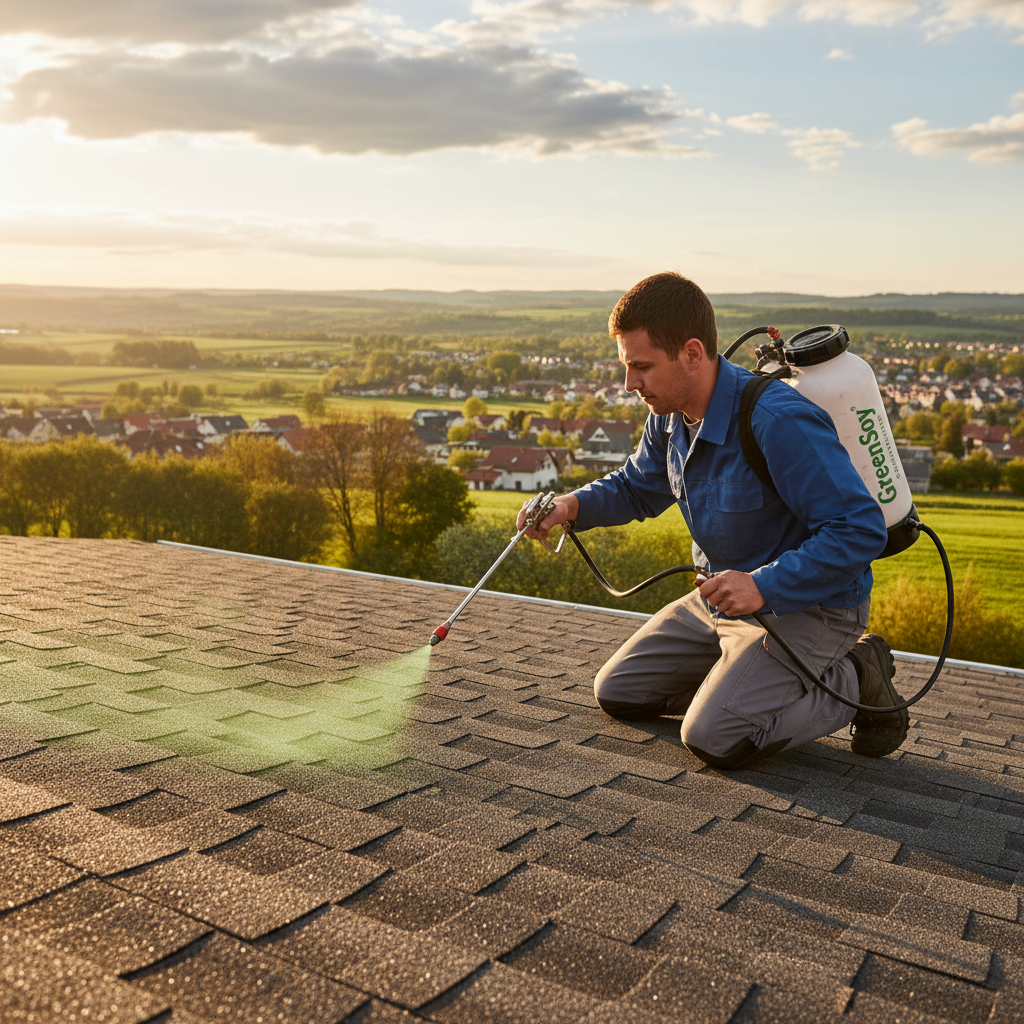
You’re really asking whether anything from the roof can end up on grass, paws, and play areas. For most roof treatments, the highest-risk window is the active job: spray and the final rinse.
The phrase “safe once dry” can be true and still not specific enough for everyday life, especially if you’ve got a dog that licks paws or kids who sit in the lawn. What you need is a clear, job-specific plan, better safe than sorry. Treat it like a pre-flight checklist: what “roof treatment” you’re getting and how the crew protects landscaping from overspray and runoff. This guide walks you through that decision so you can book with confidence, not guesswork.
What “Safe” Means Here

You get one vague promise from a contractor, and suddenly you’re guessing whether “fine” means barefoot-on-lawn fine or just “probably won’t hurt anything” fine.
When a roof treatment company says a process is “safe,” you’re really asking two separate questions: what kind of contact are you worried about (skin contact on feet and paws vs breathing mist) and when could that contact realistically happen, in other words, whether the roof treatment safe for pets claim matches real-life exposure. For most on-site roof treatments, your meaningful exposure window is the application plus dwell time and the cleanup rinse, not “days later” after everything has dried and been diluted by time and weather.
This isn’t a theoretical question, because your routine puts people and pets where residue would land. For example, a toddler rolling in grass or a dog licking paws right after you let them outside creates a very different risk profile than walking through the yard the next afternoon. You don’t need a vague promise like “safe once dry,” especially if you’re trying to confirm a roof treatment safe for kids standard for grass and play areas. Frankly, that kind of non-answer is unacceptable, so use it like a Consumer Reports sanity check: how long to keep kids away after roof cleaning, and what areas are off-limits until the final rinse is done and surfaces are dry.
Which Treatment Are You Getting?
A neighbor books a “roof treatment,” buys time off work, and only later learns the crew plans to do a bleach-based wash before the rejuvenator, with totally different yard rules.
You’ll hear “roof treatment” used for two different things: soft-wash cleaning (often a diluted sodium-hypochlorite mix applied at low pressure, then rinsed; see soft-wash roof guidance) and roof rejuvenation (a bio-based oil treatment meant to recondition shingles). Soft wash roof safe for landscaping depends on the exact mix and controls. They don’t carry the same landscaping or kid/pet precautions, so a generic “safe once dry” answer can mislead you. Mixing them up causes avoidable confusion because the precautions and timing aren’t interchangeable.
Bleach-based roof soft-wash mixes and rinsing practices are usually what determine whether nearby grass and ornamentals see any stress after the job. Read more in our article: Protect Landscaping Siding Windows
The catch: many companies do both. Case in point, they may soft-wash first to remove algae, then apply a rejuvenator. Ask one direct question before you book: “Are you using any bleach-based soft-wash step, and what’s your plant-protection and re-entry time after the final rinse?”
Your Family-and-Yard Safety Plan
After the crew wraps, you shouldn’t be guessing when the yard is usable again. This section gives you a straightforward sequence you can follow step by step.
| Job phase | Keep kids/pets out? | What you do | What the crew should do |
|---|---|---|---|
| Before (prep) | Yes (until job is done) | Move toys and pet bowls under cover; flag vegetable beds and delicate ornamentals as part of roof cleaning overspray landscaping protection. | Pre-soak and rinse plants (a common plant-protection step in bleach-handling guidance; see handling/safety directions). |
| During (spray + dwell + rinse) | Yes | Close windows; keep pets in; don’t use the yard. I’m opinionated here: you should not gamble on this, even if Nextdoor says a crew is “careful.” | Control overspray; manage rinsing so runoff doesn’t pool where people/pets step, this is the core of roof cleaning runoff safety. |
| After (post-rinse) | Yes, until dry | Wait about 30–60 minutes after the final rinse and until patios/grass are dry; then put bowls and toys back; rinse anything that could’ve caught overspray (this timing is commonly suggested in homeowner-facing soft-wash safety guidance; see re-entry guidance). | Confirm final rinse is complete and ground-level surfaces are left wet only with fresh water. |
A simple way to reduce worry is to plan for the same pre-soak/rinse steps and keep-toys-inside routines that reputable crews use to prevent overspray from reaching play areas and pet zones. Read more in our article: Prepare Driveway Yard
The 7 Questions to Ask Before Booking

Industry guidance often puts the real exposure window in minutes, not days: soft-wash working mixes are commonly around 1%–6% sodium hypochlorite, and many homeowner guidelines use 30–60 minutes after the final rinse as a baseline re-entry window.
If you want a real safety answer instead of a sales line, ask these seven questions and listen for specific steps, not “it’s good to go once it’s dry.” Think checklist, not magic spell: (1) What exactly are you applying, and is there a bleach-based soft-wash step or only a rejuvenator? (2) What’s your typical working dilution range for the roof mix, and how do you control mixing on-site so it doesn’t drift stronger? (3) What’s your plant-protection protocol: do you pre-soak landscaping first, and do you do a final fresh-water rinse of leaves and beds? (4) How do you manage runoff, especially at downspouts, so it doesn’t concentrate in one spot on the lawn or flowerbeds? (5) What do you do differently if I have sensitive areas like vegetable beds, new sod, ornamentals, or a koi pond, and should I water anything before you arrive? (6) How do you decide whether wind or rain means you reschedule, and what’s your cutoff for overspray risk? (7) After the final rinse, what’s your written re-entry time, how long to keep pets inside after roof treatment, for grass, patios, and decks, and does any product have a longer “cure” window even if it rinses off?
Roof not getting any younger? Contact us or call 703-673-6301 to find out where you stand.