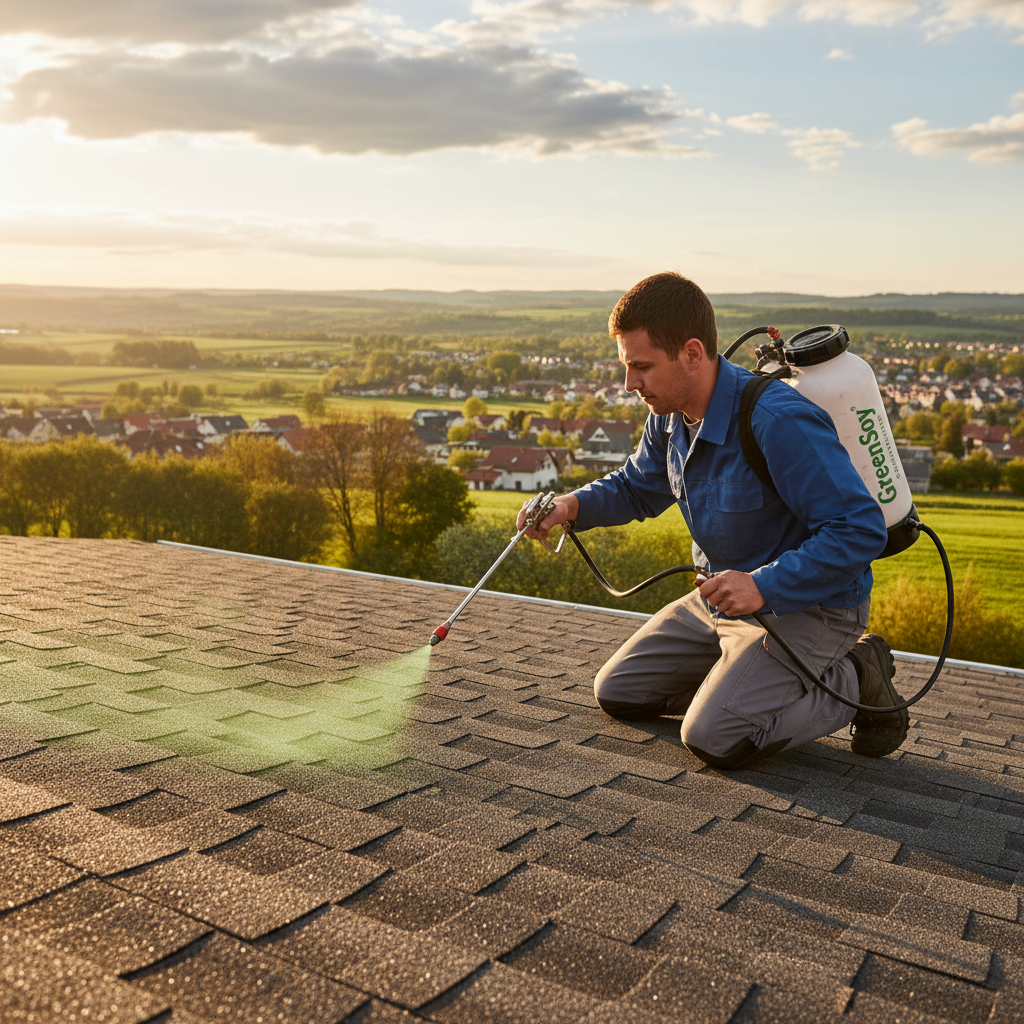
You’re trying to decide whether roof rejuvenation is greener than replacing your roof. It can be, but only when it reliably extends a still-sound asphalt shingle roof’s life without increasing the scope of the eventual tear-off.
What makes this decision hard is that you’ll hear confident claims on both sides, while your roof may look “fine” from the ground and you still don’t want to send tons of shingles to a landfill. The most practical way to judge the environmental tradeoff is to compare two timelines: replace now versus extend then replace later. Then pressure-test whether the extension is credible for your roof’s condition and coastal exposure (sun and wind). This article walks you through that math and the red flags that make rejuvenation a worse environmental bet so you can separate maintenance from marketing, like sorting clean granules from storm debris.
The Environmental Math in Plain Terms

U.S. asphalt shingle tear-offs add up to roughly 7–10 million tons of waste each year—a massive roofing waste reduction opportunity. On that scale, the greenest roof job is often the one you delay safely, not the one you make slightly easier to dispose of.
If you’re trying to be “more environmentally responsible,” don’t let the decision collapse into a single question like “Will they recycle my shingles?”—asphalt shingle recycling vs landfill is a lazy shortcut, not a strategy. That’s only the end-of-life slice. The bigger footprint usually comes from making and hauling new materials and doing the install work again, so a replacement you “recycle” can still be a high-impact move.
To judge rejuvenation versus replacement, map each option onto a timeline: replace now, or extend service life and replace later to reduce roof replacement environmental impact. The environmental win only exists if extension is real. A typical single-layer asphalt roof tear-off runs about 2.5 lb per square foot. On a 2,000 sq ft roof, that’s roughly 5,000 lb (about 2.5 tons) of shingles headed into the waste stream, before underlayment and any wood repairs.
So your math becomes: (1) how much tear-off you avoid today and (2) whether you’re adding extra trips and materials that end up followed by the same replacement anyway. If a treatment buys you 5–6 years, the tradeoff usually works in your favor; if it fails and you replace sooner, you’ve doubled the impact instead of reducing it.
A basic inspection can confirm whether you’re dealing with normal aging or the kind of damage that makes “delay” a bad environmental bet. Read more in our article: Roof Inspection Worth It
When Rejuvenation Stops Being the Greener Option

You can do everything “right” on paper and still lose the environmental bet if a small hidden leak turns into sheathing and insulation replacement. Once that happens, the dumpster gets bigger and the timeline math flips against you fast.
Rejuvenation stops being “greener” the moment delay increases the scope of the eventual job—one of the core roof rejuvenation drawbacks. In coastal North Carolina, that often means moisture getting into the system. You see soft or spongy spots or leaks you’ve “patched” more than once. If water keeps cycling through the roof, you’re not just postponing shingles, you’re kicking the can down the road while gambling with decking and insulation that could turn one tear-off into a bigger materials-and-dumpster event.
The same goes for storm-driven shingle loss. If you’ve had repeated blow-offs or widespread granule shedding, a treatment can become an extra step before the same replacement, plus extra trips and partial repairs. If your plan relies on “it’ll probably hold through one more hurricane season,” you’re not reducing impact, you’re stacking it like wet OSB in a dumpster.
In coastal North Carolina, hurricane-related shingle damage often shows up as lifted tabs, missing shingles, and fast-moving leaks after wind-driven rain. Read more in our article: Roof Problems After Hurricane
A Simple Framework to Compare Scenarios
A homeowner gets quoted a full replacement and a much cheaper treatment, and both can sound reasonable at first. The difference only becomes obvious when you force each option onto a timeline and see what you’re avoiding—or what you’re paying to do twice.
You can make a smarter environmental call without perfect carbon math. You do need to stop treating “rejuvenation” as automatically green. It’s only better when it reliably delays tear-off and new-material work without increasing the eventual scope.
Use a quick two-scenario check based on inputs you can get from a contractor quote for an Owens Corning system and a straight answer from the rejuvenation provider
Your roof area (sq ft): this anchors the waste and material scale. Using the 2.5 lb per sq ft rule of thumb, a 2,000 sq ft roof means roughly 5,000 lb (2.5 tons) of shingles before underlayment and any decking.
Credible added years (Y): don’t accept “restores your roof” as a number—ask directly, how long does roof rejuvenation last. Ask what added life they’ll stand behind for your shingle condition and coastal exposure (sun, salt air, wind).
End-of-life path (likely, not aspirational): ask the roofer where tear-off goes in your county and whether they routinely divert shingles to a recycler. Recycling exists, but it’s not the default everywhere (NAPA reports about 630,000 tons of recycled asphalt shingles used in asphalt mixes in 2021).
Then pressure-test the decision with one question: If the treatment only buys you 1–2 hurricane seasons, would you still do it? If not, you’re not comparing environmental outcomes, you’re betting on best-case timing.
If you can justify a real +5 to +6 years, you’re likely avoiding one major tear-off and pushing out new manufacturing and trucking. If the “added years” are vague, you risk paying for extra service trips and added materials and still doing the same replacement on nearly the same timeline.
Treatments vary widely in how many years they can realistically add, and the honest answer depends heavily on shingle condition and local exposure. Read more in our article: Roof Rejuvenation Results Last
How to Vet Rejuvenation Claims Credibly

If you can’t get past marketing language, you can’t make an environmental decision, because roof rejuvenation effectiveness depends on the treatment actually extending service life. In practice, the best credibility signal isn’t a glossy before/after photo; it’s third-party, standardized performance testing (accelerated weathering and granule-loss type metrics) from a real lab. If it doesn’t pass the smell test on how those results map to an older shingle roof in sun, salt air, and wind, it’s just paint over rust.
Ask the provider to show (not summarize) the independent test report. Then have them answer four specifics: What exactly is being applied (ingredient family), how much (coverage rate), and what the warranty actually covers (leaks vs. “treatment applied” vs. measured performance). If they won’t disclose product details or they dodge exclusions like brittle tabs or widespread granule loss, treat the environmental claim as unproven, because you may just be adding a service visit before the same tear-off.
Your Decision Shortlist: Rejuvenate, Replace, Or Repair-First
You want a choice that feels clean when you look back in five years: fewer surprise repairs and fewer dumpsters. A short shortlist keeps you from over-optimizing one detail while missing the obvious call.
| Path | When it’s the greener bet | When to avoid |
|---|---|---|
| Rejuvenate | Roof is dry (no ongoing leaks/soft decking), shingles still have decent granule cover, provider will put a real number on added years for your coastal exposure | Added years are vague, exclusions include brittle tabs/active leaks/widespread granule loss, or you’re likely to replace on nearly the same timeline |
| Replace | You’re already seeing moisture cycling, repeated wind damage, or widespread brittleness, where delaying can expand the dumpster and materials list | If the roof is still sound enough that credible extension is likely and won’t increase eventual scope |
| Repair-first | One or two fixable details (flashing, a small leak, a few tabs) drive the concern, but you’re not ready to bet on life-extension claims | If the underlying issue suggests system-wide moisture intrusion or repeated storm-driven failures |
Go with rejuvenation when the roof is dry (no ongoing leaks/soft decking), granule cover is still decent, and the provider will commit to a real added-years number for your coastal exposure. Opt for replacement when you’re already seeing moisture cycling or repeated wind damage, since delay can expand the dumpster and materials list.
Choose repair-first if one or two fixable details (flashing, a small leak, a few tabs) drive the concern, but you’re not ready to bet on life-extension claims. Don’t treat “we’ll recycle the shingles” as the deciding factor—use roof rejuvenation contractor questions to get the same level of paper trail you’d demand for GAF shingles and warranty paperwork in many areas where it’s not the default outcome.
Roof not getting any younger? Contact us at Contact us or call 910-241-1152 to find out where you stand.