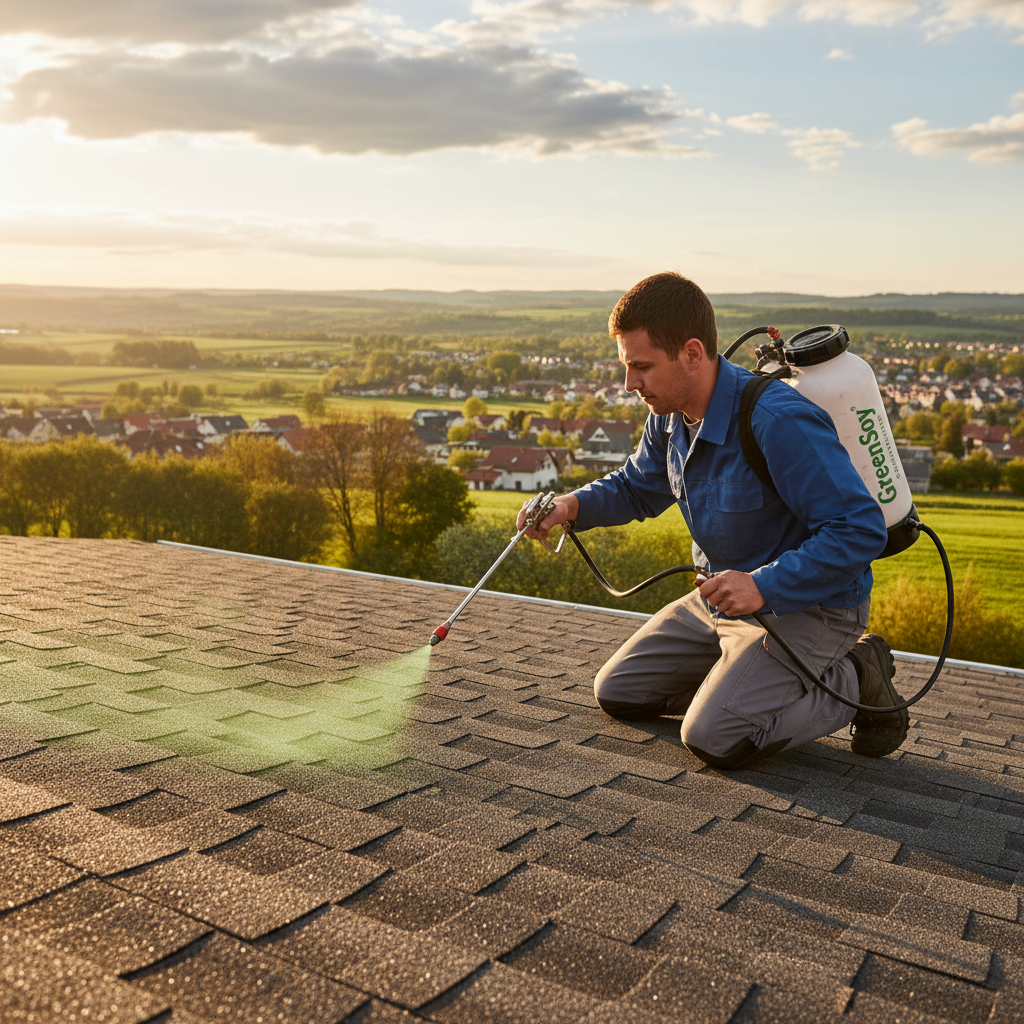
What does roof rejuvenation typically cost compared with replacing an asphalt shingle roof? Typically, rejuvenation runs about $0.50–$1.20 per sq. ft. (sometimes up to ~$1.50), while replacement often runs about $4–$10+ per sq. ft. installed (see roof rejuvenation cost vs new roof).
| Option | Typical cost ($/sq. ft.) | Notes that commonly affect the quote |
|---|---|---|
| Roof rejuvenation (asphalt shingles) | $0.50–$1.20 (sometimes up to ~$1.50) | May bundle prep (algae/moss removal) and small repairs; can vary if it’s spray-only vs a prep+repair package |
| Asphalt shingle replacement (installed) | $4–$10+ | Can swing with tear-off, disposal, steepness, decking repairs, and code/ventilation updates |
If you’re in Wilmington or elsewhere along coastal North Carolina, that price difference can bring real sticker shock, like choosing between a temporary plank bridge and rebuilding the whole span. The catch is that these quotes don’t always include the same work. Rejuvenation pricing often bundles prep like algae removal and small repairs, while replacement pricing can swing based on tear-off and disposal. This guide covers the typical cost ranges for rejuvenation versus replacement. Then it breaks down what drives the spread and when the money is better aimed at replacement.
Typical Cost Ranges: Rejuvenation vs. Replacement

In most markets, roof rejuvenation for an asphalt shingle roof typically prices around $0.50–$1.20 per sq. ft. (sometimes up to about $1.50/sq. ft.), while a full asphalt shingle replacement commonly lands around $4–$10+ per sq. ft. installed (a helpful reality-check is NerdWallet’s cost-to-replace-roof shingles guide). That gap is why these two options rarely compete on price. Consumer Reports wouldn’t treat them as substitutes, and neither should you.
To illustrate this with real math: if your roof is roughly 2,000 sq. ft. of surface area, rejuvenation often comes out to about $1,000–$2,400 (up to ~$3,000 at higher rates), while replacement often comes out to about $8,000–$20,000+. For many homeowners, that’s the difference between a low-thousands maintenance-style bill and a five-figure capital project, before replacement add-ons like tear-off complexity, steepness, or decking repairs move the number further.
Why Quotes Swing (and Which Swings Matter)
On paper, rejuvenation can be ~70–90% cheaper than replacement on the same roof area, but that spread is exactly why small scope assumptions can move your final number by thousands.
If you’re seeing wildly different numbers, do not just kick the tires and label one bid “cheap” and the other “greedy.” It’s because roof pricing has a few big levers. Different contractors may price the same roof using different assumptions. You can’t sanity-check a proposal if you don’t know which trap door you’re actually paying for.
Roof pricing gets far clearer when you understand what a professional inspection actually checks (decking, flashing, ventilation, and active leak points). Read more in our article: Typical Roof Inspection
First, pricing tracks roof surface area, not your home’s square footage. A 2,200 sq. ft. house with a simple gable roof might have far less roof area than a 2,200 sq. ft. house with multiple hips and dormers. That’s why normalizing bids to $/sq. ft. or $/square (100 sq. ft.)—including roof rejuvenation cost per square—often clears up confusion fast.
On replacements, the biggest swing is often tear-off and what’s underneath. One layer that’s lying flat and a solid deck is a very different job than two layers, soft spots, or code-driven re-decking. Case in point: two Wilmington-area quotes can look “inconsistent” until you notice one includes full tear-off and disposal, and the other assumes a clean, one-layer roof with minimal surprises for roof replacement cost Wilmington NC.
On rejuvenation, the swing is whether you’re buying spray-only or a package that includes prep and small fixes. If the invoice bundles algae/moss removal and sealing exposed nails, the price can jump even if the per-foot treatment rate didn’t change. Don’t tell yourself the treatment is expensive until you separate “product application” from “maintenance work” and decide if you’d pay for that maintenance anyway.
The Decision Test: When Rejuvenation Is a Smart Buy vs. a Money Trap
You approve a “quick treatment” now, then the first big coastal storm turns a minor weak spot into a leak that stains drywall and inflates the replacement you were trying to avoid.
Think of rejuvenation as a bridge strategy, not a reset. It’s a smart buy when your shingles are still doing their core job (shedding water) and you’re paying a low-thousands bill to reduce brittleness and extend service life. It turns into a money trap when the roof is already failing in ways a spray can’t change. Coastal Wilmington weather punishes small weaknesses fast. Wind-driven rain exploits small gaps, and salt air accelerates wear on flashing and fasteners.
A simple decision test is: Would you be comfortable betting you’ll avoid leaks and wood repairs for the next 12–24 months with only basic maintenance? If the honest answer is no, rejuvenation usually just delays the same replacement while you risk paying extra for interior damage or deck work.
Use these pass/fail signals during an inspection conversation
-
Good candidate (bridge makes sense): shingles lie flat; no widespread cracking or curling; granule loss is modest (not bare mat showing); no recurring leaks; flashing around chimneys, walls, and vents looks intact; roof has one layer and the deck checks out.
-
Bad candidate (money trap): active or recurring leaks; soft spots; widespread exposed fiberglass mat; significant shingle deformation; failing or heavily corroded flashing (common near the coast); prior aggressive algae “pressure washing” that stripped granules and shortened life.
One more reality check: if you’re trying to satisfy an insurer or a future buyer, the paperwork matters, and Angi (Angie’s List) cost guides won’t save a vague invoice. A rejuvenation invoice that doesn’t clearly state roof condition, repairs performed, and any warranty terms may not move the needle, even if it costs you real money.
How to Compare Estimates and Decide Next

Two bids can look worlds apart because one includes tear-off, disposal, and a decking allowance, while the other pushes those items into future change orders.
Don’t compare rejuvenation and replacement quotes by the total alone. It is a bad habit, even if Nextdoor neighborhood recommendations make it feel normal. You’re really comparing scope, and a cheaper number can mean you’re buying uncertainty. Before you pick a direction, make each contractor put their assumptions in writing.
When each bid lists the same assumptions, it’s much easier to spot hidden costs like decking allowances, ventilation upgrades, and disposal fees. Read more in our article: Compare Roofing Quotes
Ask both bidders: What’s included and excluded? (tear-off and disposal). For rejuvenation, ask what exact product gets applied, what prep is included (algae/moss removal and nail sealing), and what roof conditions make you decline the job. Red flags: vague “secret formula,” no photo documentation of problem areas, or a replacement quote that won’t specify layers, deck contingencies, and ventilation changes.
Roof not getting any younger? Contact us at Contact us or call 910-241-1152 to find out where you stand.