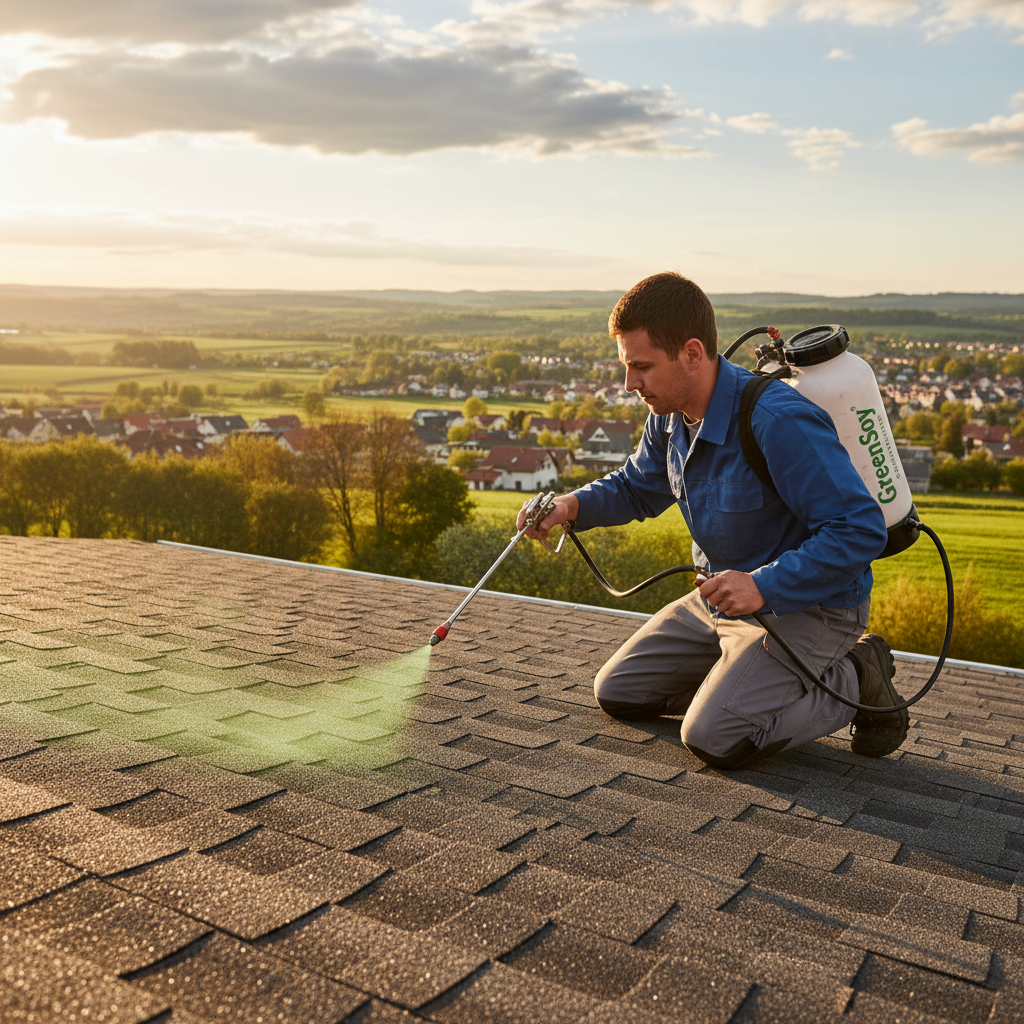
You spot moss on your shingles and wonder if you’re looking at a new-roof bill. In Wilmington’s humid, shade-heavy conditions, moss doesn’t automatically mean your roof is “done,” but it does mean part of your roof is staying damp long enough for growth to take hold.
What matters most isn’t the moss itself. It’s the shingle condition under it, whether that area is staying wet for a fixable reason (like overhanging branches), and whether other warning signs are showing up such as granule loss or lifted tabs. Once you separate “moss exists” from “shingles are failing,” you can choose the most cost-effective next step, without shortening roof life by getting too aggressive with removal.
Moss on Shingles: Red Flag or Nuisance?

Seeing moss on roof shingles doesn’t automatically mean you need a new roof. You should still kick the tires. It usually shows you’ve got a persistently damp zone, often from shade or debris that holds moisture in place. Industry guidance is clear on does moss damage shingles over time (see the Asphalt Roofing Manufacturers Association’s manual at asphaltroofing.org), but the moss itself isn’t a diagnosis.
Instead, focus on what the shingles look like under the growth and what’s causing that spot to stay wet so you can correct it (like overhanging branches). It’s like checking the decking under a loose shingle, not judging the whole roof from the street. If you treat moss as “proof the roof is done,” you’ll overspend on replacement when you might only need targeted maintenance.
A basic inspection checklist can help you separate a damp, mossy patch from broader shingle failure patterns. Read more in our article: Typical Roof Inspection
What Matters Is the Shingle Under It
You climb the ladder expecting a quick green scrape, then realize the real question is what’s been happening to the shingles while you weren’t looking.
Moss is the flag; shingle condition is the verdict. In Wilmington’s humidity, you can have a roof that “doesn’t leak” and still be losing years of life because the mossy area stays wet and the tabs stop sealing flat. That’s why a quick scrape-and-go often backfires. You can rip off granules and break the adhesive seal strips that keep wind-driven rain out.
| What to check | What it can indicate |
|---|---|
| Shingle granule loss or bald spots under/around growth (shiny asphalt showing; heavy granules in gutters) | Accelerated wear; reduced shingle protection in that area |
| Lifted/curling tabs that won’t lie flat (especially on the mossy plane) | Shingles not sealing properly; higher wind-driven rain risk |
| Failed seal strips (tabs flutter in a light breeze or look unbonded along the lower edge) | System not locking down; higher blow-off/leak risk |
| Hints the deck has stayed wet (soft/spongy feel at roof edge; sagging lines; attic staining/musty smells after hard rain) | Ongoing moisture issue; deterioration beyond surface growth |
Age + Symptoms = Replacement Triggers

If you wait for a drip to make the decision for you, you’re often paying after the damage spreads into decking and insulation.
Moss becomes a “new roof” conversation when it’s riding on top of an aging roof and you can also see system-level breakdown. At that point, it’s a money pit. As a rule of thumb, if your asphalt shingle roof is roughly 20+ years old and the mossy plane also shows widespread granule loss or multiple unsealed tabs, you’re usually past the point where cleaning or a small repair resets the clock in any meaningful way (a common inspection heuristic summarized at ). That’s not a close call.
Don’t let “it hasn’t leaked” talk you into waiting for a ceiling stain as your first real proof. Any InterNACHI-style home inspection checklist would flag that thinking. If you have attic staining or damp/musty smells after heavy rain or soft or spongy decking at the edge, treat moss as a symptom of a bigger moisture issue and price replacement, not just cleanup.
In coastal North Carolina, roof age plus humidity-driven wear can shorten the window where cleaning or minor repairs still make financial sense. Read more in our article: Wilmington Roof Too Old
If You Don’t Need a New Roof
You can keep the roof you have and buy back years of service when you stop the wet-shade cycle that lets growth keep returning.
If the shingles under the growth still look sound, your goal is to stop the roof from staying wet, then pick the lightest-touch fix. For instance, if moss is mainly on a shaded porch plane or the north-facing slope, trimming overhangs and keeping valleys/gutters clear can change the outcome more than any chemical.
Choose based on what you see. Consumer Reports home maintenance buying guides basically say the same thing: match the fix to the failure (typical repair cost ranges are summarized by Kiplinger).
The Fastest Ways to Shorten Roof Life
Zinc-strip setups are commonly described as needing re-application or replacement on about a 5-year cycle (as noted by BobVila), so the real payoff comes down to placement and restraint.
The fastest way to turn “moss maintenance” into “roof replacement” is to get aggressive. Scraping can tear tabs and strip protective granules. Pressure washing can break seal strips and drive water where it doesn’t belong (roof-cleaning guidance at highlights these risks). That’s a bad idea. And strong mixes applied carelessly can kill landscaping or corrode metals. If your plan is “make it look clean today,” you can end up buying a roof sooner.
Flip the approach and focus on drying the roof and keeping treatment gentle. That’s worth the squeeze. Clear valleys and gutters, trim back shade where you can, and use soft-wash roof cleaning when you treat growth. If you add zinc, place it high enough that runoff actually reaches the problem area. Otherwise you’ll still get moss and think “nothing works,” like grabbing the wrong product off The Home Depot / Lowe’s roofing aisle and install desk experience.
Soft washing is designed to remove organic growth without blasting away granules or breaking seal strips the way pressure washing can. Read more in our article: Soft Wash Vs Pressure Washing
Roof not getting any younger? Contact us or call 703-673-6301 to find out where you stand.Our roof algae treatment in Wilmington clears exactly this and keeps it from returning next season.