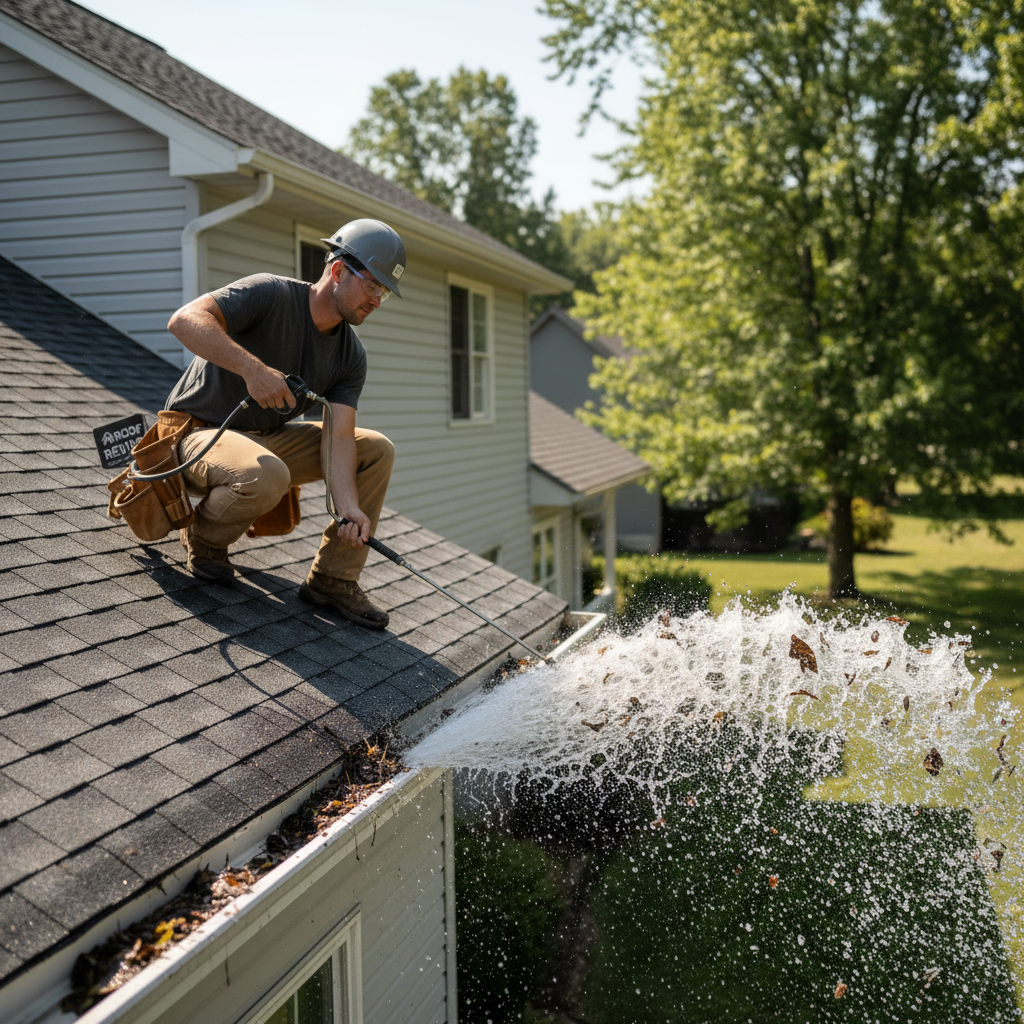
Will your landscaping or driveway get damaged during the work? Usually no, if the crew protects your runoff zones and rinses correctly. The real risk comes from chemical overspray and concentrated gutter runoff, not blasting pressure.
In a roof soft-wash or rejuvenation service, the mix goes on at low pressure. Whatever comes off the roof still ends up somewhere, and it tends to collect in a few predictable exit points. So the stress shows up most under eaves and at downspout outlets, and sun-baked concrete can mark quickly if the mix dries. In the sections below, you’ll learn what causes damage and what protections you should expect from a reputable crew.
What Actually Causes Damage (Pressure vs. Runoff)

You book a “soft wash,” then notice new driveway spots or crispy leaves near one downspout and wonder how that happened if nobody was blasting water, will roof cleaning damage landscaping. The culprit is almost always where the runoff pooled and how long it had to cook in the sun, soft wash roof runoff management matters.
Most property damage worries come from picturing high-pressure water tearing up gutters or plants. In legitimate roof soft-wash or rejuvenation work, the bigger risk isn’t impact force. It’s what runs off the roof and where it sits, and pretending otherwise is just sloppy. Crews apply solution at low pressure (often well under 100 PSI), so your landscaping and concrete are far more likely to get irritated by overspray and runoff chemistry than by “water pressure,” no matter what the Nextdoor neighborhood posts say.
The outcome depends on how strong the solution is and how long it sits. When mist or runoff dries on plants or concrete, staining and burn risk climb fast. The most common hot zone is right at downspout discharge points, because everything traveling through the gutters concentrates there. Put simply, problems come from the wrong chemistry lingering in the wrong spot, not from a stronger spray.
Runoff management usually includes protecting and rinsing gutters, windows, and adjacent siding so concentrated solution doesn’t drip and dry in streaks. Read more in our article: Protect Gutters Windows Siding
The Crew Protections You Should Expect
A homeowner watches one crew spend five minutes wetting plants and rinsing concrete, and another crew skips it to “save time.” A week later, only one of those jobs turns into an awkward text about stressed shrubs and speckled flatwork.
A solid crew manages the whole property, not just the roof, and aims to leave it in better shape than they found it. That usually means they pre-wet landscaping (especially anything under eaves and at downspouts) to protect landscaping during roof work and work in a way that limits drift on windy sides of the house.
Most avoidable staining comes down to timing and cleanup, so you should see a clear plan for both before and after treatment. For example, they’ll watch dwell time so overspray doesn’t sit, roof restoration overspray prevention, then do a deliberate rinse of the runoff zone: plants and the driveway/walkways below roof edges. Push back if their plan is basically “we’ll spray it and let it ride.” That’s how spotting and plant stress appear later, and a quick rinse at the end doesn’t count as a plan.
Simple pre-work steps like moving potted plants and identifying downspout exits can dramatically reduce the chance of spotting or plant stress. Read more in our article: Prepare Driveway Yard
Your Property’s Highest-Risk Zones
Damage and staining don’t happen evenly around your house, so don’t evaluate risk as “my whole yard” or “my whole driveway.” It usually concentrates where runoff exits and where surfaces dry fast.
Downspout outlets are the most common place for concentrated roof runoff to hit landscaping and leave visible stress if they aren’t pre-wet and rinsed thoroughly. Read more in our article: Roof Treatment Runoff Plants
| Highest-risk zone | Why it’s higher risk | Common issue | What to do before work starts |
|---|---|---|---|
| Downspout discharge points (especially into mulch beds) | Runoff concentrates here as everything from the roof funnels to outlets | Plant stress | Flag outlets; ask crew to pre-wet and rinse these areas thoroughly |
| Storm drains, curb cuts, and the path water takes to the street | Overspray and rinse water can slow down and dry on surfaces along the flow path | Spotting | Identify the flow path to the street; ask for controlled rinsing/cleanup so it doesn’t dry in place |
| Sunny concrete (driveway apron, front walk, pool deck) | Heat and wind shorten the window before droplets dry | Marks/spotting | Point out hot, sunny concrete areas; ask for deliberate rinse timing so solution doesn’t dry |
| Delicate or prized plantings under eaves (hydrangeas, new shrubs, potted plants) | Less forgiving than established hedges and turf | Plant stress | Move/cover potted plants if possible; ask for extra pre-wet and rinse under eaves |
Questions to ask before booking roof rejuvenation

Typical application strengths are often described in the ~1%–6% range, and dwell time is commonly quoted around ~15–30 minutes. If a company can’t speak clearly about those basics, it’s hard to trust them with what happens when that mix hits your gutters and runoff areas.
A good company won’t just reassure you; they’ll tell you exactly how they prevent runoff and overspray from becoming driveway spots or stressed plants. If the answers stay vague, you’re not buying “peace of mind”; you’re buying a coin flip, and it’s a small price to pay to get clarity up front.
Ask: “What mix strength are you applying to my asphalt shingles (rough percentage)?” Then ask: “Do you change it based on shade or wind, and can you just give me the straight answer?” Then ask: “What’s your dwell-time window on a day like this, and who’s responsible for rinsing the runoff zone before anything dries?” Finally: “How do you handle gutters and downspouts, especially the outlets, downspout protection during roof treatment, and what do you do to protect the concrete right under them?”
Roof not getting any younger? Contact us or call 703-673-6301 to find out where you stand.