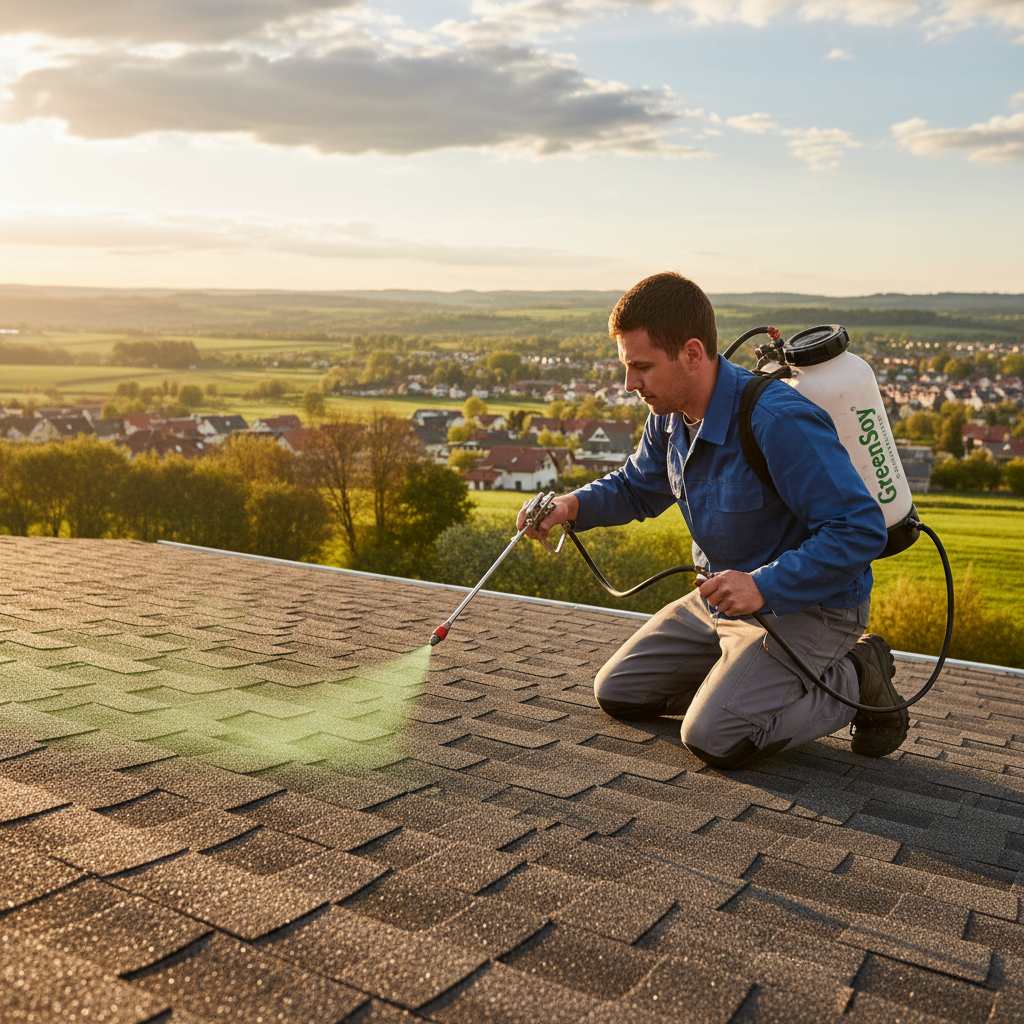
You’ve probably gotten a roof quote that made your stomach drop, even though your shingles still look “fine” from the yard. Asphalt shingle rejuvenation sits in that uncomfortable middle, where it can be real preventative maintenance for the right roof, or a waste of money if you’re using it to dodge repairs or disguise end-of-life failure.
This guide helps you see past the marketing after you give your roof the once-over. You’ll learn what roof rejuvenation can change, and what it can’t. It also covers how to spot the typical qualification window and the coastal North Carolina risks that can change the outcome, like moisture and warranty fine print. By the end, you’ll have a clear framework for roof rejuvenation vs replacement (and repair) based on how your roof is failing, not just its age or a salesperson’s promise.
Asphalt Shingle Rejuvenation: When It’s the Smart Middle Path

You should treat asphalt shingle rejuvenation as preventative maintenance, not a leak fix and not a reset button. It’s most worth considering when your roof is old enough to have started drying out, but still sound enough that you’re not just spraying over structural failure.
You’re usually in range when the roof sits in that 6–20 year band, especially 8–18 years, and the signs point to normal aging instead of active failure. For example, after a Wilmington wind event you might see a few tabs lifted or minor granule loss in the gutters, but you don’t see widespread cracking or active leaks around flashings and pipe boots. If you’re thinking the only responsible move is a full replacement the moment a roofer says “near end of life,” you may be skipping a legitimate middle option when the system is still fundamentally intact.
The Qualification Window That Matters
Two roofs on the same street can get opposite results, even if both owners say they did the “same” rejuvenation. Most of the time, what decides it is the age-and-condition window, not the label on the product.
Most roofs that benefit fall in a practical middle band: roughly 6–20 years old, with many contractors seeing the best results around 8–18. If your roof is only a few years in, the shingles haven’t oxidized and dried out enough for “conditioning” to change much. You’re paying for minimal upside, and Consumer Reports logic says that is a bad buy.
If your roof is too far gone, rejuvenation can’t put structure back into a failing shingle. As an example, once you’ve got widespread cracking or exposed fiberglass mat, you don’t need a treatment. You need a plan for repair or replacement, especially if leaks repeat at flashings and penetrations.
A roof that falls outside the viable age-and-condition band is more likely to disappoint no matter how reputable the product is. Read more in our article: Roof Rejuvenation Eligibility
What ‘Rejuvenation’ Actually Changes—and What It Can’t
You get the best outcome when the treatment solves the problem you have, not the one you wish you had. The catch is that shingle aging and roof-system leaks can look similar from the driveway.
The treatment acts on the shingles, not on the full set of roof components that keep water out. Over time, asphalt shingles dry out and oxidize, and that brittleness shows up as shingles that crack when flexed, lose granules faster, or don’t settle back down cleanly after a wind event. A quality rejuvenation treatment aims to restore some flexibility and slow that “drying-out” behavior, which can reduce breakage during normal expansion and contraction and help shingles tolerate handling during small repairs.
What it can’t do is fix the parts of your roof that actually manage water. When a roof leaks, the cause is often a detail like flashing or a pipe boot rather than a shingle surface that needs conditioning. To illustrate this, a roof in coastal North Carolina can look decent from the yard yet still leak around a chimney cricket or a vent boot after a hard rain and wind driven storm; spraying the field shingles won’t change that failure path.
A good way to keep your expectations honest: if your “problem” is structural or detail-related, you can’t kick the tires and hope a treatment saves you, any more than you can paint over rot and call it solid. If your “problem” is that the shingles are aging but still intact, rejuvenation may buy time. Practically, before you treat, you should be able to say you don’t have widespread cracking/curling or recurring leaks at penetrations and flashings, because those point to repairs or replacement, not conditioning.
The Risk Layer: Chemistry, Fire Rating, Moisture, and Warranties
You save a little up front, then spend the next hurricane season wondering whether you just made the roof harder to dry out or harder to insure. That’s the kind of regret that comes from treating “rejuvenation” like one interchangeable spray.
Because chemistry and application vary, rejuvenation isn’t something you can judge as one uniform service. That matters because at least one major shingle manufacturer has warned (in a technical bulletin on roof coatings and rejuvenators) that applying rejuvenators or coatings of unknown chemistry can create problems like blistering or softening. It may also raise questions about the roof’s fire-resistance classification. If you’re thinking “it’s just a conditioner, so the worst case is I’m only out the money,” that’s not always true.
Moisture is the other issue that catches people off guard. Some products marketed as “rejuvenation” behave more like coatings, and a film-former can trap moisture or slow drying in ways that don’t show up until you hit Wilmington’s humid stretches and wind-driven rain. Case in point: a roof that seemed fine in spring can start showing localized buckling or shingle distortion after a hot, wet summer if the surface can’t breathe the way it used to.
Before you sign off, ask for the exact product name and SDS/technical data, plus written clarification on how it affects shingle and workmanship warranties.
Coastal North Carolina Reality Check

A Wilmington homeowner can think the shingles are the story, until a wind-driven rain finds the one transition that was already marginal. In this climate, the weakest detail usually shows itself before the field shingles do.
In Wilmington and nearby coastal towns, your roof usually doesn’t “age in isolation.” Humidity and shade drive algae and grime that can hide granular wear, and wind-driven rain finds weak transitions first. Rejuvenation may help a sound shingle resist brittleness, but it will not make a marginal roof hurricane-tolerant, no matter what an HGTV-style makeover mindset suggests.
Before you pay for treatment, you should verify the coastal failure points are solid: pipe boots, step flashing, and attic ventilation (because trapped heat and moisture compound shingle aging here).
In coastal storms, small wind-driven entry points often show up first at lifted tabs, flashing edges, and vent penetrations rather than across the shingle field. Read more in our article: Roof Problems After Hurricane
The Decision Framework: Repair, Rejuvenate, or Replace
If you want a clean way to decide, stop asking “Does asphalt shingle rejuvenation work?” Ask one question instead. Is your roof system fundamentally sound, with only age-related shingle brittleness showing up? If the answer is yes, rejuvenation can be a sensible time-buying move. If the answer is no, you’ll get more certainty per dollar by fixing the weak details first or replacing the roof. The trap is paying for a treatment because the shingles “look okay” from the yard, while the real risk sits at pipe boots, step flashing, or a tired chimney transition.
| Path | When it fits | Common signals/examples |
|---|---|---|
| Repair | Roof is mostly serviceable but has fixable, localized failures. | Leaky vent boot after a wind-driven Wilmington rain; a few popped nails; a short run of damaged shingles; flashing that needs resealing or replacement. |
| Rejuvenate | Shingles fall in the viable age range and the roof isn’t actively failing, but you can see aging behavior and want to slow the decline (after addressing any detail leaks). | Brittleness; minor granule loss; contractor discloses the exact product and documentation. |
| Replace | Systemic or structural end-of-life signals (not just age). | Widespread cracking or curling; exposed fiberglass mat; repeated leaks at multiple penetrations/flashings; soft decking; shingle distortion suggesting deeper moisture or heat problems. |
If “near end of life” automatically pushes you to replacement, you’re making the call on wording rather than on how the roof is failing. Your next step is simple: ask an inspector to separate findings into (1) immediate repair items and (2) replacement triggers, in writing.
A written inspection report that separates repair items from true replacement triggers can keep you from paying for the wrong solution. Read more in our article: Roof Inspection Wilmington Nc
Pricing and ROI Math Homeowners Can Trust
Most homeowner guides put rejuvenation around $0.85–$1.50 per square foot, with steep-pitch adders often in the 15–25% range. Those numbers are only useful if you turn them into cost per year, not sticker shock.
Roof rejuvenation pricing often lands around $0.85–$1.50 per square foot, with steep-pitch adders typically around 15–25%. Don’t compare that to a replacement total and call it “cheap” or “expensive” without pencil it out into the same unit. Think of it like stretching a gallon of paint: cost per year you’re realistically buying.
Do the math like this: (treated square footage × $/sq ft, including surcharges) ÷ years of added service you’re planning around. For instance, if you’re treating ~2,000 sq ft at $1.20/sq ft, that’s ~$2,400; if you’re counting on 5 years of extra runway, you’re at ~$480/year. Run the same division on a replacement quote using the number of years you expect to own the home or keep that roof, and you’ll see which option actually costs less per year for your situation.
One catch you shouldn’t ignore: if your roof is steep or complex, that surcharge can erase the “obvious” savings, so ask for the per-square-foot rate and the pitch/complexity adders in writing before you decide.
How to Vet a Rejuvenation Contractor and Process
You want to be the customer who gets documentation, prep, and a clear scope, not the one who gets a mystery product and a vague warranty. The difference usually shows up in the questions you ask before anyone sets foot on the roof.
Before you sign, approach it the way you would any system-level work. It is not someone to “spray a roof.” A legit contractor will name the exact product, explain why it fits your shingle condition, and put the prep and limits in writing.
Ask these questions and don’t accept vague answers:
-
What’s the exact product name, and can you share the SDS and technical data sheet?
-
Is it a penetrant or a coating, and will it change fire rating or trap moisture?
-
What repairs happen before treatment (boots, flashings, lifted tabs, nail pops), and who documents them?
-
What’s excluded from the warranty, and does the shingle manufacturer object to this chemistry?
FAQ
Will Asphalt Shingle Rejuvenation Stop an Active Leak?
Not reliably. If you’re leaking, you almost always need a targeted repair at flashings or pipe boots first, because rejuvenation conditions shingles but doesn’t rebuild the water-management details.
Is It Worth Doing on a 20–25+ Year-Old Roof?
Sometimes, but the odds drop fast as you pass the typical qualification window. If you have widespread curling, exposed fiberglass mat, or repeat leaks at multiple penetrations, you’re usually past “time-buying” and into repair-or-replace territory.
Can It Void My Shingle Warranty or Create New Problems?
It can, depending on the product chemistry and how it’s applied. Don’t proceed unless the contractor discloses the exact product and provides the SDS/technical data, and you’ve confirmed how it interacts with any remaining manufacturer warranty and the roof’s fire classification.
In Coastal North Carolina, Will It Trap Moisture or Make Things Worse?
It can if the product behaves like a coating or forms a film that changes how the roof dries. If you live around Wilmington, push hard on this point and ask whether it’s a true penetrant versus a coating, because humidity and wind-driven rain punish moisture-related mistakes.
Is Rejuvenation Just a Cosmetic “Make It Look New” Spray?
It shouldn’t be pitched that way. A credible treatment aims to restore some shingle flexibility and slow granule loss on a still-sound roof, so judge it by documented product chemistry, prep/repairs, and realistic life-extension expectations, not before-and-after photos.
Roof not getting any younger? Contact us or call 703-673-6301 to find out where you stand.For a local answer instead of a national average, our local roof rejuvenation service quotes free with no pressure.