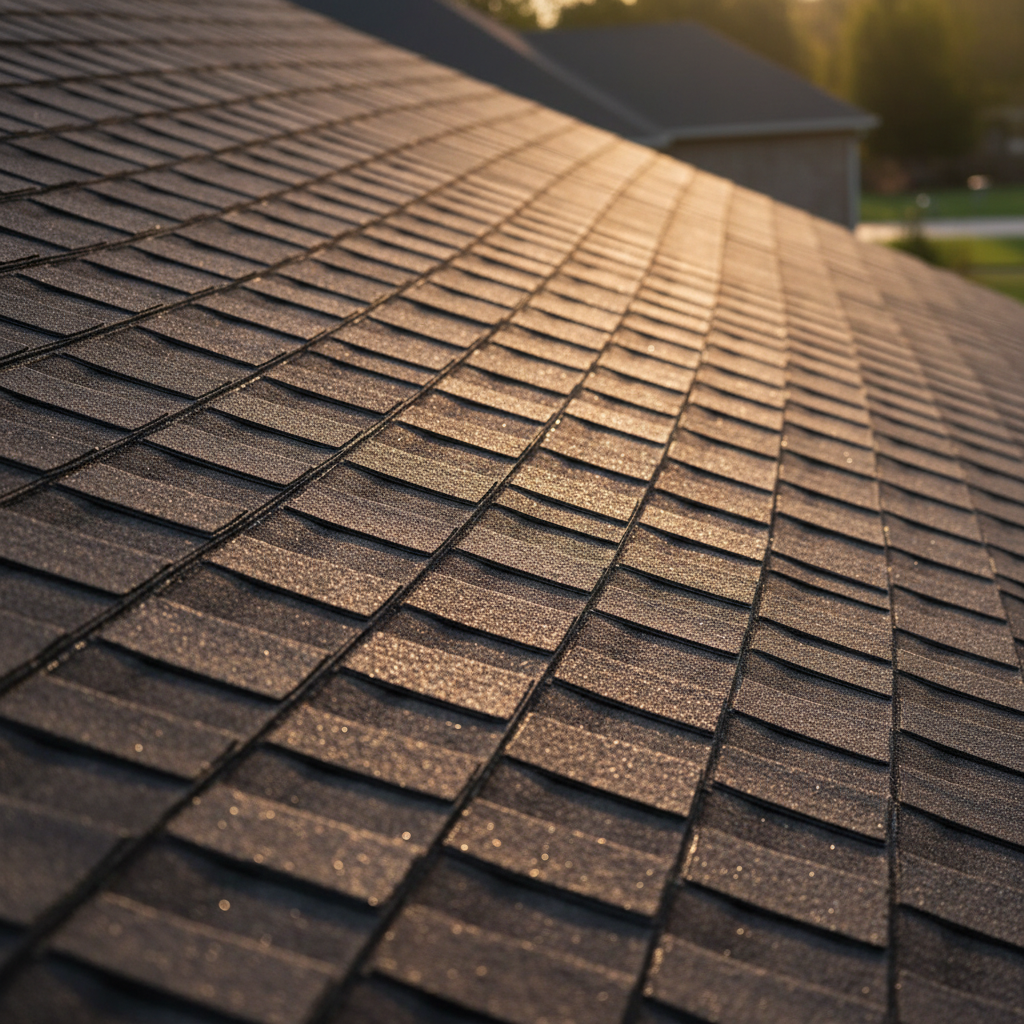
You can tell your asphalt shingle roof is aging but still fixable when the damage is localized, the roof is still workable for repairs, and you have no fresh moisture evidence inside.
If you’re in the Wilmington area, this question gets messy fast because your roof can look worn on one slope and still draw “replace it now” opinions from people who also sell replacements. Instead of letting the shingle’s age or warranty label decide for you, you want a simple, defensible read on two things: whether the roof is still shedding water as a system, and whether a roofer can lift and replace a small set of shingles without the surrounding shingles cracking and turning one loose seam into a ripped tarp. That approach keeps you ahead of it. Use it to choose between targeted repairs or rejuvenation and planning a replacement before wind-driven rain makes the decision for you.
The Fastest “Fixable vs Failing” Call
You can lose weeks (and a lot of money) arguing about age while the next wind-driven rain decides for you. A fast, consistent triage keeps you from paying for a full replacement when a small, contained fix would have held, classic asphalt shingle roof signs of aging.
| Bucket | What you’re seeing on the roof | What you’re seeing inside/attic | Typical next step |
|---|---|---|---|
| Usually fixable | Localized damage (few missing/creased shingles, one flashing detail, small area of granule loss) | No fresh staining after a hard rain | Targeted repairs or rejuvenation; confirm workability |
| Likely failing | Widespread cracking/curling across multiple slopes; repeat repairs that don’t hold | Active moisture signs (new stains, damp insulation, soft decking) | Plan replacement before next wind-driven rain |
| Uncertain | Mixed signals (not clearly localized, not clearly system-wide) | No clear active moisture, or evidence is inconclusive | Decide based on repairability (can shingles be lifted/resealed cleanly?) |
Is my roof repairable or needs replacement? The Repairability Test Most Homeowners Miss

A homeowner in midtown gets three quotes: one says “too old,” one says “brittle test failed,” and one swaps a handful of tabs and re-seals the line without breaking anything. What matters is whether the roof can still be worked without triggering a cascade of breakage.
“Fixable” isn’t really a beauty contest, and it’s not a birthday either, it’s about roof repairability vs damage asphalt shingles. A roof is fixable when a roofer can lift and swap the affected shingles (or rework a flashing line) without the surrounding shingles breaking or losing their seal in a way that creates a bigger problem. To illustrate this, replacing six wind-creased tabs near a ridge vent is a small job if the adjacent shingles flex and re-seal; it turns into a replacement conversation when every lifted edge fractures like a cracker.
What you need to know is whether the shingle field still functions as a sealed system or has become too brittle to handle. That’s why a “brittle test” by itself shouldn’t settle the call; there’s no ASTM standard for field brittleness tests on installed shingles, and a rough test can cause damage (see no ASTM standard for field “brittle tests”). If someone leans on “it failed the brittle test,” require them to connect that claim to clear, system-wide signs the roof isn’t workable. Otherwise they are just kicking the can down the road with a lab-coat verdict.
Ask for a repair-first evaluation framed around workability: “If you had to replace 10 shingles and reflash one pipe boot, can you do it cleanly, and what collateral damage do you expect?” That answer predicts your real options far better than how old the roof looks from the yard.
In coastal North Carolina, a roof that “looks old” can still be a strong candidate for rejuvenation if the shingle field is intact and the roof is still workable for small repairs. Read more in our article: Roof Rejuvenation Vs Replacement
Aging Patterns That Are Usually Fixable
When the wear has a clear pattern, you can often spend a few hundred dollars to stop a problem instead of a few thousand to start over. The trick is spotting the kind of aging that stays contained.
Targeted repair still makes sense when the wear shows up in isolated, explainable pockets instead of across the whole roof. In the Wilmington area, it’s common to see the south or southwest slope look “older” from sun and heat while the north slope still lies flatter and holds granules better. That often points to exposure, and sometimes ventilation balance, rather than a roof that has failed as a system.
You’re also still in fixable territory when the issues are detail-driven rather than field-wide. For instance, you might find a few wind-creased shingles after a Carolina Beach squall or a leaky pipe boot that’s dried and cracked, while the surrounding shingles still seal down and don’t shatter when carefully lifted for a swap. It can look rough from the yard while still remaining workable for clean, contained repairs.
A practical way to sanity-check this is straightforward. If you can point to one or two “chapters” in the roof’s story, not the whole book. Think “a handful of missing tabs near one edge,” “granules collecting under one downspout after a storm,” or “moss only in a shaded corner.” If the only reason you feel forced into replacement is the roof’s age on paper, that is lazy advice, the kind you should question even if it comes wrapped in Angie’s List (Angi) reviews.
Moss and shaded-corner growth can trap moisture and accelerate granule loss, so it’s worth treating early before it turns into broader wear. Read more in our article: Eliminating Moss Roofs
Red Flags That Mean Replacement Is Likely

If you see system-wide breakdown, including wind damage asphalt shingles symptoms, you’re past the “age but fixable” zone. That looks like cracking and curling across multiple slopes, shingles that snap when gently lifted (not just one brittle spot), or repeated patch repairs that fail again after the next Wilmington-area wind-driven rain.
Don’t negotiate with recurring water evidence: new or expanding attic stains and soft decking underfoot. Case in point: if you can trace staining after more than one storm season, rejuvenation and spot repairs stop being cost-control and start being delay. At that point, protect the house first and price replacement seriously. Bite the bullet before the next storm turns a slow drip into a rotted deck.
What to ask an inspector in Wilmington
In coastal North Carolina, a “25-year shingle” often ends up living more like a 15 to 20 year roof under salt air and storm cycles. That makes your questions matter as much as the number on the wrapper.
In Wilmington’s salt air, humidity, and storm cycles, how long do asphalt shingles last in coastal areas often looks more like 15–20 years than what the wrapper suggests. Ask this first: “Based on what you see here, is this roof still repairable?” Then ask: “Can you replace 10 shingles and rework one flashing line without breaking surrounding shingles or losing their seal?”
Then ask: “What did you find in the attic after a hard rain: any fresh staining or ventilation issues that would accelerate aging?” and “Are the marks consistent with our recent storms (wind or hail size for this shingle type), or just cosmetic?” If they cite a brittle test, make them corroborate it with system-wide evidence. Consumer Reports home maintenance guidance has it right: claims without proof are not guidance.
Early, localized leaks around penetrations and flashing are often repairable if you catch them before decking and insulation stay wet. Read more in our article: Roof Leak Repair
Roof not getting any younger? Contact us or call 703-673-6301 to find out where you stand.For Wilmington homes, our free roof check in Wilmington turns worry into a written answer in about an hour.