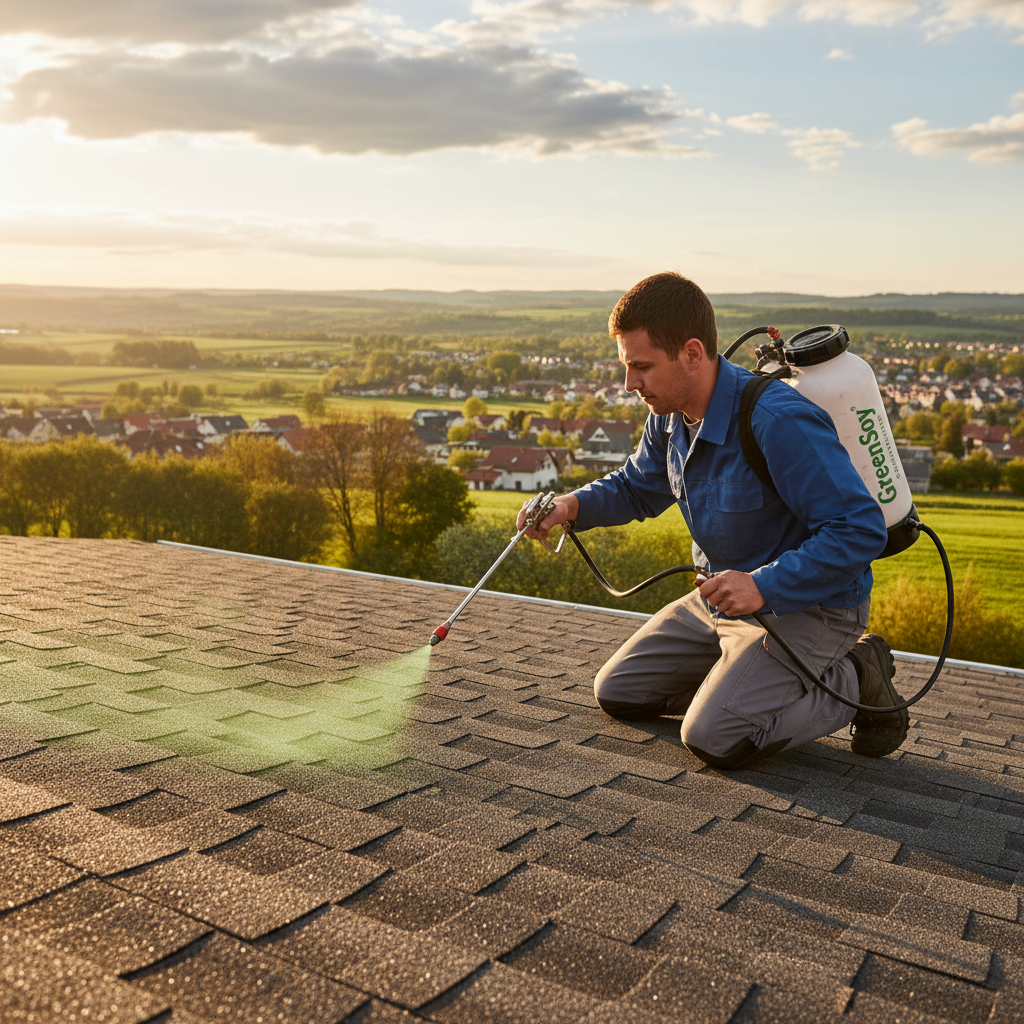
You’re probably searching “coating asphalt” because your shingle roof looks tired or streaked, and you want a cheaper alternative to replacing it. Coating can help in the right situation, but it can also create new problems if you use the wrong type on the wrong roof.
“Coating asphalt” can mean two very different things on asphalt shingles: a film-forming product that lays a membrane on top, or a penetrating treatment that soaks in to restore some flexibility without leaving a thick surface layer. In Wilmington’s heat and humidity, that difference affects how your roof dries after rain and dew, and whether you’re buying time or just buying a fresh look. This guide helps you sort what’s worth considering from what’s likely to backfire, so you can pick treat, repair, or replace with confidence.
Coating Asphalt Shingles: Two Very Different Approaches

When people say they’re “coating asphalt shingles,” they usually mean one of two things. Mix them up and you’re putting the wrong hat on the wrong roof. One approach is a film-forming coating (often acrylic/elastomeric) that creates a membrane-like layer on top of the shingles to change appearance and water-shedding. The other is a penetrating rejuvenation treatment designed to soak into the shingle and restore some flexibility by replenishing oils, without leaving a thick surface film.
A membrane-style coating changes the job your shingle system is doing, pushing it toward a coated-roof behavior. If your shingles already rely on granular texture and ventilation to dry out after Wilmington-area humidity and algae cycles, adding a surface film can change how water moves and how heat builds, even if it “looks new” from the street. You can’t treat “black streaks” as a paint problem and expect the roof to act the same.
Before you compare prices, ask what category you’re being sold:
-
Does it form a visible film on top, or penetrate and leave the surface largely unchanged?
-
What problem is it targeting: biology/soiling (staining, reflectance loss) or material aging (brittleness on older shingles)?
-
What properties were actually tested or documented (flexibility, granule adhesion, sealant performance), not just “looks better”?
When Coating Helps vs Backfires on Coastal Roofs
You pick a product that promises a “like-new” roof, and a month later the same slopes stay damp longer, look dirtier faster, and become harder to repair cleanly. Coastal roofs punish anything that slows drying or disturbs granules, even when the curb appeal improves—so coastal roof maintenance has to prioritize drying and granule integrity.
In the Wilmington area, your roof fails from a mix of heat and humidity, not just “age.” That matters because a coating or treatment changes how the shingle surface interacts with water and sunlight. If your main issue is biological staining and soiling, the problem isn’t only looks: field exposure research in hot-humid climates has shown cyanobacteria growth can measurably reduce a shingle’s solar reflectance over a few years, which can push the roof hotter and keep grime and moisture cycles going. In that scenario, a solution that targets biology and keeps the shingle surface functioning normally can help you stabilize performance, not just color.
In Wilmington’s hot-humid climate, roof algae and black streaks tend to return unless you address the conditions that keep shingles damp. Read more in our article: Roof Algae Causes Coastal Nc
Bottom line: physics still runs the roof, regardless of the installer’s reviews. A film-forming coating that bridges textures can change drying behavior after a coastal downpour or a humid night, especially on roof sections that already stay shaded or face north. You may “refresh” the look and still end up with trapped dampness or faster debris buildup because the roof now dries differently.
A second coastal reality: older shingles don’t respond like new ones. Testing on naturally weathered shingles shows they can lose dramatically more granules when impacted than conditioned samples, which is a fancy way of saying an aging roof is easier to scuff, dislodge, and strip. If you’re counting on coating to be a gentle reset, you need to ask whether the prep and application will accelerate granule loss on a brittle roof.
To diagnose whether coating is more likely to help or backfire, ask yourself:
-
Are you mainly fighting staining/soiling and heat gain, or do you see curling, cracking, exposed mat, or significant granule loss?
-
After rain or heavy dew, do the “problem” slopes dry quickly, or do they stay dark and damp into the afternoon?
-
If you lightly rub a small test spot in a hidden area, do you get minimal granules, or does it shed like sandpaper? That answer should change your plan. It is not a minor detail.
Granule loss is one of the clearest signs that an asphalt shingle roof is becoming too fragile for aggressive cleaning, prep, or film-forming products. Read more in our article: Shingle Granule Loss
The Red-Flag Checklist Before You Treat
A homeowner spends money on a treatment to buy a few more years, only to find the first heavy rain exposes a leak that was already brewing under brittle tabs. The cheapest mistake is paying for a cosmetic reset when the roof needs structural attention.
If any of these show up, pump the brakes before you spend a dollar on coating asphalt shingles or a rejuvenation treatment. You’re not “maintaining” the roof at that point. You’re building a sandcastle right where the tide comes in.
Hard stops to treat:
-
Active leaks or interior water marks, even “only during big storms.”
-
Soft or spongy decking underfoot (especially near valleys, chimneys, or skylights).
-
Brittle shingles with cracking/curling or exposed fiberglass mat.
-
Ongoing granule loss: piles in gutters/downspouts or bald patches you can spot from the ground.
-
Ventilation trouble (stuffy attic or persistent musty odor), since treatments don’t fix heat and moisture load.
-
Previous coatings or multiple roof layers you can’t clearly identify, which can make adhesion and warranty questions messy.
Your Decision Framework for Coating Asphalt
In hot-humid field exposure, biological growth has been shown to cut shingle solar reflectance by about 0.06 over three years, which is a performance hit, not just an eyesore. The smartest choice starts with what’s actually driving heat and moisture cycles on your roof, not the label on the bucket.
If you want a decision you can defend, treat “coating asphalt shingles” like triage, not a routine maintenance add-on. The right move depends on whether your roof’s problem is mainly surface biology/soiling (common in Wilmington humidity) or material breakdown (brittle shingles, failing seals, exposed mat). A treatment can be a smart 70–80% cost alternative when it’s aimed at the right problem. It’s a waste when the shingle system can’t behave normally anymore.
A local roof inspection can confirm whether you’re dealing with surface staining or early material failure that makes coating a bad bet. Read more in our article: Roof Inspection Wilmington Nc
| Decision factor | Treat (penetrating rejuvenation / biology-focused approach) | Repair first | Replace |
|---|---|---|---|
| Roof age band (asphalt shingle roof) | 10–15 years: can make sense if structurally sound and mainly staining/soiling | — | 15–25+ years: only consider treatment if inspection shows integrity and you’re bridging to planned replacement |
| Shingle condition (what you can see and touch) | — | Localized issues (a few slipped tabs, a flashing detail, a small damaged area) | Widespread cracking/curling, exposed fiberglass mat, or obvious bald areas |
| Biology/soiling severity (your real “why”) | Black streaks/grime are main complaint and roof still sheds water well | Address moisture drivers if staining comes with persistent dampness on shaded slopes | — |
| Ventilation/moisture behavior | — | If slopes stay dark and wet long after rain or heavy dew, prioritize ventilation and moisture diagnostics before any coating | — |
| Warranty status (and your risk tolerance) | Get product name and request written confirmation that your specific shingle line and warranty terms allow it | — | — |
| Budget horizon | If you need 3–7 years before a planned remodel or sale, treatment after a clean inspection can be a practical bridge | — | If you need 10+ years of certainty, you’ll usually get that reliability from repair plus replacement planning, not from putting something “over” aging shingles |
What to Demand From Any Contractor or Product

You get a bid that sounds confident, but the real win is walking away with documents you can enforce: warranty language, test results, and clear exclusions. When the paperwork is solid, you’re not guessing how the roof will behave after the first Wilmington summer.
If you’re going to spend money “coating asphalt shingles,” don’t let the conversation stay in the lane of before-and-after photos. You’re buying a change to how an aging roof system behaves, and the wrong product or sloppy prep can speed up granule loss, change drying, or create a mess you can’t undo without replacing the roof.
Use these as must-answer verification questions before you sign anything. Kick the tires first.
-
Warranty terms, in writing: Ask, “Will this affect my manufacturer warranty, and will you give me written confirmation for my specific shingle brand and warranty terms?” Don’t accept “we’ve never had an issue” as proof.
-
What was actually lab-tested (and by whom): Ask for a lab report or summary and what properties were measured, not just “tested in a lab.” For example: flexibility, granule adhesion, and sealant performance.
-
Fire and code implications: Ask, “Does this change the roof’s fire rating or classification, and do you have documentation?” A film-forming coating is the bigger concern here because it adds a new layer to the system.
-
Prep and cleaning specifics: Get the exact cleaning method (low-pressure wash vs high-pressure) and drying time. In Wilmington humidity, “spray today” without a real dry-out window should make you rethink the whole bid.
-
Exclusions and realistic life-extension range: Ask what conditions void their guarantee (brittle tabs, active leaks, prior coatings, poor ventilation), and demand a range like “X to Y years” tied to your roof’s current condition, not a single best-case number.
FAQ: Coating Asphalt Shingles in Wilmington
Will Coating or Treating My Asphalt Shingles Void the Manufacturer Warranty?
It depends on your shingle brand, product, and warranty terms, so don’t rely on verbal reassurance; get the details in writing, because guessing here is a gamble. For context (not a substitute for your own paperwork), see this lab testing summary example of the kind of documentation you can request. Get the exact treatment name and ask for written confirmation tied to your shingle line and warranty, since some providers claim manufacturers allow certain penetrants but your paperwork controls.
Do Roof Coatings “Trap Moisture” in Wilmington’s Humidity?
They can, especially if you’re applying a film-forming coating that changes how the shingle surface dries after dew, rain, and shade cycles. A penetrating rejuvenation is less likely to change drying behavior, but you still need proper ventilation and a roof that already sheds water correctly.
Will Algae and Black Streaks Come Back After a Treatment?
Yes, they often return over time in coastal North Carolina because the environment that feeds staining doesn’t go away. The practical question is whether the approach includes algae control and whether you’ve reduced the drivers (persistent shade, slow-drying slopes, debris that holds moisture).
Will Insurance Cover Roof Coating or Rejuvenation?
Usually not as a maintenance upgrade; most policies pay for covered damage, not elective life-extension. If you’re treating after a storm, take photos and ask your carrier how they want maintenance documented so you don’t create confusion later.
Can I DIY a Roof Coating on Asphalt Shingles?
You can buy products, but DIY is where people create expensive problems: too much pressure washing, the wrong chemistry for shingles, overspray, or a film that changes drying and makes future repairs harder. If you still want DIY, at least confirm the product is specifically rated for asphalt shingles and that it won’t change fire classification or violate local code.
Roof not getting any younger? Contact us or call 703-673-6301 to find out where you stand.