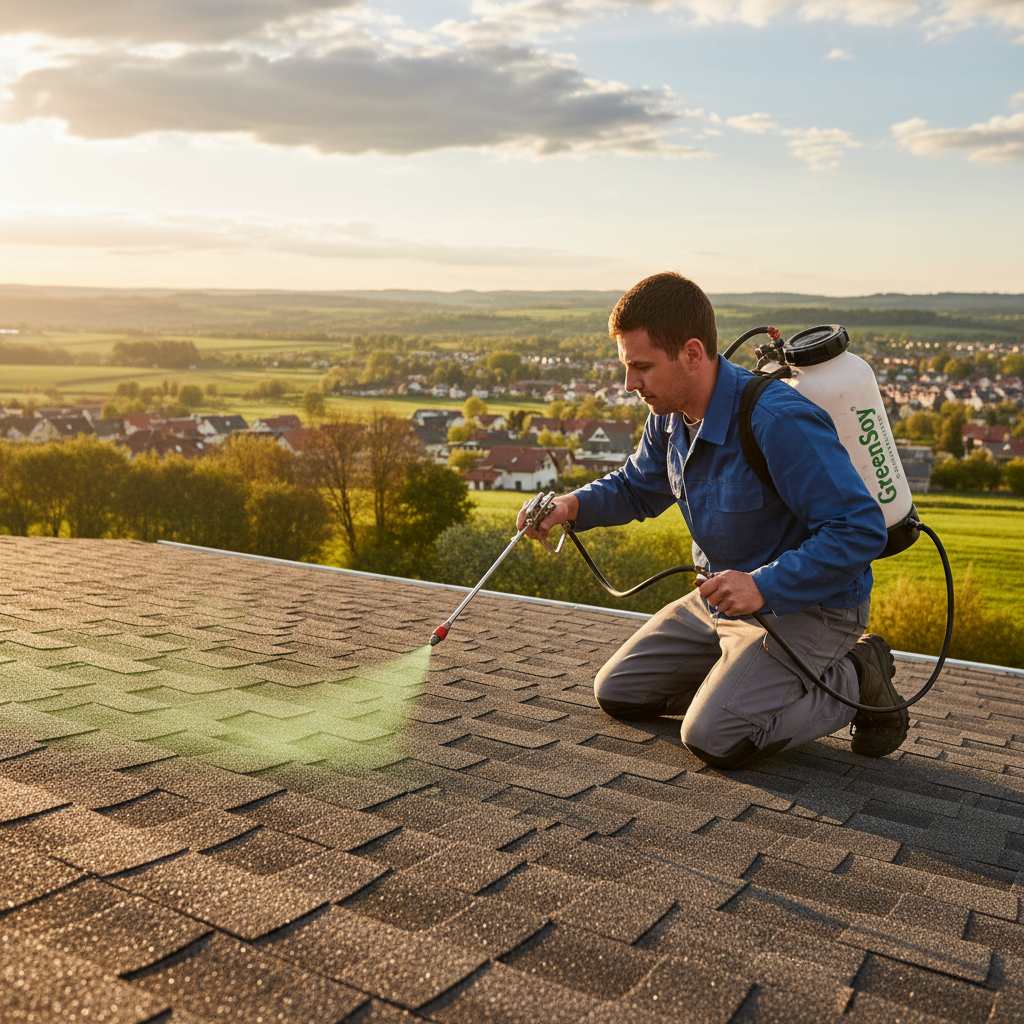
Does roof rejuvenation work? Yes, if your asphalt shingle roof is still watertight and serviceable. It can slow shingle aging and help you buy time.
If you’re in coastal North Carolina and staring at replacement quotes while your roof still looks “fine,” let’s see what we’re really dealing with: paying for a spray when your roof is already failing as a system is like painting a canoe with a crack in the hull. You’ll get a better answer by focusing on candidacy first: whether you have active leak paths at flashing or vents that a treatment can’t fix. From there, you can judge claims the right way, by what “working” means (measurable improvements like flexibility and slower granule loss) and by what the warranty covers when the next storm hits.
The Only Question That Matters: Is Your Roof Still Serviceable?
You can spend thousands on a treatment and still end up chasing leaks a month later if the problem is the roof system, not the shingle chemistry. The fastest way to lose money here is skipping the one gate that decides whether rejuvenation has any chance.
Roof rejuvenation only has a real shot when the roof is still performing, but the shingles are trending dry and brittle. If your roof is already failing as a system, rejuvenation doesn’t “buy time,” it just buys uncertainty, and in coastal Wilmington storms that can get expensive fast.
-
No active leaks
-
No widespread granule loss exposing the fiberglass mat
-
No obvious shingle blow-offs
-
No chronic flashing problems after hard rain
-
No chronic pipe-boot problems after hard rain
What you can do differently now: stop comparing quotes until you’ve confirmed candidacy. Ask for an inspection that answers one binary question: “Is this roof currently watertight and repairable with small fixes, or is it functionally done?”
A proper candidacy check usually includes documenting early leak indicators and the vulnerable transitions around penetrations and flashing. Read more in our article: Roof Candidate Check
What “Working” Means for Roof Rejuvenation

Roof rejuvenation “works” when it measurably slows how fast your shingles are aging, not when your roof simply looks darker from the street. Think Consumer Reports, not curb appeal. The outcomes that matter are physical: shingles bend with less cracking (flexibility), they shed fewer granules over time (granule retention), and the roof keeps shedding water the same way it did before treatment.
What you should demand is proof tied to your roof, not marketing: a documented flexibility check (before/after or at least a baseline) and confirmation you have no active leak paths at flashing or vents. When the pitch is mostly about looks, you’re paying for optics, not performance.
What the Best Lab Testing Supports
In one widely shared PRI accelerated-weathering summary, treated 15-year-old shingles lost about 0.67 g of granules versus 1.43 g for untreated controls after 1,500 hours. That kind of difference matters, but only if you understand what it does and does not prove about your roof.
The strongest evidence for roof rejuvenation comes from industry-neutral guidance and third-party accelerated-weathering tests on real, aged shingles, where treated samples get compared against untreated controls. In one widely circulated PRI Asphalt Technologies summary, 15-year-old shingles were run through 1,500 hours of accelerated weathering, and the treated samples showed notably less granule loss than untreated ones (about 0.67 g vs. 1.43 g). That kind of result supports a narrow claim: on aged asphalt shingles, a treatment can reduce wear signals in controlled conditions, which maps to the idea of slowing the brittleness-and-shedding cycle you’re trying to interrupt.
But don’t let “lab-tested” turn into “storm-proof” in your head. Does it pass the smell test? These tests don’t prove your roof won’t leak or won’t have flashing failures in a Wilmington wind-driven rain. They also don’t show how the product performs when the roof already has mechanical damage or bad nailing. Even if the shingles respond well, the treatment won’t fix the specific opening where water is getting in.
What you can do differently when you’re vetting a provider: ask for the specifics behind the lab claim, not the slogan. For example, ask which tests they’re relying on (ASTM-style methods, if applicable), whether results were treated-vs-untreated controls on comparable aged shingles (not just “before/after” photos), and which performance metric they’re selling you on: flexibility, granule retention, or something else.
Coastal NC Reality Check: Algae, Humidity, and Salt Air
A Wilmington homeowner sees black streaks after a wet summer and assumes the roof is at end of life, then gets pushed into the wrong fix. Coastal roofs can look worse than they perform, and the weak points are often the metal and penetrations you cannot see from the yard.
In Wilmington-area humidity, a roof can look “shot” when it’s mostly dealing with biology and climate, and Nextdoor panic posts do not change that. Algae streaks don’t automatically mean shingle failure, and rejuvenation only addresses them when cleaning and prevention are explicitly part of the scope. Salt air and constant moisture also age the roof system around the shingles. It ages the flashing, pipe boots, and fasteners first.
What you can do differently: separate “looks bad” from “wearing out.” Ask what they’ll do about algae (cleaning method and prevention), and have them call out any coastal weak points they’re not fixing, like rusting metal at penetrations or loosened flashing that wind-driven rain can exploit.
Black streaks are often algae rather than shingle failure, and treating the cause can prevent unnecessary replacement pressure. Read more in our article: Black Streaks Roof Shingles
When Roof Rejuvenation Doesn’t Work (and Can Waste Money)

Rejuvenation doesn’t work when your roof has crossed from “aging” into “failing,” and at that point you’re basically bailing water with a coffee mug. With an active leak or known bad flashing at a wall or chimney, the water path stays open even after treatment. The same goes if the decking feels soft underfoot, you see widespread curling or cracking, or shingles have lost so much granule cover that you’re close to exposed mat.
If you’re hoping a spray will turn any of those into a few safe hurricane seasons, I’m not trying to get sold. Reset that expectation now. What you can do differently: spend the money on a targeted repair and a replacement timeline, and ask the inspector to show you, in person, the specific failure points that make the roof non-rejuvenatable.
If your shingles are already too deteriorated, added slickness or a darker appearance won’t change the underlying end-of-life mechanics. Read more in our article: Shingles Too Far Gone
How to Vet a Provider so “Does Roof Rejuvenation Work” Isn’t a Gamble
You want a provider who can tell you “no” quickly and confidently, and back it up with documentation. When that happens, the decision turns from a leap of faith into a controlled maintenance call.
Most disappointment comes from hiring a company that sells “rejuvenation” like it’s a roof outcome, instead of a conditional maintenance step, and searching “roof rejuvenation near me” isn’t a substitute for that reality. You aren’t paying for a cosmetic upgrade. You’re paying for a process: confirm the roof is still serviceable, fix small failure points, then apply a product with credible evidence behind the specific claim they’re making (usually flexibility and slower granule loss). If a provider can’t explain their boundaries, you’ll end up financing their optimism.
| Vetting area | Ask the provider | What you want to hear | Red flag |
|---|---|---|---|
| Product transparency | “What exactly are you spraying, and will you provide the product name and SDS?” | Product name + SDS shared without hesitation | Won’t disclose product/SDS |
| Independent evidence | “Which independent testing are you relying on, and what was the comparison?” | Treated vs. untreated controls on comparable aged shingles; names the lab | Only “before/after photos” or vague claims |
| Claimed benefit | “What performance metric are you selling me on?” | A clear metric (flexibility or granule retention) | Pivots to appearance (“looks new”) |
| Pre-treatment inspection | “What do you inspect before you’ll treat a roof, and will you document it?” | Photos/notes on penetrations, flashing transitions, leak indicators | No documentation; superficial walk-around |
| Refusal criteria | “What makes a roof a ‘no’?” | States boundaries (active leaks, soft decking, exposed mat, widespread cracking/curling, chronic flashing failures) | “We can treat almost any roof” |
| Warranty reality | “What does your warranty actually cover, in plain language?” | Narrow coverage explained; doesn’t promise no leaks | Implies leak/storm protection without specifics |
| Repairs & pricing scope | “What repairs are included before treatment, and what’s extra?” | Written scope of included repairs vs. add-ons | Treatment-only quote; repairs always “later” |
Warranty and Fine Print: What You’re Really Buying
A neighbor hears “5-year warranty” and assumes the next leak is covered, then finds out the hard way what the exclusions actually say. The fine print is where most rejuvenation promises shrink.
Most roof rejuvenation warranty language doesn’t promise what you instinctively want: “no leaks” or “this roof is good for X more years.” They usually guarantee something narrower, like maintaining shingle flexibility for a set period, and the fine print is a trapdoor if you don’t read it. They often exclude leaks, granule loss, and installation or pre-existing roof defects. For example, Roof Maxx’s published warranty centers on flexibility for 5 years and explicitly says it’s not a warranty against granule loss, leaks, or faulty installation.
What you can do differently: before you sign, ask one blunt question and don’t let them dodge it: “If I get a leak in the next storm season, what exactly happens and what do you pay for?” If the answer is “we’ll inspect and sell you repairs,” then you’re buying a conditioning treatment with a limited performance claim, not insurance against roof failure.
Cost Decision: Postpone vs Replace, With Coastal NC Price Sanity-Checks
If rejuvenation is priced as “80–90% less” than replacement, it can feel like a no-brainer until you translate it into dollars per year of usable roof. The math is what keeps a “cheap” delay from becoming an expensive detour.
Price rejuvenation against replacement as purchased time, not as a substitute for a new roof. In coastal NC, you’ll commonly see rejuvenation quoted around $0.50–$1.20 per sq ft, while a full asphalt replacement often lands around $4–$12+ per sq ft installed depending on tear-off, steepness, access, and what gets replaced around the edges. That gap exists because rejuvenation is meant to postpone a big disruption and a big check, not erase the need for replacement.
Here’s the sanity check that keeps you from overpaying: kick the tires on it. Convert everything into “cost per year you’re realistically buying,” then sanity-check the provider with BBB basics too. At $2,500 for 2 added years, you’re effectively paying $1,250 per year. At 5 added years, that drops to $500 per year. Now compare that to the value of replacing now: fewer patch-and-panic cycles, cleaner insurance conversations after storms, and avoiding the scenario where you pay for rejuvenation and still fund a replacement soon because a flashing or decking issue forces the timeline.
What you can do differently before you sign: ask the provider to write down (1) your roof’s square footage and their exact $/sq ft, (2) the specific repairs included before treatment, and (3) the range of added years they’re willing to stand behind in plain language, separate from the warranty. If they won’t talk in years at all, you’re not making a cost decision, you’re buying hope.
FAQ
Will Roof Rejuvenation Stop Leaks?
Not by itself. If water is getting in at flashing, a pipe boot, a nail pop, or a cracked shingle, you need a repair to remove the leak path, and a rejuvenation treatment only makes sense after the roof is watertight.
Is Roof Rejuvenation Basically Just a Roof Cleaning?
No, but some providers bundle cleaning with it, which can make the roof look “new” even if the performance change is modest. Ask them to separate line items: what’s cleaning/algae treatment versus what’s the rejuvenation product and what it’s supposed to improve.
How Often Do You Need to Re-Treat?
Many programs frame results in multi-year intervals, and some warranties focus on maintaining shingle flexibility for a set term (often around five years) with re-treatment tied to a flexibility standard. You should ask what triggers a re-treatment, what it costs, and what happens if your shingles fail for reasons the warranty excludes.
Will Insurance Care, or Could This Hurt a Claim?
Insurance usually cares whether the roof is serviceable and properly maintained, not whether you sprayed a conditioner, so keep documentation: inspection photos and repair notes. Don’t treat rejuvenation as “coverage” for storm damage; if the roof is marginal, it can still get flagged after a wind or hail event.
Does Rejuvenation Help With Resale?
It can help if you can show a buyer (and their inspector) that the roof was inspected, repaired where needed, and maintained, because that reduces perceived risk. If you sell it as “this roof won’t need replacement for years,” you’ll create problems the moment an inspector spots aging details you didn’t fix.
Roof not getting any younger? Contact us or call 703-673-6301 to find out where you stand.That’s exactly the problem our Wilmington roof rejuvenation service was built for, at a fraction of replacement cost.