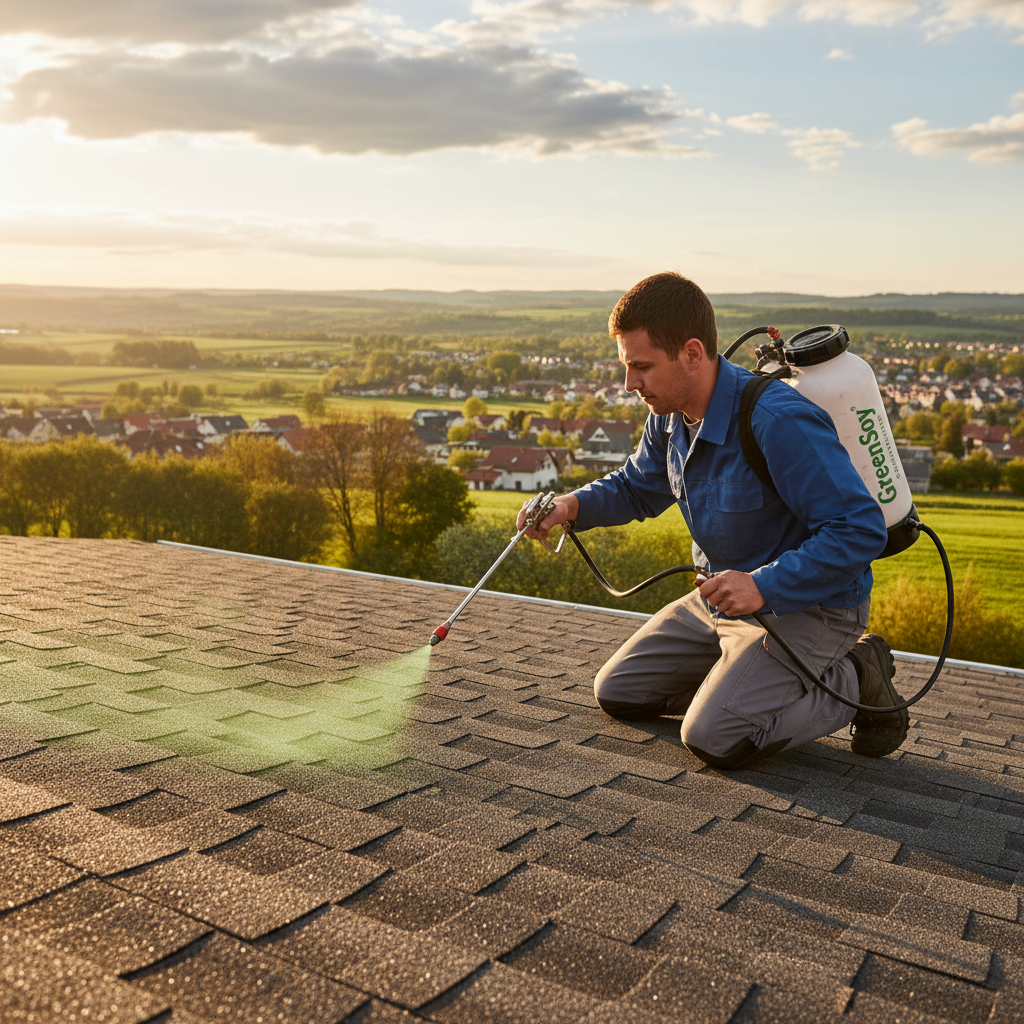
You want a homemade exterior house wash solution that removes the green film and mildew without damaging your siding or your plants. The safest approach is to start with a simple soap-and-water wash, then only step up to a measured bleach-and-water mix when you’re dealing with true biological growth.
In coastal North Carolina, the tricky part isn’t finding “a recipe,” it’s matching the mix and method to what’s on your walls: light coastal grime, stubborn algae or mildew tucked into laps, or oxidation that looks like staining but won’t wash off clean. In this guide, you’ll learn how to test and diagnose what you’re seeing, why dwell time and cling matter more than making the solution stronger, and how to apply and rinse to avoid streaks and water intrusion, especially if you’re tempted to use a pressure washer for reach.
Start With the Lowest-Risk Mix
If you haven’t tried a homemade house wash solution that’s plain soap-and-water yet, start there. A lot of what reads as “algae” from the curb is really salty film and pollen. It often lifts with a little elbow grease, particularly on sun-baked vinyl and painted trim. By way of example, if the stain lightens quickly when you scrub a small patch, you’re likely dealing with surface dirt. Think of it like beach sand on a windshield, not moss in a crack.
-
Mix warm water with a small squirt of dish soap
-
Choose a shaded area and do a 2-by-2-foot test spot
-
Apply with a soft brush or microfiber mop
-
Rinse with a garden hose
-
Check the cloth for chalky white residue and whether the “stain” changes
The Safe Bleach Rule (and Why)

If you use bleach in a bleach house wash solution, there’s one hard line you don’t cross: don’t mix household bleach with other cleaners or disinfectants. That includes common DIY “boosters” people pour into the same pump sprayer house wash solution for convenience, like vinegar (acid), ammonia, toilet bowl cleaner, or leftover multipurpose cleaners. The risk isn’t theoretical. When bleach meets acids or ammonia, you can create toxic gases (including chlorine gas/chloramines) that can burn your eyes and lungs fast, especially if you’re spraying near a doorway or under an eave.
This matters because the internet often nudges you to treat a DIY exterior house wash like a magic recipe where more ingredients means more cleaning power, and that is a terrible idea. In reality, more ingredients just makes the chemistry unpredictable and harder to control. It is the opposite of a Consumer Reports kind of testable process. Even if nothing “gasses off,” mixing products can change how the solution behaves on the surface, and higher-strength bleach solutions can also corrode metals and damage finishes. Plus, bleach gets used up by grime or organic film, so skipping a basic rinse or wash step can make you reach for a stronger mix that creates more risk without better results (the CDC notes hypochlorite solutions can be inactivated by organic matter). CDC: hypochlorite and organic matter.
What you do differently: if you choose to use bleach, keep it as a simple, standalone bleach-and-water mix (at a controlled dilution) and treat everything else as separate steps. Use soap-only cleaning in its own bucket or sprayer and rinse well. Then apply any bleach solution and rinse again. If you can’t confidently separate products and tools, you’re better off staying with soap-and-water or using a single ready-to-use exterior cleaner that doesn’t require you to play chemist.
How House-Wash Chemistry Works
A homeowner hits a north wall twice with a “strong” mix and still sees green shadowing because how to remove green algae from house siding comes down to getting the solution to stay put long enough to work.
When homemade exterior house wash solutions fail, it’s usually because the process is wrong, rather than the ingredients. Instead of adjusting technique, people jump straight to higher strength mixes. The oxidizer (usually sodium hypochlorite from household bleach) does the biological work, meaning it breaks down algae and mildew so it releases from the surface. But on vertical siding, bleach-and-water alone often sheets off fast. It’s like trying to wash something while the cleaner keeps sliding off before it can work. That’s why a mix can look like it “did nothing” even when the dilution was plenty strong.
The surfactant is the unglamorous piece that changes outcomes. It helps the solution wet out and cling instead of running straight down. To illustrate this, think about a shaded north wall in Wilmington with mildew tucked into vinyl laps: if the wash slides off in 30 seconds, you’ll rinse and still see ghosting. If it clings for several minutes, you can often rinse clean with a garden hose, not high PSI.
Green growth often comes back fastest on shaded, north-facing roof slopes if the underlying conditions that feed algae aren’t addressed. Read more in our article: [Roof Algae Causes Coastal Nc]
-
Pre-rinse or soap-clean if the siding is grimy (dirt can “use up” the oxidizer)
-
Apply so the surface stays evenly wet
-
Rinse before the mix dries in sun or wind
Homemade Exterior House Wash Solution Recipes by Goal
On a 1-gallon mix, a few extra ounces of bleach is the difference between measured and overcooked, which is why even CDC examples translate to something as specific as 5 tablespoons per gallon.
You’ll get better results if you match the mix to what you’re removing and measure like it matters, following a soft wash mix ratio the same way you’d follow the paint-desk guidance at Home Depot or Lowe’s instead of guessing. “Just make it stronger” is lazy advice. It leads to more plant damage, more streaking, and the same mildew shadowing on a north-facing wall. Keep the mix limited to bleach and water when bleach is part of your process. Skip add-ins like vinegar, ammonia, or other cleaners.
| Goal | Base recipe (per 1 gallon) | Apply + rinse notes | Scaling examples (same ratio) |
|---|---|---|---|
| Routine grime and coastal film (lowest-risk) | 1 gallon warm water + 1–2 teaspoons dish soap | Apply with a soft brush/mop or pump sprayer; lightly agitate where needed; hose-rinse | Double/triple by keeping the same ratio |
| Algae/mildew on siding (measured bleach wash) | 1 gallon water + 5 tablespoons regular 6% household bleach | Keep surface evenly wet for several minutes; rinse before it dries | 2 gallons: 10 tablespoons (or 2/3 cup) in 2 gallons of water; 5 gallons: 25 tablespoons (about 1 1/2 cups + 1 tablespoon) in 5 gallons of water |
Apply It Without Damage

You can “win” the cleaning and still lose the project if rinse water gets driven behind siding laps or your runoff sits on plants for ten minutes.
In most cases, the order of steps matters more than force. Think choreography, not a bar fight. If you treat this like a blast it with the hose job, you’re more likely to drive water where it shouldn’t go (behind laps, into trim joints) and still leave mildew ghosting in shaded grooves.
Start by pre-wetting anything you don’t want to drink your cleaner, especially landscaping and dry soil near the foundation, if you’re aiming for a plant safe house wash solution. As an example, if you’re washing a north wall with beds right underneath, soak the leaves and the ground first, then keep a hose nearby so you can re-wet as you work.
Next, do a test spot in the shade on the same material and exposure you plan to wash, and time it. Apply your mix to a small area, keep it evenly wet for a short dwell (think minutes, not “leave it all afternoon”), then do light agitation only where needed with a soft brush or microfiber mop. Pick a day or time with less sun and wind so the surface doesn’t dry out and streak before you can rinse.
Finish with a thorough rinse from the top down, using hose pressure, not high PSI. Don’t let solution sit on windows or painted trim; rinse those early and often. If you see runoff hitting plants or a metal surface for more than a moment, treat that as your signal to pause and rinse immediately before you keep applying.
Bleach overspray and runoff can burn leaf tissue quickly, which is why pre-wetting and continuous rinsing of landscaping is so important. Read more in our article: [Protect Landscaping Cleanup]
Material and Site “Red Flags”
You avoid the worst outcomes when you can spot the jobs where gentler is the professional move and where stopping early prevents permanent streaks or leaks.
Some exteriors don’t fail because your homemade exterior house wash solution is “wrong,” they fail because the surface or site turns a simple wash into damage risk. Case in point: if you’re really looking at oxidation or failing paint, you can scrub all day and still end up with chalky streaks or water intrusion.
Stop DIY, switch methods, or call in the pros after you check a few local Angi reviews and see any of these:
-
Chalky residue on your cloth or “zebra stripes” on older vinyl/gutters: that’s oxidation, not mildew. Don’t crank up bleach or pressure; you’ll just remove more material.
-
Peeling paint, soft wood, or cracked caulk at joints and penetrations: rinsing can push water behind trim or siding laps. Fix the seal/repair first, or keep cleaning to gentle soap-and-water only.
-
Porous brick, mortar, stucco, or unsealed masonry: it can soak up solution and leave light patches or efflorescence-looking stains. Test a hidden spot and avoid strong mixes.
-
Sensitive landscaping tight to the wall (new plantings, delicate beds, browned leaf tips already present): if you can’t pre-wet and rinse plants continuously, don’t use bleach-based mixes there.
-
Runoff constraints (drains to a pond/creek, adjacent neighbor’s lot, or you can’t control where rinse water goes): skip bleach and minimize chemicals until you can contain and dilute runoff safely.
FAQ
Do I Need a Pressure Washer, or Is a Garden Hose Enough?
For most siding washes, pressure washing vs soft washing house comes down to treating pressure as “rinse help,” not the main cleaning force, and a garden hose often does the job after the solution has had time to work. If you use a pressure washer, keep it on a wide fan tip and low enough pressure that you’re not driving water up under laps or into trim joints.
What “Surfactant” Can I Use in a DIY Mix?
Use a tiny amount of plain dish soap only for cling, and don’t combine bleach with other cleaners like vinegar or ammonia. If you’ve ever had a different chemical in that sprayer, don’t risk cross-contamination, dedicate a clean sprayer or stick to soap-and-water.
How Long Should I Let the Solution Dwell?
Aim for minutes, not hours: keep the surface evenly wet just long enough for the staining to loosen, then rinse before anything dries on the wall. If sun or wind is flash-drying the area, you need smaller sections and faster rinse timing, not a stronger mix.
Can I Use This on My Asphalt-Shingle Roof?
Don’t use a homemade exterior house wash solution as a roof treatment; asphalt shingles and roof details don’t tolerate the same approach, and you can cause granule loss or leaks fast. In coastal North Carolina where algae is common, you’re better off booking a roof-safe soft-wash style treatment or inspection instead of experimenting overhead.
Black streaks and organic growth on asphalt shingles usually require a roof-safe soft-wash approach rather than a siding-style DIY mix. Read more in our article: [Roof Treatment Safe]
What About Runoff, Plants, and Disposal?
Assume whatever you spray ends up in soil or stormwater unless you control it, so pre-wet and rinse plants thoroughly and avoid bleach where you can’t keep runoff diluted and moving away from sensitive areas. Never dump leftover solution into a creek or storm drain; mix only what you’ll use and rinse tools out where the water stays on your property and can disperse safely.
Roof not getting any younger? Contact us or call 703-673-6301 to find out where you stand.DIY mixes can work, but it’s easy to get the ratio wrong on siding. Our house washing crew in Wilmington uses bio-based solutions that are safe around plants and pets.