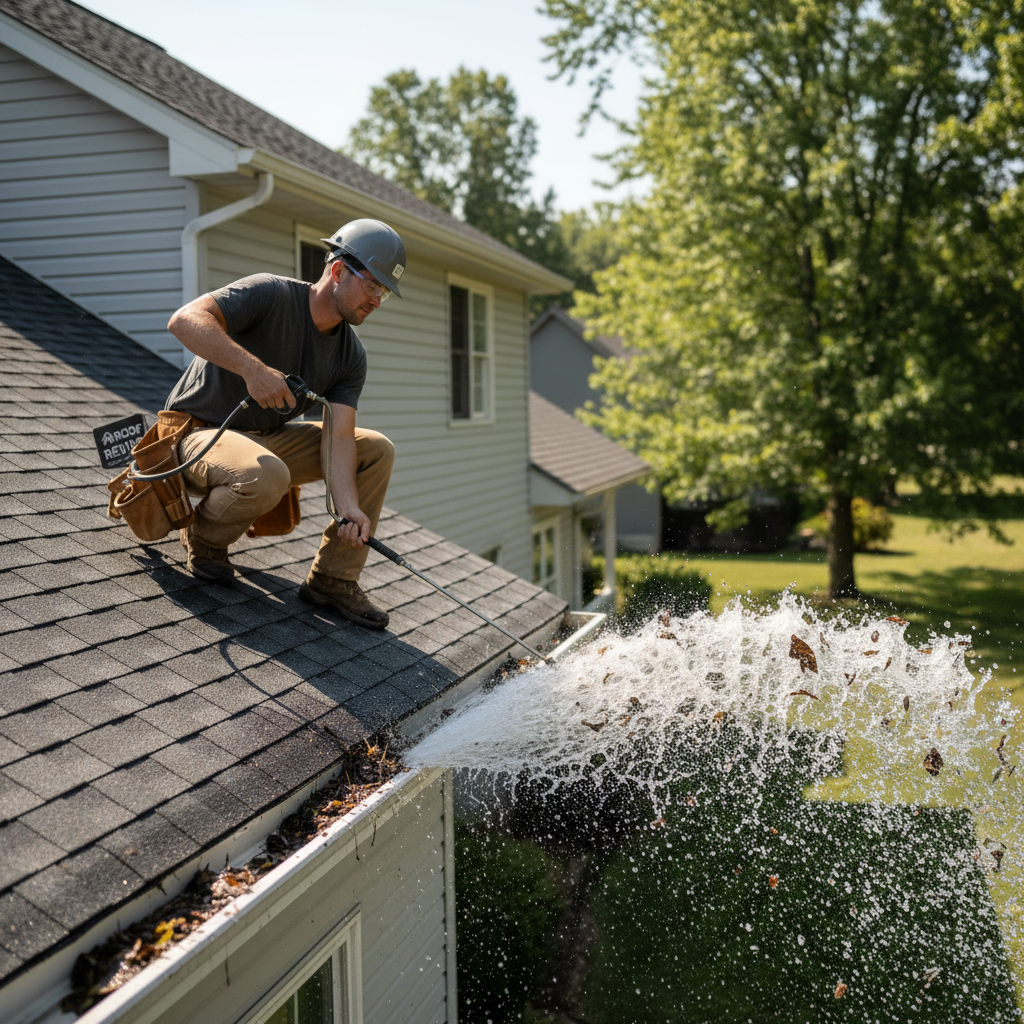
You usually start asking this after you spot black streaks, moss, or gutters that can’t keep up after a storm, and you’re right to. In Wilmington’s humid, salt-air conditions, most asphalt-shingle roofs need attention about every 1–2 years if they stay shaded or collect pine needles and leaf litter, and every 2–3 years if they stay mostly sunny and drain clean. The gentlest way to do it is a true soft-wash: low pressure (garden-hose range) with the right cleaning chemistry and enough dwell time, not pressure washing.
The confusing part is that “roof cleaning” gets used for three different jobs, so do it the right way the first time: clearing moisture-holding debris, treating organic growth like algae and moss, and chasing a like-new look for curb appeal or HOA and insurance compliance. In the sections below, you’ll learn how to choose a cadence based on what your roof is actually doing. Think of it like mowing a shady lawn. You’ll also learn what to watch for between cleanings and how to keep the process low-risk for your shingles, gutters, and landscaping.
The Wilmington-area Roof Cleaning Frequency
A neighbor on the same street can go twice as long between cleanings, even with the same shingles, simply because their roof bakes dry while yours stays shaded and damp.
In Wilmington’s humid, salt-air climate, a calendar-only rule is a bad idea, even if it sounds tidy on paper. Bob Vila would tell you to watch the house, not the calendar. If your roof gets steady shade (especially on north-facing slopes) or sits under pines and live oaks, plan on cleaning about every 1–2 years. The debris keeps shingles damp. If your roof stays mostly sunny and drains fast, every 2–3 years often fits, with roof inspection frequency focused on monitoring in between.
| Roof condition (Wilmington-area) | Typical cadence | Monitor between cleanings for |
|---|---|---|
| Steady shade / north-facing slopes | Every 1–2 years | Black streaking spreading season to season; moss at edges/valleys |
| Under pines or live oaks (debris stays damp) | Every 1–2 years | Matted debris returning after storms; gutters overflowing more than once a season |
| Mostly sunny, fast-draining, stays clean | Every 2–3 years | Early algae streaks; isolated lichen spots growing outward |
| Gutters overflow repeatedly | Short end of the range | Backups onto eaves; recurring debris accumulation |
| Any roof holds moisture after storms | Sooner rather than later | Moss/lichen growth; new streaking progression |
Don’t wait for “it looks terrible.” When to clean your roof is when you see any of these triggers, because they signal moisture staying on the roof, not just cosmetic change: black algae streaking that’s spreading season to season, moss tufts at shingle edges/valleys, lichen spots that feel crusty and grow outward, or matted debris that keeps coming back after storms. If you’re already clearing overflowing gutters more than once a season, your roof likely needs attention on the shorter end of that range.
In Wilmington’s coastal climate, a periodic inspection is often the fastest way to catch early shingle or flashing issues before a gentle cleaning turns into a repair. Read more in our article: Roof Inspection Wilmington Nc
What “gentlest” means

You can do everything “right” and still shorten a roof’s life if the cleaning method turns into abrasion and water intrusion.
For asphalt shingles, the gentlest roof cleaning method means you let cleaning chemistry and time do the work, not force. A proper soft-wash uses very low pressure (think garden-hose range, not a pressure washer), gives the solution time to dwell so algae/lichen release, and then rinses thoroughly without scrubbing or blasting. Better safe than sorry.
Pressure washing fails because it can strip protective granules and drive water under the shingles. It is like taking sandpaper to your roof, turning a cleaning job into premature aging or even a leak. If you believe the only way to get a roof truly clean is to hit it harder, you’re setting yourself up for the most expensive “cleanup” on the house.
When you want a soft-wash result without shortening shingle life, the biggest goal is cleaning without dislodging protective granules. Read more in our article: Roof Cleaning Without Removing Granules
Soft-wash chemistry without the drama
In most reputable guidance, “low pressure” is not a vibe, it is a number: roof application is often described around garden-hose levels, roughly 60–100 PSI, with chemistry and dwell time doing the heavy lifting.
Soft-wash isn’t one magic recipe, and anyone selling it like a miracle bottle is oversimplifying. Consumer Reports would call that a red flag. On asphalt shingles, many pros land somewhere around ~1% to 3.5% sodium hypochlorite (active) at the roof, then adjust based on how established the algae or moss is. “Harsher” isn’t always stronger, either. A rushed, hot mix with no control can do more collateral damage than a milder mix that’s applied evenly and managed well.
You can sanity-check the process by asking about dwell time and season. Stubborn growth often needs roughly 15–30 minutes of contact time to release, and cold winter days (roof surface under about 50°F) can slow results or require a different approach. If someone promises instant, mid-winter “like new” results, you’re likely looking at an aggressive method dressed up as soft-wash.
Your Low-Risk Roof-Care Plan
When you control where water lingers, the roof stops feeling like a never-ending cycle of stronger mixes and more frequent cleanings.
Start by treating regrowth as a moisture problem, not a “needs stronger cleaner” problem, which aligns with Extension guidance on moss control that emphasizes changing the moisture/shade conditions rather than relying on repeated cleaning alone. As an example, the same roof will stain far faster when valleys stay packed with pine needles and gutters back up after a coastal downpour—especially for roof cleaning after storm situations. The shingles sit wet like a sponge.
Use this sequence before you even think about upping mix strength. An ounce of prevention is worth a pound of cure:
-
Remove what holds water: From the ground, use a soft tool to pull visible leaf mats and pine straw out of valleys and off lower edges, and keep tree limbs from hanging over the roofline.
-
Keep water moving: Clean gutters and make sure downspouts discharge away from the house so roof runoff doesn’t back up onto the eaves.
-
Check your metals before “preventatives”: If you’re considering zinc or similar strategies, confirm what metals you already have (copper gutters/flashing can change what’s compatible).
-
Time cleanings for effectiveness: Schedule soft-wash when roof surfaces are reliably above ~50°F so you don’t feel pressured to “make it work” with a harsher approach.
Gutter clogs are one of the most common reasons roofs stay wet longer after storms, which accelerates algae and moss regrowth. Read more in our article: Safely Clean Gutters
Hiring a Pro vs DIY in Plain Terms

DIY makes sense only when you can stay off the roof and you’re dealing with light staining or simple debris management, not a The Home Depot weekend hero project. The moment you need chemical application on a steep, high, or slick roof, the “cheaper” route can turn expensive fast. Penny wise and pound foolish is still foolish, because the real risk isn’t just the shingles, it’s falls, blown-out gutters, and runoff that burns landscaping or tracks into storm drains.
In coastal North Carolina, many homeowners find roof cleaning cost for a professional soft-wash falls roughly in the $350–$900 range for an average single-family home, which often pencils out when you compare it to replacing damaged plants, repairing a leak, or accelerating shingle wear. If you hire it out, prioritize process over promises: ask what pressure they use (you’re listening for garden-hose-low pressure), how they manage downspouts and plant protection (pre-wet, controlled runoff, post-rinse), and whether they build in real dwell time instead of “spray and go.”
Roof not getting any younger? Contact us at Contact us or call 910-241-1152 to find out where you stand.