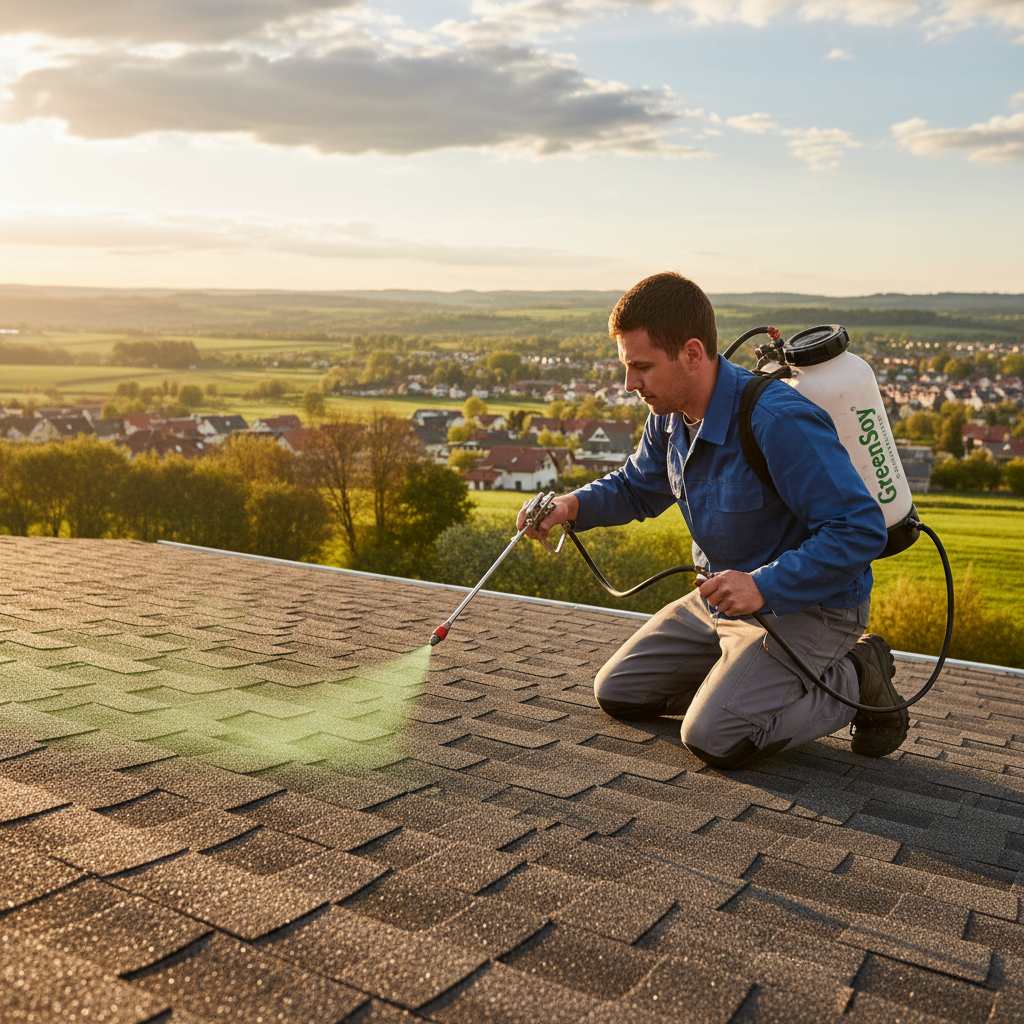
You’re looking at a roof replacement quote, but your shingles still look “mostly fine” from the yard. A roof rejuvenation treatment is a spray-applied conditioning treatment for aging asphalt shingles that can help slow brittle, granule-shedding wear, but it won’t rescue a roof that’s already failing.
The hard part is figuring out which situation you’re in, especially when most search results read like sales pages. This guide helps you screen whether your roof qualifies, understand what the treatment is intended to change (and what it can’t), and weigh cost per year against replacement before you spend money trying to “buy time.”
The Only Roofs That Truly Qualify
You can spend a few thousand dollars and still end up right back at the replacement quote if the roof is already in the “failure” zone. The win here is knowing, before anyone sprays anything, whether you’re buying time or buying disappointment.
Roof rejuvenation treatment only makes sense when your shingles are aging, not failing. That’s the line most sales pages blur, and it’s where homeowners end up disappointed: you can’t spray your way out of a roof that already has structural breakdown, ongoing leaks, or widespread surface loss. Think of rejuvenation as maintenance meant to slow the next phase of wear, not kicking the can down the road once the roof has entered the “parts are coming off” stage. It is more like re-oiling a stiff hinge than rebuilding a broken door.
In practice, the best-fit band is usually an early-to-midlife asphalt shingle roof for asphalt shingle rejuvenation, often around 7–15 years into a 25–30-year shingle, where the roof still sheds water correctly but is getting drier and more brittle. For instance, a roof in Porters Neck that still lies flat and looks “mostly fine” from the yard, but feels stiff at the edges and shows moderate granule wear in the gutters, is the kind of scenario where a treatment is at least logically aimed at the problem (aging shingles), not at symptoms it can’t solve.
| Quick screen | Typical roof condition signals |
|---|---|
| Likely qualifies | Shingles lay flat; no active leaks; minor, even granule loss; tabs mostly intact; fasteners and flashings generally sound |
| Usually disqualified | Exposed fiberglass mat; missing/torn shingles; widespread curling/cupping; soft/rotted decking spots; chronic leaks/staining; failing flashing/pipe boots as the real entry points |
If you’re telling yourself “the roof is leaking, but maybe this will stop it,” you’re setting the wrong goal. The smarter move is to treat rejuvenation as a way to buy predictable time on a still-performing roof, like when you want to pass a standard home inspection or get through a few hurricane seasons before budgeting a full replacement.
A quick eligibility check can save you from paying for a treatment on a roof that’s already past the point where flexibility and granule retention will matter. Read more in our article: Roof Rejuvenation Eligibility
What “Rejuvenation” Actually Changes

A roof rejuvenation treatment is designed to soak into aging asphalt shingles and recondition the asphalt so the shingle stays more flexible and holds onto granules longer. To illustrate this, you’re not “adding a new layer” or sealing your roof like a coating; you’re trying to slow the brittleness that shows up as cracking, faster granule shedding, and tabs that don’t handle wind as well over time.
That also means it can’t fix roof system problems. Believe that like you would believe Consumer Reports, not a sales pitch. It won’t stop a leak caused by bad flashing or a failed pipe boot, and it won’t reverse rot or soft decking. If you’ve got missing or torn shingles, exposed fiberglass mat, or active water entry, you need repair or replacement work first, not a spray that makes the remaining shingles a little less dry.
Evidence You Can Trust (and What It Doesn’t Prove)
In a 2025 PRI Asphalt Technologies accelerated-aging study on 15-year-old shingles, treated samples outperformed untreated shingles on granule loss, cold-weather flexibility, and tear strength. Numbers like that separate measurable maintenance from feel-good testimonials.
If you’re trying to decide whether a roof rejuvenation treatment is real maintenance or just marketing, the best credibility signal is measured shingle-property testing, not before-and-after photos. In that study (1,500 hours modeled as roughly 5 years), treated shingles measured 53% less granule loss (1.43 g untreated vs. 0.67 g treated), 66.7% better cold-weather flexibility, and 24% higher tear strength. Those are practical indicators because they map to how roofs actually age: shingles that stay more flexible tend to resist cracking, and shingles that hold granules longer usually weather more slowly.
What that evidence doesn’t prove is the part most homeowners want to hear: “this will add exactly 6 years on your roof in Wilmington.” Lab testing can’t replicate every real-world variable that drives lifespan in coastal Southeastern North Carolina, like salt air and UV exposure. Case in point: if your roof’s weak point is a flashing detail, a pipe boot, or a low-slope transition, improved shingle flexibility won’t stop water from getting in.
So don’t let a simple “adds years” claim carry the whole decision. Get a quick once-over that treats that claim like a shiny shingle sample, not a warranty. Instead, ask for proof in two buckets: (1) test-backed property changes (like granule retention and flexibility) and (2) jobsite inspection findings that your roof’s limiting factor really is shingle aging, not a roof-system failure.
Rejuvenation vs Replacement: Cost Per Year
Don’t judge a roof rejuvenation treatment by the smaller check. That is a rookie mistake. Judge it by cost per year of roof life you actually get for roof rejuvenation cost: treatment price ÷ years of added service. For example, if you pay $2,500 and it buys 5 years, that’s $500/year.
Now compare that to replacement the same way: replacement price ÷ expected years. A $15,000 replacement over 25 years is $600/year, which is basically “Home Depot math” you can sanity-check. But if rejuvenation only buys 3 years, it jumps to $833/year, and it stops being the “cheaper” move fast.
If you want better-than-guesswork budgeting, compare options using the same cost-per-year lens so you’re not fooled by the smaller upfront check. Read more in our article: Roof Rejuvenation Cost Vs Replacement
Coastal Wilmington Factors That Swing Results

Picture two same-age roofs that look identical from the street, but one sits in full sun with salt air and regular wind lift. That roof will punish any “one size fits all” life-extension promise fast.
On the coast, your roof doesn’t just “age,” it takes a beating—coastal roof maintenance is more like sailcloth in hard sun than a roof in gentle shade. Intense sun and summer heat cook the asphalt faster, salt air can accelerate corrosion on exposed metal components and fasteners, and wind events test whether sealed tabs stay sealed after they’ve been flexed and lifted. As an example, a roof a few blocks off Wrightsville Sound with minimal shade may dry out and lose granules faster than a similar-aged roof farther inland, even if both look fine from the driveway.
If you’re expecting a fixed number of added years no matter where you live, you’re setting yourself up for the wrong decision. Ask your inspector to tie their recommendation to your home’s drivers, especially attic ventilation and heat buildup, since a hot attic can make any life-extension claim harder to hit.
Salt air, high UV, and wind lift can shorten shingle life and change what “added years” looks like for homes near the water. Read more in our article: Signs Salt Air Wind Damage Shingles
Warranties, Fire/Code, and Documentation
You want the kind of paperwork that lets you answer an insurer, buyer, or future roofer with one clean PDF instead of a story. When the documents are vague, the risk shifts back onto you.
Treat the paperwork like part of the product. A roof rejuvenation treatment typically comes with a treatment warranty, not a “your whole roof won’t leak” warranty. For example, some provider warranties are framed around the presence/performance of the rejuvenator in the shingle for a set term (often five years), while excluding things like storm damage and flashing failures. If you hear “it’s under warranty” without those boundaries spelled out, you’re taking on more risk than you think, BBB logos or not.
Before you sign, ask for three items in writing: (1) the exact warranty PDF and what triggers a claim, (2) whether the treatment is designed to avoid compromising your shingle manufacturer warranty and how they document that, and (3) any fire/code documentation relevant to your roof. Fire ratings generally tie to roof-assembly testing (ASTM E108 is the standard), so ask what evidence exists for your specific product/system, especially if you’re selling soon or dealing with an insurer.
How to decide after an inspection
After the inspection—especially a roof inspection Wilmington NC—force the decision into one of three buckets based on what’s actually limiting your roof, not what it looks like from the yard or what you wish the quote meant. It is six of one, half a dozen of the other only if you ignore the limiting factor. If the report says your shingles are intact but drying out (minor, even granule loss and no active leaks), treat now. If it flags a few fixable entry points (pipe boot or flashing) but the field shingles still have life, repair + monitor and revisit treatment once water-shedding is confirmed. If you’ve got active leaks, exposed mat, or widespread curling, replace.
Ask the crew: “What finding would make you decline treatment?” “What repairs are included before spraying?” and “How will you document roof condition and warranty coverage in writing?”
FAQ
Will A Roof Rejuvenation Treatment Stop An Active Leak?
No. If water is getting in through flashing, a pipe boot, a nail pop, or damaged shingles, the treatment doesn’t fix that failure point. You should repair the entry point first, then treat only if the roof still qualifies.
Will It Smell, Make A Mess, Or Affect Landscaping?
You may notice a temporary odor during application, but it shouldn’t linger for days. A professional crew should protect plantings and hardscapes and control overspray; ask exactly what they cover and how they handle runoff around gutters and downspouts.
How Often Do You Reapply It?
Reapplication depends on roof condition and the provider’s program, but many homeowners treat it as periodic maintenance rather than a one-and-done fix. Ask what interval they recommend for your shingle age and how they’ll document the roof’s condition at each visit.
Will Insurance Or A Future Buyer Care?
Insurers and buyers usually care most about documented roof condition and remaining service life, not marketing claims. Get dated photos, the inspection notes, and the warranty PDF so you can show what was done and what the warranty actually covers.
How Does Scheduling Work, And Is It Really A One-Day Service?
On a qualifying roof, the treatment itself is often completed in a single day, but you still need an inspection first and you may need minor repairs before spraying. Ask when they’ll start, when you can expect the roof to be dry to the touch, and what weather conditions would push the appointment.
Roof not getting any younger? Contact us or call 703-673-6301 to find out where you stand.The same logic applies on your own roof, and our roof rejuvenation service in Wilmington makes it concrete with a free assessment.