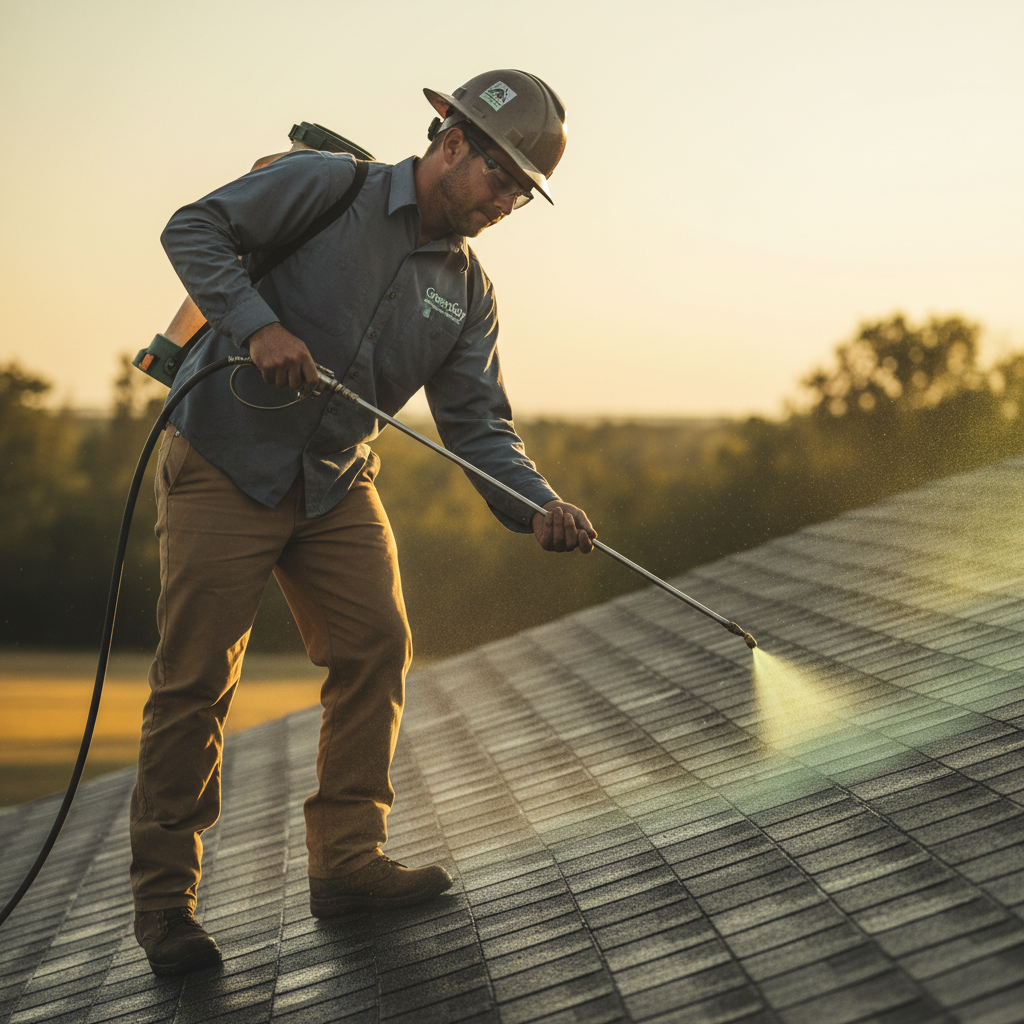
Is this safe for kids and pets, or for people with allergies or asthma? It can be, if you control drift, indoor pull-in, and residue.
What makes homeowners nervous isn’t the idea of “low pressure” or “eco-friendly” on a flyer. No one wants to be the guinea pig. It’s the reality that roof services often involve sprayed products, and sensitive lungs and curious pets don’t get a vote in where that mist goes or where runoff lands. In this guide, you’ll learn what “safe” means on service day and what precautions reduce exposure.
What “Safe” Means on Service Day
On service day, “safe” usually doesn’t mean “nothing in the product could irritate anyone”, it means roof spray chemical safety is about controlling exposure. In other words, you set clear boundaries so exposure stays contained. Practically, that means managing the main exposure routes: airborne mist during application, indoor pull-in, and residue left on surfaces.
| Exposure route | Why it matters | Controls that reduce exposure |
|---|---|---|
| Airborne drift/aerosols | Mist can irritate sensitive lungs and travel downwind during spraying | Keep kids/pets indoors or off-site; avoid downwind areas; ask crew to pause/adjust if mist moves toward windows/AC intakes; reschedule if wind makes control unreliable |
| Indoor pull-in | HVAC returns, bath/kitchen fans, and open windows can draw odors/irritants inside | Close windows/doors; turn off fans and HVAC modes that pull outside air; protect/avoid fresh-air intakes; reopen/turn systems back on once odors are gone |
| Runoff/residue on surfaces | Wet patios/decks/furniture can create touch-and-lick risk for toddlers and pets until rinsed/dry | Keep patios/decks off-limits until rinsed and fully dry; wipe outdoor furniture and pet bowls; keep pet areas protected from runoff |
First is airborne drift and aerosols. Low pressure helps with shingle damage, but it doesn’t automatically protect an asthma-sensitive household. If a contractor uses a bleach-based softwash mix (common for algae), the main issue is the chemical strength plus how well they prevent mist from moving downwind (see National Softwash Authority softwashing guidance).
Next, focus on indoor air pull-in by managing windows, vents, and anything that can draw outside air inside. Open windows, bathroom fans, and HVAC returns can draw outdoor odors or irritants inside, especially near fresh-air intakes. Third is runoff and residue: liquid can drip into gutters and splash onto patios, creating touch-and-lick risk for toddlers and pets until it’s rinsed and dried.
If you’re evaluating kid- and pet-safety, the biggest real-world variables are wind, where mist can travel, and what gets tracked or pulled indoors. Read more in our article: Roof Spraying Safety
Which Chemicals Are Used

You can do everything “right” and still end up with irritated eyes and tight chests if the product on the roof is stronger than you expected. The label that matters is the active ingredient and how concentrated it is, not the marketing language.
Most “roof rejuvenation” appointments involve one of two chemical buckets, and asphalt shingle rejuvenation safety depends on which one is used (see roof rejuvenation treatment overview).
One bucket is bleach-based softwashing (often diluted sodium hypochlorite) used to kill algae. It can smell sharp and act like an airway irritant if mist drifts or gets pulled indoors. That matters more for asthma than “low pressure,” and pretending otherwise is irresponsible. The other bucket is a soy-based penetrating oil treatment (often soy methyl ester, sometimes marketed as GreenSoy-style rejuvenation) meant to recondition shingles; it’s a different exposure profile, but “plant-based” still doesn’t guarantee “non-irritating.”
Before you schedule, ask what they’ll spray and request the exact product SDS, not ENERGY STAR-style credibility cues.
Bleach-based softwashing and soy-based rejuvenators have very different odor and irritation profiles, so confirming the exact product and dilution matters more than the marketing label. Read more in our article: Roof Cleaning Chemical Safety
Household Risk Check: Kids, Pets, Asthma
A parent schedules the work for a weekday, keeps the toddler and dog inside, and the day is uneventful. Same house, different week, doors propped open and the dog licks a wet patio, and now it’s an avoidable problem.
Treat your household as low sensitivity if you’ve got no asthma/COPD history and no recent unexplained cough/wheeze. You’re medium sensitivity if someone gets reactive to strong odors, you’ve got a baby/toddler, or pets spend the day in the yard. You’re high sensitivity if anyone has asthma that flares, uses rescue inhalers, has had urgent visits for breathing, or you’ve had past issues with bleach or “pool smell.”
Low means standard precautions usually work. Medium means you plan ahead like a preflight checklist. You keep everyone inside with windows shut and outdoor surfaces off-limits until everything’s rinsed and dry. High means you plan to be away during spraying (or reschedule) and use a belt and suspenders approach, not “it’s eco-friendly” talk.
Precautions that materially reduce exposure

EPA notes people spend up to about 90% of their time indoors, which is why a little odor getting pulled inside can matter more than what you see happening on the roof (see EPA asthma triggers guidance). The goal is to keep the “outside application” from becoming an “inside exposure,” especially when asphalt shingle treatment fumes get pulled indoors.
You don’t need to treat roof day like a hazmat event. You also shouldn’t treat it like a normal Saturday just because it’s “low pressure” or “soy-based”; that complacency is a bad idea. Your leverage is simple, even if Nextdoor neighborhood recommendations say otherwise: stop fumes from getting indoors and keep kids and pets away from wet surfaces.
Before: close windows/doors; turn off HVAC that pulls outside air and nearby bath/kitchen fans. Bring in porch items and cover/close outdoor toys. During: keep kids/pets inside or off-site; stay away from the downwind side; ask them to pause if mist drifts toward openable windows/AC intakes. After: keep patios/decks off-limits until rinsed and fully dry (roof treatment drying time safety matters here); wipe outdoor furniture and pet bowls; re-open/turn systems back on once odors are gone.
Overspray control often comes down to how crews protect windows, siding, and HVAC intake areas before they start spraying. Read more in our article: Protect Gutters Windows Siding
Questions to Ask Your Contractor
You get crisp answers, an SDS in your inbox, and a clear plan for wind and HVAC, and suddenly the job feels routine instead of risky. The difference is whether the crew can speak in specifics for your house and that day.
You can’t vet “safe for kids and pets” from a slogan. You have to kick the tires. The real test is whether the contractor can name the exact products and the specific controls planned for your house.
Ask these, and treat vague answers like a check-engine light on service day as your signal to pause
-
What exactly are you spraying, and can you text or email the SDS for each product you’ll use today? (Not “soy-based” in general; here’s an example of a publicly available methyl soyate SDS.)
-
If you’re using bleach (sodium hypochlorite), what’s the approximate mix strength at application, and how do you prevent mist from drifting?
-
What wind speed or direction makes you reschedule, and who decides that on site?
-
How will you protect HVAC intakes, openable windows, and porch areas from overspray or odor being pulled inside?
-
Where does runoff go, and what do you do to keep it off patios, pet areas, and neighbor property?