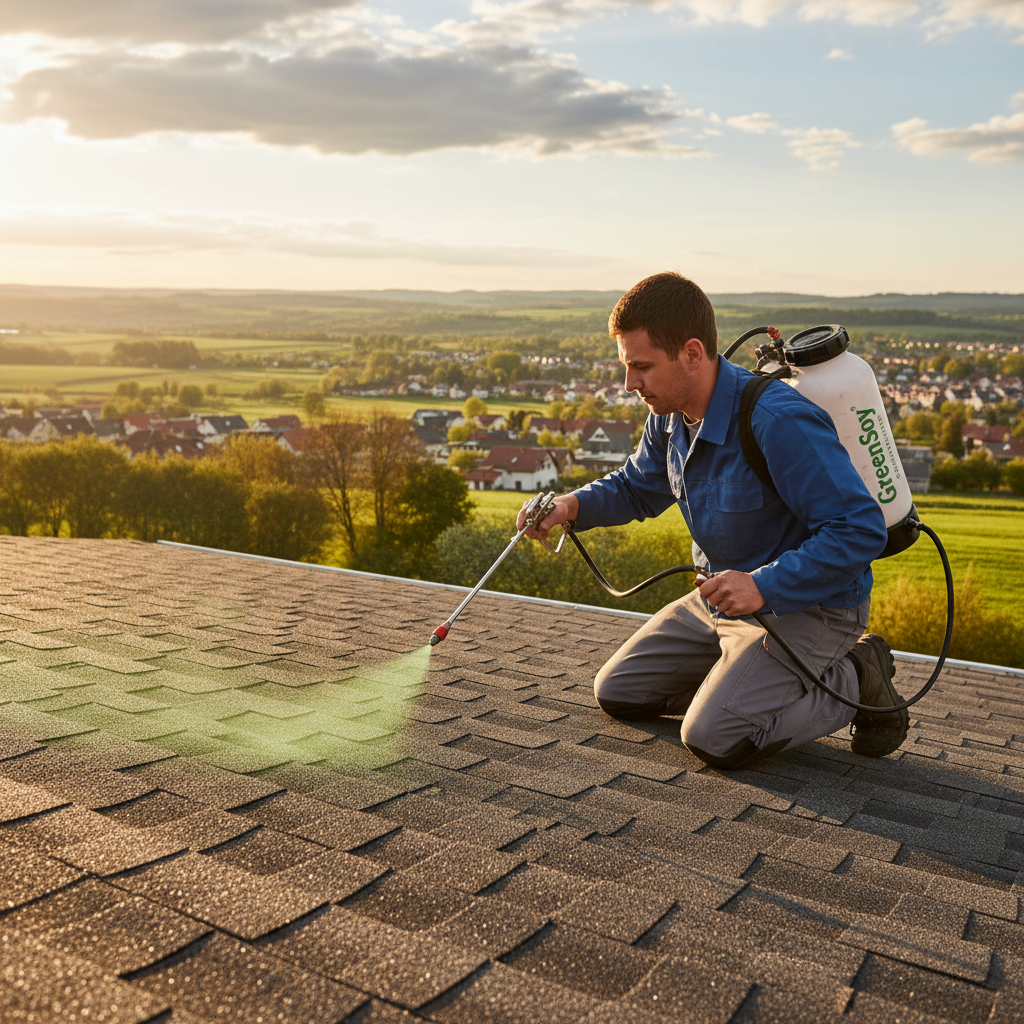
If you’re asking, “Is your roof treatment safe for my shingles, or will it strip off the granules?” you’re right to be cautious. The short answer is yes, it can be safe, but only when the method avoids mechanical abrasion and your shingles are still in good enough condition to tolerate any work.
On a coastal North Carolina roof, it’s easy to get pushed into the wrong decision by vague advice like “don’t pressure wash” when you’re trying to confirm a roof treatment safe for shingles. What you need to know is which actions make granules come off (scraping and high pressure), and how to tell when a roof is too far gone for any treatment to be worth the risk. This guide breaks those buckets apart so you can book a service with clear expectations and protect the shingle surface you’re trying to preserve.
| Item people call “roof treatment” | Typical method | Granule risk driver | Granule risk (if done as described) |
|---|---|---|---|
| Pressure washing / brushing / scraping | High pressure or direct agitation | Mechanical abrasion | High |
| Soft-wash cleaning | Low-pressure application; growth dies and weathers off over time | Pressure/contact control (avoid abrasion) | Low–Medium |
| Rejuvenation spray | Low-pressure application aimed at improving granule adhesion | Roof condition + proof tied to adhesion (not looks) | Low–Medium |
| Coatings | Film applied over shingles | Changes roof surface behavior (not interchangeable with cleaning) | Varies |
What Makes Granules Come Off

You hire a “gentle clean,” and by the time the crew packs up, your gutters are full of colored grit and the roof looks older than it did that morning. That kind of damage usually comes from force, not from a chemical simply touching the shingles.
Granules come off when you add mechanical force (pressure washing roof damage): high-pressure washing or scraping moss to get an instant “clean” look, which aligns with guidance in the ARMA residential asphalt roofing manual warning against power washers and brushes/brooms on asphalt shingles. Industry guidance is blunt on this point: power washing and brushing are the kinds of actions that can dislodge granules because they physically abrade the shingle.
With true low pressure and no scrubbing, the risk profile changes. It works differently. The liquid touching the roof usually isn’t what strips granules.
Roof granule loss is easiest to spot by checking gutters and downspout exits after normal rain, not immediately after a service visit. Read more in our article: Roof Granules Coming Off It’s when the job turns into “make it look perfect today,” and you think, “I just want to make sure I’m not making it worse,” while force scours the granule layer like a stiff shop broom on fresh grit.
The Three “Roof Treatments” Homeowners Confuse

When a contractor says “roof treatment,” you need to pin down which bucket they mean (roof soft washing vs pressure washing). Otherwise you’re guessing, and that’s a bad bet. Soft-wash cleaning is a low-pressure application meant to kill algae or moss and let weather rinse it away over time. Rejuvenation sprays aim to recondition aging asphalt so granules hold better, and reputable claims talk about measurable granule adhesion, not just “it looks cleaner.”
Coatings are different: they add a film over shingles, changing how the roof sheds water and heat. If you treat these as interchangeable, you’ll judge safety using the wrong yardstick and might approve something “stronger” than your shingles need.
When Roof Treatment Is NOT Safe
A homeowner pays for the mildest option, then notices granules in the gutters after the next rain. Sometimes the problem isn’t the method; it’s that the roof has already started letting go of its surface.
A low-pressure treatment stops being the “safe” option when your shingles are already breaking down. In that situation, even a gentle application can leave you with more loose granules simply because the bond is failing. That’s how you throw money into a leaky bucket, and you don’t want to throw good money after bad.
Skip treatment and move to a roofer-style evaluation if you see any of these red flags
Bare or shiny asphalt patches where the “gravel” look is gone, especially in wide areas, not just a few specks.
Heavy granules collecting in gutters/downspouts (asphalt shingle granules in gutters) after normal rain (not right after a new install), or piles at the end of a downspout.
Curling, cracking, or brittle tabs that lift easily when the wind hits, common on older coastal roofs.
Active leaks, soft decking, or sagging spots, including stained plywood visible from the attic.
Widespread, thick moss that’s acting like a sponge on an already thin shingle surface; if removal requires scraping to “look clean today,” you’re in damage territory.
If the shingle is already failing, don’t count on a treatment to lock it down. It isn’t a band-aid fix. Your decision should hinge on whether the roof still has a healthy granule layer to preserve, not on how fast you can make the stains disappear.
A roof that’s already shedding granules often has other age-related symptoms that point toward repair or replacement instead of any treatment. Read more in our article: Shingles Too Far Gone
How to Judge If a Soft-Wash/Rejuvenation Is Shingle-Safe

You can’t judge “shingle-safe” by how white the roof looks the same day. That’s a vanity metric. Instead, judge whether they limit contact and pressure and can cite adhesion-based proof, not just before-and-after photos.
Ask two things before you schedule. Can you level with me about whether you’ll apply it at true low pressure? Will you avoid scraping or “agitating” moss to speed up results? What’s your plan to keep hoses, shoes, and overspray from turning the roof into a sandpaper surface (common when grit is already on a coastal roof)? And for rejuvenation specifically: can you show lab-style testing that references granular adhesion, rather than testimonials like “no blow-offs”? If they can’t answer clearly, the risk is what you’re paying for.
Soft-wash safety usually comes down to controlling pressure at the nozzle and avoiding any brushing or scraping that turns cleaning into abrasion. Read more in our article: Soft Wash Vs Pressure Washing
Questions to ask before booking
Some PRI-referenced test summaries from rejuvenation vendors report granular-adhesion improvements in the neighborhood of ~25% on newer shingles and ~40–50% on older shingles (for example, Fresh Roof’s PRI-summary page frames results around measured granular adhesion versus untreated controls). That kind of claim only matters if the contractor can tell you exactly what they will do on your roof and how they will avoid adding abrasion.
Before you book (or schedule a roof inspection Wilmington NC), get the contractor to be specific, the same way you’d press for details when Angi or Nextdoor is full of vague “great job” recommendations. A fast “like-new” promise often means more pressure or scraping, which is when granules get sacrificed.
Ask these exact questions
What pressure will you apply at the nozzle, and will you use a pressure washer at all?
Will anyone scrape or “agitate” moss/lichen to speed up the result?
How will you keep hoses and windblown sand from grinding on the shingles?
What should I expect to see over the next 2–8 weeks as dead growth releases with rain?
How will you protect landscaping and manage runoff?