You’re looking at green siding, black roof streaks, or a grimy driveway, and you’re hearing two competing answers: “Just pressure wash it” or “You need a soft wash.” The real difference comes down to how much pressure hits the surface and how the cleaning solution gets applied, and that choice can mean the difference between a clean home and damaged siding or stripped roof granules.
In coastal Wilmington, where algae and mildew come back fast, blast it and hope for the best is a losing play. You win by matching the method to the material and the goal. In this guide, you’ll see what “soft washing” means in practice, when pressure washing is the right tool, and what to ask a contractor so your roof and landscaping don’t become the cost of learning.
The Difference Between Soft Washing vs Pressure Washing

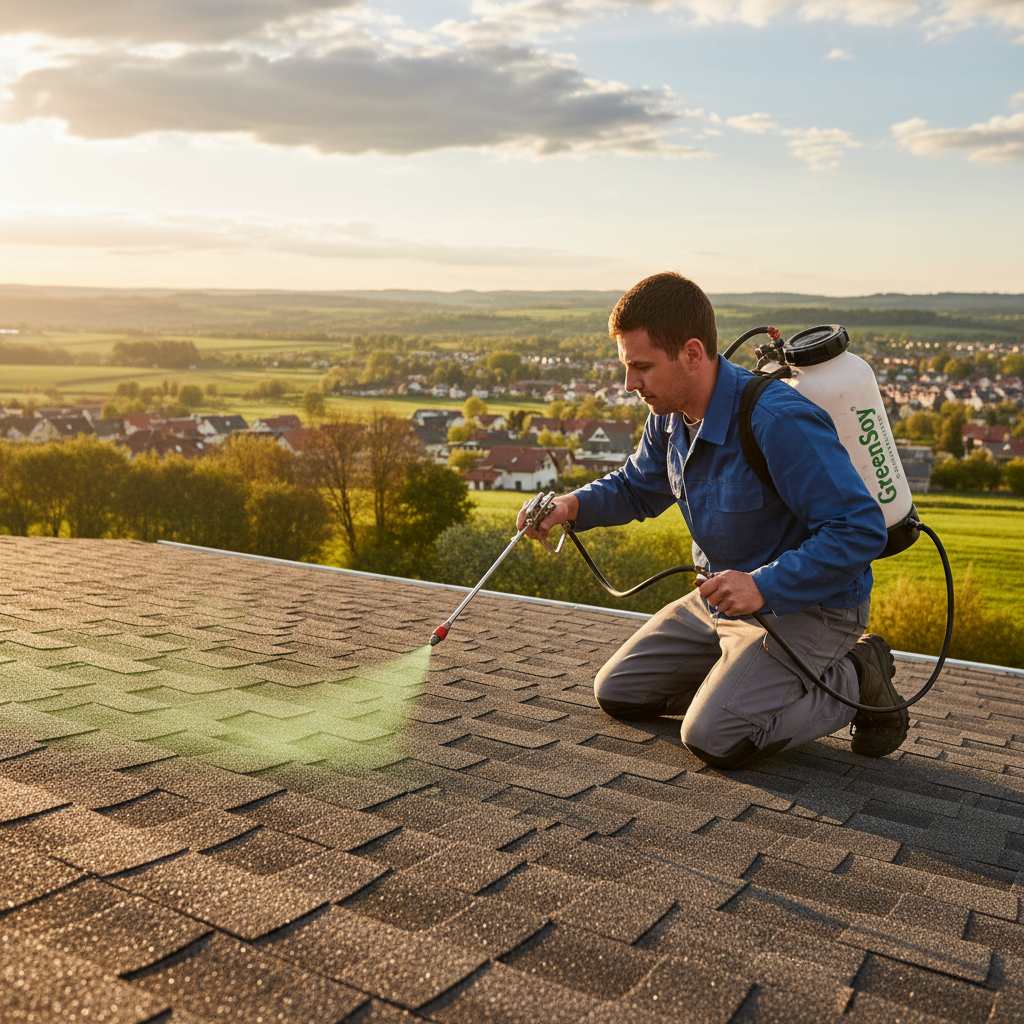
Soft washing and pressure washing aren’t two “brands” of cleaning. They’re two different ways of getting a surface clean. Soft washing relies on low pressure at the surface (often roughly 150–300 PSI) paired with the right cleaning solution, dwell time (letting it sit), and a gentle rinse. Pressure washing relies on much higher pressure (commonly around 1,300–3,100+ PSI) to shear dirt or growth off through force, which works great on hard surfaces but can be unforgiving on softer ones.
If you’ve ever thought “higher PSI means a deeper clean,” that assumption leads to some of the most expensive mistakes. For instance, the black streaks you see on Wilmington-area asphalt shingles are living growth; blasting can remove the look temporarily while leaving enough behind to rebound faster, and industry guidance for asphalt roofs explicitly warns against using a power washer because it can cause pressure washing roof damage.
When you’re deciding or vetting a contractor, listen for specifics:
Black roof streaks are usually algae that can keep spreading even after a surface-level clean if it isn’t treated correctly. Read more in our article: Black Streaks Roof Shingles
-
What PSI hits the surface, not just what the machine can do
-
What chemistry they’ll use and how they’ll protect plants/runoff
-
How long they’ll let it dwell before rinsing
-
How they’ll rinse without driving water into seams or under shingles
Where Each Method Breaks Things
You can do everything “right” and still end up paying twice if the wrong tool hits the wrong surface first. One aggressive pass can turn a simple clean into peeled paint or lifted shingle granules.
In coastal North Carolina, the enemy isn’t just “dirt.” It’s a living stain that spreads fast in shade and humidity. It keeps returning in Wilmington’s humidity and shade, and wind-driven grit still works into seams. That’s why the wrong method tends to fail in two predictable ways: high pressure forces water where it shouldn’t go, and overly hot chemistry (or sloppy rinsing) leaves you with collateral damage to finishes or landscaping.
What most homeowners miss is that the surface determines what breaks first, not the machine. For example, two homes can look equally “green,” but one is a roof where pressure can shorten shingle life while the other is a driveway where pressure is often the safest way to remove embedded grime.
| Surface | How the wrong method breaks things | Safer default in this guide |
|---|---|---|
| Asphalt shingle roofs | High pressure can lift granules, damage the mat, and drive water under shingles/into penetrations; can strip the look without fully stopping regrowth | Soft wash (low pressure + appropriate solution, dwell time, gentle rinse); avoid power washing shingles for asphalt shingle roof cleaning |
| Vinyl siding & fiber cement | High pressure can force water behind laps/J-channels/around windows (trapped moisture/leaks); can etch paint film on fiber cement and increase peeling risk | Soft wash with controlled rinse to keep water out of seams/laps instead of pressure washing vinyl siding |
| Wood (decks, rails, trim) | Pressure can fuzz/carve lap marks and force water deep (accelerates rot); strong mix can damage if it dries on surface; plant damage if not protected | Use the least aggressive method; soft wash can be safer with proper mix control, dwell time, and plant protection |
| Brick & mortar | Pressure can blow out weak mortar joints and push water into cavities; harsh chemistry can discolor mortar or cause patchiness | Lower pressure with care around joints; chemistry chosen to avoid discoloration |
| Concrete (driveways, patios) | Soft wash may leave embedded grime/biofilm in pores (quick cosmetic change, faster return); pressure can damage if you blast joints/edges | Pressure washing is usually appropriate, with care around control joints and edges |
If you want a fast credibility check when you’re hiring, ask what they’ll do differently on your roof versus your concrete, and don’t let Nextdoor neighborhood recommendations do the thinking for you. If the answer sounds like the same approach everywhere, that’s a hard pass. You’re the one taking the risk.
Granule loss is one of the most common (and easiest-to-miss) signs that high pressure has been too aggressive on asphalt shingles. Read more in our article: Shingle Granule Loss
How to Choose a Contractor in Wilmington

A homeowner hires the cheapest crew, watches the siding turn bright in an afternoon, then finds moisture trapped behind a window trim weeks later. The difference was not effort, it was process and restraint.
You don’t need to know every chemical or nozzle to hire a good crew. You need to ask questions that force the contractor to explain their process in a way that matches your surfaces and Wilmington’s reality: algae that returns fast, salt air that accelerates wear, and landscaping that sits right under what they’re spraying. If someone sells you on “we just pressure wash everything,” you’re not buying confidence, you’re buying risk.
Ask How They’ll Limit Pressure on Siding and Avoid Roof Pressure Altogether
On a house wash, a competent pro talks about low pressure at the surface and controlled rinsing, not the maximum PSI on their machine for soft wash house washing. As an example, if you ask, “What PSI will hit my siding and around windows?” you should hear a range and a method (tip choice and stand-off distance). For your asphalt shingle roof, you can be even more direct: “Do you ever use a power washer on shingles?” Industry guidance warns against it because it can damage the roof, so a confident “no” with a soft-wash approach is the answer you want.
Ask What Mix Strength They’ll Use and How They’ll Protect Plants and Runoff
“Soft washing” isn’t a magic word, it’s chemistry applied at the right strength for the surface, then given dwell time. Case in point: roofs typically need a stronger applied mix than vinyl or aluminum siding, so ask, “What strength are you applying on the roof vs the siding, and how do you adjust it?” You’re listening for logic (different surfaces, different mix) and safeguards: pre-wetting plants and covering sensitive shrubs.
Ask What Results to Expect and What They Guarantee
If you’re targeting black roof streaks or green mildew, you’re dealing with living growth. Ask, “How long should I expect it to stay clean here, and what makes it come back faster?” A good answer acknowledges coastal humidity and shade and explains that killing growth beats blasting it off. If they promise permanent results or dodge the regrowth question, they’re selling a fantasy, not a process.
Ask for Proof on Insurance and Business Basics
Finish with simple credibility checks: “Can you send a certificate of insurance?” and “Are you licensed for this work in North Carolina?” You’re not trying to play gotcha. You’re making sure the person spraying chemical around your landscaping and home exterior can cover damage if something goes sideways.
Will Pressure Washing My Asphalt Shingle Roof Void a Warranty or Damage It (Is Pressure Washing Bad for Shingles)?
Many shingle manufacturers and industry groups explicitly warn against using a power washer on asphalt shingles because high pressure can remove granules and drive water where it shouldn’t. Even if you don’t see immediate leaks, you can shorten roof life, so treat “we pressure wash roofs” as a red flag.
Manufacturer rules around cleaning methods can matter just as much as the cleaning result if you ever need to make a warranty claim. Read more in our article: Shingle Warranty Cleaning
How Long Do Results Typically Last With Soft Washing vs Pressure Washing to Prevent Roof Algae Regrowth?
If you are cleaning to buy time, the timeline matters as much as the price. Proper soft washing is often cited as staying clean for about 2 to 5 years; force-only pressure washing often sees growth return in roughly 6 to 12 months.
When the treatment kills algae and mildew, soft washing usually keeps things clean longer, with results varying by shade and humidity. In Wilmington’s climate, force-only cleaning can look great at first, but streaks and growth often return sooner.
What Does “50/50 Bleach and Water” Really Mean?
It depends on what you start with: 50/50 using 6% household bleach is very different from 50/50 using 12.5% pool-grade sodium hypochlorite. If a contractor can’t tell you the applied strength they’re targeting for your roof vs siding, they’re mixing by folklore, not by control.
Is Soft Washing Safe for Plants and Pets?
It can be, but only when the crew controls overspray and runoff by pre-wetting and rinsing plants and protecting sensitive landscaping. Plan to keep pets inside and off treated areas until everything is thoroughly rinsed and dry.
Why Does Pricing Vary So Much Between Soft Washing and Pressure Washing?
You’re not just paying for water, you’re not trying to void the warranty, and you’re paying for control: the right mix strength and dwell time. If the bid sounds too good, ask what they’re skipping, because the shortcuts usually show up as damage or faster regrowth.
Roof not getting any younger? Contact us or call 703-673-6301 to find out where you stand.Not every surface can take the same blast of water. This is exactly how we handle pressure washing in Wilmington, adjusting pressure job by job.