You’ll hear “pressure wash” used as a catch-all, but it isn’t one method. Soft washing cleans with chemistry and a gentle rinse, while pressure washing cleans with force, and choosing wrong can damage roofs or siding.
If you’re in Wilmington or anywhere along the NC coast, that choice matters even more because algae keeps coming back unless you kill the growth. In this guide, the devil’s in the details. You’ll get a simple rule for choosing soft washing or pressure washing, plus contractor questions that help you avoid costly surface damage.
| Dimension | Soft washing (chemistry + low pressure) | Pressure washing (force + higher pressure) |
|---|---|---|
| Best for | Roofs; painted siding; vinyl siding; other “layered” assemblies | Driveways; sidewalks; pavers; many patios; flat hardscape |
| Primary goal | Kill algae/mildew and lift staining with dwell time | Remove bonded grime with mechanical bite |
| Typical pressure referenced | Under ~500 PSI at the surface (often lower at the nozzle) | Often ~2,500–3,000 PSI on flatwork (commonly with a surface cleaner) |
| What does the work | Mix strength + surfactant + dwell, then gentle rinse | Impact force and agitation (plus water flow) |
| Biggest risk if misused | Chemical overspray/runoff issues if not controlled | Granule loss on asphalt shingles; water intrusion behind seams/laps; etching/oxidation/striping |
| Coastal NC performance | Better when growth is the stain-maker because it kills organics | Can look clean fast but may leave living spores to recolonize |
| Typical use on a full exterior job | Roof + house wash | Concrete/flatwork portion of the job |
The Decision in One Sentence

For soft washing vs pressure washing, if you’re cleaning a roof or the painted/vinyl parts of your house, choose soft washing (chemistry plus low pressure, typically under about 500 PSI) and save pressure washing for tough, flat surfaces like driveways and patios.
The caveat that changes it is paint prep and bonded grime. You may need controlled pressure or agitation on the right materials, but “more power” is a reckless pitch, no matter how pretty the Google Business Profile stars look.
What “Soft Washing” Really Means
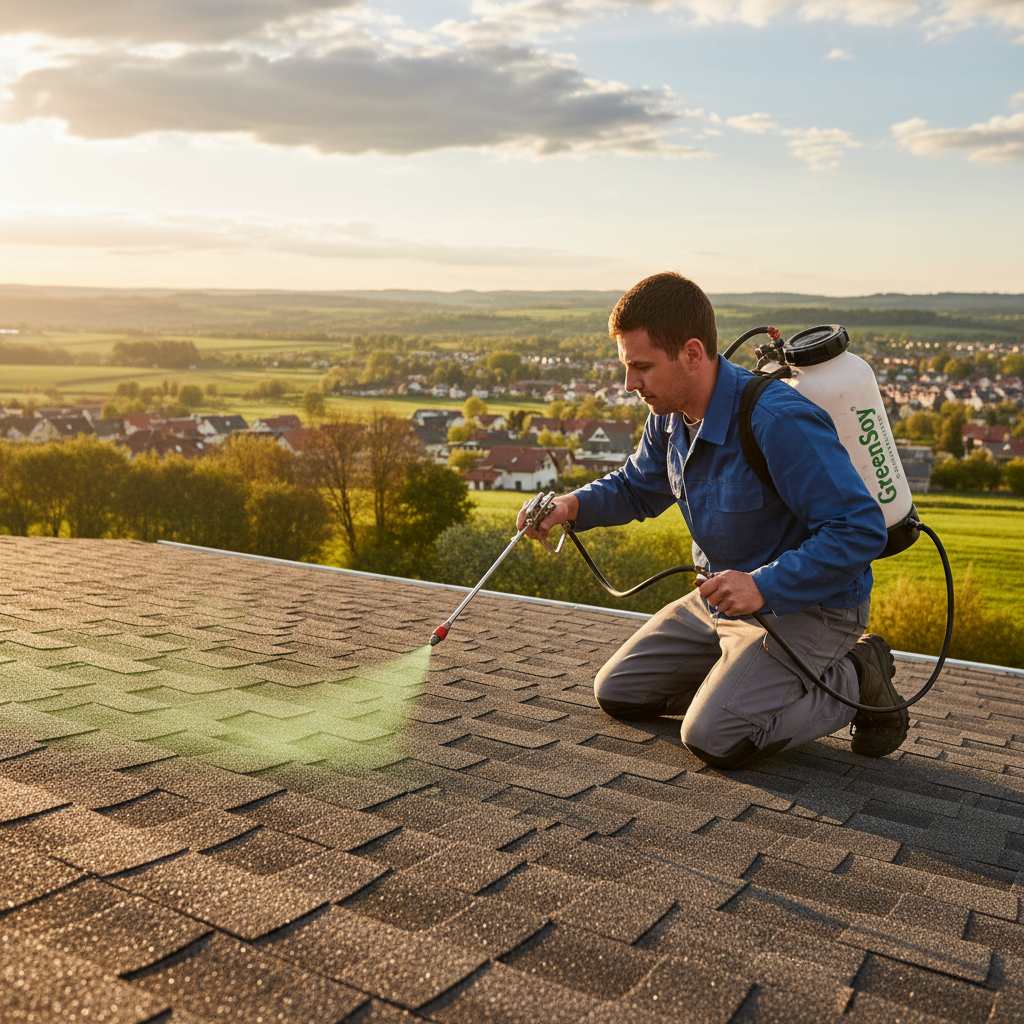
Soft washing isn’t a vibe. Let’s not fix what isn’t broken. It’s a process where chemistry and time do the work, like using the right paint stripper instead of grinding the surface. In most industry-style definitions, that means you apply solution at low pressure (generally under ~500 PSI, often far lower at the nozzle), let it dwell so it can break down and kill organic growth, and then rinse without trying to “peel” grime off the surface.
On roofs and siding, that usually looks like a biocide (often sodium hypochlorite) mixed to an appropriate working strength, paired with a surfactant so it clings instead of flashing off and drifting everywhere. For example, on an asphalt shingle roof with algae streaking, soft wash roof cleaning should sound like mix strength and plant protection more than “3,500 PSI.” Also, don’t expect every roof to look perfect in 10 minutes; some results keep improving over the next 2 to 4 weeks as weather rinses away dead growth.
If you want to spot “pressure washing in disguise,” ask: What PSI hits the surface? What mix are you using, and how do you keep it on the roof long enough to work? How do you protect landscaping or control runoff?
If your roof has black streaking, the stain is often algae that needs to be killed at the root, not just rinsed off. Read more in our article: Black Streaks Roof Shingles
Why Roofs And Siding Fail Fast Under Pressure
You hire a “quick wash,” and a month later you’re chasing a musty smell in the attic or wondering why your siding suddenly looks streaky in the sun. The ugly part is that the damage can hide long after the stains are gone.
-
Granule loss on asphalt shingles (reduced UV/heat protection)
-
Water intrusion behind shingles, laps, soffit vents, and siding seams
-
Oxidation, etching, and striping on siding and masonry finishes
Roofs are designed to shed water, so a concentrated spray directed at them can push water where it doesn’t belong. A pressure washer can make things look better, but it can also wreck materials—and even “This Old House” would call that avoidable. That quick visual payoff can come at the cost of reduced material life.
On an asphalt shingle roof, the biggest problem is granule loss. Those granules protect the shingle from UV and heat; when you blast the surface, you can strip them off or loosen them so they wash away later. To illustrate this, if you see a heavy “sand” trail in your gutters or at the end of a downspout after a roof cleaning, you may be looking at roof life that got traded for a faster-looking rinse.
The next problem is water intrusion. Shingles and siding seams all rely on overlap and drainage paths. A concentrated stream can push water up under shingles or behind vinyl laps and trim, then trap it where you won’t notice until you smell a musty attic, see staining, or get paint bubbling. If someone tells you they’ll “just keep the wand back,” you should rethink that plan, because one close pass at the wrong angle can do more harm than a whole season of rain.
Finally, siding finishes fail under force in ways that don’t show immediately: oxidation and etching. Older painted surfaces can chalk and streak; some brick, stone, or stucco can scar; and vinyl can end up with visible “tiger striping” from uneven blasting. A practical move when you’re comparing bids: ask exactly how they’ll avoid driving water behind laps or what they do on older, oxidized surfaces besides turning pressure up.
Granules collecting in gutters or at downspouts after cleaning can be an early warning sign of shingle wear or damage. Read more in our article: Granules In Gutters
Coastal NC Grime Changes The Math
A homeowner in Wilmington gets the house bright again, then the green haze comes back before the next season even starts. What matters is whether the process kills the organism or only strips away the visible layer.
Along the Wilmington coast, the problem is more than surface dirt. It behaves differently and returns faster. You’re fighting warm humidity that feeds algae, plus a salty film that clings like flypaper to pollen and roadway grime. When growth is the main stain-maker, blasting it off can look great today and still leave living spores ready to recolonize.
That’s why the method matters more here: you want a process that kills organics and then rinses them away without tearing at the surface. If your plan is simply “more PSI,” you’re optimizing for instant visuals, not how long the clean lasts.
A Safe Roof Soft Wash, Step-by-Step

You want a roof that looks better now and keeps getting better as the weeks pass, without gambling on granules, flashing, or warranty headaches. That only happens when the process is built around control, not force.
A safe roof soft wash prioritizes controlled chemistry and dwell time so algae dies before it’s rinsed away. If someone sells you “instant” by leaning on PSI, you’re paying for speed, not roof preservation, and that’s a bad trade when your shingle warranty paperwork is on the line.
First, they should inspect and set expectations. You’ll hear roof-specific talk like protecting valleys and flashing, plus plant and runoff control. Then they apply a roof mix built for asphalt shingles, often using sodium hypochlorite at a working strength roughly in the 1% to 3% range for typical streaking (heavier growth can push higher). Just as important, they add a surfactant so the solution clings and stays wet long enough to work instead of flashing off in the sun.
After application, most homeowners overlook how the dwell time and rinse approach affects results. Expect a gentle rinse, and expect some roofs to keep improving over 2 to 4 weeks as dead growth loosens and weather finishes the rinse.
When you’re comparing bids for low pressure roof cleaning, listen for these specifics:
-
Pressure at the surface: they should describe true low pressure (commonly under ~500 PSI, often far less at the nozzle).
-
Mix and dwell: what SH range they’re using for asphalt shingles and how they keep it dwelling (surfactant, re-wetting strategy).
-
Protection plan: what they do for landscaping, gutter/downspout management, and where rinse water goes.
When pressure washing is the better tool
On concrete, the goal is consistent mechanical bite that lifts embedded grime. That’s why flatwork is where higher pressure makes sense.
Use pressure washing on flat, hard surfaces where mechanical bite is the point. It’s six of one, half-dozen of the other, like using a wire brush on a cast-iron skillet: right tool, right surface.
-
Driveways and sidewalks
-
Pavers
-
Many patios and other flat hardscape
-
Jobs needing mechanical bite (embedded grime, gum, tire marks)
Think driveways and sidewalks, often cleaned around 2,500 to 3,000 PSI (frequently with a surface cleaner for even results). If you’ve been equating “stronger” with “better,” this is where that logic applies.
In practice, many Wilmington-area jobs split the work: soft wash the roof and house, then pressure wash the concrete. When you compare bids, ask what surfaces they’ll pressure wash versus soft wash, and why.
Plant protection and runoff control are usually what separates a “cheap wash” from a genuinely safe exterior clean. Read more in our article: Protect Landscaping Cleanup
What to ask before you book
Don’t let a low price or neighborhood buzz replace a clear scope and method. Make the contractor tell you what they’ll actually do to your roof, siding, or landscaping. Two quotes can both say “house wash” while one means controlled low-pressure chemistry and the other means a high-pressure rinse with a little soap. Ask these questions and listen for specific, calm answers rather than horsepower talk.
-
“What method will you use on my roof and on my siding, and what PSI hits the surface?” (You’re looking for true low-pressure on roof/siding, not “we’ll just keep it back.”)
-
“What’s your roof mix for asphalt shingles, and do you use a surfactant so it clings and dwells?” (They should speak in ranges and process, not secrecy.)
-
“How will you protect plants and control runoff?” Ask what they pre-wet, what they cover, how they rinse, and where the rinse water goes.
-
“What should I expect right after the service, and over the next few weeks?” (Especially on roofs, results can keep improving over 2 to 4 weeks.)
-
“How long should it stay clean here on the coast, and what would make it come back sooner?” This forces an honest conversation about algae regrowth, shade, and the difference between killing growth versus just rinsing it off.
FAQ
Is Soft Washing Safe For My Roof And Landscaping?
Yes when it’s done with controlled mixes, low pressure, and a real protection plan. You should hear specifics like roof-appropriate sodium hypochlorite strength (often in the low single digits for asphalt shingles), pre-wetting plants, and thorough rinse or runoff control.
Will The Bleach Smell Hang Around?
You may notice a pool-like smell during application and shortly after, especially on a warm, still Wilmington day. It typically fades as the area dries and gets rinsed, and you shouldn’t accept “we’ll just blast it off” as the fix.
What About My Pets, Kids, And Outdoor Furniture?
You can keep pets and kids inside during the service and until surfaces dry, and you can move or cover items you don’t want overspray on. A pro should also tell you what they’ll do around patios or grills before they start, not after something gets spotted.
Why Does Soft Washing Often Cost More If It Uses Less Pressure?
You’re paying for control and outcomes: correct mix strength, dwell time, plant protection, and avoiding roof and siding damage that can cost far more than the cleaning. In coastal humidity, killing the growth usually buys you a longer clean than a pressure-only rinse.
Can I DIY This With A Pressure Washer I Already Own?
You can DIY some flatwork and maybe small, simple siding areas if you understand chemical handling and can keep water out of seams, but roof work is where DIY goes wrong fast. If you’re not fully confident about mix control, overspray, and runoff, hire it out and treat the estimate as cheap insurance.
Roof not getting any younger? Contact us or call 703-673-6301 to find out where you stand.Picking the wrong method can crack mortar or strip paint you meant to keep. Our Wilmington pressure washing service crew knows which surfaces need a lighter touch.