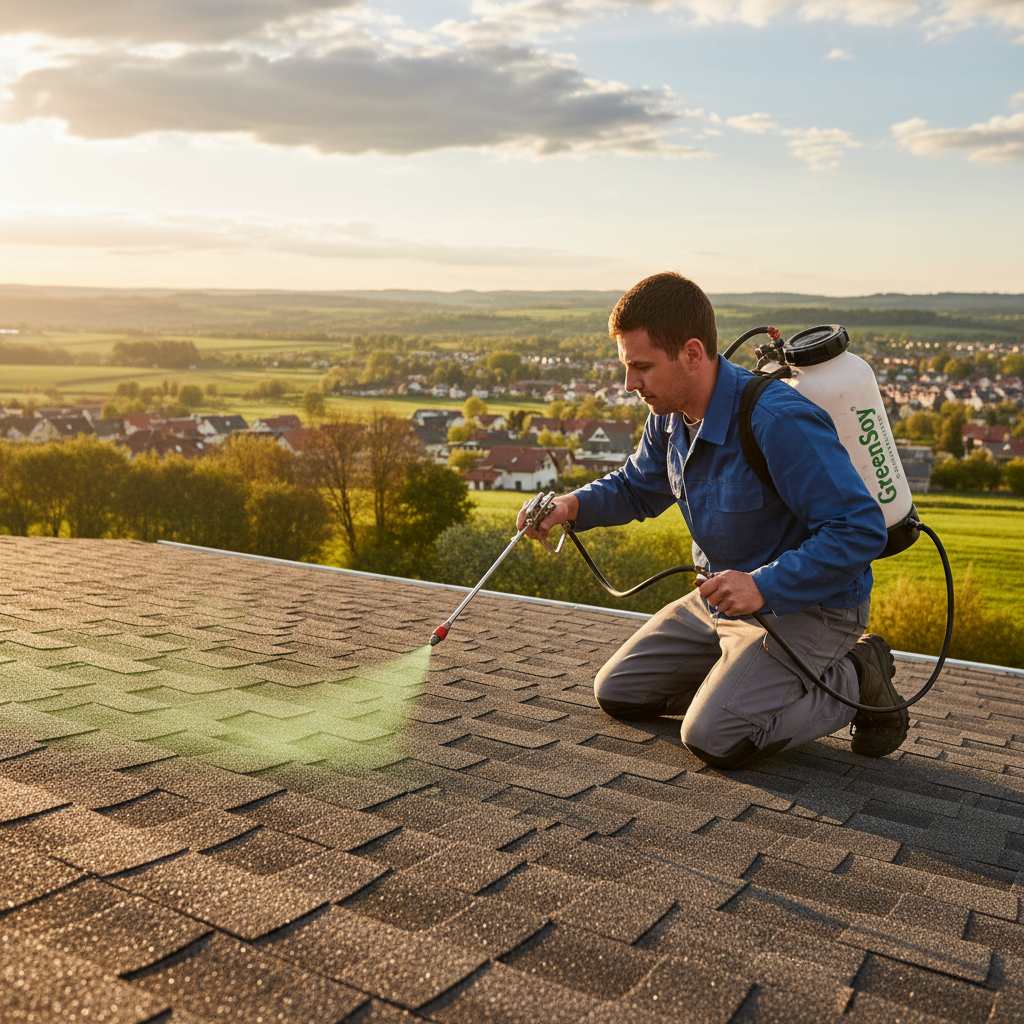
If your roof’s black streaks are getting attention from an HOA, an insurer, or your own curb-appeal instincts, you’re probably trying to fix it without shortening your roof’s life. Softwash roof cleaning targets the algae behind those stains with a controlled cleaning mix applied at low pressure, rather than relying on force.
But the word “softwash” gets used loosely, and that’s where homeowners in coastal southeastern North Carolina get burned, sometimes literally in the landscaping. Skip the label and focus on the mechanics: the real pressure at the shingles and the sodium hypochlorite strength that gets applied. This guide walks you through what softwashing is and isn’t, what results should look like over the next 30–90 days, and how to compare providers so you don’t pay for a buzzword or a risky “make it perfect today” promise.
Softwash Roof Cleaning: What It Is (and Isn’t)

Softwash roof cleaning applies a diluted sodium hypochlorite and water solution at low pressure to kill the algae behind black streaks on asphalt shingles. The stains then fade with weathering. The point isn’t to “blast” your roof clean. It’s to use chemistry with minimal force, so you do it right the first time and don’t sandpaper off granules.
Softwash isn’t pressure washing in disguise, and it isn’t scrubbing shingles to force instant brightness. It also isn’t the same as many store-bought “spray and forget” treatments that can be much weaker and slower, which matters in humid, coastal southeastern North Carolina where growth returns faster. If a provider can’t tell you what pressure actually reaches the shingle surface or what they’re applying, you’re buying a label, not a method.
Where Roofs Get Damaged During “Cleaning”
You hire a “roof cleaning” and end up with missing granules in the gutters or lifted shingle edges. Those are expensive problems that come from method, not bad luck.
Damage usually starts when a crew cleans shingles the way they’d clean concrete. That’s a bad idea. Use too much pressure and you’ll lose granules or lift edges; use abrasion and you’ll scuff the surface. If a contractor promises to make everything look perfect instantly, that’s a red flag, and Angi reviews won’t save you from a bad method.
Chemicals can cause their own problems when the mix is too strong for the roof or the job, or when runoff isn’t managed. For instance, a strong solution dumped through one downspout can hit your landscaping like a firehose and scorch shrubs, even if the shingles survive. You reduce risk by asking how they keep pressure at the shingle surface low and how they control gutters and downspouts during application.
Granule loss from aggressive washing is often easiest to spot after the fact when you see sand-like shingle grit collecting in gutters and downspout splash areas. Read more in our article: Granules In Gutters
What Shingle Makers Actually Allow
Asphalt-shingle manufacturers and industry guidance tend to converge on one core point: you can address algae staining with a diluted bleach (sodium hypochlorite) and water approach applied with low pressure, and you shouldn’t use high-pressure washing on shingles—roof cleaning safe for shingles depends on that method (see GAF’s R-102 algae staining bulletin). That matters because warranty risk usually comes less from whether you cleaned and more from how you cleaned.
A “spotless today” pressure-wash pitch is a trade: cosmetic speed in exchange for higher mechanical risk. A simple credibility check is to kick the tires on their method in plain terms. Have them explain the mix they use and the steps they take to keep pressure off the shingle surface.
The Hidden Variable: Chemical Strength and Dwell
One crew’s “softwash” might be ~0.5% sodium hypochlorite, while another’s is closer to 6%, depending on setup and conditions. That range is why one bid behaves gently and another behaves like a risk you did not agree to.
Those quotes can represent very different work because the term doesn’t specify chemical strength or dwell time on the shingles. Nextdoor threads prove that fast. A hotter mix can lighten heavy algae faster, but it also raises the stakes for runoff and scorched landscaping if the crew doesn’t control gutters and downspouts.
Lower-strength work often looks unimpressive on day one since it depends on kill-and-weather-off, not immediate removal. When you compare bids, ask: “What SH percent hits the roof, and what dwell time do you target before rinsing or leaving it to weather?” If they can’t answer, you shouldn’t hire them.
What Results Should Look Like Over 30 Days

A homeowner sees the crew pack up and thinks the job failed because the streaks are still there that afternoon. After a couple of rains, the roof starts to brighten on its own, and the change finally makes sense.
Softwashing is judged first by the biological kill, not by a photo-ready roof the moment the crew leaves. For example, black streaks may shift lighter (sometimes to brownish tones) right away, then fade as rain and weather rinse away dead growth over the next 30–90 days (as described in soft-wash training guidance from the National Roof Cleaning Authority).
Instant, total stain removal is the pitch that usually comes with unnecessary force. Instead, look for a clear direction of change within the first week and continued lightening after a few good rains, especially on the north-facing slopes where algae usually hangs on longest.
How Long It Lasts in Coastal NC
In Wilmington-area humidity, a softwash roof cleaning rarely “lasts” like a generic national blog number. If you’ve got live oaks shading the roofline or a north-facing slope that stays damp, algae can reestablish faster, sometimes on a 12–24 month rhythm; in clearer sun and airflow, you may stretch closer to 2–3 years.
Treat it like routine exterior maintenance. It’s maintenance, not magic. As an example, if you’re comparing a cleaning quote to replacement, run the math as a repeatable maintenance line item and be skeptical of fixed multi-year guarantees. Consumer Reports logic beats marketing here.
When Cleaning Beats Replacement (and When It Doesn’t)
Cleaning makes sense when the roof is structurally fine and you’re dealing mainly with biological staining, not leaks or failing shingles. By way of example, if your roof looks “shot” from black streaks but your attic stays dry, get three quotes for cleaning before you gamble on tear-off, and treat the attic like the scoreboard.
Cleaning doesn’t beat replacement when the roof is failing, not just ugly. If you’re seeing lifted or brittle shingles or recurring leaks around penetrations, you don’t need a prettier failure, you need a repair plan or a new roof. If you’re on the fence, ask the provider to point out condition evidence (not stain photos) and tell you plainly whether they’d clean their own roof in that state.
If your roof is on the edge between “stained” and “failing,” a professional inspection can document what’s cosmetic versus what’s a real water-shedding problem before you spend on the wrong service. Read more in our article: Roof Inspection Wilmington Nc
Comparing Providers Beyond the Word “Softwash”
You should be able to pick the safer bid without needing to “trust the vibes” or guess what they are really doing on your shingles when searching “roof cleaning near me.” A few specific questions will tell you whether you are buying controlled chemistry or hidden force and messy runoff.
“Softwash” by itself doesn’t guarantee anything, since different crews can sell the same term while using very different pressure and mix strength. For example, one company might apply at near garden-hose pressure and spend most of their time managing gutters and rinsing landscaping, while another “softwash” quote might rely on more force and hope the downspouts don’t dump strong runoff onto your azaleas.
| What to ask | What a good answer includes |
|---|---|
| What pressure actually hits the shingle surface, and how do you apply it (angle and distance)? | Clear, specific explanation of low-pressure application and how angle/distance prevent granule loss and edge lifting. |
| How do you protect plants during the job, not just before and after? | Active plant-wetting/rinsing plan during application and steps to prevent overspray and concentrated runoff damage. |
| How do you control runoff from gutters and downspouts, and what do you do if a gutter is clogged? | Specific downspout/gutter management approach to avoid dumping stronger mix in one area; contingency plan for clogs. |
| Can you show current proof of insurance (liability and workers’ comp) and your license status if required locally? | Willingness to provide current documentation (COI) and confirm licensing requirements for your area. |
Local pricing for roof washing can swing widely based on roof pitch, access, staining severity, and how much time the crew spends protecting landscaping and managing runoff. Read more in our article: Wilmington Roof Soft Wash Cost
FAQ — Softwash Roof Cleaning
Will Softwash Roof Cleaning Kill My Plants or Grass?
It can if runoff gets concentrated, especially where one downspout dumps a stronger mix onto shrubs. You protect your landscaping by choosing a company that actively manages downspouts and keeps vegetation wet during the job, not just as a quick rinse at the end.
Is It Safe for Pets and Kids?
Treat it like any bleach-based service: keep pets and kids indoors while the crew applies the solution and until any overspray areas have been thoroughly rinsed and dried. If a contractor can’t tell you how they’ll keep chemical away from patios and play areas, don’t hire them.
How Bad Is the Bleach Smell, and How Long Does It Last?
You’ll usually notice a pool-like smell during application and for a short time afterward, especially in humid weather. It fades as the solution dilutes and dries, so plan to close nearby windows and keep HVAC fresh-air intakes in mind if they sit near rooflines.
Do I Need a Sunny Day, and What If It Rains After?
Light rain after treatment typically doesn’t “ruin” the job because soft washing works by killing growth and letting weather gradually clear it. What matters more is whether the crew can control runoff safely on your property that day, so ask how they handle gutters and downspouts if storms are in the forecast.
What Should Softwash Roof Cleaning Cost, and How Do I Sanity-Check a Quote?
Pricing often scales with roof size and complexity, so a quote that changes logically with square footage usually makes more sense than a mysterious flat number. When two bids are far apart, ask what strength they plan to apply and what protection steps they include, because those choices change both results and risk.
Roof not getting any younger? Contact us or call 703-673-6301 to find out where you stand.For this done locally, see our soft wash roof cleaning in Wilmington, calibrated for coastal roofs.