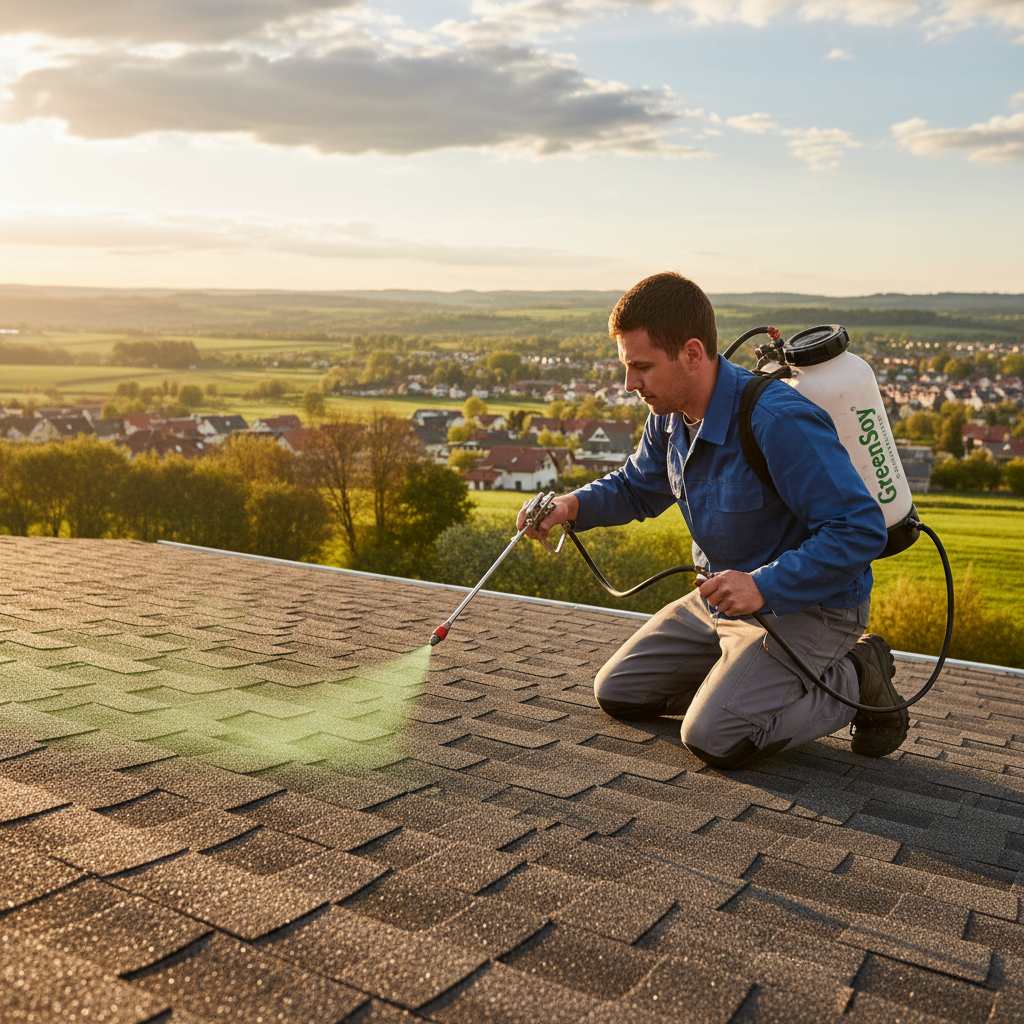
You’re looking for sustainable roofing solutions, and you want something greener and financially sane. For many coastal North Carolina homes, the most sustainable move is to avoid an early tear-off and extend a sound asphalt shingle roof. That means fewer dumpsters and less disruption.
This article shows you how to make that call without guesswork by weighing roof rejuvenation vs replacement. You’ll learn when your roof is a real candidate for life extension versus when replacement is the only responsible option and what “cool roof” claims are worth paying for in a hot, sunny climate.
Sustainability Starts With Not Replacing

If you’re searching for sustainable roofing solutions, it’s easy to fixate on “greener materials” and miss the simplest move with the biggest payoff: eco-friendly roofing that avoids a tear-off when the roof doesn’t need it. Asphalt shingles are manufactured at massive scale, and every premature replacement turns usable material into a disposal problem plus a new round of manufacturing and transport impacts.
For many coastal North Carolina homes, the sustainable move is straightforward: maintain a sound roof instead of chasing a flashy new system. After you’ve confirmed it’s still sound, the goal is to stretch the roof’s service life with maintenance that’s proportional to the problems. For example, if your 15 to 20-year-old shingle roof in Porters Neck is aging but not failing, a documented inspection and targeted repairs can reduce landfill waste and disruption while buying you meaningful time.
Before you let “eco-friendly” equal “replace,” ask: is this roof at end-of-life or is it simply dried out and maintainable? The difference changes your budget, your timeline, and your environmental footprint.
Is Your Roof a Candidate to Extend?
You can usually extend an aging asphalt shingle roof when the structure is still sound and the problems are localized, but I’m going to be blunt: if it can’t pass a hurricane roof prep checklist, it isn’t a candidate. In practice, that looks like shingles that are worn or drying out but still lying flat, with leaks traceable to fixable details (a pipe boot, flashing at a chimney, a few storm-lifted tabs) rather than broad failure.
A quick candidate check can help you separate fixable detail failures from signs the roof is truly too far gone to extend safely. Read more in our article: Roof Candidate Check
-
Widespread curling or cracking across most slopes
-
Soft or spongy decking (walkable “give”)
-
Repeated active leaks in multiple areas
-
Large sections with missing shingles after a coastal storm
The Hidden Sustainability Costs of Tear-Off
EPA reports about 8.6 million metric tons (9.5 million tons) of roofing shingles are manufactured each year. When a roof gets replaced early, your project taps into that bigger waste-and-production cycle whether you see it or not.
A tear-off also turns your yard into a landfill staging area. You’re paying for removal, hauling, and dumpsters for material that may still have usable life.
You take on the impact twice: first by landfilling material that still had service life, then by paying for a full new round of manufacturing and transport. When the roof can be safely maintained, skipping the tear-off is often the biggest sustainability win available.
A Practical Menu of Sustainable Roofing Solutions
You get a roof decision that feels simple: less waste and less hassle. The trick is choosing the smallest intervention that still buys real reliability.
If you’re trying to be eco-minded, you can lose weeks comparing “green roof,” “metal,” “solar,” and a dozen shingle SKUs while your actual roof problem stays unresolved, and in my opinion that kind of analysis paralysis is exactly why a Consumer Reports-style checklist beats vibes every time. Think of sustainable roofing solutions as selecting the smallest scope that restores reliability, starting with extending what’s already working.
| Option | What it is | Best fit (coastal NC) | Sustainability/decision note |
|---|---|---|---|
| Maintenance + restoration (life extension) | Keep existing shingle system; inspection, small repairs, and tested rejuvenation/restoration where appropriate | Roof is aging but still sound | Usually lowest landfill impact and least disruption |
| Partial repair (targeted rebuilds) | Rebuild specific weak points (pipe boots, step flashing, small damaged fields/valley areas) | Localized storm or detail failures, not broad system failure | Restores reliability without a full tear-off/dumpster |
| Coatings or reflective “cool” upgrades (conditional) | Add reflective/cool performance products where they’re justified | Benefits depend on sun exposure and attic insulation; verify metrics and cost | Not automatically sustainable; compare claimed performance vs roof area and premium |
| Replacement (when integrity is gone) | Full redo when roof can’t be made reliable | Widespread failure, wet deck, repeated leaks, major storm loss | Sustainability comes from durability and avoiding rework—not replacing on a schedule |
A useful next step is to ask any roofer to point to which menu item they’re recommending, and why your roof can’t safely fit the less wasteful option.
One-day restoration options can reduce disruption while still addressing the weak points that cause most leaks on aging shingle roofs. Read more in our article: One Day Roof Restoration
Cool Roofs: When Reflectivity Really Pays

A “cool roof” can be a real sustainability win in coastal North Carolina, but only when it changes something measurable: how much heat your house takes on during long, sunny stretches. Reflectivity tends to pay off most on roofs that get full sun and on homes where the attic/roof assembly doesn’t already block most heat transfer with strong insulation, because that’s when the premium is worth the squeeze. If your attic is well-insulated and ventilated, the inside of your home may not feel much difference even if the shingles reflect more sunlight.
Don’t buy reflectivity as a feel-good upgrade by default. Ask your contractor to show you the product’s solar reflectance numbers both when new and after aging, and to explain which directory or program those numbers come from. Then sanity-check the upgrade cost against your roof size: as a rule of thumb, energy guidance suggests cool-roof premiums stay cost-effective when they’re roughly within $0.64 per square foot above a comparable non-cool option.
Labels Without Confusion: ENERGY STAR vs CRRC
A homeowner signs off on a “cool roof” upgrade, only to find later the paperwork they needed for comparison or rebates is missing or points to a different program than they assumed. Once the shingles are on, the argument turns into shrugs instead of proof.
When a bid says “ENERGY STAR-certified cool roof,” don’t treat that as self-explanatory, and I’ll say it plainly: if you wouldn’t trust a contractor without a quick Better Business Bureau (BBB) check, don’t trust a label without the paperwork. In the real world, contractors often point to different things: ENERGY STAR refers to a specific qualified product program, while the Cool Roof Rating Council (CRRC) is a directory that lists tested performance values (it’s commonly used for code and rebate documentation, but it isn’t the same as ENERGY STAR certification). See CRRC’s overview of how its program relates to ENERGY STAR.
To verify a cool-roof claim without becoming an expert, ask the roofer to put this in writing: which program or directory they’re referencing, the exact product name, and the roof’s initial solar reflectance and 3-year aged reflectance values. If they can’t document the source, you aren’t comparing options, you’re comparing marketing.
Choosing a Contractor and Scope You Can Trust
You hire the “green” option, and six months later you are chasing stains in a different room because the real leak path never got fixed. In coastal weather, a vague scope turns sustainability into rework fast.
If you want results that hold up, a one-line bid can’t do the thinking for you. Vague scopes, skipped prep, or selling “restoration” over a wet deck turns a green plan into rework and waste fast. In coastal North Carolina, you’re dealing with wind-driven rain, salt air, and sudden storm damage, so you need a contractor who proves what’s happening, not one who guesses.
A trustworthy inspection and estimate should look like a diagnosis, not a sales pitch, and the difference is night and day: one is a chart with findings, the other is a brochure with promises. For instance, if they recommend life extension, they should be able to show you exactly where water gets in (a pipe boot, step flashing, a lifted tab line), what they’ll fix first, and how they verified the deck is still sound with a roof inspection Wilmington NC homeowners can review in writing.
Before you choose a scope, kick the tires on the evidence and get it in writing:
Coastal storms often cause subtle damage like lifted tabs and compromised flashing that may not leak until the next wind-driven rain. Read more in our article: Roof Problems After Hurricane
-
Photo documentation of key areas: penetrations, flashings, valleys, ridge/hip caps, and any suspected leak path.
-
Interior/attic findings: signs of staining, wet insulation, moldy sheathing, and whether bathroom fans dump into the attic.
-
Clear scope boundaries: what gets repaired vs left alone, what prep steps happen before any treatment/coating, and what would trigger a switch to replacement.
-
Proof-based product claims: the exact product name and the test directory/certification behind any “cool” or performance statement.
If a contractor won’t show you evidence, you’re not buying sustainability, you’re buying confidence theater.
The ROI Story: Costs, Payback, And Disruption
A couple compares two bids at the kitchen table: one is a full tear-off with a big price tag, the other is a day of restoration plus targeted fixes and a shorter invoice. The right answer is whichever one buys dependable years, not whichever one sounds more “complete.”
ROI isn’t just “what does it cost today,” it’s what you spend to get a dry, dependable roof per year of added service life, plus how much your household gets disrupted. To illustrate this, a one-day shingle roof rejuvenation program can pencil out when the roof is still sound because you avoid tear-off labor and dumpsters, while a targeted repair plan can be the better deal when you only need to rebuild a few failure points.
Don’t default to replacement as the “best value” if your roof isn’t truly at end-of-life, especially when an extend roof life treatment is still on the table. In my opinion, that mindset often buys the most waste and disruption instead of the most reliability. Before you commit, ask each bidder to show three numbers in writing: total cost, expected added years (with clear conditions), and what gets torn off and hauled away.
FAQ: Sustainable Roofing Solutions for Asphalt Roofs
Will My HOA Let Me Choose a More Sustainable Option?
Usually, yes, but it often depends on color and appearance more than performance. If your HOA restricts “nonstandard” roof colors, ask for “cool-color” shingle options that look traditional while improving reflectance, and get approval in writing before you schedule work.
Is Algae Staining a Sustainability Problem or Just Cosmetic?
On coastal North Carolina roofs, algae can speed up granule loss and keep the roof looking “older” than it is, like a slow scuffing that wears the protective grit away, which pushes homeowners into earlier replacement—one reason roof cleaning Wilmington NC contractors offer can be a practical step before you commit to replacement. If you can clean it safely and correct the causes (shade, debris, poor runoff paths) with warranty-friendly roof cleaning, you often buy time without sending shingles to a dumpster.
Will Restoration or Rejuvenation Void My Shingle Warranty?
It can, depending on the shingle brand, roof age, and what product gets applied, so you need the contractor to show you the warranty language that applies to your exact roof, because you want to do it right the first time. Don’t accept “it’s fine” as an answer; you’re managing risk, not buying a story.
When Is the Wrong Time of Year to Do Life Extension in Coastal NC?
If a contractor can’t get the roof clean, dry, and properly prepped because of frequent rain, heavy humidity, or storm-season scheduling, the most “eco-friendly” plan can turn into rework and waste. Ask what moisture checks and weather windows they require before they treat or seal anything.
Can I Count on Shingle Recycling Instead of Extending the Roof?
Not reliably, because recycling availability and contractor participation vary by area and by jobsite logistics. Treat recycling as a bonus if your roofer can document where the tear-off goes, not as a reason to replace a roof that still has safe service life.
Roof not getting any younger? Contact us or call 703-673-6301 to find out where you stand.A quick request for HardShore’s free Wilmington roof inspection gets you dated photos and a plain answer.