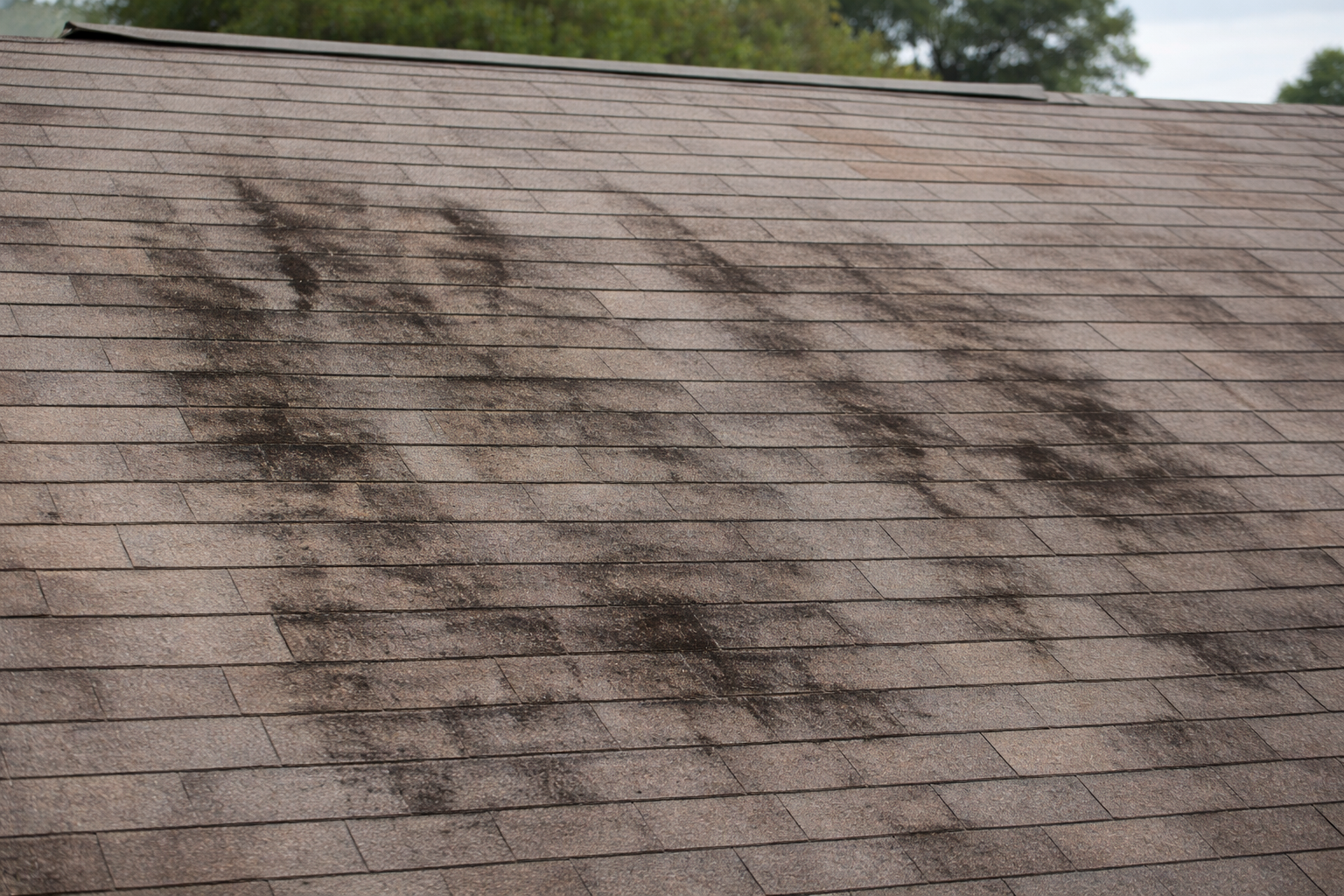
Your greener option is the one that keeps your house dry longer. Treating your roof beats replacing it when it credibly adds years. Replacing is greener when treatment would only delay an inevitable failure.
If your roof still has solid shingles and no active leak paths, a low-impact treatment can postpone a tear-off and keep a large pile of asphalt shingles out of the waste stream a little longer. But if you’re already dealing with leaks and brittle shingles, “eco” treatments can turn into extra trips, extra materials, and an earlier replacement anyway. This guide helps you make the call using a simple impact-per-year lens, so you don’t confuse cosmetic improvement with real life extension.
| What’s true right now | Greener default | Why (impact-per-year) |
|---|---|---|
| Shingles still solid; granules intact; no active leak paths; issues mainly surface-level (light algae/early moss/grime) | Treat | Credibly extends dry service and delays tear-off/disposal. |
| Active leaks or recurring wetting around details (flashing/chimney/valley/vents) | Replace | Stops ongoing damage that can expand scope/materials.
| Widespread brittleness/cracking/curling/missing tabs/exposed mat/heavy granule loss | Replace | Treatment won’t restore protective surface; delay is short and adds extra trips/materials.
| Cleaning/moss removal would require aggressive washing or heavy scraping | Replace | High risk of accelerating failure and forcing earlier tear-off.
When Roof Treatment Is Greener

You can spend money to make a roof look cleaner and still be accelerating the day it fails. The green choice starts with whether the roof can stay watertight longer, not whether it photographs better.
Roof treatment is greener when it credibly buys you more dry, leak-free years on a roof that’s still structurally sound, an approach often framed as eco friendly roof restoration. That usually means a roof with sound shingles, no active leak pathways, and problems limited to surface growth like light algae and early moss at the edges.
Don’t let appearance make the call for you. It is a trap. If an inspection shows your roof still has intact granules and solid flashing, a low-impact treatment can delay a tear-off. That delays disposal of a large volume of shingles and pushes back the tear-off timeline.
A basic inspection that checks granules, flashing, and soft spots can quickly tell you whether treatment is likely to add real years or just improve appearance. Read more in our article: Typical Roof Inspection
When Replacement Is the Greener Choice

Replacement is greener when a treatment would only disguise a roof that’s already failing at keeping water out, and pretending otherwise is wishful thinking, this is the core of roof restoration vs replacement environmental impact. Once moisture gets past shingles and underlayment, the “environmental” move isn’t stretching time, it’s stopping ongoing damage before you turn a shingle job into a sheathing-and-framing job. Case in point: a coastal roof that looks mostly fine from the street but has recurring leaks around a chimney cricket or step flashing. If you treat the field shingles and postpone the tear-off, you often buy a season or two of continued wetting, swelling, and rot.
You’re also in replacement territory when the shingles have little life left to recover: widespread brittleness and heavy granule loss that shows up as bald spots and piles in gutters. At that point, asphalt shingle roof rejuvenation doesn’t restore the protective surface that actually takes UV and abrasion, so you risk paying for a second mobilization and still sending the same roof to disposal later.
Finally, replacement can be the cleaner outcome when cleaning or moss removal would predictably damage the roof, especially when the real choice is soft wash roof cleaning vs pressure washing. If the only way a contractor can make it look better is aggressive washing or heavy scraping, you can accelerate failure and force an earlier tear-off, which is the opposite of waste reduction. The practical move: if an inspection says you need repeated patching, ongoing leak monitoring, and another intervention within a year or two, you’re not saving the environment, you’re stacking labor, trips, and materials on top of an outcome you already know. That belongs in your Angi notes, not your green plan.
Leaks at chimneys, vents, and valleys usually point to detail failures that coatings and surface treatments won’t correct on their own. Read more in our article: Roof Leaks Chimneys Vents
Do the Environmental Math Per Year

The U.S. generates roughly 10 to 11 million tons of asphalt shingles each year, and most of it still heads to landfills in many regions, underscoring roof replacement waste landfill impact (see EPA discussion of construction materials and asphalt shingles: epa.gov). Small decisions about extending or replacing roofs add up fast at that scale.
If you want a decision tool that’s harder to game than green marketing, think in impact per year of dry service, including roof treatment vs replacement carbon footprint, not “treatment good, replacement bad.” A replacement has a big one-time footprint: new shingles manufactured and delivered, a crew tearing off and hauling away material, and usually a dumpster headed to disposal. That footprint is like a storm surge, it hits all at once. At that scale, even small shifts in timing change how much tear-off material ends up in landfills. A treatment can be greener, but only if it adds enough real years to spread that replacement footprint out.
Here’s the simple math: (replacement footprint you delay or avoid) ÷ (credible added years). For example, if a treatment truly buys you 5 more leak-free years on a roof that would otherwise be replaced now, you’ve effectively lowered the “roof impact per year” for those 5 years. If the gain is only 12 to 18 months before you replace anyway, you’ve mostly increased labor, mobilizations, and product use. You have also added runoff risk on top of the same eventual tear-off.
To run this on your house, get specific about the inputs that change the result:
-
Added service life you can defend (based on roof condition, not how it looks): 1–2 years vs 4–6 years changes everything.
-
End-of-life path in your county: can your contractor actually route shingles into a recycling market (and will they), or is it a landfill dumpster by default?
-
Job logistics: long-haul trucking to a distant landfill or recycler, multiple mobilizations (treat now, replace soon), and how much tear-off you’ll need (one layer vs two).
-
Material intensity: full tear-off and redecking has a very different footprint than a clean replacement over solid decking.
The pressure test to apply: if your plan relies on “they’ll recycle it” or “this product will definitely add years” without proof, you’re just kicking the can down the road, not doing environmental math (overview of shingle scrap and end-of-life realities: rmrc.wisc.edu). Ask for the disposal/recycling plan in writing and pin the treatment to a measurable outcome, like “we’re trying to make it to year X before replacement,” not “we’re making it look new.”
If You Must Replace: Make It Low-Waste

Done well, a replacement can be one clean, well-planned job with minimal scrap and a clear end-of-life path. Done loosely, it becomes extra dumpsters, extra decking, and a bigger mess for the next tear-off.
If you’re replacing, make the tear-off and disposal plan the first thing you manage. It is your greenest win. A “new roof” can include avoidable waste: mixed dumpsters that make recycling impossible, unnecessary redecking, or a second layer that guarantees the next owner faces a bigger tear-off.
Before you sign, require two specifics, no exceptions: the disposal path in writing (landfill vs a real shingle-recycling drop, not “we recycle”) and a plan to minimize tear-off and scrap (accurate measurements and only replacing decking where it’s actually damaged); guidance and recycling-market specifics vary by location (example: NC DEQ asphalt shingles recycling). You don’t get environmental credit for recycling that never happens.
Even a few added years only matter if you can set realistic expectations for how long a rejuvenation treatment typically lasts on your roof type and exposure. Read more in our article: Roof Rejuvenation Results Last
Decision Checklist for Coastal Roofs
In salty, humid, storm-prone neighborhoods, your green decision hinges on one thing, salt air roof damage prevention included: will this choice keep your house dry for years without forcing an earlier tear-off, or are you being penny wise and pound foolish? Don’t settle for “it’ll look better” or “it’s near end of life” as the justification either way.
Ask these questions before you approve a treatment or a replacement:
-
Where is water getting in, if anywhere? Ask for the specific leak pathway (flashing, chimney, vent boot, valley) and what will be fixed, not just coated.
-
What do the shingles tell you up close? Have them show you brittleness, cracking/curling, exposed mat, or heavy granule loss (including granules in gutters).
-
How will you handle algae or moss without damaging shingles or landscaping? Get the exact method (no aggressive washing) and how they’ll manage runoff near beds, wells, or waterways.
-
How many “dry years” are you planning to buy? Make them put a realistic range on added service life and what would trigger stopping treatment and moving to replacement, so you are not caulking a leaky boat one weekend at a time.
-
If we replace, where do the old shingles go? Ask for the disposal or recycling destination by name and who’s responsible for getting them there.