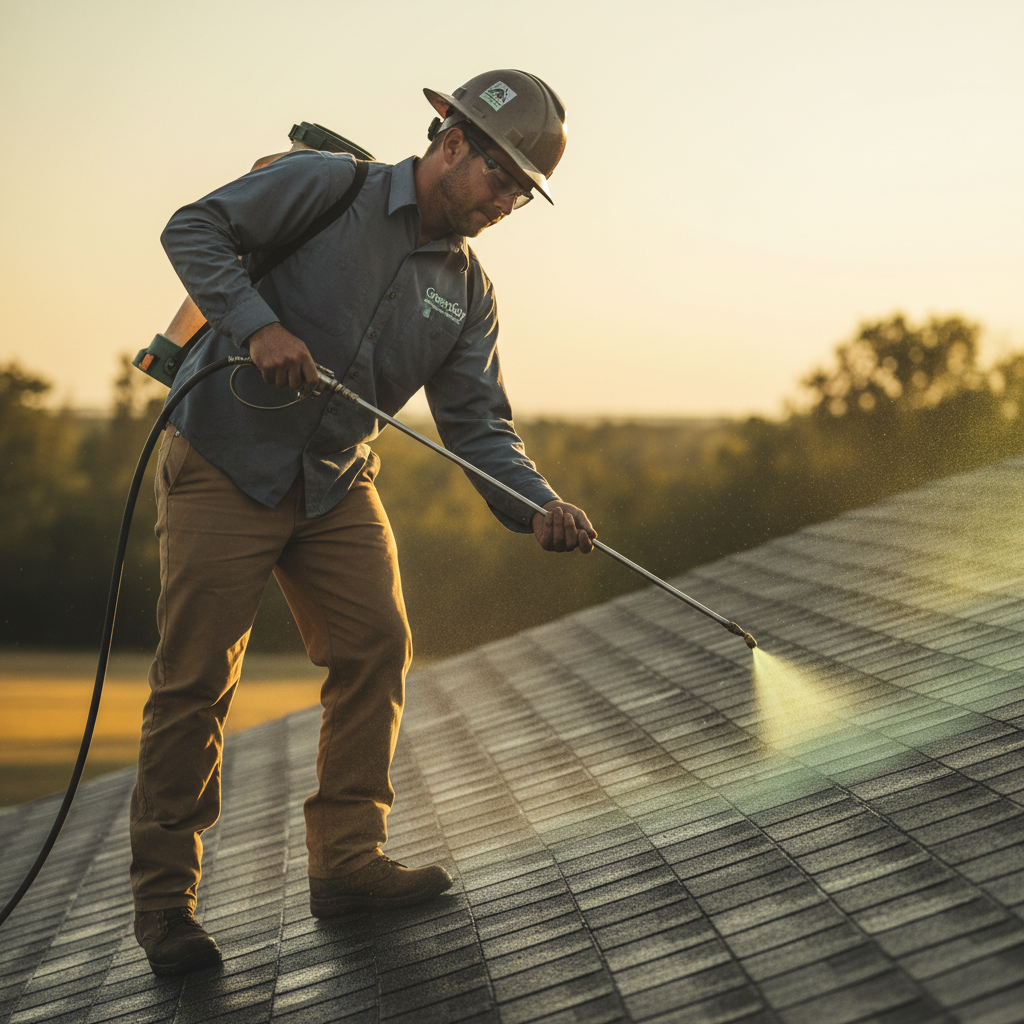
Is GreenSoy safe for your kids, pets, and plants? Usually, yes, if you prevent contact during application and until everything dries. The main risk is contact with wet overspray or runoff.
What matters most isn’t the “plant-based” marketing, but your real exposure pathways on treatment day: the drip line and any runoff safety. That’s worth the peace of mind. In this guide, you’ll learn what “safe” depends on, which documents to request (so you know what’s being sprayed), and the simple treatment-day precautions that keep your family and landscaping away until everything is dry.
| Exposure pathway (treatment day) | Highest-risk moment | What to do | When it’s OK again |
|---|---|---|---|
| Drip line / eaves runoff | While product is wet and can drip/transfer | Keep kids/pets away; move items away from drip line | When fully dry to the touch |
| Overspray on nearby leaves/hard surfaces | Immediately after application if mist/drips land | Lightly rinse leaves/hard surfaces if you see overspray; keep pets off area | After rinsed areas are dry |
| Paws/shoes tracking residue | If walking through damp splash/drip areas | Keep traffic off; re-route entry/exit paths | Once no wet/oily transfer occurs |
| Open water (birdbath/pond) | If runoff/overspray can reach water | Cover/move what you can; prevent discharge toward water | After any nearby wet areas are dry |
What “Safe” Depends On (and When)

“Safe” mostly comes down to how someone could contact the product on treatment day: overspray onto nearby leaves or runoff at the eaves. Think of the drip line like a leaky gutter seam.
The good news is the higher-risk window is usually short. Soy methyl ester roof rejuvenator emulsions are designed to soak into asphalt shingles in roughly 30–60 minutes (weather-dependent), so the keep-off concern is mainly about that wet period, not the days after (see an independent university-authored technical report). Treating “plant-based” as automatically harmless can distract from the real issue: keeping people and surfaces out of contact until it’s fully dry.
In coastal North Carolina, humidity and salt air can slow drying and increase how far runoff carries along soffits and downspouts. Read more in our article: Salt Air Humidity Shingles
GreenSoy Safety: The Documents to Ask For

A homeowner hears “plant-based” and waves the crew on, only to realize later the product sprayed that morning was not the same formula they assumed. A single page of paperwork would have prevented the guesswork.
If you want a straight answer on kid, pet, and plant safety, don’t treat “plant-based” as proof. That’s not good enough, even if HomeAdvisor contractor reviews and project cost guides say they’re “highly rated” for GreenSoy roof treatment safety. Different roof rejuvenators can all sound natural while using different chemistries. Some brands even market themselves as “SME-free.” To confirm what’s being sprayed, ask for paperwork that identifies the exact formulation.
Start with the Safety Data Sheet (SDS) for the exact product being applied (not a generic company SDS). Case in point: if the contractor says “GreenSoy,” you still want the product’s full chemical name and the SDS revision date so you’re not reading an old version for a different blend.
Use this quick filter when you review what they send
-
SDS (Sections 2, 8, 11, 12): Look for the stated hazards and recommended personal protection for applicators.
-
Exact base chemistry: Ask whether it’s a soy methyl ester (SME) water emulsion or a different oil blend. “Bio-based” and “food grade oils” describe a category, not the exposure profile.
-
Application rate and dry-time guidance: Request the labeled rate (often around 1 gallon per 100 sq ft) and the “keep off until dry” language, since most real-world risk is about the wet window and overspray/runoff that day (one test protocol used 1 gallon per 100 square feet).
-
Third-party technical report or test summary: If they reference independent testing, ask for the document. You’re looking for plain statements like absorption timing (often 30–60 minutes, weather-dependent) and performance notes that reduce secondary mess, like improved granule adhesion (for example, a report describing a soy methyl ester based water emulsion).
If they can’t provide the documents up front, take that as a red flag (some brands even market themselves as “SME-free”, so you need the exact formulation). You’re not being picky, you’re making sure the safety claim matches the actual product going on your roof.
A clear, step-by-step roof inspection helps you spot overspray-prone edges, gutter issues, and landscaping risk zones before any treatment starts. Read more in our article: Typical Roof Inspection
Your Treatment-Day Safety Checklist

Skip the prep and the “wet window” can follow you inside as paw prints, slick patio spots, or residue tracked across entryways. A few small moves before spraying starts keep the mess and the worry outside.
Plan for a short “wet window,” not a week-long hazard, but don’t let “bio-based” talk you into treating it like harmless cooking oil. I don’t want any nasty surprises. To illustrate this, the only time you’re likely to have a real kid/pet/plant issue is when material is still wet and can transfer to paws, shoes, leaves, or patio surfaces. Think of wet transfer as a smudge risk you can track onto skin, paws, and surfaces.
Before they start, move toys and patio cushions away from the drip line. Keep kids and pets inside until the roof and eaves are fully dry (often about 30–60 minutes, weather-dependent). If you see overspray on plants or runoff at the edge, lightly rinse leaves and hard surfaces with water and keep pets away from that area until it’s dry (as some contractor guidance notes these treatments can be easily washed off with water).
FAQ: Is GreenSoy Safe for My Kids, Pets, and Plants?
How Long Do Kids and Pets Need to Stay Inside?
Keep everyone away until the roof edge, gutters, and any splash or drip areas are fully dry to the touch, this is the practical answer to how long to keep pets inside after roof treatment. Many soy methyl ester water-emulsion rejuvenators absorb in roughly 30–60 minutes (weather-dependent), but you should follow the product label and your contractor’s dry-call for that day. Trusting anything else is asking for trouble, even if This Old House makes it look simple.
What Does “Dry” Mean in Humid Coastal Weather?
Tests report absorption in about 30 to 60 minutes, depending on temperature. Coastal humidity can stretch that window enough that a clock check becomes a bad substitute for a touch check, which is why people ask: is roof rejuvenation safe in coastal areas.
Skip the clock-only approach. “Dry” means you can touch the drip line or downspout area without getting an oily or damp transfer on your finger; if it still feels slick, it isn’t done.
Is It Safe Around Vegetable Gardens or New Transplants?
Gardens and new transplants are higher sensitivity zones, since direct wet contact can still stress tender leaves (standard precautions like keeping pets away until dry and rinsing exposed plants are commonly advised; see roof-treatment safety guidance). Ask the contractor how they’ll prevent overspray, and if you see any misting or drips on leaves, rinse them gently with water as a precaution.
What If You Have a Birdbath, Fish Pond, or Water Feature Nearby?
Don’t let runoff or overspray reach open water. Cover or temporarily move what you can, and ask your contractor to control downspout discharge so treated material doesn’t wash toward the pond.
Will It Smell Strong or Make Walkways Slippery?
You may notice an odor during application (roof rejuvenation chemical smell), but it should fade as the product absorbs and dries. More often, the practical issue is slick residue on patios or driveways after overspray or drips. Check those areas before letting kids, pets, or visitors back outside and rinse any visible residue.
Roof not getting any younger? Contact us or call 703-673-6301 to find out where you stand.