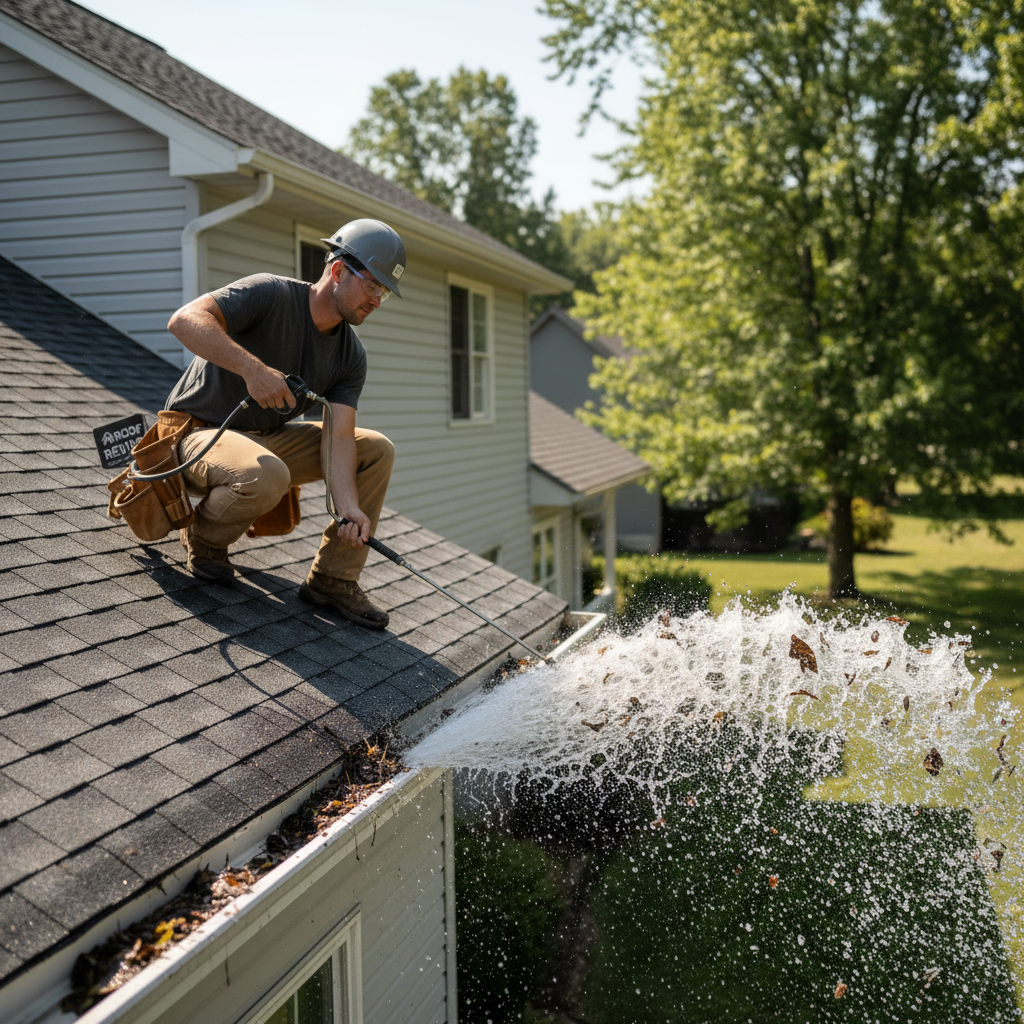
You can, but high-PSI pressure washing can damage a recently restored asphalt shingle roof. It can strip protective granules and break shingle seals. Even a gentler wash can cause problems if you do it too soon.
If you just paid for restoration or a rejuvenation treatment and the roof still looks stained, you’re not really asking how to make it look better. You’re asking how to clean it without turning a non-leaking roof into a leaking one or washing off the benefit you just bought, especially in Wilmington’s humid swings. In the sections below, you’ll get a practical way to separate a safe rinse from risky blasting and pick the timing and soft-wash approach that improves appearance without trading curb appeal for a repair bill.
When “power washing” means three different things
A neighbor tells you they “power washed” their roof with no issues, but what they did might have been a gentle rinse while you’re picturing a wand on full blast. That language mix-up is where a lot of avoidable roof damage starts.
When you say “power wash,” you might mean a garden-hose rinse to knock off loose dust and pollen, or high-PSI blasting from a pressure washer wand, roof power washing after restoration.
| What you mean by “power wash” | Typical force | Safer after restoration? | Main downside if misused |
|---|---|---|---|
| Garden-hose rinse (dust/pollen) | Low | Usually, if timing is right | Can still be too soon after treatment if you interrupt curing/soaking |
| Soft-wash / low-pressure rinse (pump sprayer) | Low | Yes (preferred lane) | Wrong mix/dwell/rinse timing can reduce results or cause uneven appearance |
| Pressure-washer wand / high-PSI blasting | High | No (highest risk) | Granule loss, lifted tabs/broken seals, and water driven under overlaps |
Only the first two stay in the “low-force” lane; the third is the one that can strip shingle granules and undo the point of a restoration.
Before you touch the roof, ask yourself: are you trying to rinse something off? Or are you planning to blast it off fast and make a rookie mistake?
Pressure Washing Roof Damage on Asphalt Shingles

You can do everything “carefully” and still end up with a roof that sheds grit into the gutters or shows a ceiling spot a week later. The problem isn’t the water; it’s the force and direction it hits the system with.
A restored asphalt shingle roof isn’t designed to be “waterproof” under force for asphalt shingle roof pressure washing. It’s designed to shed rain downhill in thin sheets. Pressure washing rewrites how water moves across the roof. Instead of flowing downhill, water gets forced sideways and uphill, which can turn a cosmetic clean into a performance problem.
The first common problem is granule loss. Those sand-like granules protect the asphalt from UV and wear. A high-PSI stream can scour them off, especially on edges and high spots. You might not notice from the yard, but the evidence shows up as extra grit in gutters/downspouts and new patchy areas that look darker or “raw.” If you just paid for a rejuvenation-style treatment, stripping granules is the fastest way to shorten the benefit you were trying to buy.
The second is lifted tabs and broken seals. The pressure and spray angle can catch the lower edge of a shingle and flex it up. That breaks the adhesive seal strip and leaves tabs easier to flip in Wilmington wind-driven storms. For instance, a roof can look cleaner the same day and then start chattering or lifting at the first strong coastal gust.
The third is water intrusion where it doesn’t belong. Water shot upward can get under laps and around pipe boots, leading to damp decking or a surprise ceiling spot later. If your mental model is “it’s fine because it’s just water,” you’ll miss that roofs fail when water goes against the drainage design.
Finally, there’s warranty and documentation risk. Many asphalt-shingle cleaning recommendations align around low-pressure chemical washing, not blasting, because roof pressure washing voids warranties. In my view, blasting is a bad call, and even Angi listings will flag it as avoidable damage when it goes wrong. If you’re cleaning to satisfy an insurer or to polish curb appeal for a sale, creating a roof that now sheds granules or leaks defeats the point.
If you see a lot of gritty sediment collecting in your gutters after any roof work, it’s often a sign of granule loss that should be taken seriously. Read more in our article: Roof Granules Coming Off
After Restoration, the Real Risk Is Timing
Even if you keep the pressure low, washing right after a restoration or rejuvenation can still backfire because you can interrupt how the treatment cures or soaks in. Many rejuvenation-style products need time and decent weather to bond or absorb (and heavy rain too soon can be a wash-off/dilution risk, depending on the product), as noted in discussions of asphalt shingle rejuvenation treatments. Hit the roof with water too soon and it can bite you later, like treading on unset roofing cement.
This is where coastal North Carolina weather doesn’t cooperate. A humid week and a surprise afternoon thunderstorm already push moisture into every nook. Add “just a quick rinse” and you can create the same outcome you were trying to avoid: a roof that looks cleaner today but loses the protective benefit earlier. If your instinct is to make the roof look finished immediately after service, that impulse can cost you more than the staining ever would.
Before you clean anything, get two clear answers from your contractor: the waiting period, and which weather conditions restart it (like heavy rain or extreme heat that flash-dries liquids). Then schedule any soft-wash or rinse after that window, not before.
Restoration and rejuvenation products often need a specific cure window before any rinsing, and that timeline can change if you get heavy rain or extreme heat right after application. Read more in our article: Roof Rejuvenation Timeline
The roof-safe alternative: soft wash after restoration

You get the stains trending lighter without gambling your granules, seals, or flashing details just to chase a same-day before-and-after photo. The trade is patience and process, not brute force.
If the roof still has algae streaks or light moss staining after restoration, the safer lane is a soft wash: you apply a roof-appropriate cleaning solution at low pressure, let it dwell, and rinse gently. The point isn’t to “erase” stains on contact. It’s to kill the organisms without scraping granules off shingles or driving water where it shouldn’t go.
Expect the results to show up over time. By way of example, the roof may look only slightly better the day of service, then improve over the next 30–90 days as dead growth weathers off in normal rain cycles. If you judge the method by same-day curb appeal, you’ll push toward pressure. That is the wrong yardstick, and the Home Depot mindset of instant results is how shingles get chewed up.
A practical way to sanity-check the plan: ask whether the cleaner is relying on chemistry and dwell time (good) or wand force (risk), especially on a recently treated roof.
If black streaks are what’s still bothering you after restoration, it helps to confirm whether you’re seeing algae staining versus simple weathering so you choose the right low-pressure approach. Read more in our article: Roof Algae Black Streaks
A homeowner decision rule for Wilmington, NC
Gentle cleaning often looks underwhelming at first, since improvement can take 30–90 days as dead growth weathers off with normal rain. If you expect instant brightening, you will be tempted to pull the one lever that causes the most damage: more pressure.
If you’re in Wilmington, treat roof cleaning like a runoff-and-risk problem. Let’s not turn this into a whole project that sends bleachy water down your gutters like a bad tide straight to the storm drain (the EPA emphasizes steps homeowners can take to reduce pollution reaching waterways via stormwater/runoff pathways). DIY only makes sense when you can stay in the soft-wash lane and you can control where the rinse water goes.
DIY is a go only when your roof is newer and tight, the staining is light-to-moderate algae rather than thick moss, and you’re comfortable applying a low-pressure roof wash and waiting weeks for the change.
Otherwise, it’s a no-go and you should hire a soft-wash pro, especially if you have heavy black streaking on the north side or any history of leaks.
Roof not getting any younger? Contact us or call 703-673-6301 to find out where you stand.