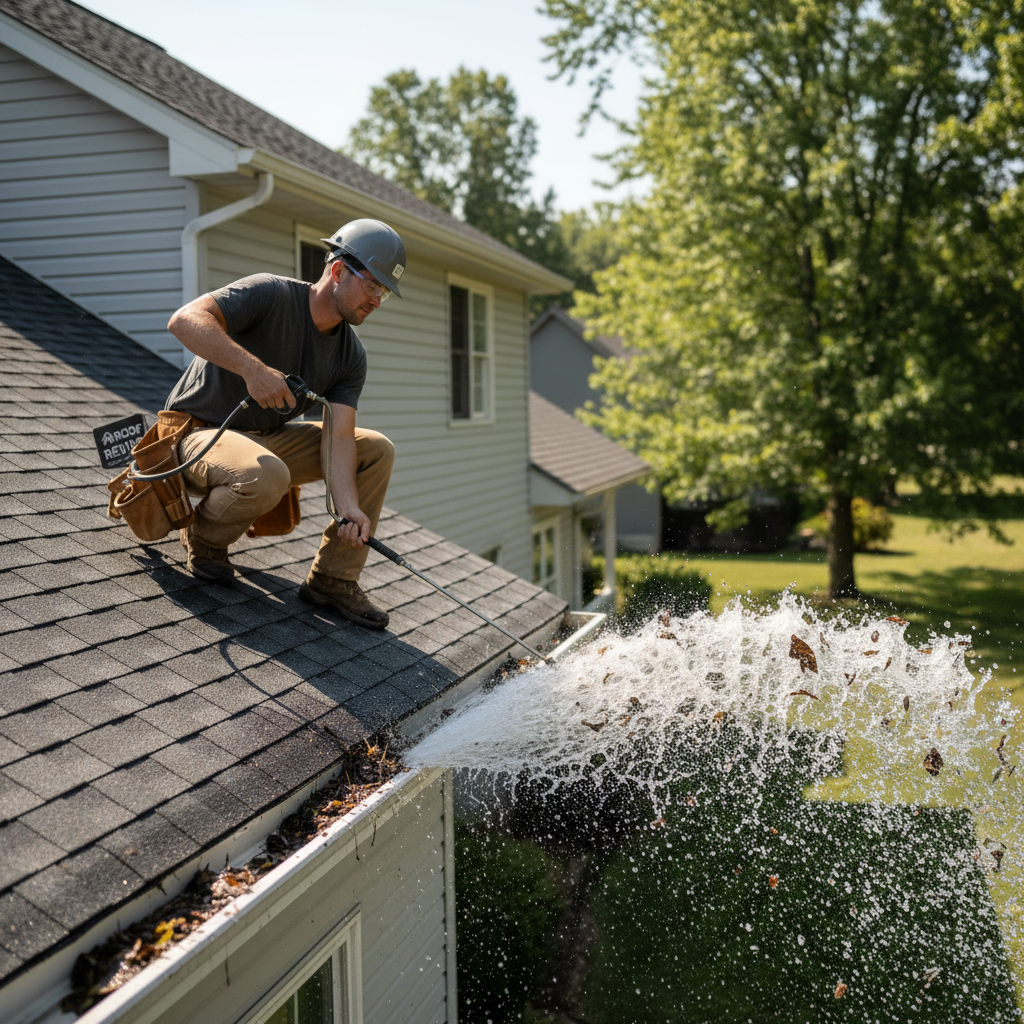
You clean algae streaks off a restored asphalt shingle roof by using a gentle, no-scrub soft-wash approach. You avoid pressure washing and brushing, which can strip granules or scuff the restored surface. You also give results time, since staining often fades after rain.
If you’re in Wilmington-area humidity and black streaks on roof are coming back, I don’t want to open a can of worms chasing a next-day showroom look. The goal is simple: keep algae in check without sanding through the finish or voiding the restoration. The sections below walk you through the two rules that prevent most damage and a quick way to confirm what “restored” means on your roof. They also cover a low-risk soft-wash method you can do from a ladder and what “normal” looks like in the 30–90 days after treatment so you don’t overcorrect and make things worse.
The Two Rules That Prevent Damage

Follow these two rules and you’ll sidestep most “I cleaned it and now it looks worse” outcomes on a restored asphalt shingle roof.
First: don’t pressure wash, this is roof cleaning without pressure washer, not a driveway blast. Industry guidance is clear here, and many reputable sources note a restored surface is less forgiving. Under high pressure, protective granules can lift right off. It can force water under shingle edges and leave lighter “clean” wear stripes.
Second: don’t scrub or brush it. Brooms and stiff brushes can scuff the shingle surface and take off what you paid to preserve. Case in point: if you feel grit coming off on your brush, that’s not algae, it’s your roof. When you catch yourself wanting to “just hit the worst streaks,” stop and switch to a no-agitation, low-pressure rinse approach instead.
Before You Clean a Restored Roof
A homeowner in a humid coastal neighborhood sprays what worked on their driveway, and a week later the roof has pale run marks and a contractor pointing to the fine print. The difference between a rejuvenator, a coating, and a “restoration plan” decides what counts as safe cleaning versus accidental damage.
“Restored” can mean very different things: a rejuvenation treatment absorbed into aging shingles or a sprayed coating that sits on top. That difference changes what chemicals are safe and what counts as damage. Not knowing what was applied isn’t “being careful.” It’s a rattle-can decision on a surface you already paid to protect.
Do a quick check before you touch anything.
If you’re unsure whether your roof was treated with a rejuvenator, a coating, or a combination, confirming the restoration type and curing timeline can prevent cosmetic streaking and accidental warranty issues. Read more in our article: Roof Restoration Types For example, if the product is still curing, even a low-pressure rinse can leave uneven tracking. It can look like staining. And if you’re already seeing exposed fiberglass mat or widespread granule loss in gutters, cleaning becomes secondary to an inspection.
| Preflight check | What to verify | If you can’t confirm, do this |
|---|---|---|
| Restoration type | Invoice/product name; ask contractor: “Rejuvenator, coating, or both?” | Pause and confirm before applying any cleaner |
| Timing | Days since application; any “no wash” instructions | Wait until curing/no-wash window has passed |
| Slope & access | Can you do it from a ladder without stepping on the roof? | Treat as a stop sign; consider a pro |
| Existing failure signs | Lifted tabs, soft spots, missing granules, exposed nail heads, active leaks | Schedule an inspection; cleaning is secondary |
| Warranty/contract terms | Exclusions on methods, chemical concentrations, contractor-only maintenance | Follow terms to avoid voiding coverage |
| Documentation | Wide shots of each slope + close-ups of worst streaks/edges/flashings/gutters | Photograph first, then proceed |
A Safe Soft-Wash Method for Algae Streaks

If you want the safest DIY approach, treat this as “kill, don’t scour.” Anything else is penny wise and pound foolish. The streaks are algae staining, not dirt you need to grind off, and the moment you chase instant results, you’re more likely to trade cosmetic improvement for granule loss or a blotchy, worn look you can’t undo.
Start by protecting what the runoff hits. Pre-wet shrubs and grass below the eaves, and keep a hose ready to dilute overspray as you work. Apply an asphalt-roof-safe soft-wash solution with a pump sprayer from a ladder, using roof cleaning chemicals safe for shingles. Use the right gear for the job, then work bottom-to-top to avoid uneven runs. Let it dwell per the product directions, then mist-rinse with garden-hose pressure only if the label calls for it or if you’re seeing heavy residue on flashings and gutters.
Expect the roof to improve over time. It’s common for dead staining to fade over the next few rains or over several weeks, so “it still looks streaky tomorrow” isn’t a reason to scrub harder (softwash guidance commonly notes 30–90 days for full visual clearance).
What results should look like after
Weather and rain may need 30–90 days to fully clear black streaks after treatment. If you judge it like a next-morning car wash, you will almost always be tempted into the one move that causes real damage.
Right after a soft-wash, a “working” roof may look only slightly better or even blotchy since the algae is dead but the staining still has to weather off. In Wilmington humidity, that fade can still take 30–90 days, which makes next-day judging a bad tradeoff.
Stop and rinse or re-wet anything that looks like damage, not dirt. Red flags include light, clean-looking stripes that follow your spray pattern or obvious granules collecting at downspouts. If you see that, don’t “touch up” the spot. Good enough for government work applies here. Dilute it with water and gently rinse with garden-hose pressure.
Granules collecting at downspouts after cleaning can be a clue that the shingle surface is wearing faster than normal, especially on older asphalt roofs. Read more in our article: Roof Granules Coming Off
Keep Algae From Coming Back
You get the best outcome when your roof stops being a recurring weekend project. Set up a few small roof algae prevention wins, and you can stretch the time between treatments without escalating to harsher, roof-wearing cleanings.
In coastal North Carolina, the real win is touching the roof less, period. Chasing a perfectly uniform look every season usually creates more wear than the algae ever would, especially on a restored surface.
Focus on prevention that changes conditions: keep valleys and gutters clear so wet debris doesn’t sit and feed growth, and consider zinc strips near the ridge. If Nextdoor neighborhood recommendations talk you into “just cleaning it again,” stick to a light-touch cadence so early regrowth doesn’t tempt aggressive cleaning.
In coastal humidity, preventive steps like keeping valleys clear and choosing the right algae-resistant approach can significantly extend the time between cleanings. Read more in our article: Prevent Algae Moss Return
Roof not getting any younger? Contact us or call 703-673-6301 to find out where you stand.If the streaks are winning, our Wilmington soft wash roof cleaning resets the roof in a single visit.