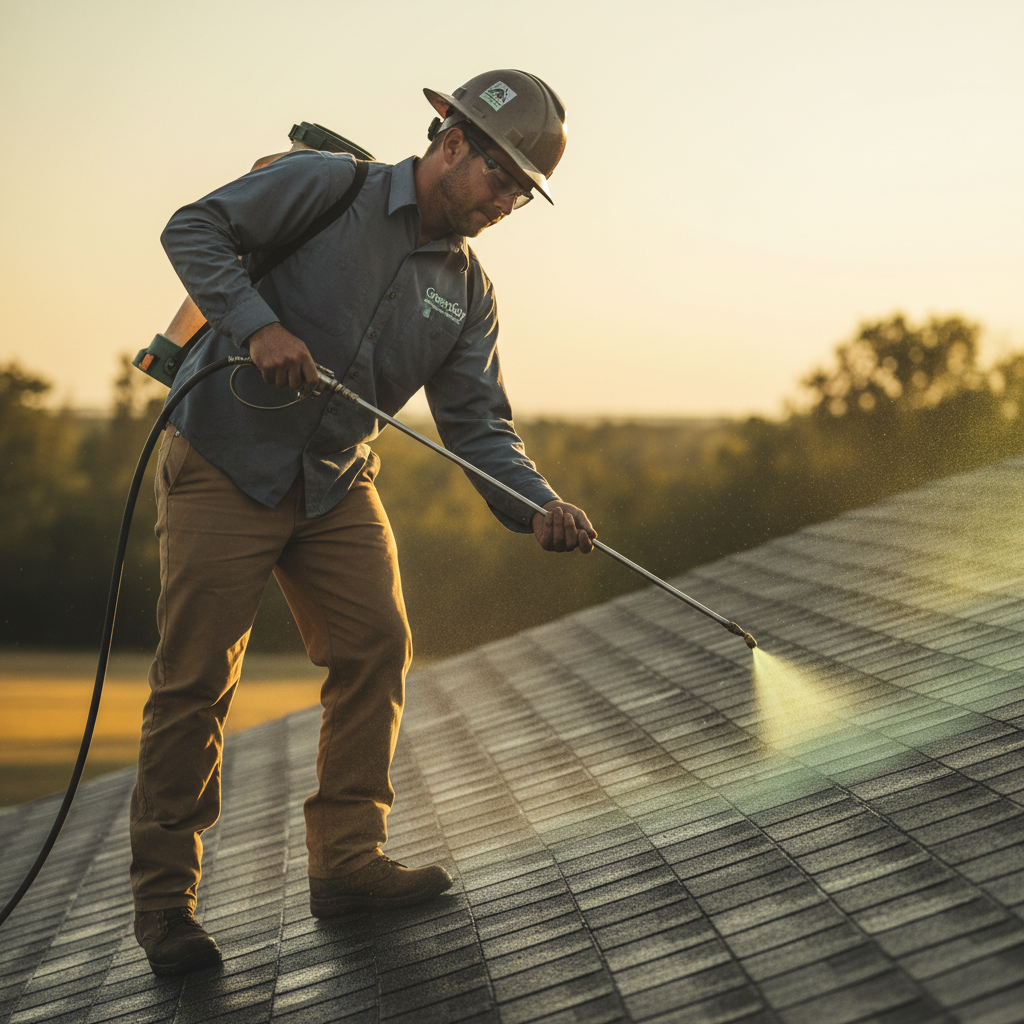
You’re watching your roof after a rejuvenation treatment and wondering if it did anything. The clearest signs it didn’t work are continued water intrusion and ongoing granule loss.
A darker, “newer” look can be misleading, especially in Wilmington’s heat and heavy rain cycles. What matters is whether the roof performs better at the places that fail first: transitions like chimneys and pipe boots, valleys and edges, and the shingle surface itself—those are the roof rejuvenation treatment failed signs that count. Below, you’ll learn the practical red flags to look for after the next big storm and over the following weeks and months (a roof rejuvenation results timeline), plus when it’s time to call for a documented re-check instead of assuming you just need to wait longer.
| Red flag (what you notice) | Typical time frame | What it usually points to | What to do next |
|---|---|---|---|
| Water spots, damp drywall, or a drip after rain | Next storm(s) | Flashing/seals/details at penetrations, valleys, edges | Request a follow-up inspection focused on transitions/penetrations |
| Fresh granules still collecting (recurring piles/bands) | Weeks to months | Treatment didn’t improve retention or application was too aggressive | Photo the recurrence; ask for a follow-up inspection based on trend |
| Curling/cracking/brittle tabs or blow-offs continue | Over a season of heat/UV + wind/rain cycles | Roof is mechanically end-of-life (not just “dry”) | Take dated photos; request documentation on repair vs replacement territory |
| Staining/algae unchanged or returns quickly | After rains / short window | Cosmetic claims not met; moisture/shade conditions remain | Take before/after photos; ask what staining reduction was included and next steps |
The first big red flag: water still gets in

You do not want to be the person who waits for “one more storm” and then finds the stain has turned into wet insulation, swollen drywall, or a growing moldy patch. The next heavy rain after a rejuvenation gives you the quickest reality check.
If you get a fresh water spot on a ceiling or damp drywall during the next heavy rain, treat that as a hard failure signal—a new leak after roof treatment (especially around chimneys, skylights, valleys, pipe boots, and roof edges). It doesn’t pass the sniff test to “give it time.” Roof rejuvenation might darken shingles or make them look newer, but it doesn’t consistently stop water that’s already finding a path into the house.
To illustrate this, a leak that shows up around a chimney chase or skylight usually points to flashing or detailing, not “dry shingles.” If the inside symptoms keep showing up after storms, your next move should be a follow-up inspection focused on penetrations and transitions, not another round of spray that’s a fresh coat of paint on a leaky bucket.
Leaks that show up at chimneys, vents, and other roof penetrations usually trace back to flashing details rather than the shingle field. Read more in our article: Roof Leaks Chimneys Vents
Granules Keep Coming Off
Some vendors even advertise testing that shows around 53% better granule retention as a headline benefit. If your gutters and splash blocks keep filling with fresh grit anyway, the one performance claim that should be easiest to verify is not showing up.
A little extra grit right after a spray treatment can happen, but the promise is improved granule retention over time—not continued granule loss after rejuvenation. Fresh, pepper-like granules showing up in the same spots weeks to months later is evidence the treatment didn’t deliver what you paid for. That’s unacceptable, and it’s a pattern that shows up in Google Reviews for local contractors.
Check where granules naturally concentrate: inside gutters after you clean them and at downspout outlets. “Too much” looks like recurring little piles or a gritty band that keeps reappearing after you rinse it away, not a one-time dirty flush. If it’s ongoing, take a quick photo each time you notice it and ask for a follow-up inspection based on that trend, not on how the shingles look from the street.
Recurring gritty piles at downspouts can be a practical way to confirm whether granule loss is ongoing or just a one-time flush after treatment. Read more in our article: Leftover Granules Gutters
Shingles Still Act End-of-Life

A homeowner pays for “more years,” then one normal wind event later they are picking shingle tabs out of the yard and hearing the same “it’s just old” explanation. The real test is whether the roof behaves differently when heat and storms do their usual work.
If the treatment “worked,” your shingles should act less fragile, not keep progressing into classic end-of-life behavior. Case in point: you still see curled edges (curling shingles after treatment) or new cracking on tabs after a normal coastal wind event, which is kicking the can down the road like putting bald tires back on before hurricane season. A darker, richer-looking roof can look like progress even while the underlying failure stays mechanical.
Pay special attention after a full season of Wilmington heat and a couple of big rain and wind cycles (because seasonal temperature cycling can reveal brittleness/curling that wasn’t obvious right after service). If curling spreads, cracking increases, or you find fresh shingle pieces in the yard, take dated photos and request a follow-up inspection that documents whether the roof has crossed into replacement territory rather than “needs another application.”
A roof can look darker after a treatment and still be too aged to reliably handle Wilmington’s wind and heat cycles without cracking or losing tabs. Read more in our article: Wilmington Roof Too Old
Algae and Staining Don’t Improve
If you paid in part for a cleaner-looking roof, you should see at least some improvement in the black streaking or green film that shows up fast in Wilmington’s humidity. When the staining looks unchanged after a few good rains or it comes right back within a short window, treat that as a sign the treatment didn’t deliver its claimed cosmetic value. Frankly, Angi (formerly Angie’s List) listings won’t save a result like that.
Don’t confuse looks with protection, though. A roof can stay leak-free and still shed granules while looking ugly. A darker “refreshed” roof can still be aging underneath. Take a simple before-and-after photo from the same spot in your yard (same time of day if you can), then ask the provider what staining reduction was actually included and what they’ll do if the roof’s appearance doesn’t change.
It Looks Uneven or Caused Side Effects
Obvious blotchiness, light and dark patches, or wide spray bands point to workmanship, not “how it’s supposed to look.”},{ That’s not a finish you’d accept staring at shingle sample displays in Home Depot’s roofing aisle. A uniformly darker roof doesn’t prove anything, and uneven color change often means uneven coverage.
Slick or oily feel on the shingle surface
Visible shoe-print track lines where someone walked it
Overspray haze on gutters
Overspray haze on downspouts
Overspray haze on siding
Overspray haze on windows
Your Warranty and Paperwork Don’t Add Up

In the best outcome, you can point to a clean, written chain of responsibility and know exactly who pays if something fails, including warranty coverage. If the documents get fuzzy after the treatment, you can end up with a roof that looks improved but is harder to defend when problems show up.
If your roof “looks better” but your paper trail got worse, the treatment didn’t work the way you needed it to. For instance, you call your shingle manufacturer afterward and learn they don’t approve field-applied coatings or rejuvenators. Then you realize your contractor can’t show you clear, written coverage terms that replace that lost backing.
Treat any mismatch as a decision trigger: get the manufacturer’s compatibility position in writing (or at least documented) and ask the provider to spell out what counts as failure and what they’ll pay for if problems show up, since ARMA cautions homeowners to consult the shingle manufacturer before applying coatings/rejuvenators. A darker roof isn’t proof of value if you’re now the one holding all the risk. At the end of the day, don’t throw good money after bad.
Roof not getting any younger? Contact us at Contact us or call 910-241-1152 to find out where you stand.