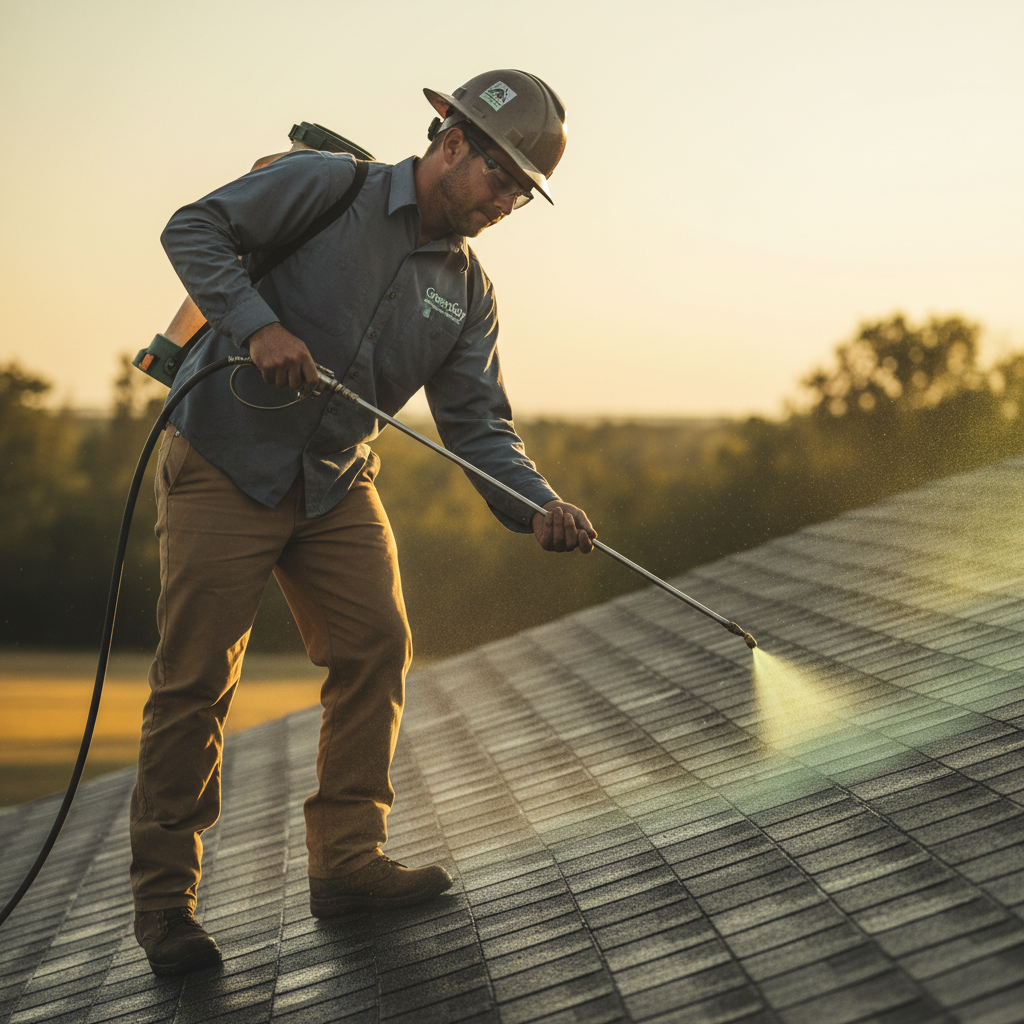
You can usually walk on your roof after treatment only once it’s fully dry and no longer slick. That timeline depends on what was applied, plus your weather and shade.
If you’re in Wilmington or elsewhere in coastal North Carolina, humidity and morning dew can make “looks dry” a trap, especially after a soy-based rejuvenator or soft-wash.
| What was applied | Main limiter before walking | Typical wait guidance in this draft | Coastal NC note |
|---|---|---|---|
| Soy-based rejuvenator (GreenSoy-type) | Traction (slick residue while wet/freshly absorbed) | ~30–60 minutes in good drying weather; plan for several hours in humidity/shade | Dew/shade can keep it slick even after the shine fades |
| Soft-wash / cleaning | Wet, slick shingles + damp runoff residue | Wait until fully dry for a while (not just “not raining”) | Roof can re-wet from dew; late morning/afternoon is safer |
| Coating / sealant / encapsulation | True cure time | At least 24–48 hours (often longer if cool/damp/overcast) | Ask contractor for today’s no-foot-traffic window |
In the sections below, you’ll identify the type of treatment, get a realistic wait-time range, and learn how to reduce slip risk and avoid scuffing or damaging shingles if you have to step up there.
First, Identify What Was Applied

Hearing “treatment,” many homeowners assume there’s one simple waiting rule. That assumption can end with them stepping onto what they thought was a cleaned roof and learning it was an oil-based rejuvenator.
Not all “roof treatments” behave the same when it comes to being roof treatment walkable. One blanket waiting rule doesn’t pass the sniff test. Start by checking your invoice or proposal.
If it’s a soy-based rejuvenator (often described as restoring oils and elasticity), the main issue right after service is usually slipperiness while it’s wet. Think like a freshly waxed concrete walkway, not paint curing. If it’s a soft-wash/cleaning, you’re dealing with wet, slick shingles and runoff residue. If anyone said roof coating, sealant, or encapsulation, treat it like a product that needs true cure time before foot traffic.
When Can I Walk on the Roof After Treatment?

If you had a GreenSoy-type rejuvenator, the practical limiter is usually traction, not some long “cure.” Even when the shingles stop looking shiny, a thin residue can still feel slick. With sun and airflow, the surface often settles in roughly 30 to 60 minutes, which is a practical roof rejuvenation drying-time range. In coastal North Carolina, plan for several hours if humidity stays high or the roof sits in shade.
If it was a soft-wash/cleaning, treat it like any wet roof (the application/rinse process can make the roof slippery and hazardous to walk on during and right after cleaning per asphalt-roofing algae-cleaning guidance). Do not go up until it’s been fully dry for a while, not just “not raining,” no matter what HGTV makes it look like. If a true coating/sealant went down, plan on at least 24 to 48 hours (longer in cool or damp weather) before any foot traffic (field-coating guidance commonly notes cure times can range roughly 12–72 hours depending on product and conditions per InterNACHI).
Your rule: “Not wet” isn’t the same as “safe to walk.” If you wouldn’t confidently plant your foot without testing, don’t talk yourself into it. Around Wilmington, morning dew can re-wet a roof that dried the afternoon before, so late morning or afternoon is usually the safer window.
Coastal humidity and shade can stretch drying times and make a “looks dry” roof re-wet and turn slick again by the next morning. Read more in our article: Salt Air Humidity Shingles
The Real Hazards in the First Hours
You wait a bit, the shine fades, and from the yard it looks fine. Then your first step loads the slope and you realize the roof slick after treatment is acting like it was lightly greased.
Right after treatment, the roof is risky for a simple reason. Let’s not open a can of worms by pretending time alone fixes it, because you’re dealing with a thin slick film plus moisture like a greased cookie sheet. With a soy-based rejuvenator, a light residue can stay slippery after the shine fades; with a soft-wash, damp granules can feel fine until your shoe loads the slope.
The risk can spike again later when the roof re-wets. In Wilmington-area conditions, shade holds dampness, which slows roof treatment curing in shade. Even a quick mist or morning dew can flip “dry yesterday” into “slick today.” If you’re telling yourself it’s safe because it looks dry from the yard, that’s the exact moment people take the step they can’t take back.
If you’re trying to reduce slip risk, the safest “inspection” is often from a ladder or window rather than putting weight on treated shingles. Read more in our article: Typical Roof Inspection
If you must go up, reduce damage and slip risk

Done right, you get in and out without scuffing shingles and grinding granules. Small choices like timing, footwear, and how you step change the risk more than bravado does.
If you absolutely have to step on the roof soon after treatment, assume it can still be slick even when it doesn’t look wet. If you are thinking about the Home Depot rental counter, you are already in over your head. Footing is only part of the problem. You also need to avoid scuffing shingles and accelerating granule loss while the product finishes soaking in.
Keep it simple with these roof treatment safety precautions
-
Delay to the warmest, driest part of the day (late morning to afternoon), and avoid shade lines where dampness lingers.
-
Wear clean, soft-soled shoes with no gravel in the tread; avoid boots with hard edges.
-
Walk like you’re on ice: short steps and no pivoting.
-
Step on the “flats,” not the edges or seams; avoid valleys and areas with visible runoff paths.
-
Minimize time and traffic: go up, do the one task (for example, reseat a popped gutter guard or take a quick photo of a vent boot), then get back down.
Quick DIY fixes on a roof, especially right after treatment, can create bigger problems if you slip or scuff shingles while chasing a small issue. Read more in our article: Small Roof Repair Risks
FAQ
Can I Go Up Just to Take Photos or Do a Quick Inspection?
If your goal is documentation, don’t default to stepping on the shingles. Take photos from a ladder at the eave (without climbing onto the roof) or from an upstairs window, and you’ll avoid the slickest, highest-risk part of the day.
It Rained After the Treatment. Did That Change When I Can Walk on It?
Some soy-based rejuvenators can dissipate on the surface in about 30 minutes in good conditions, but rain can undo that progress and bring the slick-surface problem back. Treat new water like a fresh variable, not a minor interruption.
Yes, it can. Rain (and even heavy dew) can bring back the same slip risk you were trying to wait out, so if you’re wondering how long before rain after roof treatment, reset your clock and wait for a genuinely dry stretch, not just “the storm passed.” If your contractor applied a true coating or sealant, rain can also affect performance, so ask whether they need to re-check coverage.
How Can I Tell It’s Safe to Walk, Not Just “Looks Dry”?
If the roof still feels at all slick at the edge, it’s not ready, even if it lost its shine. In coastal North Carolina, the safest window is usually late morning to afternoon after sun and breeze have had time to burn off dew and surface moisture.
What Should I Ask the Contractor Before I Decide to Step on the Roof?
Ask, “Was this a soy-based rejuvenator, a soft-wash cleaning, or a coating, and what’s your no-foot-traffic window for today’s weather?” Do not take a Nextdoor thread as your safety plan. Also ask whether they recommend staying off entirely and handling your task from a ladder, since many roofs can be serviced and inspected without walking on the field of shingles.
Does an Older Roof or a Low-Slope Roof Change the Answer?
An older roof changes it because the risk isn’t only slipping, it’s breaking brittle shingles or finding soft decking near past leaks. A low-slope roof can still be slick, and it can hide ponding or damp seams, so treat it as “easier to stand on” but not “safe to work on” until it’s fully dry.
Roof not getting any younger? Contact us or call 703-673-6301 to find out where you stand.For Wilmington homes, our free Wilmington roof inspection turns worry into a written answer in about an hour.