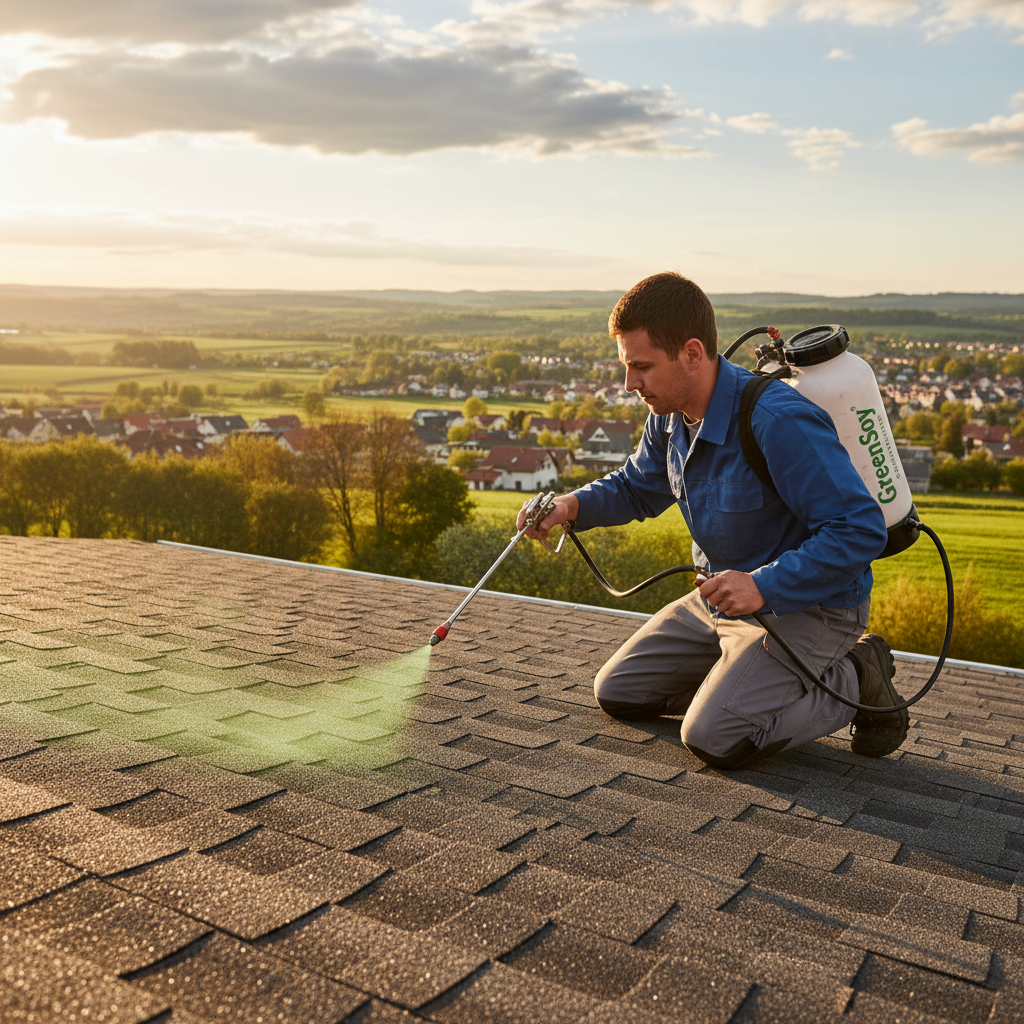
Will a roof rejuvenation treatment help prevent damage from hurricanes or strong winds? Sometimes, but only in a narrow way. It may reduce blow-off risk if your shingles are partially unsealed and can re-adhere.
If you’re in the Wilmington area and trying to buy time before a full replacement, act early. To decide if a spray-on treatment helps, focus on what wind attacks first, since one loose tab can start the zipper effect. This guide explains how shingle tabs start to lift and peel in strong winds, and what rejuvenation can and can’t change about your roof system.
What Wind Usually Destroys First

A gust rarely takes the whole roof at once; damage tends to spread from tab to tab. If one edge is already a little loose, wind can turn that tiny flaw into a zipper you cannot stop mid-storm.
On most asphalt-shingle roofs, wind damage starts when shingle tabs aren’t fully bonded down (IBHS wind-uplift of asphalt shingles). When a corner or edge lifts, wind slips underneath and ratchets the tab upward.
That means the first failure often isn’t the shingle “wearing out,” it’s the seal letting go in patches, especially near edges and around recent repairs. After a windy day, a practical check you can do is look for any tabs you can gently lift by hand or see fluttering. If the NHC cone has you watching updates, those are the tabs most likely to start the blow-off chain.
A quick post-storm walkaround can reveal subtle lift, creasing, and edge damage before it turns into a leak. Read more in our article: Roof Problems After Hurricane
What Rejuvenation Can and Can’t Change
A roof rejuvenation treatment only affects the surface it reaches. That part is the asphalt in the shingle. It may restore some flexibility so tabs sit flatter and marginal seal strips have a better chance to bond again. It is not my first rodeo. It’s aimed at the early lift-and-peel pathway, trying to slow the first tab that starts the chain.
What it can’t do is upgrade the mechanical system that keeps your roof on the house: nail placement and holding power or decking condition. If you’re counting on a spray-on treatment to make an older roof “hurricane resistant,” you’re solving the wrong problem.
| Your main wind weak point looks like… | Rejuvenation likely helps? | Why | Better next step |
|---|---|---|---|
| Tabs partially unsealed (corners lift a bit, mild curl, shingles otherwise sound) | Sometimes | May improve flexibility so tabs lay flatter and marginal seal strips can re-adhere | Re-seal specific loose tabs; consider rejuvenation as life-extension |
| Roof cool/shaded so sealing rarely activates | Unlikely | Even improved flexibility won’t create reliable re-seal without heat | Targeted hand-sealing/repairs; address shading/ventilation factors where feasible |
| Missing/creased shingles; widespread brittleness | No | Material damage/advanced aging isn’t fixed by a spray-on treatment | Repair/replace affected areas; plan for replacement |
| Mechanical issues (bad nail placement/holding, soft decking, weak starter/edge, loose ridge caps) | No | Treatment doesn’t change attachment, edges, caps, or decking strength | Mechanical repair (edge/starter/ridge/nailing/decking) or replacement |
| High-wind exposure site (open lot near Intracoastal/beachfront) | Limited | Uplift forces are higher; treatment won’t change roof-system design | Prioritize code-level/mechanical upgrades; manage expectations for any treatment |
When Roof Rejuvenation Helps in Strong Winds

A homeowner seals up everything that looks fine from the street, then still finds a few corners that flick up on breezy afternoons. Those are the borderline roofs where a little regained flexibility can matter more than a fresh coat of confidence.
Rejuvenation can help most when your roof’s weak link is partial unsealing: tabs that sit slightly curled, feel brittle, or lift at corners even though the shingles and decking still look sound. There, added flexibility may help tabs sit down and let marginal seal strips bond again, especially on sunny slopes where heat does the work.
It’s unlikely to move the needle if your roof stays cool or shaded (so it never really re-seals) or if the real problem is mechanical like high/overdriven nails or soft decking, and no amount of spray fixes that. In those cases, wind still finds an entry point under the roof.
A structured inspection helps separate “can be resealed/repaired” issues from attachment problems that only a re-roof can fix. Read more in our article: Typical Roof Inspection
The Checks Before You Treat
IBHS has observed winter-installed shingle panels taking up to about 12 weeks to become fully tacky and sealed (IBHS Wind Uplift of Asphalt Shingles (PDF)). If your roof is still in that vulnerable window, timing and compatibility matter as much as the product you spray.
Before you pay for rejuvenation, treat it as a pre-hurricane inspection plus a compatibility and condition check, not a “storm upgrade.” Ask your roofer to confirm your shingle manufacturer allows any coating/resaturant/rejuvenator on that specific product and age. ARMA has warned homeowners to check first, because the wrong chemistry can turn your warranty into a house of cards (ARMA technical bulletin (Feb 2026)).
Then ask them to determine whether your wind risk is mainly a sealing issue you can improve as part of roof maintenance Wilmington NC. If you’ve got lifted tabs or loose ridge caps, address those mechanically first. Also be honest about exposure: if you’re on an open lot near the Intracoastal or beachfront, a treatment won’t change the fact that uplift forces are higher.
Wilmington-area decision: treat, reseal/repair, or replace

Go into hurricane season knowing what each option buys you: time, reduced risk, or a true reset in the roof rejuvenation vs replacement decision. The right call is the one that matches your roof’s weak point and your tolerance for a midnight tarp run.
If you’re heading into hurricane season with a roof that still has a few usable years, treat rejuvenation as a life-extension play, not storm armor: it’s most defensible when your main issue is marginal tab sealing and you can accept “lower odds of a blow-off,” not “won’t be damaged.” If you can identify specific loose tabs, ridge caps, or repair areas, reseal/repair first because targeted adhesion fixes usually buy more wind protection per dollar than a blanket treatment (ARMA guidance on resealing/hand-sealing after wind damage (Feb 2026)).
Replace when you’re seeing widespread brittleness, repeated blow-offs, soft decking, or multiple leak points, or when you can’t tolerate even a small chance of emergency tarps and interior damage, and that is the only responsible call. A “spray it and hope” plan ignores how wind failures usually begin.
On an older coastal roof, the tipping point is often whether you’re seeing isolated failures or widespread aging across multiple slopes. Read more in our article: Wilmington Roof Too Old
FAQ
Do Wind Ratings Mean My Existing Shingles Will Perform That Way?
Not necessarily. Most wind ratings are based on test setups where shingles are fully sealed under controlled conditioning, but your real roof can have patchy sealing from shade, dirt, age, or prior repairs (IBHS summary of ASTM conditioning and sealing assumptions (PDF)).
How Soon Before Hurricane Season Should I Treat or Reseal?
Don’t wait until a named storm is in the forecast. Even new or repaired shingles can take time to fully seal in cooler or low-sun periods, so give yourself weeks, not days, to inspect, reseal loose tabs, and address weak spots.
Will Rejuvenation Void My Shingle Warranty?
It can, depending on the shingle manufacturer and product. Before you schedule anything, ask your roofer to confirm in writing that your specific shingle line allows coatings/resaturants/rejuvenators, because industry guidance warns that incompatible treatments can create performance and warranty problems.
Will Insurance See Rejuvenation as a “Hurricane Mitigation” Upgrade?
In most cases, no. FEMA’s hurricane guidance is about proven mitigation, not spray-on hope. Insurance tends to care about roof age, documented repairs, and code-level features, so treat rejuvenation as maintenance. Keep receipts, photos, and an inspection note you can upload to your carrier portal later.
What Should I Ask a Roofer So I’m Not Just Buying a Spray?
Ask them to show you where tabs are lifting (especially at eaves, rakes, ridges, and around past repairs) and whether they recommend targeted hand-sealing or ridge-cap repairs first. If they can’t point to specific adhesion failures they’re fixing, you’re paying for a promise instead of a risk reduction.
Roof not getting any younger? Contact us or call 703-673-6301 to find out where you stand.