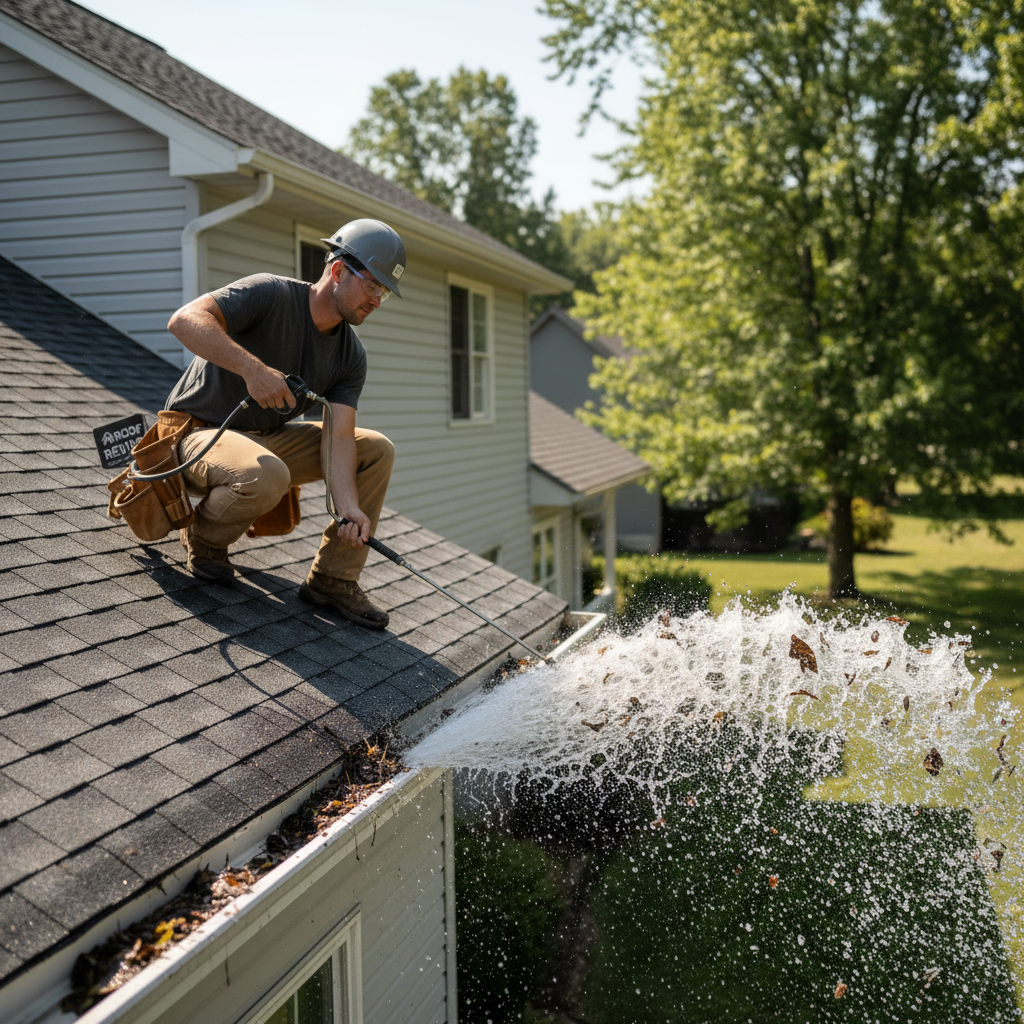
Can algae or moss shorten the life of asphalt shingles? Yes, but not equally. Algae staining is usually cosmetic, while moss can shorten shingle life by holding moisture and lifting edges. In many cases, aggressive cleaning does the fastest damage.
If you live around Wilmington, you see this most on shaded or north-facing roof planes that stay damp longer. You don’t need scare tactics or a one-size-fits-all rule. You need to kick the tires on what you’re looking at, because the roof is a system, not a billboard. This guide breaks down algae vs. moss, the red flags that justify action, and the cleaning methods that shorten roof life. It also covers the paperwork that can matter for insurance, warranty, and resale.
Algae vs. Moss: Which Really Shortens Shingle Life?
Algae usually shows up as black streaks or staining on asphalt shingles. It looks alarming, but there’s no scientific evidence algae stains directly damage asphalt shingles. If this were a Consumer Reports decision, panic would not make the list, even if the roof can run hotter and look “old” fast.
Moss on roof shingles is the green, fuzzy growth that can build thickness. In Wilmington’s humidity and shade, it acts like a wet blanket. It keeps shingle surfaces and edges damp longer and raises the odds of lifted tabs and shed granules, does moss damage asphalt shingles is the practical concern here. If you treat both problems the same way, you can do more damage with scrubbing or pressure washing than the algae ever would.
| Growth type | Typical look | Shingle-life impact | When it’s worth action |
|---|---|---|---|
| Algae | Dark streaks/staining | Usually cosmetic; no solid evidence staining itself directly damages shingles | Act mainly for appearance, HOA/resale concerns, or if you’re already doing gentle maintenance |
| Moss | Green, fuzzy/matted growth with thickness | Can shorten life by holding moisture, slowing drying, and lifting edges/tabs | Act when mats lift edges, pack valleys/butts, or keep areas damp/green long after rain |
When Growth Becomes a Roof Problem

You can ignore a lot of ugly on a roof right up until it starts changing where water sits and how long things stay wet. The mistake is waiting for a leak to be the first signal that growth crossed the line.
In coastal North Carolina, growth stops being “just ugly” when it changes how water moves and how shingles dry out. If you’re only seeing light, flat dark streaks, you’re usually dealing with a cosmetic issue, but thicker growth can push you toward earlier repairs.
Treat it as a performance risk if you see moss thick enough to lift shingle edges, growth concentrated along shingle butts and in valleys, granules piling up at downspouts after you disturbed the area, or shingles that stay damp and green days after a rain on the same roof plane.
Moss mats that lift edges or pack into valleys are the situations most likely to trap moisture long enough to accelerate granule loss and tab lifting. Read more in our article: Eliminating Moss Roofs
The Hidden Risk: Cleaning That Damages Shingles

A homeowner in a hurry blasts the dark streaks off on Saturday, and by the next big rain they are wondering why the gutters are full of grit and a few tabs look different. The roof looks better in photos, but it aged in a day.
If you take one thing seriously here, let it be this: the wrong “cleanup” turns your roof into a money pit. The damage is subtle at first, but it compounds fast. Think of it as abrasion that strips protection where you need it most. Shingles rely on their granules and sealed tabs to handle sun and shed water (inspection-style guidance commonly flags aggressive removal as a bigger near-term risk). High-pressure washing and stiff brushing can strip granules, loosen tabs, and even push water up under the shingle edge. For example, a quick weekend pressure-wash can leave you with bare spots, a pile of granules in the gutters, and a roof that suddenly looks “clean” but is now closer to failure.
Avoid any approach that’s primarily mechanical force, especially on a 10–25-year-old roof: pressure washing and hard scraping. If a contractor’s plan depends on making the roof look perfect in one afternoon, you should not buy it.
High-pressure washing can remove the protective top layer of granules and shorten the time your shingles can handle UV and water shedding. Read more in our article: Pressure Washing Roof If you found them on Nextdoor, you should still question whose timeline that protects.
A Homeowner Decision Path for Roof Cleaning
You want an answer that protects the roof, not just its curb appeal, and you want it without guessing from the ground. A simple go or no-go path can keep you from turning a minor cosmetic issue into a repair.
Start with two questions: can you safely access the roof and can your shingles take it? If you can’t walk it confidently (steep pitch or slick north-facing shade), or the roof feels brittle (curling edges or lots of loose granules), skip DIY. At that point, you’re choosing between a gentle pro cleaning (roof cleaning Wilmington NC) or simply planning replacement.
Use this quick filter.
Older shingles that feel brittle or are already shedding granules can be damaged further by even “light” cleaning, so age and condition should drive the decision. Read more in our article: Shingle Brittle Cracking Treatment Light dark streaks with no lift are good enough for now, but think of it as a decision tree: moss mats lifting edges or packed valleys mean hire soon, and 20+ years old with brittleness means patch it and move on to replacement planning.
Paperwork stakes: insurance, warranty, resale
Insurers now commonly lean on aerial or drone photos when they decide whether a roof looks like a maintenance risk. If the images raise a flag, the fastest way out is often documentation, not an argument.
Even if the streaking or green patches aren’t destroying your shingles, other people can treat them like a problem. A visibly mossy roof can get tagged as “maintenance-related” from aerial or drone photos long before you have a leak. If you can compare contractors on Angi, you can document the roof too, because “trust me” is not a plan. Likewise, roof algae impact on shingle warranty is real in practice: shingle warranties often limit or exclude coverage tied to discoloration or contamination from algae or lichen (for example, some major warranty documents list discoloration/contamination from fungus, mold, lichen, or algae as excluded/limited). A future buyer may read roof growth as “this roof hasn’t been cared for,” even if it’s still performing.
Keep simple proof so you’re not arguing from memory later: dated wide-angle photos of each roof plane, the invoice/work order that shows the method used, and any product or service notes about what was applied. If you do nothing else, document what you’re seeing now, because “it’s only cosmetic” doesn’t help if someone else’s decision depends on appearances.
Roof not getting any younger? Contact us or call 703-673-6301 to find out where you stand.