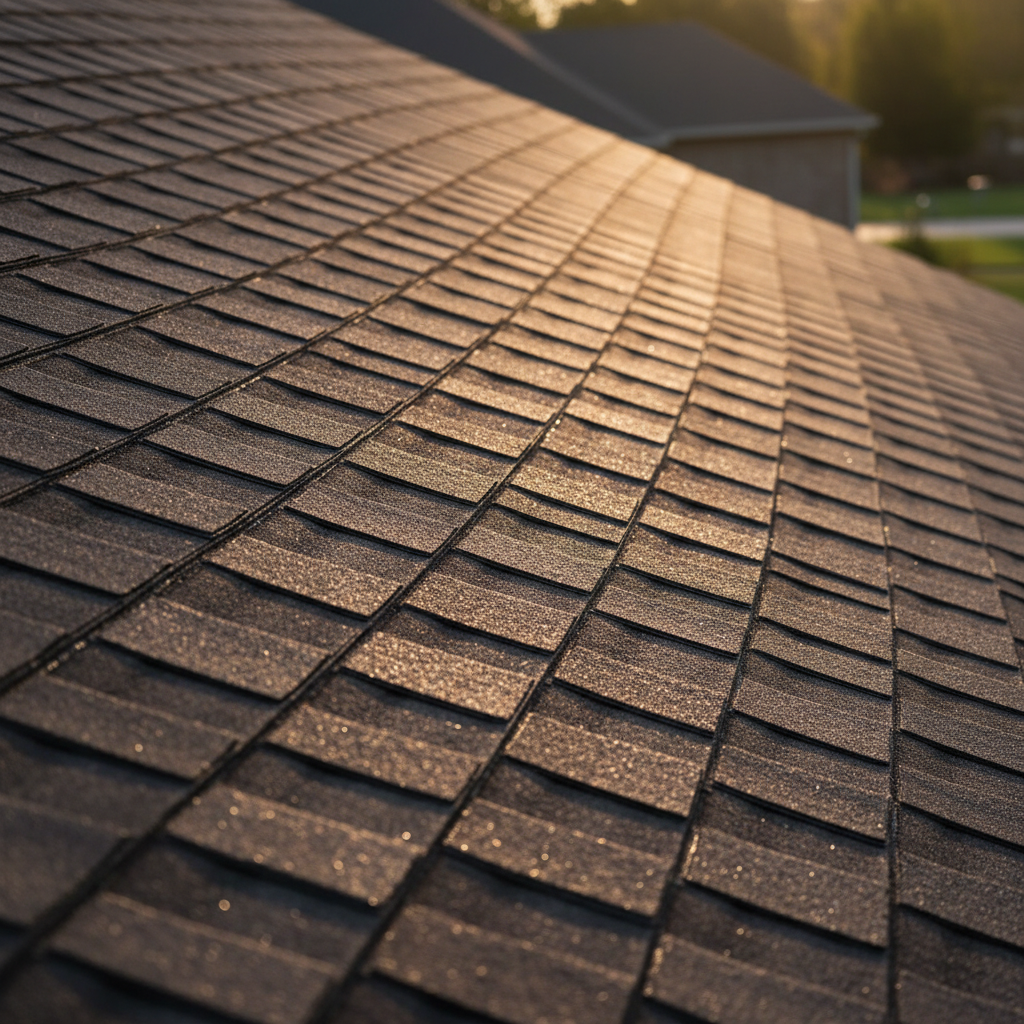
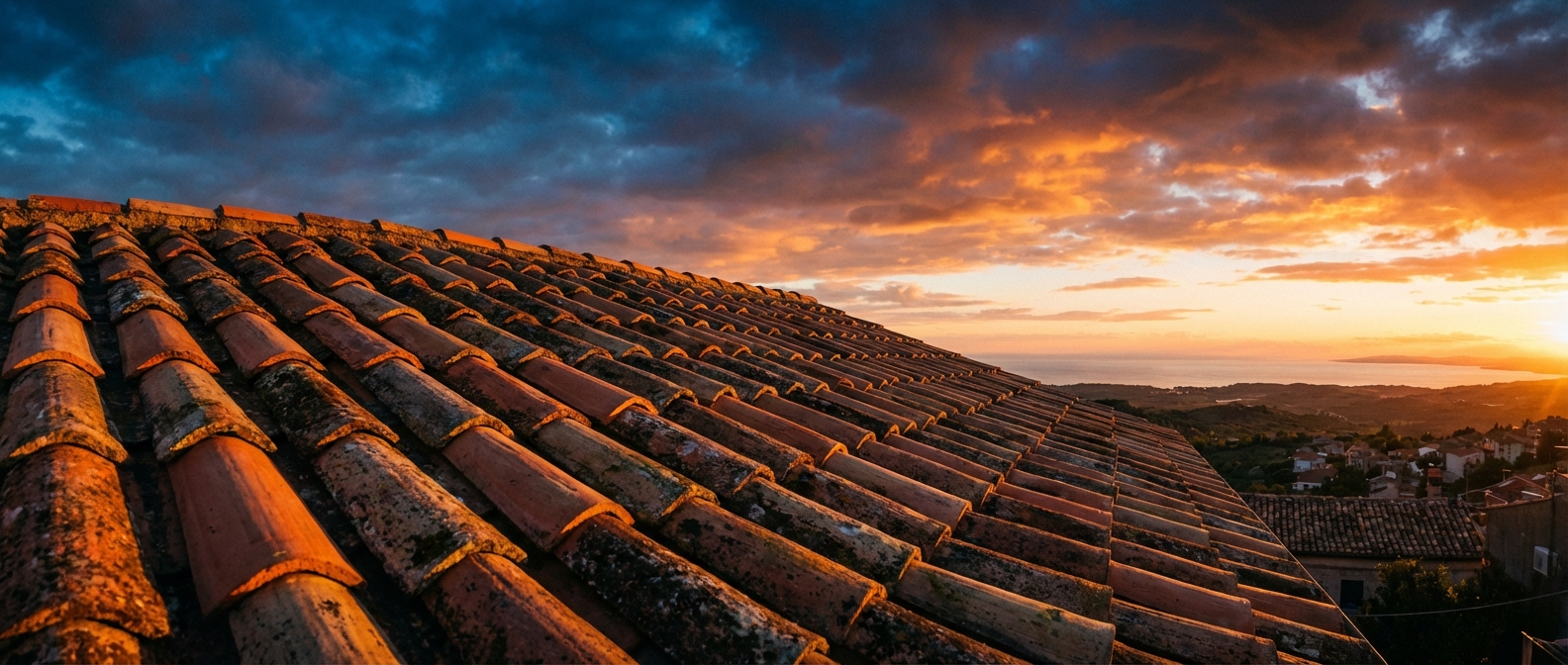
How long do roof shingles last? In most cases, 3-tab shingles last about 15–20 years, and architectural shingles last about 20–30 years. In coastal markets, you’ll often land on the lower end of those ranges.
-
Coastal sun
-
Wind-driven grit
-
Humidity
-
Salt
Your Shingle Age vs Coastal Reality

If you’re trying to map the “25-year” number on a bundle to your roof shingle lifespan in Wilmington, you’re using the wrong yardstick. That label mostly describes a warranty category, not the service life your house will get once salt air and humidity start stripping granules and pushing moisture into weak points.
Even at 15–20 years, many roofs here are already near end-of-life, especially on south- and west-facing slopes. Get a second set of eyes on it before it turns into a salt-and-sun slow leak. Treating age as the decision rule hides the factors that control failure timing. Those factors often determine whether the next storm is routine or turns into a call for help.
Salt air and wind-driven grit can accelerate shingle aging long before you see obvious leaks. Read more in our article: Signs Salt Air Wind Damage Shingles
How Long Do Roof Shingles Last Here?
In coastal markets like Wilmington, asphalt shingles usually die by a thousand cuts, not one big event. Because salt and humidity speed granule loss and slow drying, online lifespan ranges often read too generous here unless conditions are favorable.
As a planning baseline (not a promise) for how long does an asphalt shingle roof last, expect:
-
3-tab asphalt shingles: about 15–20 years in typical conditions (3 tab shingles lifespan), and closer to 12–18 if you’re exposed to steady coastal wind, full sun, or chronic algae and moisture.
-
Architectural (dimensional) asphalt shingles: about 20–30 years in typical conditions (how long do architectural shingles last), and often 15–25 in harsher coastal exposure.
That coastal haircut surprises people because “30-year” keeps getting treated like gospel (dimensional shingles lifespan), the same way the Home Depot / Lowe’s roofing aisle can make every color board feel like a guaranteed outcome. What matters most is whether the roof can vent heat and dry quickly, not what the packaging promised.
Two things tend to decide where you land inside the range:
1) Exposure: Sun, Wind, and Salt Don’t Hit Every Slope Equally
For example, a south- or west-facing slope over a vaulted ceiling can run hotter and age faster, while a shaded north slope may look worse from algae but lose less material to UV. Near the beach, grit in the wind can act like sandpaper, and once granules thin out, shingles wear faster and become easier to damage in the next storm.
2) Ventilation and Drying: The Quiet Multiplier
When the attic traps heat, shingles fail from the underside. They age early even if they’re a “better” grade. It’s also a common warranty tripwire: manufacturers routinely point to inadequate ventilation when a roof underperforms. Homeowner takeaway: if a roof isn’t very old yet looks brittle, balding, or stays damp after rain, don’t assume it will reach the top of the range.
Practically, you can use this section to set expectations for how long do roof shingles last in Wilmington NC: if you have 3-tabs past ~15 years or architectural shingles past ~20 years in a true coastal exposure, you’re no longer asking “Is it old?” You’re asking “How much risk am I taking into the next hurricane season, and can the system still protect itself?”
The Fast Wear Signals That Matter
You can ride out a lot of coastal weather until one small symptom turns into the first interior stain after a sideways rain. Catching deterioration early keeps a surface issue from turning into a decking repair.
Granule loss is one of the earliest measurable clues that shingles are drying out and losing their protective surface. Read more in our article: Shingle Granule Loss
-
Widespread granule loss (bald patches or heavy grit in gutters)
-
Brittle or curled shingles with cracking at the tabs
-
Repeated shingle blow-offs after moderate storms
-
Soft or spongy decking feel along an eave or valley
Inspection Triage: Repair, Extend, Or Replace
Roof decisions get clearer when you remember what a full reset costs (roof repair vs replacement decision): one major estimate pegs an average replacement around $9,500, with reported ranges from ~$5,800 to $46,000 depending on the job. That makes the difference between buying runway and throwing money at a failing system worth getting right.
You don’t need a perfect diagnosis to make a good next move. You do need to pick a lane. The mistake is treating every worn roof like a replacement candidate, or treating “no leaks” like a clean bill of health. Use age, how widespread the failure is, and whether water has already gotten in to decide what you’re buying: time, stability, or a reset, instead of kicking the can down the road.
| Lane | When it fits | What you’re seeing | Rule-of-thumb threshold |
|---|---|---|---|
| Repair (targeted fixes) | Roof is generally performing; issues are isolated | A handful of wind-lifted/missing shingles; one trouble spot that hasn’t spread | Well under ~20% of roof surface showing breakage |
| Extend (inspection + maintenance or rejuvenation) | Roof is aging but mostly intact; you’re buying runway | In the 15–20 year zone (earlier for 3-tab, later for architectural); wear signals present; no repeating interior leak history; damage isn’t “everywhere” | No widespread/roof-wide pattern; not near the ~20–30% broken/missing/curling threshold |
| Replace (planned, not emergency) | Failure is widespread or repeatable | Recurring leaks; soft decking areas; repeated blow-offs; multiple slopes degrading fast | ~20–30%+ of shingles missing/broken/curling (or higher) |
When Life-Extension Is Rational

Life-extension (inspection, minor repairs, cleaning, or a rejuvenation-style treatment) makes sense when you’re buying predictable runway, not trying to “save” a roof that’s already failing as a system. It’s most defensible when the roof is largely intact, issues are localized, decking is firm, and you’re only bridging to a planned sale, remodel, or timing window.
It’s false economy when failure is widespread, you’ve had repeat leaks, or you’re already near that ~20–30% broken/missing/curling threshold. And don’t anchor on “no leaks” as proof you’re safe: in Wilmington, that often means water hasn’t found the easiest path into your drywall yet. Before you spend a dollar extending life, verify ventilation and, in my opinion, don’t gamble on a random Angi (formerly Angie’s List) pick to confirm you’re not masking moisture or soft sheathing.
The Hidden Constraints That Shorten Lifespan
A homeowner can do everything “right” on shingle grade and still watch a roof age fast because the attic runs hot and damp. The roof can look like it has bad materials, but the real culprit is often airflow and drying time.
The biggest reason “good shingles” underperform is that the shingle isn’t the system, and when you ignore that, you’re heading into money pit territory like putting a new faucet on rotten pipes. Without enough airflow and drying, the roof overheats from below, stays damp longer after storms, and ages early regardless of the label on the bundle. That same mismatch also shows up when a claim gets denied: manufacturers often point to ventilation or installation details as the root issue, not the product.
To illustrate this, a roof can look like it got “bad shingles.” Many times it’s ventilation: a blocked ridge vent, weak soffit intake, or a bath fan exhausting into the attic. A practical move: when you get an inspection or bid, ask for the attic ventilation numbers (intake and exhaust) and photo proof of the actual vents and baffles, not just a verbal “it’s fine.”
A professional inspection can document ventilation, flashing, and soft-spot risks before you decide whether to repair, extend, or replace. Read more in our article: Roof Inspection Wilmington Nc
Does A “30-Year” Or “Lifetime” Shingle Warranty Mean You’ll Get 30+ Years?
No. That number is a warranty category (roof shingle warranty vs lifespan) and it’s usually prorated; it also covers manufacturing defects more than normal wear. If your roof ages early because of heat, ventilation, or install details, the warranty often won’t pay the bill you think it will.
Why Does My Insurance Company Care About Roof Age If It Isn’t Leaking?
Because age changes risk and, on some policies, how a claim gets settled. A common breakpoint is around 16 years, where some carriers treat roof surfaces differently (often closer to actual-cash-value due to age), which can raise your out-of-pocket even if the roof still sheds water.
How Do I Tell Storm Damage From Normal Coastal Wear?
Storm damage usually shows up as a sudden change: missing tabs, fresh creases from wind lift, or impact marks after a specific event. Normal coastal wear looks like progression: thinning granules, brittleness, and recurring minor blow-offs because the shingle has less “fight” left for the next gust.
Should You Replace Now Or Try To Buy A Few More Years?
Replace when the problems are widespread or repeating, especially if you’re near the ~20–30% broken/missing/curling threshold or you’ve got soft decking or recurring leaks. If the roof is mostly intact and you’re trying to control timing, an inspection plus targeted repairs (and only then any life-extension work) can be a rational way to reduce hurricane-season risk without committing to a full replacement today.
Is It Okay To Replace Only One Slope?
Sometimes, but only when the rest of the roof is truly stable and you’re solving a specific exposure issue (like a south/west plane that’s cooking faster). If the roof is aging everywhere, partial replacement often turns into mismatched performance and repeat visits, which can cost more than you expect while still leaving you with a weak system overall.
Roof not getting any younger? Contact us or call 703-673-6301 to find out where you stand.Our free Wilmington roof inspection covers exactly these problem spots and hands you the findings in writing.