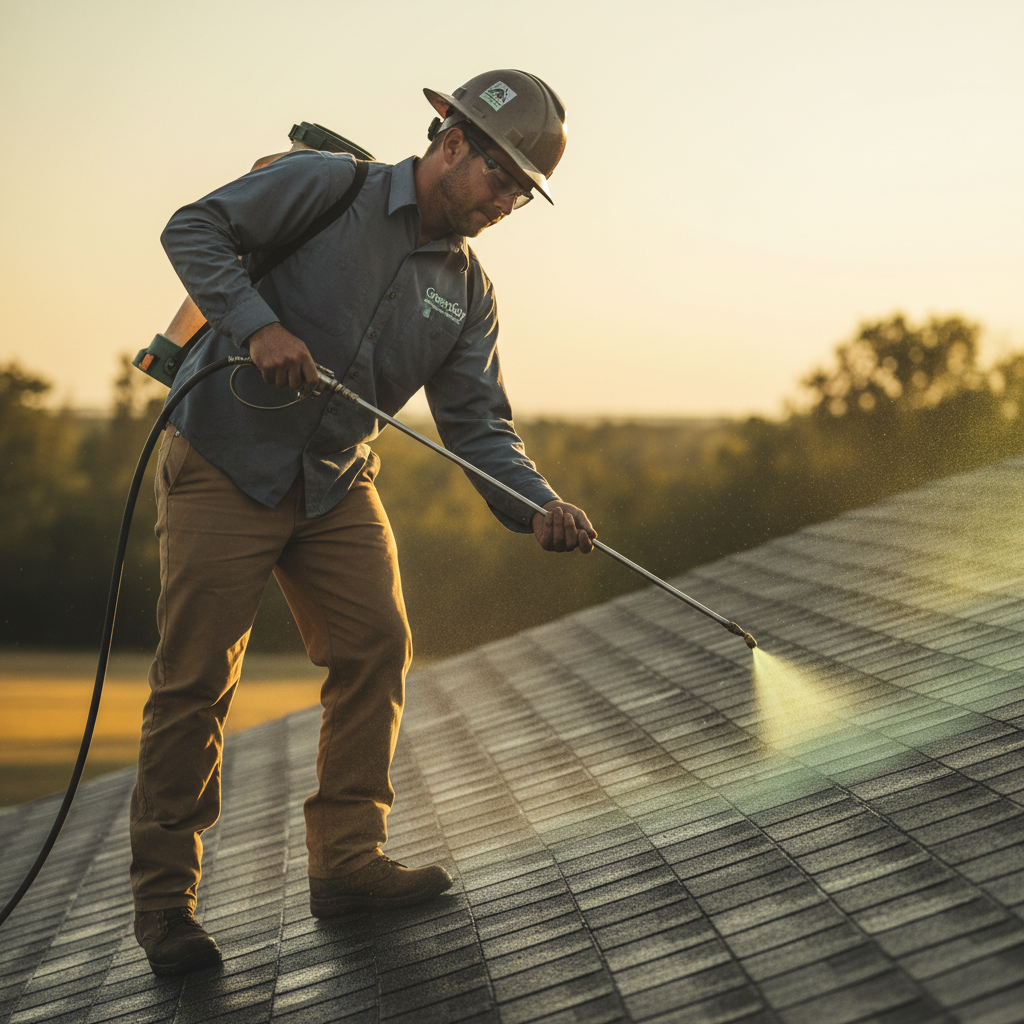
If you’re searching for GreenSoy reviews, you’re trying to answer one question: is this roof “rejuvenation” legitimate and worth paying for, or should you put that money toward repairs or a full replacement.
The problem is that most of what ranks as a “review” is sales copy or dealer pages, not evidence that the roof holds up through heat and wind-driven rain. In this guide, you’ll learn how to read GreenSoy-style feedback the way a cautious homeowner should, by separating cosmetic change from performance and checking what’s backed in writing (like the 6-year performance warranty and the recommended reapplication cycle).
GreenSoy Roof Treatment Reviews: What’s Real

Most “GreenSoy review” content online isn’t a neutral pile of homeowner experiences. It’s usually marketing copy, dealer pages, or comments that judge surface appearance rather than whether the roof held up through heat, storms, and salt air. If you want something you can verify, focus on what shows up consistently and is in writing, not what sounds good on Google Reviews / Google Business Profile.
Start with what’s in the contract. Skip the rah-rah promises. Fresh Roof positions GreenSoy treatments around a 6-year performance warranty when applied by a certified dealer, and it also recommends reapplication about every 6 years to keep performance up. That framing matters because it tells you what the system is selling: a maintenance cycle rather than a one-and-done rescue. Think of it like re-oiling a squeaky hinge, not rebuilding the door.
Cost and “results” claims are where marketing tends to creep in. You’ll see collateral suggesting treatment can cost less than ~15% of an average replacement, and you’ll also see lab-style numbers like “over 60% flexibility improvement.” Treat those as context, not proof of your outcome, because lab documents often rely on materials supplied by the client and don’t translate cleanly to your roof’s specific age, ventilation, and shingle condition.
The most reliable pattern behind good and bad reviews is candidacy. As an example, consumer complaint narratives tend to explode when someone believes the service was sold on a roof that wasn’t a suitable candidate. Before you weigh any review heavily, ask the contractor what would disqualify your roof and get that answer tied to your inspection notes, not just a sales pitch.
Why Reviews Split So Hard
GreenSoy roof rejuvenation reviews split because the real subject is the job, not the liquid. What you’re actually judging is screening, prep, and follow-through from the contractor. To illustrate this, one homeowner gets a tight inspection and a new pipe boot, so they report a win. Another gets the same spray on a roof that already has failing flashing or active leaks, expects it to stop water in the next nor’easter, and calls it a scam on Angi (Angie’s List) reviews.
If you treat every outcome as proof the product “works” or “doesn’t,” you’ll miss the real variable: whether the contractor set the right target and did the unglamorous fix-it work that actually changes your risk.
Candidate Screening Is the Whole Game
You can pay for a treatment, feel good for a week, and still get the same ceiling stain after the next hard rain if the roof never qualified in the first place. The expensive part is not the product, it is being sold the wrong job.
GreenSoy roof rejuvenation fits aging shingles that are still intact since the treatment can’t replace missing material. If you’re losing lots of granules, exposing fiberglass, or dealing with shingles that won’t lay flat because they’re cracked or deformed, you’re past “conditioner” territory. You are already in triage mode. A surprising number of bad reviews come down to this mismatch: the homeowner thought they were buying leak prevention, but the roof actually needed repair or replacement first.
A practical pass looks like: no active leaks and no widespread cracking. In coastal Wilmington-area conditions, pay extra attention to the stuff wind-driven rain exploits first, like pipe boots, step flashing at sidewalls, and chimney transitions. Case in point: if your ceiling stain traces back to a flashing detail, spraying shingles won’t change your risk.
Before you book, ask what would disqualify your roof and have it documented in the inspection notes.
A quick candidate check can prevent you from paying for a treatment on a roof that was already beyond its useful service life. Read more in our article: Roof Rejuvenation Bad Candidates If they won’t put “not a candidate” criteria in writing, you’re gambling.
What Success Should Look Like
Success with a GreenSoy roof treatment should look like slower aging, not a “no more leaks” promise. If a review talks like the spray is a waterproofing fix, treat it as a misunderstanding or a sales shortcut. It also can’t fix the leak-prone details that drive water entry.
In practice, you’re looking for a few inspectable signals: the roof may look a bit darker (cosmetic) and shingles should feel less brittle during handling. Take a few dated photos of gutters/downspouts and any bare spots on shingles so you can judge change with your own evidence, not Nextdoor neighborhood recommendations.
Reading the 6-Year Warranty Correctly

A homeowner hears “6-year warranty,” files the paperwork, and expects the next winter leak to be handled end-to-end. Then the first service call turns into a flashing bill, and the disappointment shows up as a one-star review.
A 6-year performance warranty is a useful roof rejuvenation warranty “review proxy,” but only if you translate it into what risk it actually removes. In plain terms, it’s a promise tied to the treatment’s performance window when a certified dealer applies it, not a blanket promise that your roof won’t leak or that you won’t need a replacement in that period. Treating “warranty” as automatic peace of mind is how people overpay.
What’s usually still on you is anything the spray can’t fix or anything that existed before the application: failing flashing and bad pipe boots. As an example, if water shows up around a chimney after a storm, you may still be paying for diagnosis and a flashing repair even if the treatment itself is “under warranty.” Before you sign, hold your feet to the fire with one direct question in writing: “If I have a leak next winter, what exactly do you cover, and what do I pay for?”
Most warranty misunderstandings come from assuming a performance warranty covers pre-existing leaks, flashing defects, or maintenance-related issues. Read more in our article: Roof Warranty Expectations
The Evidence Behind ‘Third-Party Tested’
Some lab documents used in rejuvenation marketing explicitly state their conclusions are based on material supplied by the client and that the lab makes no performance or warranty statement for that material. That fine print is the difference between “tested” and “proven on your roof.”
When you see “third-party tested” in GreenSoy reviews, don’t treat it like a guarantee. In many reports, the conclusions depend on material supplied by the client, which changes what “tested” really means. That’s how “tested” turns into a sales line.
A better move is to ask for the actual document and pressure-test the basics like you would a home inspection report. What shingle age did they test? Was the “before” sample already near failure or still healthy? What conditions and endpoints did they measure (flexibility, granule adhesion), and how does that translate to your real risk in Wilmington wind-driven rain, flashing details, and salt air?
Coastal NC Reality Check
You get better answers fast when you judge a roof like a coastal roof, not a brochure example. When you prioritize penetrations, transitions, and metal details, the decision stops being about how the shingles look and starts being about what actually fails here.
In Wilmington-area conditions, the same roof rejuvenation job won’t behave like it would inland. Humidity and shade drive algae and staining, so a roof looking darker or “cleaner” after a visit can read like performance when it’s partly cosmetics. Salt air also eats at the things that usually fail first, like exposed metal and flashing edges, and a spray on shingles won’t stop that salt air roof protection problem. It is like waxing paint while the rust keeps spreading.
Wind events change the risk profile, too: nor’easters and tropical storms push water sideways, so your outcome hinges on penetrations and transitions more than the field shingles. As an example, a pipe boot that’s starting to crack or loose step flashing at a sidewall can turn into an interior stain even if the shingles feel less brittle. If you move forward, treat this like a maintenance cycle.
In coastal Wilmington wind events, the first failures are often at flashing edges and penetrations rather than the field shingles themselves. Read more in our article: Roof Problems After Hurricane Pencil it out, and plan to check flashings and boots after big blow-through storms.
Decision Point: Rejuvenate, Repair, or Replace
| Option | Best fit when | Not a fit when | What to ask/get in writing |
|---|---|---|---|
| Rejuvenate | Roof is a clean candidate (no active leaks; no widespread cracking or granule loss; details mostly sound) and you’re buying a 6-year maintenance window | You need the spray to solve a known flashing/penetration problem (“leak insurance”) | Inspection notes stating candidate status; disqualifiers; any pre-work required (boots/flashings) |
| Repair | Roof field is decent but 1–2 weak points drive risk (pipe boots, step flashing, small wind-lifted area) | Shingles are failing broadly or the deck feels soft | Scope for the specific weak points; photo/documentation of the defect; expected remaining life after repair |
| Replace | Shingles are failing broadly or the deck feels soft | You’re hoping to avoid replacement when structural/material failure is already present | Replacement triggers noted in the inspection; decking condition; ventilation and flashing scope included for roof restoration Wilmington NC |
FAQ
How Much Does GreenSoy Roof Rejuvenation Cost?
Most homeowners see it priced as a fraction of replacement, and some Fresh Roof ecosystem collateral frames it as potentially less than about 15% of an average new roof for roof rejuvenation cost. Your real number depends on roof size/complexity and whether you need small repairs (like pipe boots or a few shingles) done first.
How Long Does the Treatment Take, and When Can You Schedule It?
Many jobs can be completed in a single visit, but weather drives scheduling because crews need conditions that let the product apply and settle correctly. If you’re in coastal NC, ask what wind and rain window they require and what happens if a storm pops up right after application.
Will It Smell or Make a Mess Around My House?
You should expect some odor during application, and overspray control matters near siding, decks, and outdoor furniture. Before you book, ask exactly what they’ll cover or pre-wet, what runoff looks like, and what cleanup is included.
Is This a One-Time Thing or Repeat Maintenance?
Fresh Roof’s own guidance commonly frames reapplication at about every 6 years to maintain peak performance. That means you should evaluate it like a repeatable maintenance cycle you choose to stay on, not a single visit that “resets” a 20-year-old roof.
Does the Warranty Transfer if I Sell the House?
A 6-year performance warranty is typically tied to certified application and specific terms, and transferability can vary by provider. Don’t guess, and don’t lean on Better Business Bureau (BBB) ratings as a substitute for terms. Get the written warranty and have them point to the transfer clause, any fees, and the exact conditions that would void coverage.
Roof not getting any younger? Contact us or call 703-673-6301 to find out where you stand.