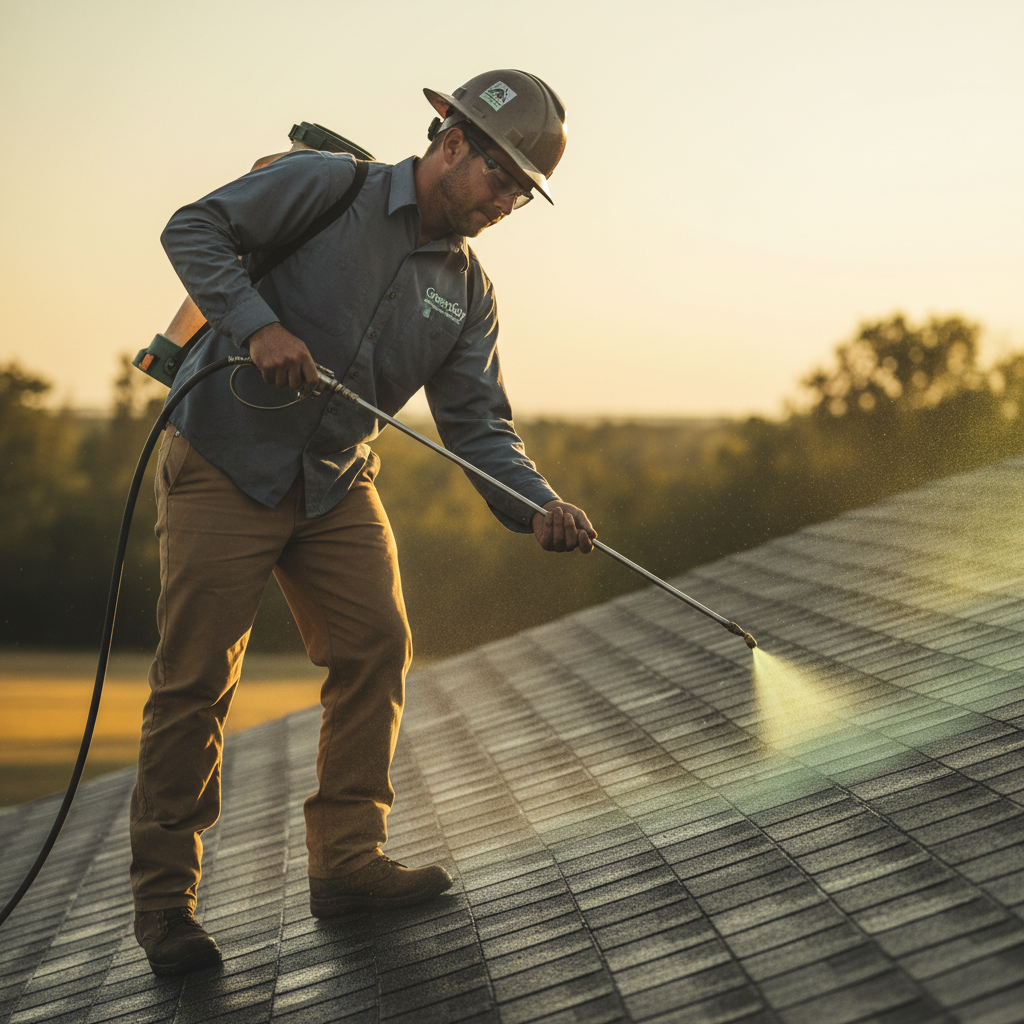
If you’re wondering when you can use the yard or step onto the roof again, base it on drying and runoff, not a fixed wait time. In most soft-wash style roof treatments that include a final rinse, you can let kids and pets back out about 30–60 minutes after that rinse, once downspout runoff has stopped and the splash zones are dry to the touch. For the roof itself, plan to stay off it until it’s fully dry and, in many cases, not the same day.
That “back to normal” feeling comes down to the spots you don’t notice at first. They are the downspout dumps and the shaded, moisture-holding areas that stay damp in Wilmington humidity. Ahead, you’ll get a clear go/no-go way to think about yard re-entry and a conservative rule for when it’s safe to set foot on the roof after treatment.
When Can You Use Yard After Roof Spray?

Your dog bolts for the back door the second the crew packs up, and everything looks “done” until you remember the downspouts have been dumping treated water into the same patch of mulch they love to sniff.
Use a simple checkpoint instead of a countdown: the splash zones are dry, and the downspouts have stopped running. Think of it like waiting for fresh paint to stop feeling tacky. If your contractor did a typical soft-wash style roof treatment (often a diluted bleach-based mix) and then rinsed, you can let kids and pets back into the yard about 30–60 minutes after the final rinse, once runoff from downspouts has stopped and the wet splash areas have dried (a common practical buffer noted in soft-wash safety guidance).
In practice, that last bit is what people miss (some pro guidance notes runoff can take up to ~10 minutes to cease after application/rinsing: SoftWash Technologies). Roof runoff can keep dripping for several minutes after the crew “finishes,” and the most concentrated contact points are the downspout exits and nearby surfaces. As a practical cutoff, keep everyone away from the downspout exits and nearby surfaces until they’re dry to the touch, even if the rest of the yard looks fine.
If you’re concerned about residue around downspouts and mulch beds, the exact product used can change how cautious you should be with kids, pets, and plants. Read more in our article: Greensoy Safe Kids Pets
What Changes That Timeline?
The “30–60 minutes after final rinse” guidance only works when you had a final rinse and the crew controlled runoff for roof treatment runoff safety. Trusting a generic wait time can lead to problems. In Wilmington-area humidity, wet mulch and shaded grass can stay damp long after the roof looks done, and many labels for similar outdoor treatments emphasize keeping pets off treated areas until they’re dry (EPA-labeled directions example). That’s when kids and pets can track residue inside like sand off a beach towel. If you try to force this into one universal wait time, the guidance won’t match what’s happening on your property. It is the same reason Angie (Angi) reviews push you to compare a few local contractors before booking.
| What can change the wait | What it affects | Simple check before “all clear” |
|---|---|---|
| What was applied (and how strong) | Stronger mixes and add-ons can change how long nearby surfaces should be avoided | Ask what was used; keep people/pets off any areas that still feel wet or “treated” |
| Rinse vs. no-rinse approach | No-rinse methods can leave residual on nearby surfaces longer | Confirm whether there was a final rinse; if not, be more conservative with splash-zone re-entry |
| Where the runoff went | Mulch beds/low spots can stay wet longer than hardscape/drains | Check downspout exits and low lawn spots for lingering wetness |
| Weather and drying conditions | Shade, humidity, and cloud cover slow drying; sun/airflow speed it up | Wait until splash zones are dry to the touch and downspout dripping has stopped |
Can You Walk on Roof After Treatment?

You only need one quick step on a damp, freshly treated shingle for it to turn into a slip, or for residue to end up on your shoes and then across your attic ladder and floors.
Don’t plan to walk on the roof the day it’s treated. The slip and residue risks are higher than the convenience. Even if the chemistry is diluted, the application and rinse leave shingles slick, and Wilmington-area humidity can keep valleys and north-facing slopes damp long after the crew packs up, so roof treatment drying time can run longer than you expect (industry guidance also flags the slip hazard around algae/treatment conditions: Asphalt Roofing Manufacturers Association). If your HOA requires exterior-work approvals, treat roof access with the same seriousness. If a rejuvenation oil was applied, you also don’t want foot traffic while it’s absorbing because you can scuff granules or track product.
If roof access is truly unavoidable (storm tarp or active leak), call the contractor for an explicit go/no-go time for your product and conditions and avoid stepping on treated shingles unless they confirm it’s fully dry and cured. When possible, inspect from a ladder at the eave or with binoculars instead.
Shaded areas and coastal moisture can keep shingles damp longer, which is why drying time often stretches out in Wilmington’s climate. Read more in our article: Salt Air Humidity Shingles
Roof not getting any younger? Contact us or call 703-673-6301 to find out where you stand.Wondering whether your roof qualifies? Our roof rejuvenation service in Wilmington answers that with a free inspection first.