If you’re seeing green growth on your roof, you’re probably wondering what works. You want it gone without damaging shingles, killing landscaping, or doing something unsafe on a steep slope.
In Wilmington’s humidity and shade, “moss treatment” only pays off when you match the fix to what’s on your roof and where your roof is in its lifespan. In this guide, you’ll learn how to tell moss from algae or lichen, when treatment makes sense versus when replacement is smarter, and what roof-safe treatment really looks like (and why pressure washing backfires).
Moss or Algae—Why It Matters

Moss treatment for roofs only works as advertised when you’re dealing with moss—rather than needing roof lichen removal. In Wilmington’s humid, shady conditions, a lot of “green roof” complaints are really algae staining or lichen, and each one responds differently. Treating stains as if they’re living moss still leaves you paying for product, risking plant damage from runoff, and ending up with a roof that looks basically the same.
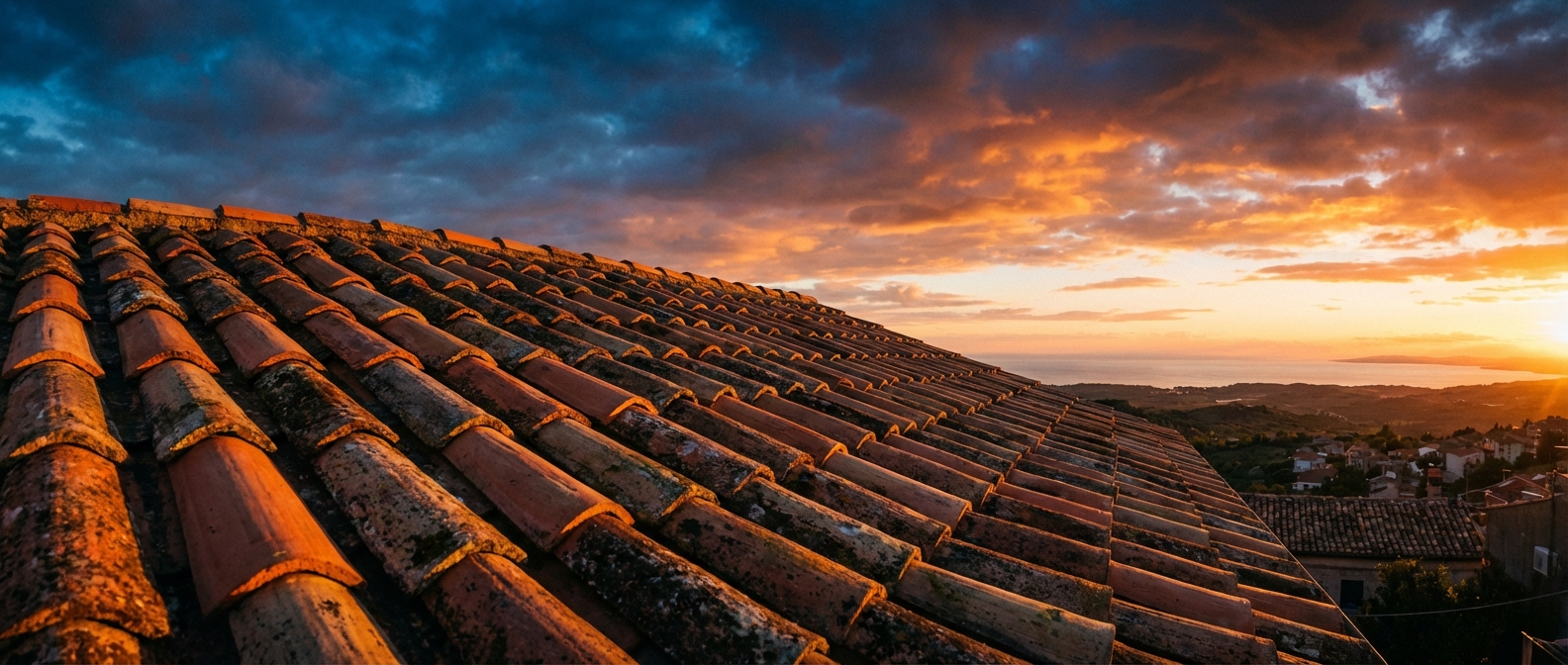
As a quick visual check: moss looks like fuzzy, raised clumps or “pillows” you can lift at the edges; algae usually reads as flat dark streaks (often near the north-facing slope); lichen looks like crusty, coin-like spots that cling tight. If you’re not sure, take a close-up photo from a ladder edge or zoomed from the ground and match your plan and product to what you have.
In coastal NC, algae-related black streaks are often mistaken for moss, so the most effective fix starts with an accurate ID. Read more in our article: Black Streaks Roof Shingles
When Treatment Is Smart vs When to Replace
You can spend a Saturday and a few hundred dollars on roof moss removal for a roof that is already past its point of no return and end up with new damage and the same looming replacement bill.
Moss treatment for roofs makes sense when moss is the problem, but your shingles are still doing their job: shedding water. If your roof is already near end-of-life, killing moss can turn into a frustrating spend because the roof keeps looking rough, leaks still happen, or a contractor won’t warranty any work on brittle shingles. The hard truth is that “clean it first” feels like the responsible step, but sometimes it just delays the inevitable while adding risk to an aging roof.
Treat (and then prevent regrowth) when the roof structure is sound and the moss is more of a moisture trap than a symptom of shingle failure. In Wilmington’s humidity and shade, look for granules still in place, shingles that sit flat, and no active water entry, even if the roof looks rough.
| Category | Go/No-go signal | What it suggests |
|---|---|---|
| Treatment is smart | Shingles still lie flat | Structure is sound; treatment likely worthwhile |
| Treatment is smart | No widespread granule loss (bald-looking patches or heavy grit in gutters) | Shingles still have protective surface |
| Treatment is smart | Moss is localized to shaded areas | Moisture trap is targeted, not whole-roof failure |
| Treatment is smart | No recurring leaks or stained decking in the attic | Water-shedding performance still intact |
| Replacement/inspection is smarter | Shingles crack when lightly flexed or you see lots of brittle edges | Cleaning/treatment can worsen damage; roof may be near end-of-life |
| Replacement/inspection is smarter | Tabs are curling/cupping across large areas | Elevated risk of failure; treatment won’t restore shingle shape |
| Replacement/inspection is smarter | Repeat leaks after storms | Underlying roof system issue likely persists beyond moss |
| Replacement/inspection is smarter | Flashing around chimneys/valleys looks compromised | Leak risk is detail-driven; needs repair/inspection |
| Replacement/inspection is smarter | Within a few years of your roof’s expected lifespan | Treatment spend may have low ROI versus replacement planning |
As an example, if you’re considering a home insurance wind inspection, filing a warranty claim, or selling in the next year, ask a roofer whether cleaning could dislodge fragile shingles or expose existing wear that was being “held together” by debris, and check your Owens Corning asphalt shingle warranty documents too.
Granule loss, curling, and brittleness are common signs a roof is too far gone for cleaning to be a good investment. Read more in our article: Signs Shingles Too Far Gone If the answer is yes, you’re usually better off putting moss-treatment money toward replacement planning instead of chasing a cleaner look.
What “Roof-Safe” Actually Means
A homeowner reaches for the fastest-looking fix, and a week later the roof looks cleaner but the shingles are thinner, rougher, and suddenly harder to trust in a hard rain.
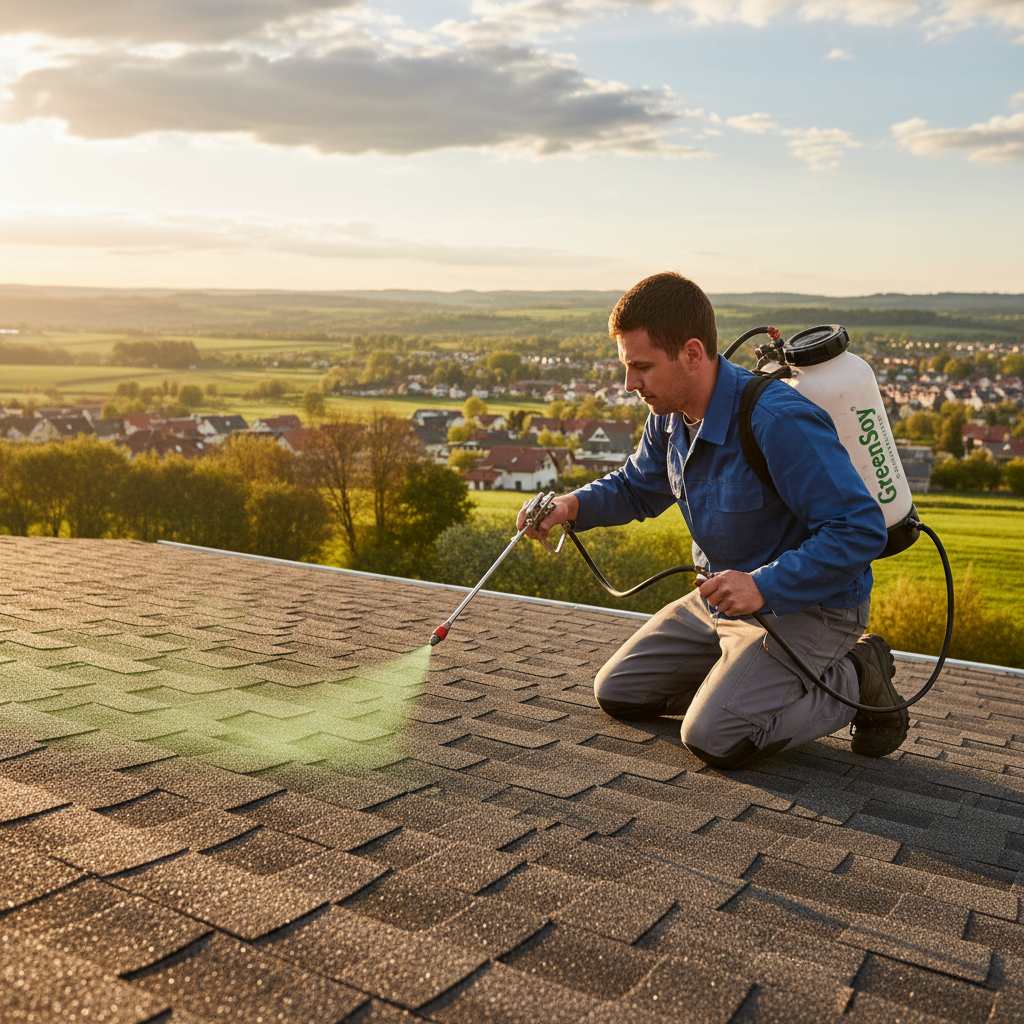
On an asphalt shingle roof, “roof-safe” moss treatment means soft wash roof cleaning that kills and loosens growth without mechanically stripping the roof. That’s why pressure washing is a no. It acts like sandpaper on your shingles, so the damage can be permanent. Chasing immediate visual change pushes people toward the most destructive option.
It also means controlling side effects and planning for runoff. Minimize abrasive scraping and stiff brushing (especially on older shingles), and plan for runoff: pre-wet and rinse nearby plants and keep gutters flowing. Finally, factor in shingle age and brittleness.
Runoff and overspray control is one of the biggest differences between a “roof-safe” treatment and a cleanup that damages plants and exterior surfaces. Read more in our article: Protect Landscaping Cleanup The older the roof, the more “gentle” becomes non-negotiable, and the more you should treat cleaning as risk management, not a makeover.
Moss Treatment for Roofs: The Proven Sequence
Most roofs do not need gallons of product and a full-day scrub to get results; extension-style guidance even frames coverage in the rough range of 600 to 1,000 square feet per pump sprayer treatment depending on conditions.
Moss treatment for roofs works best when you stop chasing a single “spray and it’s gone” fantasy. Consumer Reports home maintenance guidance basically treats it as a sequence for a reason. Moss is a living sponge: it holds water against shingles, and thick patches can keep working even after you’ve knocked the green color out. If you skip steps, you usually get the worst combo: the roof still looks rough, and regrowth starts faster in Wilmington’s shade and humidity.
1) Loosen (only what needs loosening). Your goal isn’t to scour shingles clean. It’s to break up heavy “pillows” so water and treatment can reach the roots and so the dead mass doesn’t keep trapping moisture. For instance, a thick mat behind a chimney on the north slope may need gentle lifting at the edges, while thin fuzz doesn’t. When the urge to scrub kicks in, that’s usually a sign you’re about to trade shingle life for speed.
2) Kill, then let weather do the cleaning. Most roof-safe approaches rely on controlled chemical action and time, not force. EPA-registered roof washes and zinc-based actives often aim to kill moss so it dries out and releases over days to weeks, especially after rain cycles. Practically, that means “no immediate visual change” can still be a successful treatment.
3) Prevent regrowth. Prevention is its own job. Ridge-installed zinc strips, for example, are designed to inhibit future growth as rainwater carries small amounts down-slope, not to erase established moss overnight. After a kill treatment, prevention measures matter most on the shaded side where you’ve already proven the roof stays damp.
If you want a quick reality check that you’re sequencing correctly: you should be planning for a delayed clean-off timeline, managing runoff to plants and gutters, and treating prevention as an ongoing control step, not a one-time reset.
Choosing Chemicals Without Collateral Damage

You get the moss to die off, your plants stay happy, and you do not create a new problem for your gutters or flashing just to win back some curb appeal.
Zinc-based actives (like zinc sulfate) are the main “kills moss” chemistry you’ll see behind many roof-moss products, and they can work well on asphalt shingles when you apply them as directed and let time and rain cycles do the removal. The catch is that the roof isn’t an island. If you have copper gutters, downspouts, or copper flashing, zinc sulfate can accelerate corrosion, so a “standard” moss treatment can be penny wise and pound foolish.
If you lean toward eco or less harsh options, peroxide-based roof cleaners and other non-chlorine oxidizers often trade speed for gentler handling: you may wait weeks for visible change, especially in Wilmington’s humid shade where regrowth pressure stays high. Either way, bake runoff control into the plan: pre-wet shrubs below the eaves and keep gutters flowing.
Prevention That Actually Works Here
In Wilmington, moss returns when the roof stays damp, most often on north-facing slopes and in shaded valleys where airflow stalls under tree cover. If you want prevention that holds, you have to treat shade and moisture as the real enemy: trim back branches to let sun hit shingles, open up air movement, and keep gutters moving water off the roof fast.
Zinc strips can help, but don’t buy the myth that they “solve moss for years,” and if you’re in an HOA, check HOA architectural review / approval guidelines before you add anything at the ridge (they’re generally intended to inhibit new growth, not remove existing moss—see manufacturer installation guidance). Installed near the ridge with exposure to runoff, they’re meant to inhibit new growth, not erase what’s already there. Planning for periodic maintenance means picking a repeatable, roof-safe method, not gambling on a one-and-done claim.
DIY vs Hiring a Pro in Coastal NC
Someone starts with a $30 sprayer plan, then realizes the steep side is slick and the runoff heads straight into landscaping.
DIY moss treatment for roofs can make sense in coastal NC—and for roof cleaning Wilmington NC homeowners—if you can apply from the ground (hose-end or pump sprayer) and you’re okay with a slow payoff, since many roof-safe products kill first and clean off over rain cycles. As an example, if your north-facing slope is steep or two stories up, “I’ll just do it this weekend” can turn into ladder roulette, so get three quotes instead.
Bring in a pro when the roof is hard to access, the moss needs careful loosening, or you want proper runoff controls with lower shingle-damage risk. You also buy liability coverage and clearer accountability, which matters if a slip, broken shingle, or gutter overflow turns into a bigger problem.
FAQ: Moss Treatment for Roofs
When’s the Best Time to Treat Moss on an Asphalt Shingle Roof?
Treat during a stretch of mild, dry weather so the product can sit on the roof as directed instead of getting immediately diluted by rain. In coastal North Carolina, many homeowners aim for a fall or late-winter treatment, then use prevention to blunt spring regrowth.
How Long Does Moss Treatment Take to Show Results?
Many roof-safe treatments kill moss first, then rely on drying and rain cycles to release it, so visible change often takes days to weeks, not hours. If you expect same-day “clean,” you will feel tempted to scrub or pressure wash. That is usually the fastest way to damage shingles, no matter what the Angi (Angie’s List) contractor reviews say.
How Often Will You Need to Re-Treat in Wilmington’s Climate?
If your roof stays shaded and damp, plan on maintenance, not a one-time fix. A common pattern is an initial treatment to knock it back, then a periodic re-treatment schedule based on how quickly moss returns on the north-facing or tree-covered areas.
Will Runoff Hurt My Shrubs, Lawn, or Stormwater?
It can, especially if you let concentrated runoff dump into planted beds, so you should pre-wet and rinse nearby vegetation. Use only label-approved products and directions, and if you drain toward sensitive areas, consider hiring a pro who can manage collection, dilution, and rinse-down.
Do Zinc Strips Kill Existing Moss?
Zinc strips mainly inhibit new moss and mildew growth as rainwater carries small amounts down the roof; they aren’t designed to erase thick, established moss on their own. If you already have visible clumps, treat what’s there first, then use strips to slow the comeback.
Roof not getting any younger? Contact us or call 703-673-6301 to find out where you stand.Our Wilmington roof cleaning service treats moss and algae in the same low-pressure visit.