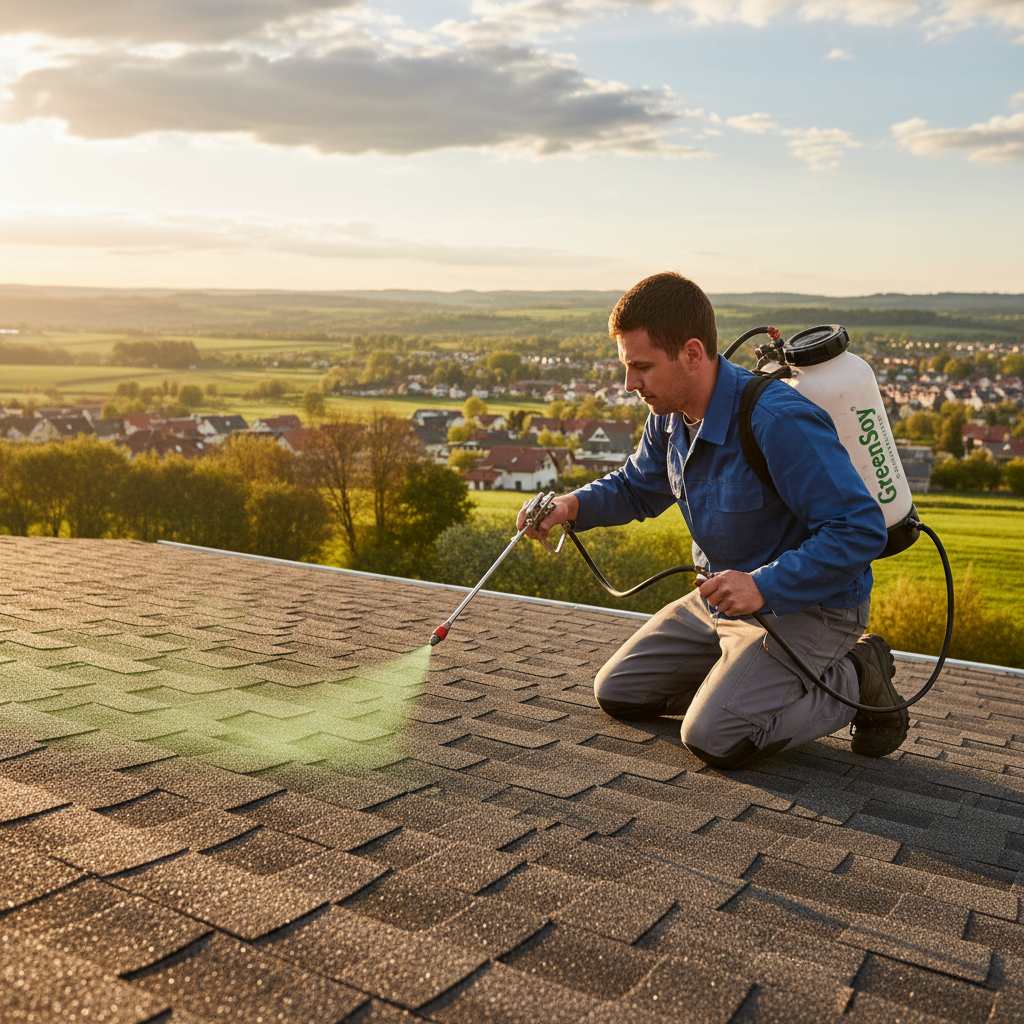
If you’re looking for the best roof cleaner for asphalt shingles, you want a product that removes algae or growth without stripping granules. The best choice is a roof-labeled, low-pressure roof cleaner for shingles you can apply without scrubbing or blasting the surface.
The problem is “best” changes with what’s on your roof and what you can safely control around your home in coastal North Carolina, where your shingles are the front line against salt air. In this guide, you’ll confirm whether you’re dealing with algae or moss, then compare fast-acting chlorine soft-wash options versus slower oxygen-bleach and spray-and-leave treatments. You’ll also learn what “safe for shingles” really means and why label directions beat internet recipes.
Before You Choose, Confirm It’s Algae
A homeowner spots black streaks and buys the strongest cleaner on the shelf, only to find out later it was lichen and the stain barely budged. Identify the growth first, or you’ll waste time and still end up repeating the job.
Those “black streaks” on asphalt shingles are often algae (blue-green algae that looks dark), but guessing wastes time, and checking first beats going on vibes. Algae usually shows up as thin, smoky streaking that runs downhill from the ridge and spreads across sun-facing fields.
-
Thin, smoky black streaks running downhill: often algae
-
Fuzzy green patches that hold moisture: moss
-
Crusty, raised, stubbornly spotty growth: lichen
-
Uniform wear with lots of loose granules in gutters: aging, not growth
In coastal North Carolina, black streaks are most often algae, and knowing the cause helps you pick a cleaner that actually works without escalating strength unnecessarily. Read more in our article: Black Streaks Roof Shingles
What ‘Safe for Shingles’ Actually Means
“Safe for shingles” isn’t a marketing claim, it’s a roof-life claim. With asphalt shingles, the biggest risk isn’t the stain, it’s losing the protective granules or disturbing the shingle surface so it ages faster. That’s why “I’ll just hit it quickly so I don’t have to go back up there” often backfires. Do it right the first time: force is like sandpaper on sunscreen for your granules.
In practice, safe means you clean with chemistry, not abrasion. Industry guidance like ARMA’s notes chemical cleaning approaches for algae and also reminds you it doesn’t override what your shingle manufacturer allows. – Low-pressure application (soft-wash style)
-
Label- and manufacturer-acceptable dilution
-
No scouring, scrubbing, or aggressive brushing
-
No blasting water up under shingle tabs
Low-pressure application is the core of shingle-safe cleaning because it avoids driving water under tabs and reduces granule loss compared with high-pressure washing. Read more in our article: Soft Washing Roof Shingles
The Roof-Cleaner Decision Filter
You end up with an asphalt shingle roof cleaner you can actually apply safely, control the runoff from, and price out per treatment without surprises. That is how you get a cleaner roof without turning it into a weekend of damage control.
Choosing the right roof cleaner for asphalt shingles usually comes down to fit rather than raw strength. Choose based on your timeline, your ability to manage runoff, and how often you’re willing to treat. Case in point: a fast-acting soft-wash style mix can knock back algae quickly, but it also raises the stakes for landscaping, gutters, and anything the runoff touches.
| Decision filter | What to ask yourself |
|---|---|
| Speed of results | Do you need visible improvement in days, or can you live with a “works over weeks” treatment? |
| Runoff and landscaping risk | How sensitive are your plants, mulch beds, and nearby surfaces to chlorine-based runoff, and can you realistically pre-wet and rinse like you’d need to? |
| Effort and access | Can you apply it safely from a ladder or roof edge with a pump sprayer, or does it require more setup and control than you want to own? |
| Repeat frequency | Are you trying to reset a heavily stained roof, or maintain it seasonally so stains don’t build back up? |
| Cost per application | What does one full-roof treatment cost you in ready-to-use gallons, not just per bottle? |
A quick way to keep yourself honest on cost is simple. Estimate your roof area, then turn the label’s coverage claim into a per-treatment price. If a concentrate makes 10 gallons and claims 1,000–2,000 sq ft coverage, your real cost depends on where your roof lands in that range. The cheapest jug can become the most expensive choice if it takes two rounds to get the look you expected.
Chlorine Soft-Wash Options (Fast Results)

Chlorine-based cleaners (sodium hypochlorite, basically “pool chlorine” chemistry) are often the best fit when you’re trying to reset a roof with obvious algae streaking and you want visible improvement in days, not months. ARMA’s algae guidance points homeowners back toward chemical cleaning for discoloration, and in the real world this is the chemistry most likely to deliver a faster “you can see a change” result without scrubbing. The catch is that speed comes with a narrower margin for error around runoff and over-strength mixing.
When you see “diluted” in soft-wash guidance, think in terms of final strength on the roof, not what’s in the jug. Many homeowner-friendly approaches aim roughly around a 1–3% sodium hypochlorite working mix at the point of application (sources vary). Practically, that means you don’t just pour straight household bleach or pool shock on the shingles because you’re impatient. Not my first rodeo: that’s how people cook a roof. If you can’t explain what your final mix is and how you’ll apply it at low pressure, you’re not doing soft wash roof cleaning, you’re experimenting.
In coastal North Carolina, your real risk is what the runoff hits after it leaves the roof. You don’t get to ignore that. Downspouts dump into beds and AC pads, and sometimes straight onto shell or concrete that shows every mistake.
If you go this route, make your “best cleaner” decision based on control, not bravado: read the product label for roof compatibility and dilution directions, and plan how you’ll manage downspout discharge before you spray anything.
Runoff planning matters as much as the cleaner itself because overspray and downspout discharge are what typically damage plants and stain nearby surfaces. Read more in our article: Protect Landscaping Cleanup
Oxygen-bleach and ‘spray-and-leave’ options (lower-stakes, slower)

Oxygen-bleach style cleaners and “spray-and-leave” treatments make sense when you want a lower-drama application, and I’ll say it: the Nextdoor “my cousin’s magic mix” approach is how people create messes around beds and downspouts. The tradeoff is timing: these options often lighten algae gradually, and you may need a second application to get from “better” to “clean.”
If you can live with gradual improvement over weeks, this can be the right choice for a streaky roof in Wrightsville Sound. You just have to stop judging success by same-day before/after photos and start judging it by whether you avoided harsh rinsing and collateral damage.
Label Directions Beat Internet Recipes
You follow an online “stronger is better” mix, and the roof might look improved while your plants, paint, or warranty take the hit. A label-compliant application is boring for a reason: it is the version that is designed to be repeatable without collateral damage.
A roof-cleaner label can be more useful than any “best roof cleaner for asphalt shingles” roundup, and Ain’t broke, don’t fix it: the label is the recipe card, not a mystery stew. That specificity matters more than brand promises.
Copying a Facebook mix or boosting strength mostly raises your chances of plant damage and warranty trouble. Pick a cleaner you can follow to the letter, then follow it exactly.
DIY vs Hiring a Wilmington-area Pro
A couple in Wilmington tries to DIY from a ladder, but the downspout dumps straight into their favorite bed and the roof pitch makes every step feel sketchy. The right call is less about toughness and more about whether you can control footing, runoff, and the roof’s condition.
-
DIY makes sense when the roof is walkable (low pitch, single story)
-
DIY makes sense when staining is light-to-moderate algae streaking
-
DIY makes sense when you can apply from a ladder or roof edge without stepping onto hot, brittle shingles
-
DIY makes sense when runoff will not dump into prized beds or onto bright concrete
-
Hire a Wilmington-area pro when the roof is 15–25+ years old or already shedding granules
-
Hire a Wilmington-area pro when it is steep/high or hard to access
-
Hire a Wilmington-area pro when staining is heavy or mixed with moss/lichen
-
Hire a Wilmington-area pro when you have tight lots and landscaping where downspouts discharge
FAQs
When’s the Best Time to Apply Roof Cleaner (Heat, Sun, and Rain)?
Aim for a mild, overcast day when the roof surface isn’t hot. Hot shingles dry cleaners too fast, and that is asking for blotchy results. Light rain soon after application can reduce performance; a dry window helps the chemistry stay where you put it.
How Long Should It Take to See Black Streaks Improve?
Chlorine soft-wash style approaches can show improvement quickly, sometimes within days, while oxygen-bleach and “spray-and-leave” products often brighten the roof over weeks. If you expect same-day, pressure-washed “before/after” results, you’ll be tempted into the very methods that shorten shingle life. Penny wise, pound foolish.
How Often Do You Need to Treat an Asphalt Shingle Roof?
In humid, coastal areas like Wilmington, you’ll usually treat more than once over the life of the roof, and Angi reviews won’t change the physics on shaded slopes. If staining returns quickly, focus on prevention and conditions (shade, dampness) rather than simply escalating strength.
What Should You Do to Protect Plants, Gutters, and Everything Below the Downspouts?
Before you apply anything, decide where runoff will exit and pre-wet anything it can hit, then keep rinsing during and after the job. If you can’t control downspout discharge away from beds, AC pads, or bright concrete, that’s a strong signal to choose a lower-stakes product or hire a pro.
When Is Cleaning Not Worth It on an Older Roof?
If you’re already seeing heavy granules in gutters, curling tabs, or brittle shingles, cleaning won’t fix the underlying wear and can make failure come sooner. In that situation, put your money toward an honest roof assessment and a replacement plan instead of chasing cosmetics.
Roof not getting any younger? Contact us or call 703-673-6301 to find out where you stand.Our soft wash roof cleaning service in Wilmington uses bio-based cleaners matched to asphalt shingles.