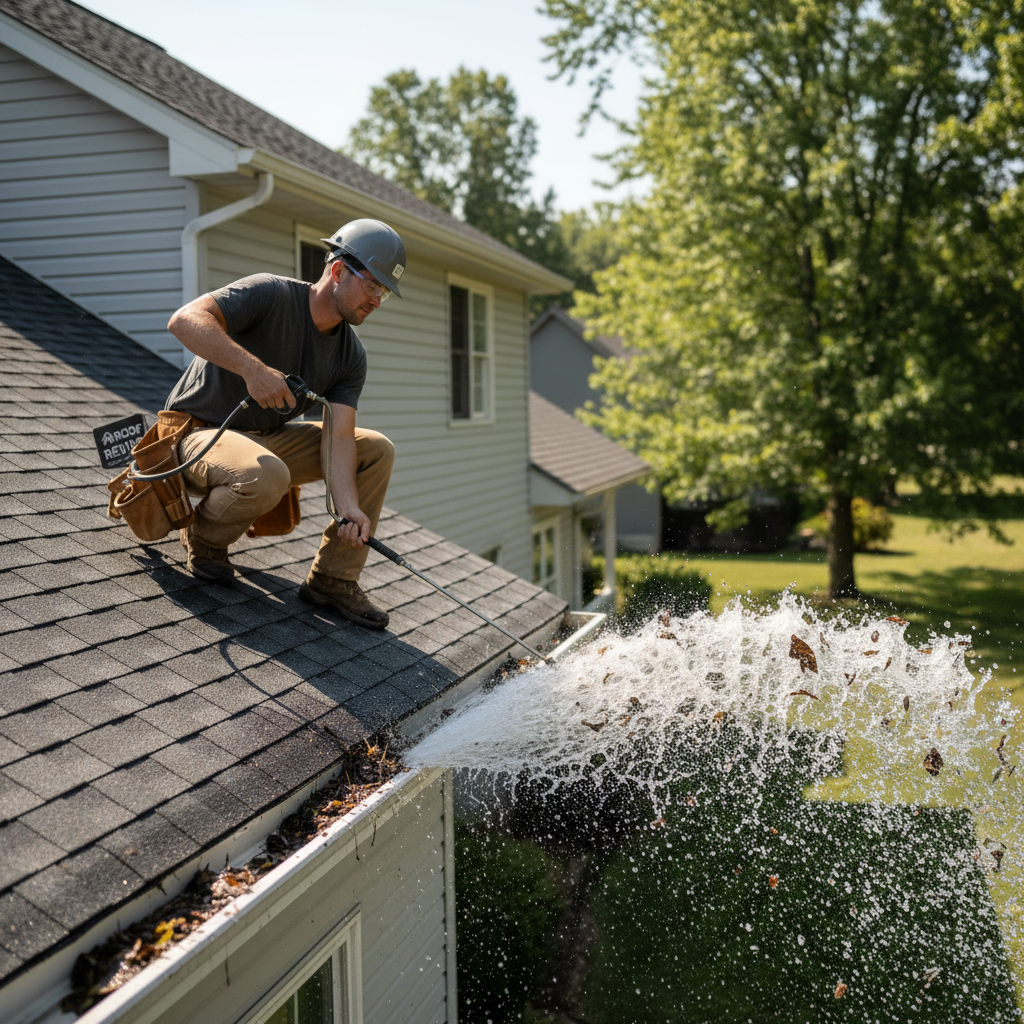
You can remove black streaks and green moss with soft-washing without damaging asphalt shingles, as long as you avoid pressure and scrubbing. The safe version relies on a mild cleaning solution applied at low pressure and a controlled dwell time.
What trips you up is that “soft wash” gets used like a magic word, even when the crew still plans to blast or brush for a quick before-and-after that’s like painting over rot, so it pays to ask exactly what they’ll do on the roof. In this guide, you’ll learn what a truly safe soft-wash process looks like and why black algae streaks and green moss differ. You’ll also learn what results to expect right away versus after a few rains, so you can protect your roof while still getting it clean.
What ‘Safe Soft-Washing’ Means

Safe soft-washing isn’t a brand of cleaner or a promise that “nothing can go wrong.” It’s a controlled method where chemistry does the work and you avoid the two things that usually hurt asphalt shingles: force and friction. A roof that looks dramatically “new” in minutes usually got that way through blasting or scrubbing, which can loosen granules and cut shingle life.
In practice, “safe” means you apply a mild detergent or mild bleach-and-water type solution at low pressure (think pump sprayer, not a pressure washer) and let it dwell briefly. Industry guidance for algae cleaning is specific on timing: leave solution on at least 15 minutes but no more than 20 minutes before rinsing (see ARMA’s technical bulletin: Algae Discoloration). If you’re hiring, one blunt question beats the fluff in Angi (formerly Angie’s List) contractor reviews: “Are you going to use any high pressure or scrub the shingles at any point?”
True soft washing uses low pressure to apply a cleaning solution, rather than relying on a forceful rinse to remove staining. Read more in our article: Soft Wash Roof Cleaning
Black Streaks vs Green Moss: What You’re Solving
Those black streaks are typically gloeocapsa magma roof algae discoloration. They look terrible, but industry guidance notes they haven’t been shown to shorten shingle service life (ARMA Residential Asphalt Roofing Manual: Residential Asphalt Roofing Manual). That matters because chasing spotless streaks with pressure or scrubbing is like sanding off the roof’s protective grit, and it can do more harm than the staining.
Green moss is different: it holds moisture like a sponge, lifts at shingle edges, and can interfere with water shedding, especially on shaded, damp roof slopes common in coastal areas. If you see raised, fuzzy patches or thick growth in the shingle overlaps, treat it as a functional problem to eliminate safely, not just a cosmetic one to brighten up.
Moss behaves differently than algae because it can physically lift shingle edges and hold moisture on the roof surface. Read more in our article: Eliminating Moss Roofs
| Issue | What it usually is | Primary concern | Urgency | What a safe result looks like |
|---|---|---|---|---|
| Black streaks | Algae discoloration | Mostly cosmetic; not shown to shorten shingle service life | Lower | Often lightens gradually after treatment and a few rains |
| Green moss | Moss growth | Holds moisture, can lift edges and interfere with water shedding | Higher | Growth is killed and loosens; thick patches reduce over time without scrubbing/pressure |
The Ways Cleaning Can Damage Shingles
You only notice the problem weeks later: a roof that sheds granules into the gutters (shingle granule loss after cleaning) and looks worn in patches. That kind of damage is usually the result of one or two avoidable shortcuts.
If you see granules collecting in gutters after a wash, it can be a warning sign that the cleaning method was too aggressive for the shingle surface. Read more in our article: Granules In Gutters After Treatment
Even when it’s dressed up in GAF asphalt shingle warranty/roofing system documentation, pushing for an instant, spotless result is where roof-cleaning damage usually starts. Asphalt shingles rely on their surface granules and layered overlaps to shed water. Anything that strips granules or drives water up under the tabs can shorten roof life faster than the staining ever would.
Watch for these common ways things go wrong:
-
High pressure (a pressure washer, or even a “soft wash” setup that still uses a hard rinse): it can dislodge granules and lift shingle edges (NRCA guidance: FAQs: roof cleaning).
-
Scrubbing or brushing to “finish” stubborn areas: friction loosens granules, especially on older shingles.
-
Over-strong mixes or letting solution sit too long: higher concentrations and excessive dwell time increase the chance of damaging the roof system and nearby materials.
-
Water intrusion from bad technique: spraying upward against laps, lingering at penetrations, or flooding valleys can push water where it shouldn’t go.
-
Cleaning a brittle, aged roof like it’s new: a 20-year-old coastal roof that’s already dry and granular doesn’t tolerate aggressive handling, even if the method sounds gentle on paper.
The Process to Ask for, Step by Step

Imagine two bids that cost about the same: one promises a dramatic 10-minute transformation, the other walks you through a calm, repeatable method. The difference is whether the crew can describe a process they can actually stick to once they’re on the roof.
You’re looking for a simple sequence you can verify, and I’m not trying to reinvent the wheel, but the best crews follow a low-and-slow recipe instead of chasing a dramatic before-and-after in 10 minutes. Done right, they apply a mild detergent or mild bleach-and-water type mix with low pressure (a pump sprayer or similar), keeping the spray pattern gentle and not driving water up under shingle laps.
Then they dwell the solution for a controlled window, at least 15 minutes but no more than 20, and rinse with a garden hose at low pressure. If you hear “we’ll hit it quickly with a pressure washer to finish,” or you see anyone scrubbing shingles to speed up the cosmetic result, you’re watching the process that creates damage.
Results to Expect and How Fast It Returns
You get the roof cleaned without trading away shingle life for a photo-ready moment. The win looks more like steady improvement over days and weeks than a single, instant reveal.
Right after a proper soft-wash, you should expect a “treated” roof more than a “brand-new” roof. The algae and moss can die quickly, but the black streaks often lighten gradually over the next few rains, and shaded sections may clean up slower or look patchy for a while. Uniform, immediate transformation promises are often sales talk, and those methods tend to rely on force or friction that can end in damage.
Just as important: it comes back (how long does soft wash last on roof). In humid or tree-shaded conditions, discoloration and regrowth can recur, so think in terms of a safe cleaning plus simple prevention.
Roof not getting any younger? Contact us or call 703-673-6301 to find out where you stand.