Will algae or moss shorten the life of my roof? Algae streaks usually don’t shorten asphalt shingle life on their own. Moss can shorten roof life when it holds moisture and disrupts runoff.
In Wilmington’s humid, salt-air climate, staining and green fuzz often aren’t the real threat; the cleaning approach is. If you treat every dark streak like something you need to blast off, you can strip granules and wear out shingles faster than the algae ever would. What you want is a clear way to tell algae stains from true moss buildup and choose between cleaning, prevention, or replacement in a way that protects your roof instead of only making it look better for a week.
| What you see | What it usually is | Roof-life risk by itself | Safest next step |
|---|---|---|---|
| Dark, flat streaks that follow water paths/shading | Algae staining | Usually low (main risk is aggressive removal) | Avoid force; if cleaning, use gentle/low-pressure methods |
| Raised green clumps or fuzzy mats, especially in shade/north side | Moss (sometimes lichen) | Medium–High if it holds moisture/blocks runoff | Clean gently to kill growth and let it release over time |
| Brittle shingles, lots of granule loss, lifting tabs, near end-of-life | Aging shingles (growth is secondary) | High (cleaning can accelerate wear) | Replace or rejuvenate instead of repeated cleaning |
Algae Streaks vs Moss Mats, What You’re Really Seeing

Those dark, tiger-like streaks on asphalt shingles are often algae staining (black streaks on roof cause), not “growth” you can peel off. It looks like flat discoloration from gloeocapsa magma roof algae that follows water paths and shading patterns and rarely forms a thick layer. Treating stains like a physical problem pushes people into aggressive washing. If you’re thinking, “I’m not made of money,” don’t take sandpaper to your shingles just to fix a stain.
Moss (and sometimes lichen) is different: it’s 3D. You’ll see green clumps or fuzzy mats that sit above the shingle surface, especially on the north side or under tree shade. Case in point, if you can spot raised tufts from the driveway, you’re looking at something that can hold moisture and interfere with runoff, which deserves a different response.
In coastal North Carolina, dark roof streaks often look worse than they are, but they’re still worth identifying correctly before you decide to clean. Read more in our article: Roof Algae Black Streaks
When Algae Or Moss Shortens Roof Life
You can live with discoloration for years, but you cannot ignore water that lingers where it should shed. The tricky part is that the thing that looks worst is not always the thing that wears the roof out fastest.
Algae streaking usually doesn’t mean algae on roof harmful to an asphalt shingle roof’s life by itself; it’s mainly a discoloration issue. The real lifespan hit often comes from what people do next. I’m firmly against harsh washing on shingles, even if a contractor flashes Better Business Bureau (BBB) ratings to sell it.
Moss is different when it starts acting like a sponge and a dam, classic moss on asphalt shingles problems. If it stays wet for days in shade (common on coastal NC north-facing slopes) or blocks runoff so water pushes under tabs instead of shedding cleanly, you’ve crossed from “ugly” into “durability risk.”
The Biggest Risk Is The Removal Method

You hire a “quick clean,” and a week later the roof looks brighter but your gutters are full of gritty granules. That cosmetic win can trade away years of shingle life.
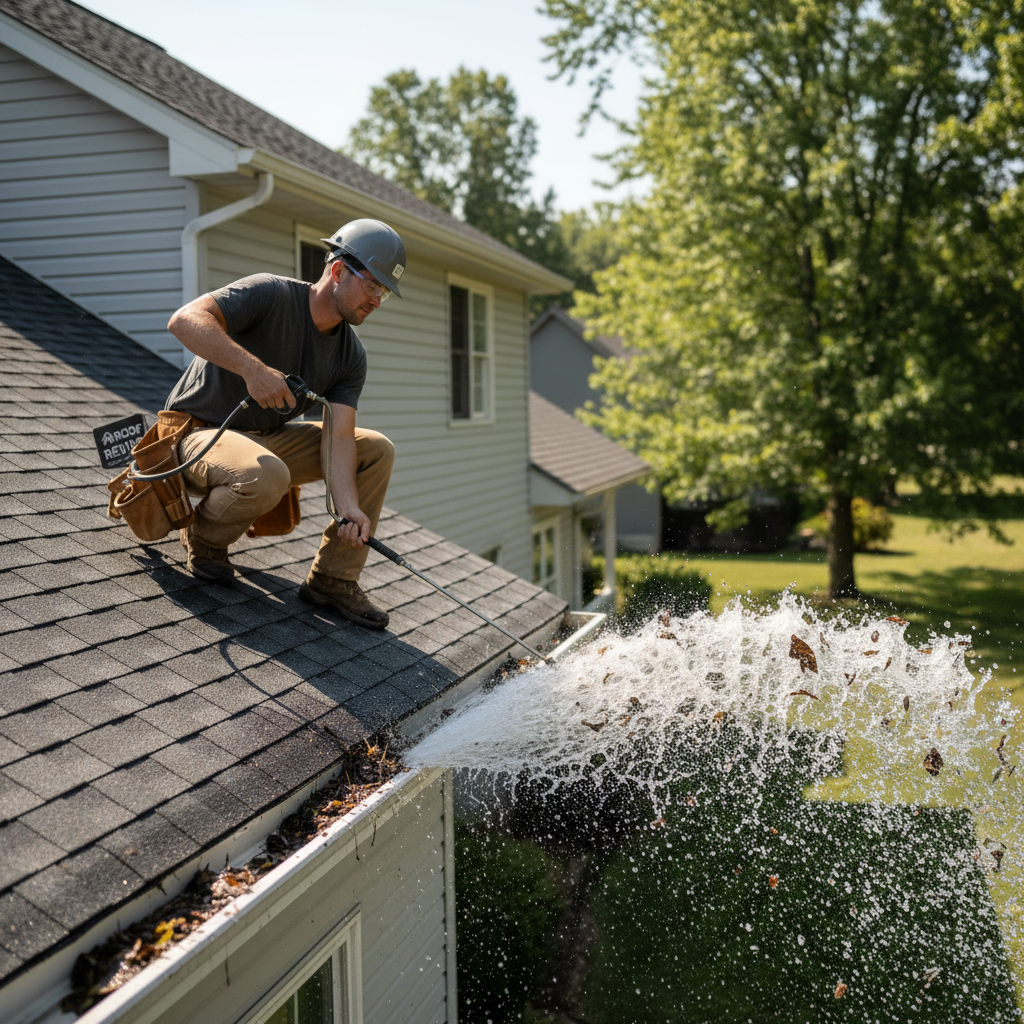
With asphalt shingles, algae and moss typically matter less than the damage caused by the wrong cleanup. What matters is the attempt to remove it, especially short-term cleaning that leaves moisture problems in place and still costs you later. Pressure washing and hard scrubbing can cause pressure washing roof damage by stripping protective granules and breaking the shingle’s surface faster than the staining ever would.
If you’re seeing gritty granules in gutters after a wash, it’s often a sign the cleaning method was too aggressive for asphalt shingles. Read more in our article: Roof Cleaning Without Removing Granules
-
Kill growth first, then rinse
-
Low-pressure rinse (soft wash roof cleaning)
-
No wire brushes
-
No grinding
-
No super-strong bleach mixes hot enough to damage the roof or surroundings
Choose: Clean, Prevent, or Replace
A neighbor adds a ridge zinc strip and expects the whole roof to stay clear, then the same shaded slope turns green again by next season. Most roof planes are bigger than the protection zone, which is typically only about 10 to 15 feet downslope.
In Wilmington’s humid, shaded, salt-air reality, the decision hinges less on whether there’s growth and more on how much service life the roof has left. A cheap, aggressive clean on a fragile shingle roof can be the most expensive option you pick. I don’t care how shiny the Angi (formerly Angie’s List) profile looks, this is where shortcuts backfire.
If you want a simple rule:
-
Clean (now) if the roof is structurally OK and you’re dealing with moss clumps or heavy buildup that’s holding water. Choose a gentle clean that kills growth first and lets it release over time.
-
Prevent (after cleaning, or on light growth) if the problem keeps returning on the same shaded slope. Ridge zinc/copper strips usually only protect roughly 10 to 15 feet downslope, so on bigger roof planes you may need more than one strip (some instructions even call for a second strip mid-slope) to get real coverage.
-
Replace or rejuvenate (instead of chasing perfection) if shingles already look brittle, tabs are lifting, or the roof is near end-of-life. At that point, spending for repeated cleaning can feel like they’re nickel-and-diming me. It’s like painting over rot instead of fixing the wood.
If shingles are already brittle or lifting, rejuvenation can sometimes make more sense than repeated cosmetic cleaning when the roof still has usable structure. Read more in our article: Roof Rejuvenation Vs Replacement
Roof not getting any younger? Contact us or call 703-673-6301 to find out where you stand.