If you’re searching “asphalt shingle roof treatment,” you’re probably trying to avoid a five-figure replacement without gambling on snake oil. In coastal North Carolina, that’s a reasonable instinct, but the marketing makes it hard to tell what’s real because “treatment” gets used to describe very different services with very different outcomes.
This guide helps you separate cleaning from rejuvenation, set expectations about what a spray can and can’t do, and decide if your roof is a candidate to “buy time.” You’ll also learn how to interpret “lab-tested” claims, what Wilmington-area sun and wind do to the timeline, and how to compare treatment vs replacement in a way that doesn’t leave you paying twice.
Asphalt Shingle Roof Treatment: Cleaning vs Rejuvenation
People say “asphalt shingle roof treatment” when they mean two completely different things, and that confusion is how homeowners end up disappointed.
| What it is | Cleaning (algae/mildew removal) | Rejuvenation (roof restoration/resaturation) |
|---|---|---|
| Primary goal | Improve appearance; slow organic growth | Buy time by improving shingle flexibility and sealing behavior |
| Typical method | Low-pressure soft wash (not high-PSI) | Spray-applied conditioner (often soy-based) |
| What it can help | Staining from algae/mildew; cosmetic renewal | Brittleness/dry-out symptoms; tabs staying sealed (in some product claims) |
| What it won’t fix | Worn-out asphalt, leak pathways, flashing/underlayment issues | Active leaks, flashing/boot failures, rotten decking, failing shingles |
| Best fit | Roof is structurally fine but looks stained | Roof is aging but intact and still eligible (not failing) |
One service is basically cosmetic and preventive maintenance (cleaning). The other aims to extend service life (rejuvenation). If the company can’t name which service they’re selling in one sentence, your bids aren’t comparable. It is like buying a used truck by the shine, not the engine.
Cleaning (algae/mildew removal) targets the black streaks you see on many coastal North Carolina roofs. The credible version is low-pressure roof soft washing, not high-PSI blasting. ARMA-style guidance commonly points toward a water + liquid chlorine bleach solution applied and rinsed at low pressure because pressure washing can strip granules and shorten shingle life (see Northeast Recycling Council resources on asphalt shingles for related industry context and references). Cleaning can make a roof look newer and may help slow organic growth, but it doesn’t meaningfully rebuild worn-out asphalt or fix leak pathways.
Soft-wash methods are designed to remove algae staining without blasting off protective shingle granules when done correctly. Read more in our article: Roof Cleaning
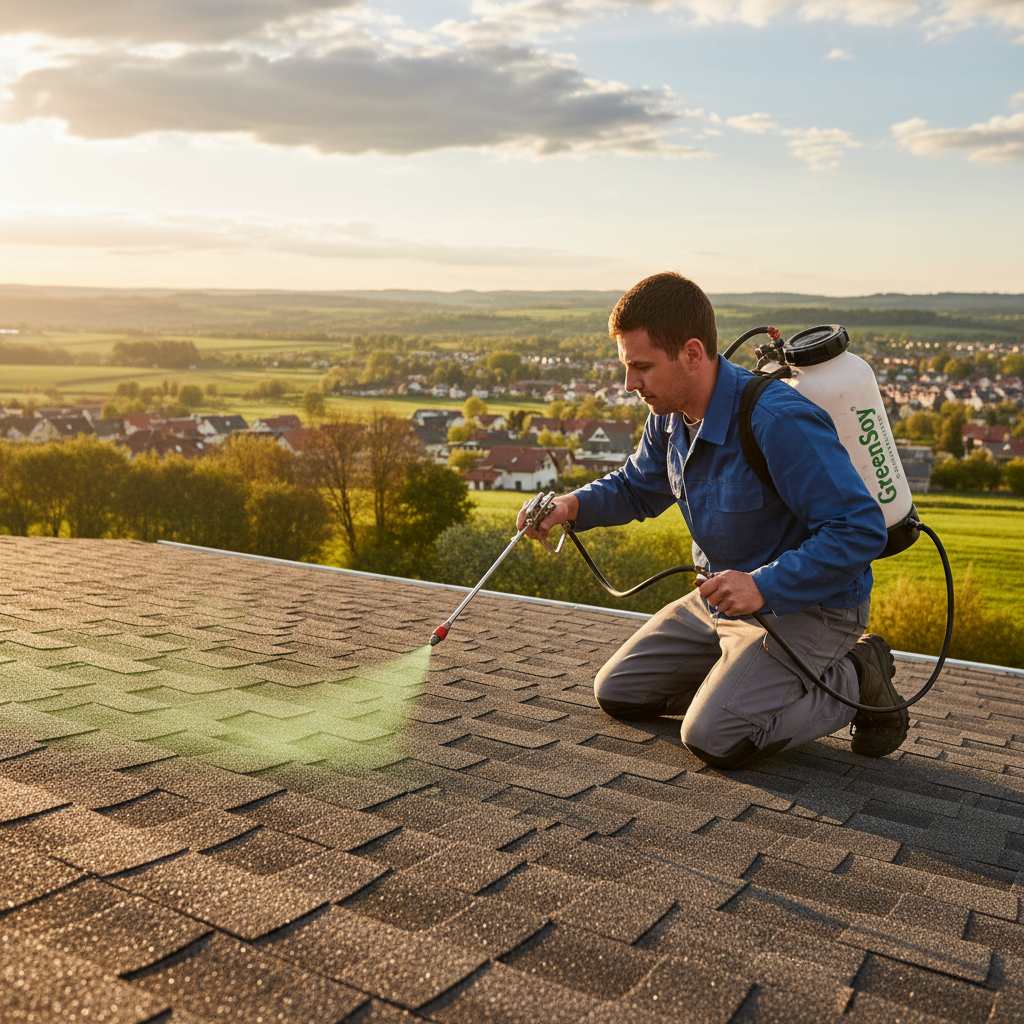
Rejuvenation (roof restoration/resaturation) is a different promise: a sprayed conditioner, often soy-based, marketed to reintroduce oils into aging shingles and, in some product descriptions, to reactivate the adhesive seal strip so tabs stay sealed for wind resistance. It’s still not a leak repair or a flashing fix, and it won’t rescue shingles that are already failing. What you can do today: when a contractor says “treatment,” ask, “Are you proposing a soft-wash cleaning for appearance, or a rejuvenation aimed at flexibility and seal-strip performance, and what roof conditions would make you refuse the job?”
When Treatment Is a Smart Bet
Paying for a spray and then booking a replacement after the next storm season is the outcome you’re trying to avoid. The win is catching that narrow window where the roof is tired but still holding together.
Rejuvenation makes sense only in that narrow middle ground: aging shingles with an intact system. That usually means an asphalt shingle roof in the “middle years” (often roughly 6 to 20 years old) where the shingles have started to dry out but the roof system is still fundamentally sound. In coastal North Carolina, that distinction matters because wind and sun can punish a roof that looks “fine” from the driveway while the details that keep water out (tabs, flashing transitions, penetrations) drift out of spec.
A smart-bet roof has enough shingle material left to condition and enough integrity left to protect. You’re a good candidate when most of these are true:
-
No active leaking or rotten decking: no recurring ceiling stains, soft spots, or sagging lines. If water is already getting in, a spray won’t become your waterproofing layer.
-
Shingles are aging but intact: minor edge lift is one thing; widespread curling, cracking, delamination, or exposed fiberglass means you’re past “restore.”
-
Granules aren’t washing off aggressively: a few granules in gutters is normal; heavy, sandy buildup and bald patches signal the asphalt layer is already too far gone.
-
Seal-strip behavior is the issue you’re trying to improve: for example, you notice tabs lifting in wind on otherwise decent shingles, or an inspection finds poor adhesion without widespread breakage.
What you can do today: walk the perimeter and look for bald spots, consistent curling, and obvious tab lifting, then ask any provider, “What would make you refuse this roof?” If they won’t name clear disqualifiers (active leaks, exposed mat, major granule loss), you are not hearing a diagnosis.
If you’re seeing lifted tabs or mixed wear patterns, a professional eligibility check can confirm whether you’re in the “treatable” window or already in replacement territory. Read more in our article: Roof Rejuvenation Eligibility You are hearing a sales pitch, and that is a hard pass even if their Angi reviews look perfect.
When Treatment Is a Bad Idea

You book a “rejuvenation,” the roof looks better, and a later hard rain still puts a stain back on your ceiling. That is how homeowners end up paying for a treatment and a replacement in the same year.
If you’re hoping a roof treatment will “fix” a roof that’s already letting water in, you’re buying a nicer-looking problem, not more roof life. It is like painting over rot and calling it carpentry. Rejuvenation products condition shingles; they don’t rebuild underlayment or flashing, and those are the parts that turn into expensive surprises in Wilmington-area rain and wind.
Skip treatment and put your money toward targeted repairs or replacement if you have active leaks or recurring interior stains, or widespread cracking/curling/delamination. If you can see damaged pipe boots, rusty flashing, or lifted step flashing at a wall, the failure point isn’t the field shingles, so a spray won’t solve it.
What “Lab-Tested” Really Means Here
A Wilmington homeowner hears “PRI tested” and assumes it means their roof is about to behave like new. The fine print is that the sample in a lab is never the same thing as your flashings, penetrations, and attic ventilation in the field.
When a roof-treatment company says “lab-tested,” they’re usually pointing to third-party testing (often through a lab like PRI) run against ASTM-style methods on shingle samples, not a guarantee that your specific roof will perform a certain way in Wilmington wind and rain. That’s still useful, but only if you understand what the tests can and can’t show.
In plain terms, this kind of testing tends to focus on whether treated shingles behave more like healthier shingles in controlled conditions. For instance, some providers cite improvements in cold-temperature bend or flexibility tests after treatment, which maps to a simple idea: dried-out shingles crack easier, and a conditioner aims to reduce that brittleness. You may also see references to changes tied to moisture resistance or retention within the shingle matrix, which is another way of saying the shingle may hold up better against drying and weathering.
What this doesn’t prove is what most homeowners want to know: that your roof won’t leak or that you’ll automatically “get 6+ years.” Lab work can’t validate your flashing transitions or pipe boots, or whether your roof deck already has soft spots. A treated shingle sample can pass a bend test while the real leak still comes from a tired wall flashing line or a bad bathroom-fan penetration.
What you can do today: ask the provider to show you the actual test summary and translate it into one sentence, like “This testing suggests improved flexibility and sealing behavior, not waterproofing.” If they treat “lab-tested” like the end of the conversation, you are not hearing evidence. You are hearing a sales shortcut, and Consumer Reports would not let that slide.
How Long Results Last in Wilmington Weather

In real-world terms, a single asphalt shingle roof rejuvenation application is usually a “buy time” move, not a decade-long reset. Many providers frame single-application performance around about 5 years, and the bigger 10 to 15 year promises you’ll see tend to depend on re-treating on a schedule when the roof still qualifies.
Wilmington-area conditions push you to be even stricter about that timeline: high UV and heat dry shingles faster, and coastal wind tests whether tabs stay sealed. If one spray is your whole plan to reach the next roof, that isn’t maintenance. You are betting your house on a single coat of sunscreen. What you can do today: ask, “What re-treatment interval do you recommend here, and what roof changes (granule loss, tab lift, leaks) would make you say I’m no longer eligible?”
Cost Tradeoffs: Treatment vs Replacement
The replace-or-restore decision isn’t just about your budget line item; it’s also about waste. One frequently cited estimate puts asphalt shingle waste at 11+ million tons per year going to landfills (see the Northeast Recycling Council (NERC) shingles end-of-life management summary).
If your roof still qualifies, compare rejuvenation vs replacement by estimating cost per year of roof life for each option. A professional asphalt shingle roof treatment often lands in the low-thousands for an average single-family home (a typical roof rejuvenation cost), while a full tear-off and replacement in coastal North Carolina commonly lands in the five-figures once you include labor and disposal.
To illustrate this, if a treatment costs $2,500 and realistically buys ~5 years, you’re paying about $500 per year deferred. If replacement costs $15,000 and you expect ~20 years of service, that’s about $750 per year. That comparison is why treatment can be rational even when you know you’ll replace later: you’re not “avoiding” replacement, you’re deciding what it’s worth to postpone it.
Replacement wins financially when the extra money also buys you risk reduction you can’t get from a spray. Lean toward replacement when it bundles needed fixes (pipe boots, decking repairs) or when solar is next and you want to avoid remove-and-reinstall later. The trap is treating the lowest upfront price as the smart move. In my view, that is backwards homeowner math, and “This Old House” has spent decades showing why details beat bargains after the next coastal blow.
In coastal North Carolina, the best comparison is usually cost-per-year plus the risk of paying twice if the roof is already near the end of its service life. Read more in our article: Roof Rejuvenation Vs Replacement
Choosing a Local One-Day Service Without Getting Sold
A legit one-day service should feel more like a documented maintenance visit than a high-pressure “today only” offer. If the provider can’t clearly separate what the spray might improve (shingle flexibility, sealing behavior) from what it won’t touch (flashings, underlayment, existing leak paths), you’re not hiring expertise, you’re buying confidence.
Use a few concrete filters before you sign anything. You want a company that (1) does a real eligibility inspection before quoting, (2) names the exact product and provides the SDS/MSDS on request, and (3) offers a warranty or guarantee that’s specific about what’s covered (application workmanship) and what isn’t (pre-existing leaks). By way of example, if they won’t put “roof was dry at time of service” and “no exposed mat observed” in writing, get it in writing elsewhere or walk. Otherwise you will have nothing but a handshake receipt if a dispute pops up after the next coastal storm.
Protecting Warranties, Insurance, and Resale Narratives
You want the next insurer, appraiser, or buyer to see a roof that has been maintained, not a roof that was disguised. A little documentation now can save you an ugly conversation later.
If you treat your roof, you still own the roof’s age and history, so stop thinking of it as a “reset.” Insurance usually doesn’t pay for rejuvenation, and a treatment doesn’t automatically preserve or extend a manufacturer warranty, especially if the warranty language restricts aftermarket applications.
What you can do today: keep a proof-of-maintenance packet with dated pre- and post-service photos, the provider’s written condition summary (dry roof or no exposed mat observed), and the paid invoice. When you talk to an insurer, appraiser, or buyer, do it right the first time and call it documented maintenance that may extend service life. If you sell it as a “new roof” on Nextdoor talk, you are asking for a fight at inspection.
FAQ
Will An Asphalt Shingle Roof Treatment Stop Leaks?
Not reliably. Rejuvenation conditions shingles and may help tabs seal and resist wind lift, but leaks usually come from flashings or pipe boots, and a spray won’t rebuild those.
Is Roof Rejuvenation The Same Thing As Painting Or Coating A Shingle Roof?
No. Rejuvenation is marketed as a conditioner that soaks in, while a coating tries to leave a film on top of the shingles; that “flat-roof logic” doesn’t translate well to asphalt shingles.
What’s A Realistic Life Extension From One Treatment?
Treat it like a bridge, not a reset. Many providers frame one application around about five years, and longer timelines usually depend on re-treating on schedule while the roof still qualifies.
Does Insurance Or A Shingle Warranty Cover This?
Usually insurance won’t pay for rejuvenation, and a treatment doesn’t automatically preserve a manufacturer warranty. Protect yourself by keeping photos, the invoice, and the product SDS/MSDS so you can show documented maintenance later.
Should You Treat Your Roof If You’re About To Add Solar?
Only if you’re confident you won’t need a replacement soon, because removing and reinstalling panels later can erase the savings you thought you gained. If your roof is borderline, replacement before solar is often the cleaner risk decision.
Roof not getting any younger? Contact us at Contact us or call 703-673-6301 to find out where you stand.For a local answer instead of a national average, our Wilmington roof rejuvenation quotes free with no pressure.