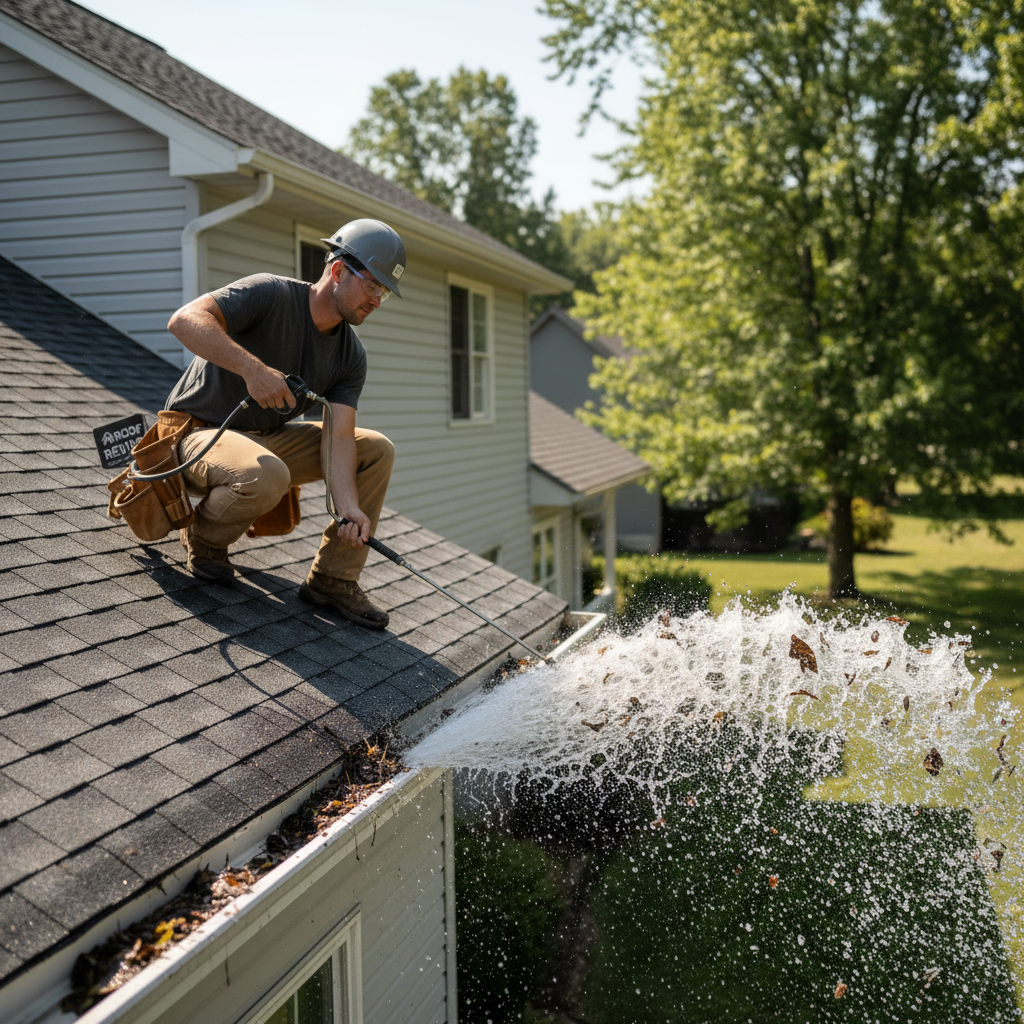
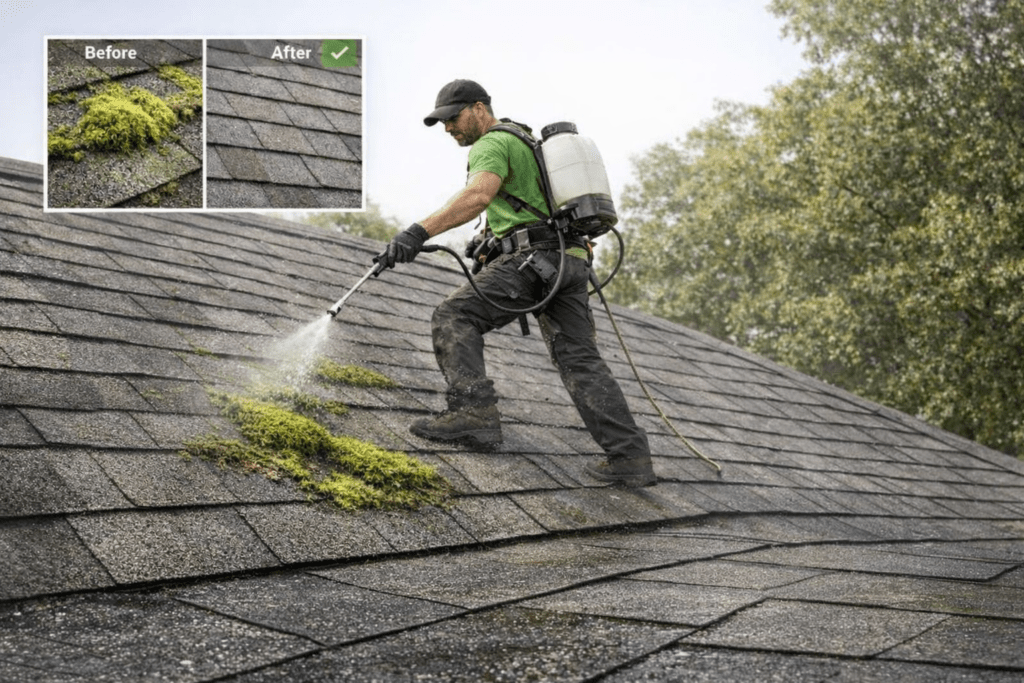
You don’t search “roof cleaning” because you’re bored, you search because your roof looks wrong. Maybe it’s black streaks or green moss, and you’re trying to figure out whether it’s just ugly or shortening the life of your aging asphalt shingles.
What makes this tricky is that “roof cleaning” covers multiple approaches, and the wrong one can cause real damage. If you treat shingles like concrete and blast them with high pressure, you can knock off protective granules and loosen tabs. If you dump harsh mix into your gutters without a runoff plan, you can burn landscaping and create a whole new headache. This guide breaks the problem into what you’re actually seeing and when it’s worth acting on.
Roof Cleaning: Decide What You’re Seeing
Before you pick a roof cleaning method, get specific about what’s on the roof. In warm, humid, coastal-style climates, multiple issues can show up at once, and they don’t behave the same. If you treat everything as “mildew” or try to force a same-day makeover, you’ll either under-treat the real problem or overdo it and risk turning your shingles into wet cardboard.
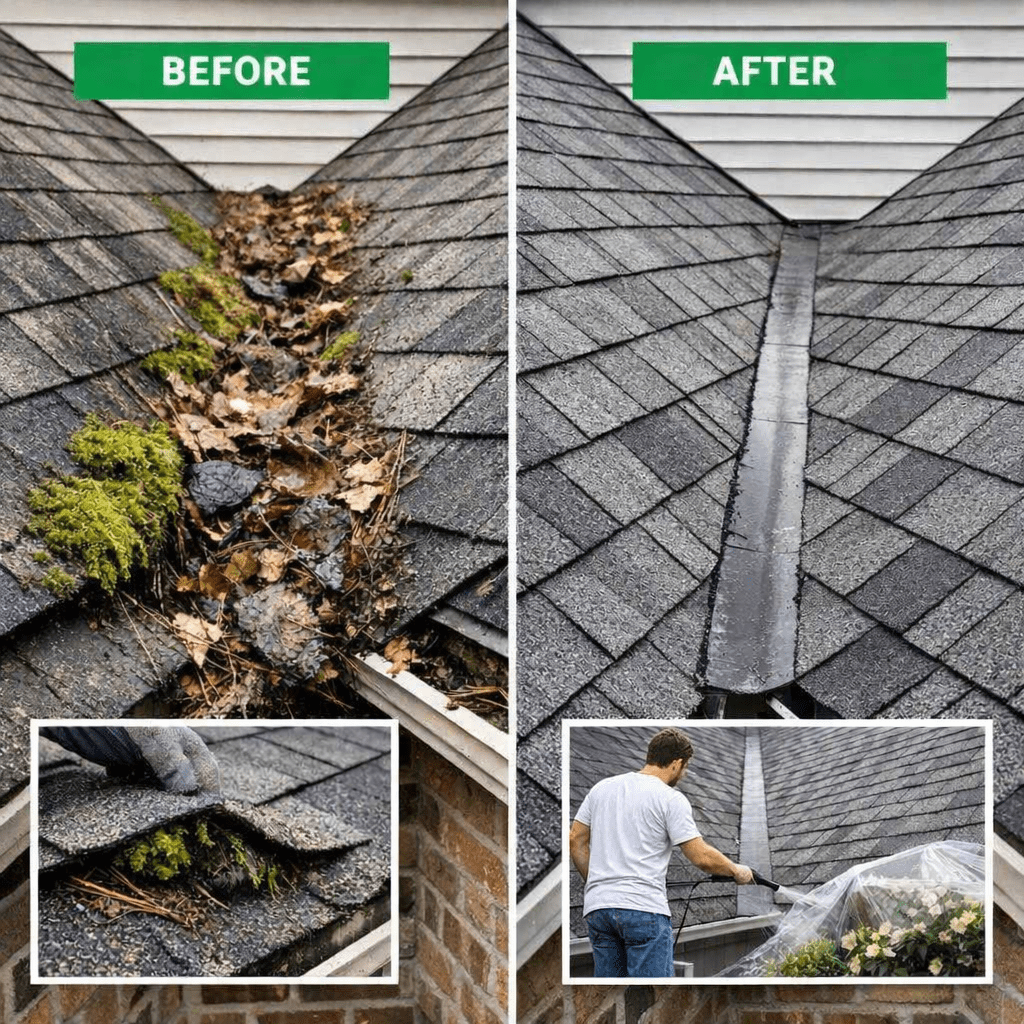
Start with what you can see from the ground (binoculars help) and what you find in roof valleys. Case in point: a roof can look “dirty” from the street because of dark streaks, but the bigger risk to shingle life might be the damp leaf mat sitting in a shaded valley.
| What you’re seeing | Typical appearance (from ground) | Main risk | Usual urgency |
|---|---|---|---|
| Black streaks (algae staining) | Thin, dark lines running down-slope with water path | Mostly cosmetic; can return over time in humid areas | Low unless paired with moisture-holding buildup |
| Moss | Green, fuzzy/tufted patches (often shaded/north-facing) | Holds water; can lift edges | Higher (treat as moisture issue) |
| Lichen | Crusty flat-to-raised spots (green/gray/orange), “stuck on” | Anchors tightly; may not vanish immediately after treatment | Medium (often slower visual results) |
| Debris buildup | Leaves/needles/granules in valleys, behind chimneys, along gutters | Traps moisture; can hide wear | High when it stays damp |
Quick gut-check: if thick growth or piles stay damp after a sunny day, prioritize moisture risk over appearance.
When Roof Buildup Is Worth Acting On
One major shingle manufacturer says it has not seen evidence that algae deposits affect asphalt shingle performance, even though the stains can look severe. That’s why the real decision is usually about moisture, not color.
A “dirty” roof doesn’t automatically mean you need roof cleaning right now. On asphalt shingles, dark algae streaks often look worse than they perform, so you don’t need to panic-clean just because the roof isn’t photo-ready. What’s worth acting on is anything that holds water or lifts shingle edges, because moisture and movement shorten the life of an already aging roof.
Treat it as a roof-health issue if you see moss that stays puffy after dry weather or debris mats in valleys and along the gutter line (for example, a north-facing valley packed with pine needles that never seems to dry out). Waiting it out is wishful thinking. If it’s only thin streaking with no buildup, it’s usually a cosmetic call, not an Owens Corning emergency.
If your shingles are aging but still serviceable, roof rejuvenation can be a complementary option to cleaning that focuses on restoring flexibility and extending service life. Read more in our article: Roof Rejuvenation
The Asphalt-Shingle-Safe Methods (and Why Pressure Washing Fails)
You can get a roof that looks cleaner in an afternoon and still create leaks and premature wear you won’t notice until the next storm season. The damage can be permanent, and you may not notice it until later.
On aging asphalt shingles, the safest approach leans on chemistry and dwell time, not brute force. The moment you treat your roof like a driveway, you can trade a cleaner look today for a shorter shingle life tomorrow. Do it right the first time.
Pressure washing fails on asphalt because the damage mechanism is built in. High-pressure spray can dislodge protective granules and drive water up under the shingle edges. As an example, you might not notice a problem from the ground. But you’ve just created tiny weak points where wind, UV, and future rain can accelerate wear.
| Method | How it works | Best for | Tradeoffs / watch-outs |
|---|---|---|---|
| Soft wash (chemical + low pressure) | Apply mix at low pressure, allow dwell; lightly rinse or let weather lighten staining | Roof algae removal and broader organic growth control | Not an instant makeover; requires runoff control; avoids mechanical abrasion |
| Chemical-only (spray-and-dwell) | Similar goal with less rinsing; relies on dwell time | Algae and some organic growth | Needs good runoff control; results can be gradual |
| Gentle rinse (after treatment) | Garden-hose-like flush after treatment | Carrying away residue (not “blasting clean”) | Should not be used as a cleaning-force step |
A quick way to rule options in or out: ask yourself (or a provider) whether the plan relies on dwell time or spray force. If they’re selling “high pressure to get it bright today,” you’re paying for risk.
What “Soft Wash Roof Cleaning” Really Includes
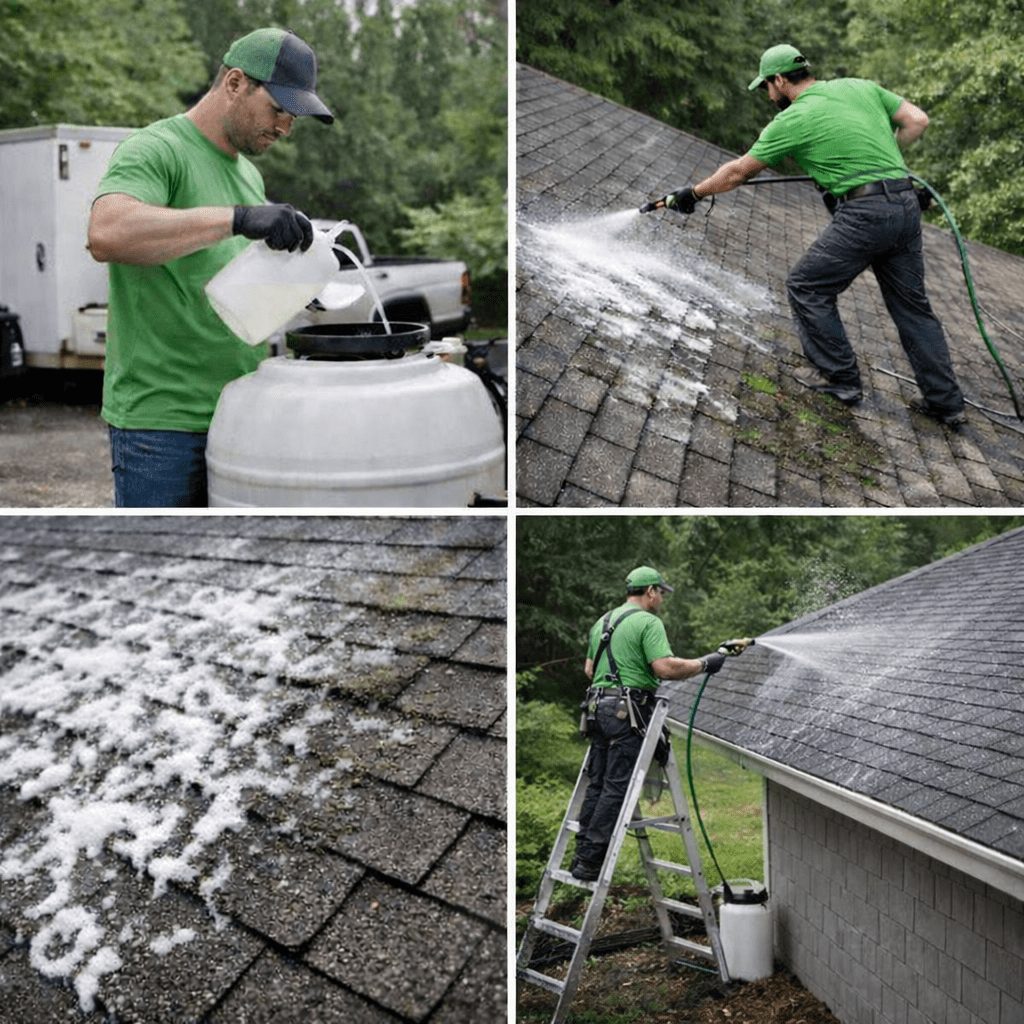
“Soft wash” isn’t a brand name and it’s not a guarantee. Two companies can both say they soft wash, while one is basically misting a weak mix for marketing and the other is doing a controlled chemical treatment designed for asphalt shingles. Details decide whether the treatment removes growth safely or just roughs up the surface. The goal is to kill the organic growth and let time and weather do the removal.
At a process level, you want to hear four specifics: they apply a chemical mix intended for roof algae/moss/lichen (many pros target low single-digit active chlorine for roof work, often around 3% to 5%) and they give it dwell time (commonly 15 to 30 minutes) instead of immediately “washing it off,” as outlined in roof softwashing process guidance.
Runoff control is non-negotiable. It is the difference between a professional job and a yard-killer. As an example, a careful crew pre-wets and protects plants, controls where downspouts discharge, and manages gutters so you don’t dump hot mix onto one mulch bed. When you’re evaluating quotes, ask: What mix are you using (and why) and how long does it dwell? What are you doing to protect landscaping and control runoff?
DIY Roof Cleaning: Where It’s Reasonable (and Where It Isn’t)
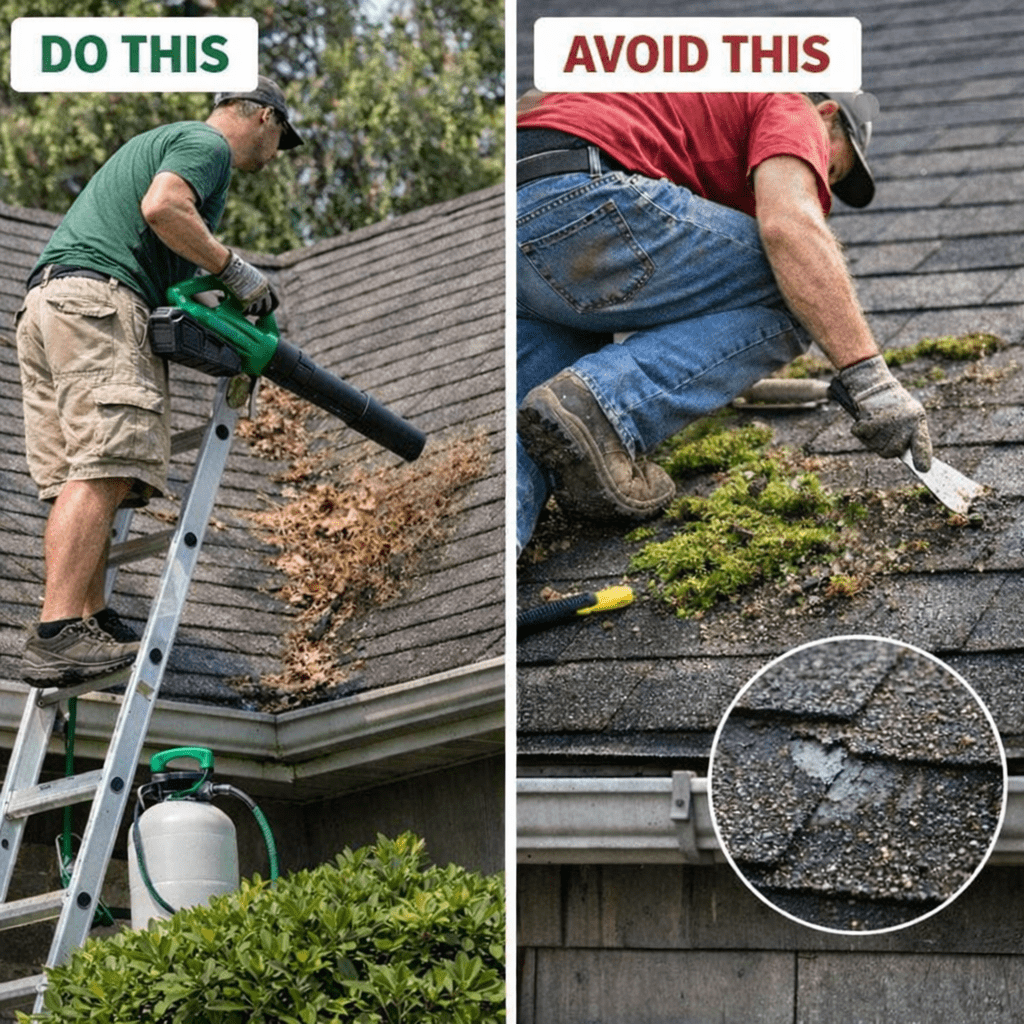
A homeowner clears a valley from a ladder in ten minutes and solves the real moisture problem. The next weekend, they try to “finish the job” by scraping moss off the shingles and turn a simple chore into a repair call.
DIY roof cleaning makes sense if you can stay on the ground or a ladder and stick to loose-debris removal plus light treatment for minor algae. For instance, using a leaf blower from a stable ladder position to clear valleys (then flushing gutters) reduces moisture-holding buildup without grinding anything into the shingle surface.
DIY stops being reasonable fast on steep, high, or slick roofs, on older shingles that can crack or shed granules under foot traffic, and whenever you’re dealing with roof moss removal or lichen that tempts you to scrape or brush. Get a second opinion. It also gets risky if you have sensitive landscaping or downspouts that dump into one flower bed, because you’re now juggling runoff like a waiter carrying a full tray.
If you’re trying to decide in 30 seconds, use this line: if the job requires you to walk the roof or to “make it look clean today,” you’re usually not saving money, you’re buying risk.
Some homeowners prefer plant-friendlier alternatives to traditional bleach-based mixes when controlling algae and organic growth on asphalt shingles. Read more in our article: Greensoy Roof Treatment
How Often to Clean a Roof in Humid Climates (How Often to Clean a Roof)
You stop treating the roof like a one-time project and your weekends get easier. A simple rhythm of inspection and occasional cleaning keeps small buildup from turning into a wet, stubborn mess.
In warm, humid areas, roof cleaning usually turns into periodic maintenance, not a single event. If you’ve got daily dew, salty air, and shade, you’re managing regrowth cycles, not chasing a permanent “like new” roof. Forcing that outcome usually leads to the wrong method.
Use your site conditions to set expectations. It is worth its weight in gold: inspect twice a year (spring and fall) and plan to clean about every 1–3 years if you have heavy shade or north-facing slopes. If your roof gets full sun and you’ve got algae-resistant shingles, you may only need spot treatment or a less frequent schedule, closer to every 3–5 years, unless moss or debris starts holding moisture.
What a Professional Roof Cleaning Should Look Like

A professional roof cleaning should look like a planned procedure, not a quick spray-and-go. It is closer to surgery than a car wash. You’re paying for a controlled process that protects your shingles, your landscaping, and your gutters. The cheapest bid often gets cheap by skipping the unsexy parts.
In a basic, well-run visit, you should see: pre-inspection and photos of trouble spots (valleys, penetrations, loose tabs) and plant and runoff protection (pre-wet/cover sensitive beds, control downspout discharge).
Before they pack up, they should do a quick post-check: confirm no visible damage was caused and point out areas where staining may lighten gradually over weeks.
Choosing a Reputable Roof Cleaning Provider
Two bids come in at similar prices: one promises “bright today,” the other walks you through mix strength, dwell time, and where the runoff will go. Only one of those sounds like they plan to leave your shingles intact.
A reputable provider focuses on process control, not a makeover pitch. If someone promises “bright today” or won’t explain their method, walk away. That kind of promise is a red flag.
Ask: Will you clearly explain pressure washing roof vs soft wash and avoid any brushing/scraping on shingles? What mix will you use and what dwell time do you target? How will you protect plants and control downspout runoff? Red flags include vague “eco-friendly” claims with no details and refusal to discuss runoff. Check Angi (Angie’s List) and compare what people say about process.
If you decide to hire out the work, scheduling an on-site evaluation is often the fastest way to confirm methods, runoff protection, and expected results for your exact roof. Read more in our article: Book Appointment
Roof Cleaning FAQs
How Much Does Roof Cleaning Cost?
Many homeowners see pricing quoted around $0.15–$0.70 per square foot, with big swings based on roof height and pitch. A steep two-story roof with heavy growth and lots of landscaping typically costs more than a simple one-story roof with light staining.
Is It Safe to Clean an Older Asphalt Shingle Roof?
It can be, but only if you avoid high pressure and aggressive brushing, since older shingles lose granules and flexibility like a beach towel that is already shedding sand. If the roof is already brittle or curling, you may be better off limiting cleaning to debris removal and getting a pro to assess whether treatment is worth the risk.
How Long Does It Take for Black Streaks to Go Away After a Soft Wash?
You might not see a “bright today” change, especially with chemical-and-dwell approaches that rely on weather to do the final lifting. In humid climates, expect improvement over weeks and sometimes longer, depending on staining depth and rainfall.
Will Roof Cleaning Void My Shingle Warranty?
High-pressure washing and abrasive methods can put you at odds with common manufacturer guidance for asphalt shingles, because they can damage the surface. Low-pressure, chemical-assisted cleaning is the direction many manufacturers and industry sources point to, so ask a provider to describe their exact method rather than accepting the label “soft wash.”
Will the Chemicals Hurt My Plants or Pets?
They can if runoff isn’t controlled, especially near sensitive beds or vegetable gardens. Make sure the plan includes pre-wetting and protecting plants and keeping kids and pets inside until everything is rinsed and dry.
Contact us for a free inspection or call 703-673-6301 to find out where you stand.
For Wilmington-area homes, our soft wash roof cleaning service in Wilmington does it shingle-safe from the start.