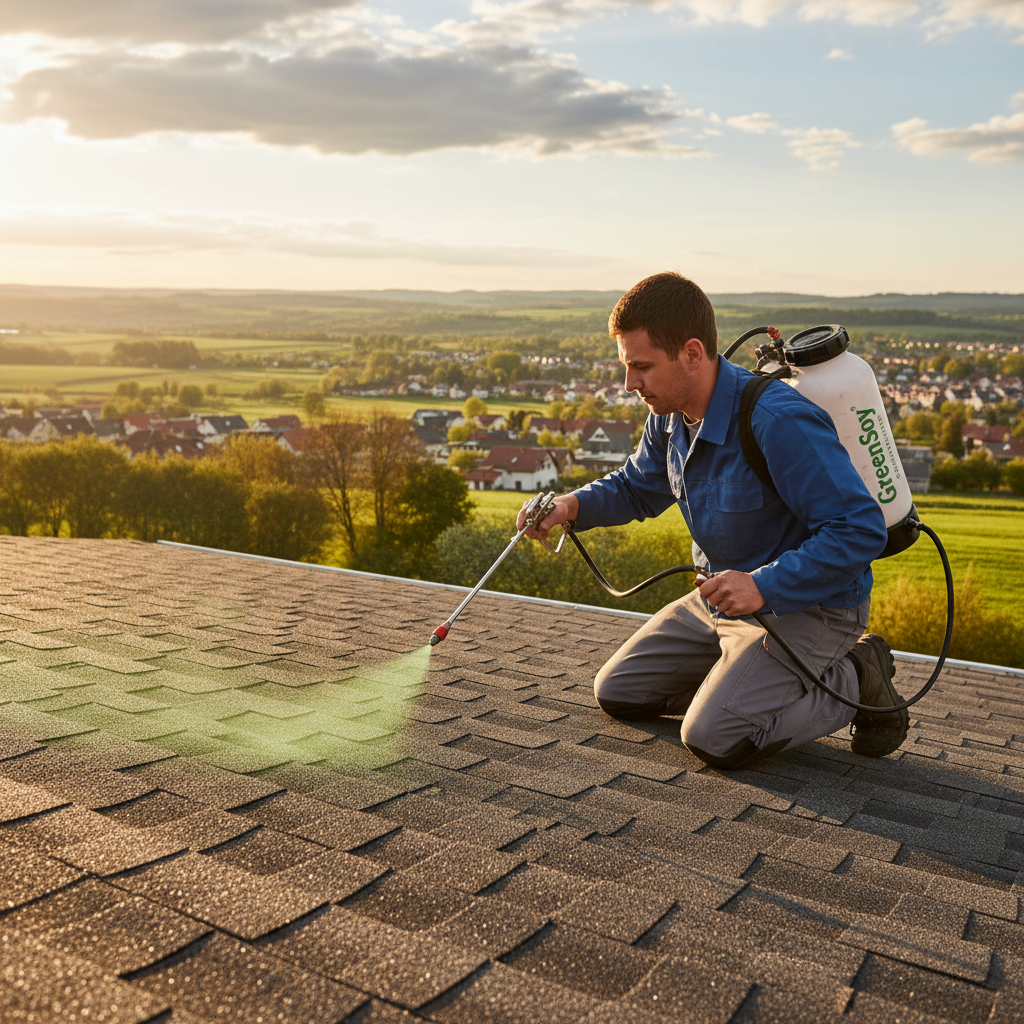
If you’re being pitched roof rejuvenation as an alternative to replacement, the real answer is: sometimes it buys you time, and sometimes it buys you nothing. On an asphalt-shingle roof that’s still intact and laying flat, you can reasonably hope for about 3–6 years. On a roof that’s already losing lots of granules, curling, or going brittle, you might only get 0–2.
The hard part is you can’t verify that from the driveway, and most “adds 5–6 years” claims don’t say what roof conditions that number assumes or what signs would make it unrealistic, especially around Wilmington and nearby beach communities where sun and salt speed up wear. This guide walks you through how to tell whether you’re a real candidate (surface aging vs. material loss). It helps you compare options so you are not just trying to kick the can down the road on a roof that is already running on fumes.
How Long Does Roof Rejuvenation Last, Really?

Most asphalt-shingle rejuvenation marketing clusters around “adds 5–6 years.”Treat that line as sales talk unless the Better Business Bureau (BBB) level details back it up. For most homeowners, the realistic outcome is 0–2 years on a brittle, granule-shedding roof, and about 3–6 years only when the shingles still have enough material and flexibility to respond.
Also, “extend roof life” usually means buying time before replacement without new leak risk increasing, not making a 18-year-old coastal roof behave like a brand-new 30-year shingle. If you’re near Wilmington or beach communities where sun, salt, and wind speed up wear, be wary of treating “5 years” as a universal number rather than a best-case outcome on a still-healthy roof.
Salt air and persistent humidity can accelerate asphalt shingle oxidation and granule loss compared with inland homes. Read more in our article: Salt Air Humidity Shingles
Does Roof Rejuvenation Work or Not?
You can pay for a treatment, feel good for a month, and still be pricing a replacement by the first hard storm. The difference is rarely the product, it’s whether there’s enough shingle left to respond in the first place.
Rejuvenation only has a shot when your shingles still have enough physical roof left to respond. Think of it as slowing ongoing drying and asphalt shingle oxidation on a roof that’s aging, not rebuilding a shingle that’s already worn through. That difference matters because once the shingle surface and granule layer are too far gone, water handling and UV protection don’t come back just because the roof looks darker or feels temporarily less brittle.
A good rule: it can pencil out as a bridge in early-to-midstage wear. It fails when the roof is already a sandcastle at high tide. For instance, a 12 to 18-year roof in Wilmington that’s weathered but still lying flat might plausibly buy time; a similar-aged roof a few blocks from the ocean with heavy granule loss and lifting tabs usually won’t.
| Condition check | More likely to work | More likely to fail (money wasted) |
|---|---|---|
| Shingle shape / edges | Shingles mostly lay flat | Widespread curling, cupping, or lifted edges |
| Granules / surface | Granule loss is light; not exposing large bald areas | Lots of loose granules in gutters/downspouts; exposed fiberglass or bald patches |
| Leaks / deck | No recurring leaks | Multiple active leaks or soft decking |
| Brittleness / cracking | You’re not seeing widespread cracking; roof still “reads” as intact from the ladder line | Shingles snap or crumble when gently lifted |
If you want one practical move: ask for a quick roof report that separates “surface aging” from “material loss.” If the contractor can’t show you photos of granule condition, edge lift, and any exposed mat, you’re being sold a number of years instead of a roof diagnosis.
The most reliable way to judge whether rejuvenation is worth it is a documented inspection that clearly separates normal wear from damage and shows close-up roof photos. Read more in our article: Typical Roof Inspection
Coastal NC Factors That Change the Math

In coastal North Carolina, the same roof often won’t last as long as it would farther inland. Wear often runs higher, so the same “adds 5–6 years” claim can shrink quickly in real life. A roof that might coast along to 20+ years farther inland can land closer to the mid-teens near Wilmington’s beach communities, which means you’re trying to buy time on a faster-moving clock.
Salt humidity and intense sun accelerate shingle drying and granule loss, and algae and dark streaking aren’t just cosmetic when they hold moisture on the surface. Even when it passes a quick glance, it may be shedding protective granules faster than expected. That is why Consumer Reports style skepticism matters here, since rejuvenation cannot replace missing mineral cover.
Wind and storms are the other limiter. After a tropical system or a winter nor’easter, the deciding factor often becomes seal strips, edge lift, and creased tabs, not overall appearance. If you’re in a high-wind pocket and you’ve already had a few shingles re-sealed or replaced after storms, treat rejuvenation as a shorter bridge, not a reset button.
A Decision Framework: Cost per Year Added

A lot of “adds ~5 years” talk traces back to lab-style accelerated aging, like PRI Asphalt Technologies 1,500-hour tests meant to approximate about five years on roughly 15-year-old shingles. If your roof is older, coastal-stressed, or already shedding granules, the only number that matters is what you are paying for each likely year you actually get.
Put each option into a cost-per-year-added number based on what you’re likely to get. Use that number to decide whether it’s worth it, since the math usually beats intuition here. This pushes you to stop thinking in percentage savings and start thinking in what you’re actually buying: time.
Start with rough math. As an example, if rejuvenation costs $2,500 and you believe your roof is a real candidate for about 5 years, you’re paying about $500 per year. If targeted repairs run $1,200 and realistically keep you stable for 2 years, that’s $600 per year. If replacement is $14,000 and you expect 18 years in coastal NC conditions, that’s about $780 per year. The point isn’t the exact numbers; it’s that the “cheap” option can be more expensive per year if it only buys a short window.
Then apply two reality filters. Risk: rejuvenation and spot repairs can be a smart bridge, but they don’t reset shingle age in the eyes of wind, water, or sometimes underwriting. Disruption: replacement costs more, but it collapses a lot of uncertainty in one move.
To use this framework in quotes, ask: “What’s the most likely added years on my roof specifically, and what would make it less?” “What failure would still force replacement inside 12–24 months?” and “What documentation will you provide to show current condition after the work?”
Cost-per-year math gets clearer when you compare rejuvenation cost against realistic remaining roof life in Wilmington’s coastal conditions. Read more in our article: Roof Rejuvenation Cost Vs New Roof
Making the Call With Proof, Not Promises
A homeowner has a clean-looking roof, a fresh invoice, and still gets an underwriting letter asking for proof of current condition. The contractors who make this easy are the ones who document what they saw and what they’re willing to stand behind.
You’re not buying a spray, you’re buying probability: the odds your roof stays trouble-free long enough to justify spending more money on it. So base the call on documentation and accountability, not on whether the roof looks darker afterward.
Before you sign, get it in writing (email is fine): (1) photo documentation of granule condition and edge lift, (2) their most likely years added on your roof and what would reduce it, (3) the roof rejuvenation warranty details in plain language, and (4) a simple invoice plus a “condition at time of service” note you can keep for underwriting, because trusting Google Reviews alone is a bad way to bet your ceiling. If they won’t get specific or won’t show you the roof conditions they’re basing the quote on, you’re paying for a slogan, not a plan.
Roof not getting any younger? Contact us at Contact us or call 910-241-1152 to find out where you stand.