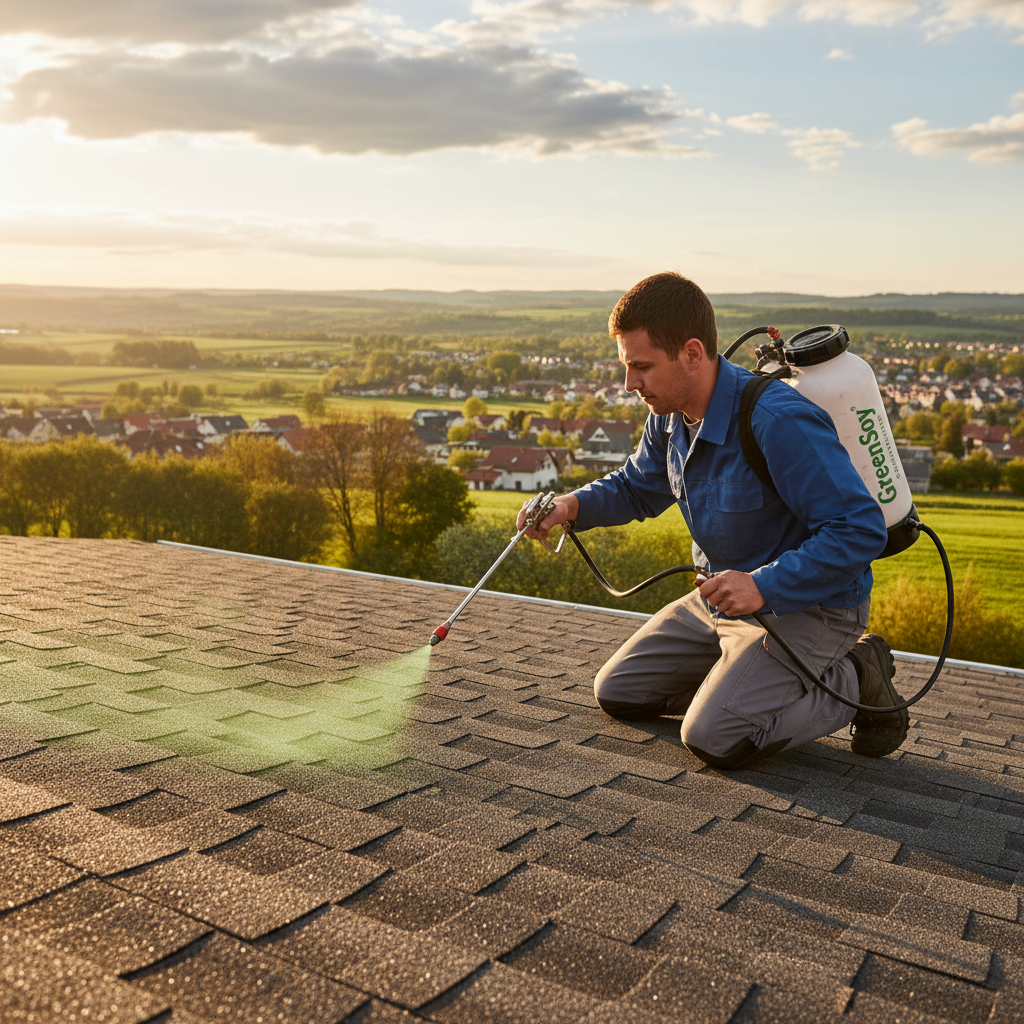
If your roof still looks “fine,” but you’re hearing it’s near end of life, you’re not alone. The confusion usually starts when one person offers a rejuvenation spray and another pushes a coating, and both pitch it as a cheaper alternative to replacement, turning it into a coating-versus-replacement choice. A lot of homeowner-facing marketing makes rejuvenation sound like it can add years for far less than replacement (as described here: Roof Maxx’s overview of roof rejuvenation).
Here’s the practical difference: roof rejuvenation is meant to soak into asphalt shingles to restore some flexibility as they dry out, while a roof coating is meant to sit on top and form a film-like layer for surface protection. If you’re in coastal North Carolina, that distinction matters because wind-driven rain and humid attics punish weak flashing and damp decking, plus ventilation problems that no spray can fix. You’ll also want to think about shingle manufacturer guidance and warranty impact before you approve any treatment, since some manufacturers explicitly warn that coatings or rejuvenators can void coverage.
| Topic | Roof rejuvenation (soaks in) | Roof coating (sits on top) | What to do with this info |
|---|---|---|---|
| What it’s trying to do | Restore some flexibility in aging asphalt shingles | Add a film-like surface layer for protection/water-shedding/reflectivity | Ask: “Does it penetrate, or leave a visible layer?” |
| Best fit | Roof is still shedding water; aging brittleness is the main issue | Situations where a surface membrane is the intended solution (coatings on asphalt shingles can be controversial) | Don’t treat them as interchangeable fixes |
| Wrong tool when | Active leaks, soft spots, damp decking, ventilation-driven moisture | Trying to solve leaks, soft spots, flashing failures, or attic moisture | Diagnose and repair the roof system first |
| Warranty risk | May affect shingle manufacturer warranty | May affect shingle manufacturer warranty (some manufacturers advise against field-applied coatings) | Get brand/line + written warranty impact before approving |
Roof Rejuvenation vs Roof Coating, What Changes on the Shingle

The simplest way to separate these is to ask: is the product meant to soak in or sit on top? Roof rejuvenation is typically a spray-applied, oil-based conditioner designed to penetrate an asphalt shingle and restore some flexibility as the shingle dries out over time. The pitch is simple: make a brittle, crack-prone shingle behave more like a flexible one again under heat and wind.
A roof coating is different in kind. It’s meant to form a continuous film on the surface, more like a paint or membrane. The goal is surface protection: reflectivity and weathering resistance. On asphalt shingles, that “top layer” idea is exactly why coatings are controversial, because shingles already rely on a specific surface design (granules and airflow pathways) to work as a system.
To illustrate this, kick the tires by lifting a tab to replace a boot. If the shingle snaps, it is a sandcastle at high tide. Rejuvenation is sold as conditioning that brittleness so the tab is less likely to snap when handled. Coating is sold as adding a protective film over the surface. Those aren’t the same fix, and treating them as interchangeable can push you into the wrong solution.
When you’re comparing quotes, get specific with questions like
-
“Is this intended to penetrate the shingle, or leave a visible layer on top?”
-
“What problem are you solving: brittleness/flexibility, or adding a surface membrane?”
-
“After it cures, will the roof look and feel different to the touch (tacky, glossy, film-like), or mostly the same?”
If your shingles are already cracking when handled, conditioning may buy time only if the underlying roof system is sound. Read more in our article: Shingle Brittle Cracking Treatment
When Each Option Fits (and When It’s the Wrong Tool)

A neighbor takes the “quick treatment” offer, and six months later they’re chasing the same ceiling stain after every hard coastal rain. The difference was never the product, it was what the roof was actually doing under the surface.
Both rejuvenation and coating pitches can sound like “avoid replacement.” Your real decision gate is simpler: are you dealing with an aging surface or a failing roof system? Once water is getting into the assembly, a surface treatment won’t solve it. Worse, it can postpone the repairs that prevent rot, mold, and insulation damage. In coastal North Carolina, that “looks fine” talk can get expensive fast. Wind-driven rain finds pinholes like a hound finds a scent trail.
Rejuvenation is the better fit when the roof is still shedding water and you’re mainly seeing age-related brittleness: tabs that crack when lifted and widespread stiffness. As an example, if a roofer can replace a pipe boot and a few damaged shingles without the surrounding field shattering, you’re at least in the territory where “conditioning” could be discussed as a time-buying maintenance move.
A coating becomes the wrong tool fast on asphalt shingles if you’re trying to solve leaks or ventilation-driven moisture. If you’ve got staining on ceilings and damp decking, treat that as a hard stop until you diagnose the source. If algae streaking is the complaint in Wilmington-area humidity, keep the fix in its lane: cleaning and ventilation checks, not a “seal the roof” pitch.
Before you green-light either option, press for roof-condition proof, not promises: ask what they saw under a few lifted tabs and whether any areas read wet or feel soft. If the answer keeps drifting back to “it’ll waterproof everything,” you’re not evaluating maintenance anymore, you’re buying a story.
A roof that “looks fine” can still have early leak pathways at pipe boots, chimneys, and vents, especially after wind-driven rain. Read more in our article: Roof Leaks Chimneys Vents
Risks That Matter: Moisture, Heat, Traction, and Shingle Warranty

One practical benchmark used in coating decisions is moisture, not marketing: some guidance points to a tear-off when moisture shows up in about 25% or more of the roof area. That’s the kind of constraint a glossy “waterproofing” pitch rarely mentions.
The biggest risks with anything you spray or roll onto asphalt shingles aren’t the ones in the pitch; they’re the physics you can’t see. If a product changes how the shingle dries or vents, you can end up trapping moisture or accelerating aging in ways that won’t show up for a season. For instance, in Wilmington humidity and wind-driven rain, a roof can look “dry” from the yard while the deck stays damp around a bathroom fan or pipe boot.
You also need to treat manufacturer guidance as a real decision factor for roof rejuvenation warranty. It is not fine print. Owens Corning’s technical bulletin states that applying a rejuvenator solution or coating makes the Limited Lifetime Product Warranty “not applicable.” That is not a small-print gotcha, and Consumer Reports-style realism says you should assume you eat the risk. GAF also notes that they and the Asphalt Roofing Manufacturers Association strongly advise against field-applied coatings over installed asphalt shingles, citing potential degradation and ventilation-related moisture buildup.
What you can do differently: before you approve any treatment, ask which shingle brand or line is on your roof. Ask for the exact product name and a written scope, then require a written statement on warranty impact. If they dismiss moisture checks or promise it’ll “waterproof everything,” you’re taking the downside without any measurement.
Many homeowners don’t realize that some roof treatments can affect warranty coverage even if the roof isn’t leaking. Read more in our article: Roof Warranty Void
How to Choose and What to Ask

You walk away from an estimate with the product name, the prep and repairs spelled out, and a straight answer on warranty impact. That’s how you convert a pitch into a decision you can defend.
You don’t have to become a roofing expert to make a smart call here. What you can’t do is rely on vague promises. If a contractor can’t clearly explain what they’re applying and what it changes on the shingle, you’re not choosing between options. That’s a bad bet, and even This Old House would call it out as salesmanship over diagnosis.
Bring these questions to a roof inspection Wilmington NC visit or estimate, and let the answers do the sorting
-
“Is this meant to penetrate the shingle or leave a film on top?” Ask what it will look and feel like after it cures.
-
“What did you check to rule out trapped moisture or active leaks?” Have them point to specific areas: around pipe boots, chimneys/step flashing, valleys, and any suspect decking.
-
“What repairs happen first, before any spray or coating?” An honest scope will include small fixes (bad boots, missing/damaged shingles, flashing touch-ups) instead of pretending the product replaces repair.
-
“What’s the exact product name, and can you send the data sheet?” If they won’t disclose it, treat that as your answer.
-
“How does this affect my shingle manufacturer warranty?” Get the response in writing with your shingle brand/line noted.
Documentation to request: a written scope of work (prep + repairs + application), photos of problem areas they found, and a clear statement of what they’re willing to rule out before selling you anything (soft decking, wet areas, ventilation-driven moisture issues).
Roof not getting any younger? Contact us or call 703-673-6301 to find out where you stand.The fix is often simpler than it looks. Our roof rejuvenation service in Wilmington starts with a free inspection and a written report.