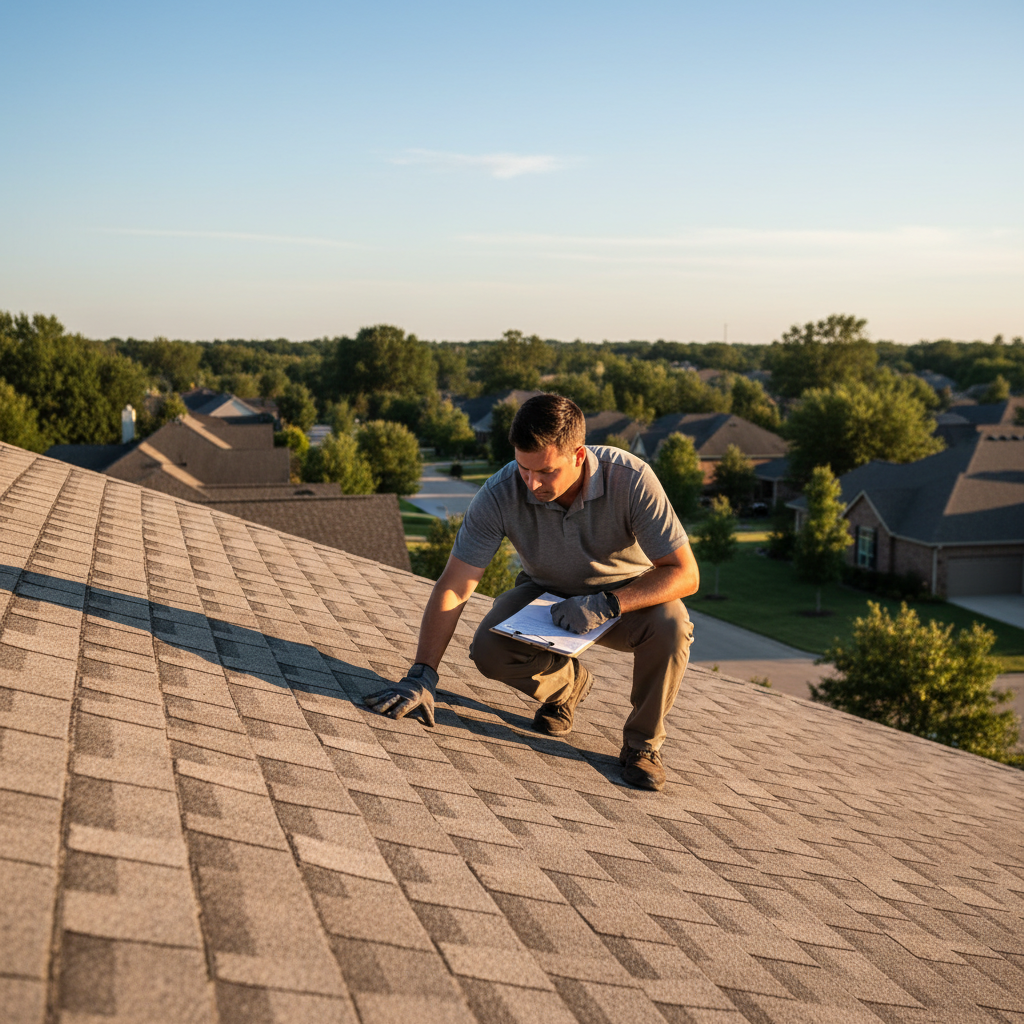
Not usually, by itself. It depends on what’s done and what changes.
If you’re in coastal North Carolina and you’re weighing a soft-wash or a “rejuvenation” spray, your real risk isn’t a magical on-off switch that voids everything. A future claim can get denied when the manufacturer can tie the issue to maintenance damage or missing documentation you can’t fix. This guide breaks down what typically puts coverage at risk and why pressure washing creates the easiest denial story.
| Treatment option | Typical warranty-risk trigger | What to get in writing / document |
|---|---|---|
| Pressure washing | Mechanical damage narrative (granule loss, scuffing, lifted/stressed tabs), roof cleaning void warranty | Avoid on shingles; if any cleaning occurs, keep dated before/after photos and proof method avoided high pressure |
| Soft-wash (true low pressure) | Risk if it becomes high-pressure, uses a tip on shingles, or involves scrubbing/abrasion | Contractor states low-pressure application, no pressure-washing tip on shingles, no scrubbing/abrasion; keep product name + SDS/label; dated photos |
| Rejuvenation / “restorer” spray | Treated as unapproved modification (surface altered; harder to prove defect vs post-install change) | Email confirmation from manufacturer/installer that product/process won’t affect your specific warranty; keep product name + SDS/label + scope of work |
The Fastest Way Warranties Get Denied

The quickest path to a denied shingle warranty claim isn’t using the “wrong” cleaner. Major manufacturer limited warranties commonly exclude issues tied to improper workmanship and lack of roof maintenance (for example: GAF’s asphaltic materials limited warranty). It’s giving the manufacturer an easy cause to point to that you can’t disprove, like granule loss from aggressive washing or physical scuffs from walking. In practice, “voided” often looks like “we can’t verify this is a manufacturing defect.” The burden shifts to you.
For example, if you later report wind-lifted tabs after a Wilmington storm, but your roof has visible abrasion marks, the manufacturer can argue the damage came from handling or maintenance, not the shingle itself. So don’t frame this as a chemistry question. It hinges on whether your documentation holds up when the claim adjuster shows up.
High-pressure rinsing can accelerate granule loss and leave evidence that’s easy for a manufacturer to blame for future issues. Read more in our article: Pressure Wash Asphalt Shingles
Pressure Washing vs Soft-Wash, Why ARMA Draws the Line
If you want one source you can point to that isn’t tied to a single brand’s fine print, ARMA is about as close as it gets. Their latest algae-discoloration bulletin is direct about what not to do on asphalt shingles.
ARMA’s algae-discoloration guidance is unusually blunt: don’t use high-pressure washing on asphalt shingles for algae removal or for any other purpose because it’s likely to damage the roof surface. That guidance matters because it gives a straightforward warranty exclusion angle: visible scouring or stressed tabs let them anchor the denial to mechanical damage instead of debating products.
Soft-wash only stays “warranty-defensible” when it means low pressure and no scrubbing that grinds granules loose. Before you book anything, ask the contractor to put in writing that they’ll apply chemicals at low pressure (often described as well under 100 PSI) and won’t use a pressure-washing tip on the shingles, consistent with how soft washing is commonly defined (low-pressure chemical application). If they won’t document it, this stops being a roof-cleaning decision. You’re tossing your warranty leverage off the roof.
A true soft-wash relies on low pressure and the right mix to remove algae without scouring the shingle surface. Read more in our article: Soft Wash Roof Cleaning
Rejuvenation treatments: maintenance or unapproved modification?

A homeowner signs off on a “roof restore” service, the roof looks great, and six months later a defect claim turns into an argument about what was sprayed on it. After that, the conversation shifts from performance to responsibility.
Rejuvenation sprays and “restorer” treatments carry a different warranty risk than soft-wash: a manufacturer can treat them as an unapproved modification to the shingle, not routine maintenance. Even if it looks better, it can hand them a clean claim defense: the surface was altered, so they can’t isolate a defect from a post-install change.
By way of example, if you file a claim for premature granule loss or cracking after a rejuvenation service, the debate can shift from “is this a defective shingle?” to “did that treatment change how the shingle aged?” Before you book, get written confirmation (email is fine) that the product and process won’t affect your specific warranty, because post-treatment warranty disputes are commonly framed as an unapproved modification problem. If you would not trust it from Angi (formerly Angie’s List), you should not trust it on your roof.
Most restoration sprays create warranty risk because they can be treated as a post-install alteration rather than normal cleaning or maintenance. Read more in our article: Roof Rejuvenation Risks
Your Warranty’s Remaining Value Changes the Decision
You can save yourself time by doing one quick reality check: what would a successful claim pay at your roof’s age and warranty tier. If the dollars are small, the warranty often shouldn’t be the main constraint.
If your roof is 10+ years old, a manufacturer shingle warranty often doesn’t function like “full coverage” anymore (many are prorated and materials-focused). It may be prorated and focused on materials. Labor coverage may be limited or long gone, so spending weeks chasing paperwork can cost more than the warranty could realistically return.
On the other hand, if you paid for an enhanced or “system” warranty tier, the math flips because eligibility can hinge on certified contractors and specific accessory packages, not just the shingles (see manufacturer program overviews like GAF’s warranty resources). As an example, a minor-sounding deviation like a non-qualifying vent or underlayment can matter more on paper than a gentle cleaning ever will.
Before you book a treatment, ask yourself: if a claim happened after the next big Wilmington wind event, what dollars are actually on the line for your roof today, and what proof would you need?
What to do before booking any roof treatment

Imagine facing a post-storm roof issue with nothing but a contractor’s verbal promise and a couple of blurry phone photos. That kind of missing documentation can sink a claim.
Before anyone touches the roof, lock down the paper trail that makes a future claim winnable. Nextdoor neighborhood posts do not count. Without proof of shingle condition and method, your claim depends on the other side’s version of events.
Do this first
-
Find your warranty tier (standard vs enhanced/system) and any contractor-certification requirements.
-
Email the manufacturer (or your installer) the exact product name and method and ask, “Does this affect coverage?” Save the reply.
-
Take dated photos: wide shots of each slope plus close-ups of valleys and ridges.
-
Get the contractor to write: low-pressure application (no pressure-washing tip) and the product/SDS they’ll use.
FAQ: Will This Void My Shingle or Manufacturer Warranty?
Will a soft-wash void my manufacturer warranty?
Not automatically. It becomes a problem when the method causes visible mechanical damage (granule loss or scuffing) or when you can’t prove what was done, so get the low-pressure process and the no-scrub/no-pressure-tip commitment in writing.
My roof is 10+ years old. Does protecting the warranty still matter?
Sometimes, but you should check what’s left: many shingle warranties are prorated over time and often cover materials more than labor. If a claim would only return a small credit, it may not be worth treating the warranty like your main decision driver.
I have an enhanced or “system” warranty. Can cleaning or treatments affect it?
Yes, because enhanced coverage often depends on meeting program rules (certified contractor and documented compliance), not just the shingles looking fine. Even if cleaning isn’t the issue, anything that creates paperwork gaps can make a claim harder to win.
If algae comes back in Wilmington’s humidity, do repeat cleanings create warranty risk?
Repeated pressure washing does, because it can accumulate abrasion and make a roof warranty claim denied due to cleaning more likely by making future granule loss look like maintenance damage. If you need repeat service, stick to documented low-pressure methods and keep before-and-after photos so the roof’s condition doesn’t turn into a “we can’t verify” denial.
A contractor said, “This won’t void your warranty.” Is that enough?
No, because the manufacturer decides manufacturer-warranty coverage, and a contractor’s promise usually isn’t enforceable against the manufacturer. Treat it as a sales line. Read the fine print unless you also have written method details and (ideally) an email from the manufacturer or your installer confirming it doesn’t affect your coverage.
Roof not getting any younger? Contact us or call 703-673-6301 to find out where you stand.