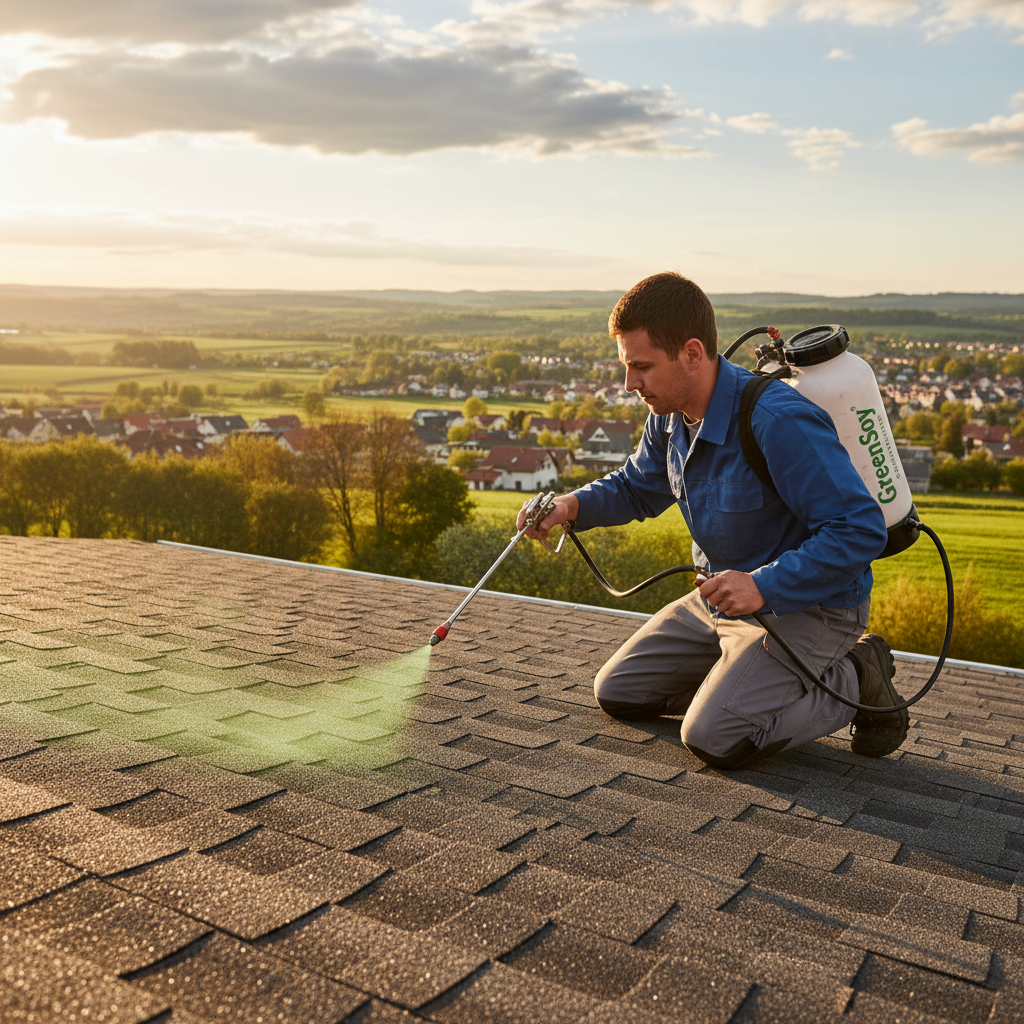
If you’re in coastal North Carolina, most roof “results” last on two different clocks. A soft-wash clean look often holds about 12–24 months in heavy shade (sometimes 2–5 years with good sun and airflow), while a GreenSoy-style rejuvenation typically runs about 5–6 years per application (as commonly framed by GreenSoy-based rejuvenation programs).
That split matters because dark streaks can come back long before the roof-life benefit is gone. Letting it get to that point usually means you’ll need a heavier, pricier reset.
| Result you’re tracking | Typical duration (coastal NC) | What it impacts | When to plan the next step |
|---|---|---|---|
| Soft-wash “clean look” | 12–24 months in heavy shade; 2–5 years with good sun/airflow | Appearance (algae staining and recolonization) | Check every spring; budget a maintenance clean about every 2–3 years (sooner with heavy shade/dew) |
| GreenSoy-style rejuvenation | About 5–6 years per application (often tied to a ~6-year warranty window) | Roof life / shingle flexibility (not spotless appearance) | Spring check yearly; book a pro re-inspection around year 4–5 to decide on re-treatment before ~year 6 |
In this guide, you’ll learn how to tell which result you’re judging and what conditions shorten or stretch your timeline (shade and morning dew). You’ll also learn a simple maintenance rhythm so you know when to check, when to clean, and when to book a re-inspection before you miss the re-treatment window for overall roof treatment lifespan.
First, Define What “Results” Means, Clean Look vs Roof-Life Extension

If you don’t name the result you’re tracking, you’ll end up re-treating too early or, worse, putting it off until a roof that’s still serviceable starts looking ugly again like the tide line creeping back up the beach. In coastal North Carolina, those two outcomes follow different timelines.
A soft-wash/cleaning result is mostly about appearance: removing the dark algae staining and slowing recolonization. In humid, tree-heavy areas, the clean look can fade in 12–24 months; with better sun and airflow, it can hold 2–5 years, largely driven by shade and ventilation.
A rejuvenation result (like a GreenSoy-style treatment) is about roof rejuvenation longevity, roof life and shingle flexibility, not how spotless it looks. Those treatments often get framed around about 5–6 years per application (commonly tied to a 6-year warranty window). Case in point: your roof can start showing light dark streaking again next summer and still be well within the window where the rejuvenation benefit hasn’t “worn off” yet.
How Long Should Roof Cleaning Results Last Here?
After a wet spring, the streaks can return and make it seem like the last cleaning failed. If you treat that as a failure instead of a normal coastal timeline, you usually wait too long and pay for a much heavier reset later.
In the Wilmington-area humidity, it’s normal for a roof that looked great after a soft-wash to start showing faint dark speckling or light streaking again sooner than you’d like (soft-wash providers in humid/coastal markets often note results can be closer to 12–24 months depending on conditions). Many homeowners see the “clean look” hold roughly 12–24 months in shaded or north-facing sections, while homes with better sun and airflow can sometimes stay noticeably cleaner for 2–5 years.
If you’re waiting for the roof to look “bad again” before you act, that’s a losing strategy, and Consumer Reports would tell you the same. That delay tends to turn a small maintenance visit into a bigger, costlier clean. Instead, set a recurring spring checkup as the baseline.
In coastal humidity, algae can start recolonizing shaded roof planes within a year or two even after a proper soft-wash. Read more in our article: Roof Cleaning Results Last Budget for a maintenance clean about every 2–3 years in most neighborhoods, sooner if you have heavy shade or frequent morning dew.
How Long Should GreenSoy Roof Rejuvenation Last?

Many rejuvenation programs are built around a roughly 6-year planning window, often paired with a 6-year warranty. That makes timing your re-inspection the real make-or-break move, not whether the roof stays photo-perfect.
GreenSoy-style rejuvenation is typically positioned as a 5–6 year cycle, frequently mapped to a 6-year warranty (see typical program framing in Fresh Roof FAQs). Use that as your planning clock, not the moment dark streaks reappear, because algae returning can be a cosmetic issue while the shingle still benefits from the treatment.
To stay inside the window, do a quick spring check each year (and glance at the attic after heavy rain), then schedule a professional re-inspection around year 4–5 to decide on re-treatment before ~year 6 and to flag flashing or ventilation issues early.
A year-4 or year-5 check is when many homeowners catch ventilation or flashing issues early enough to avoid missing the re-treatment window. Read more in our article: Typical Roof Inspection
The Few Factors That Actually Change Your Timeline
A couple on one street follows a “clean every three years” rule and it works fine, while their neighbor across the way keeps chasing stains that return fast. The difference usually comes down to a handful of site conditions, not luck.
Treat the timelines above as baselines. Your roof isn’t “average.” Copying a neighbor’s schedule without factoring in your site conditions is a gamble. Nextdoor favorites aren’t a maintenance plan, and you’ll either clean too often or miss the moment a re-treatment decision should happen.
A few site conditions drive most of the change.
Salt air and persistent humidity can accelerate shingle aging and make “normal” timelines shorter on the coast than they are inland. Read more in our article: Salt Air Humidity Shingles Some variables buy you time: heavy shade and morning dew (tree cover, north-facing planes) usually shorten the clean-look window, and weak attic ventilation keeps shingles hotter and aging faster.
When to Act Again (A Simple Checklist + Timing)
You put this on a calendar once, do quick seasonal checks, and the roof rarely gets the chance to slide into the expensive zone. The payoff is fewer surprise cleanings and fewer last-minute decisions right before a warranty window closes.
If you wait for a leak or for the whole roof to look awful, you’ll act at the most expensive moment, and it rarely isn’t worth the squeeze. It’s like skipping oil changes until the engine starts knocking. Follow a basic cadence: check each spring and assume a maintenance clean every 2–3 years (sooner with heavy shade). Then book a pro re-inspection around year 4–5 after rejuvenation so you can decide on re-treatment before that ~6-year window closes.
Act sooner than your calendar if you notice: algae streaking returning fast on the same shaded planes or gritty granules piling up at downspouts. Also watch for shingles that look dry and “scaly” instead of flexible, lifted/loose shingle edges after a wind event, or any flashing/pipe boot gaps. If any of those show up, schedule an inspection now. Small water entry and accelerated shingle wear don’t wait for your next planned cleaning.
Roof not getting any younger? Contact us or call 703-673-6301 to find out where you stand.