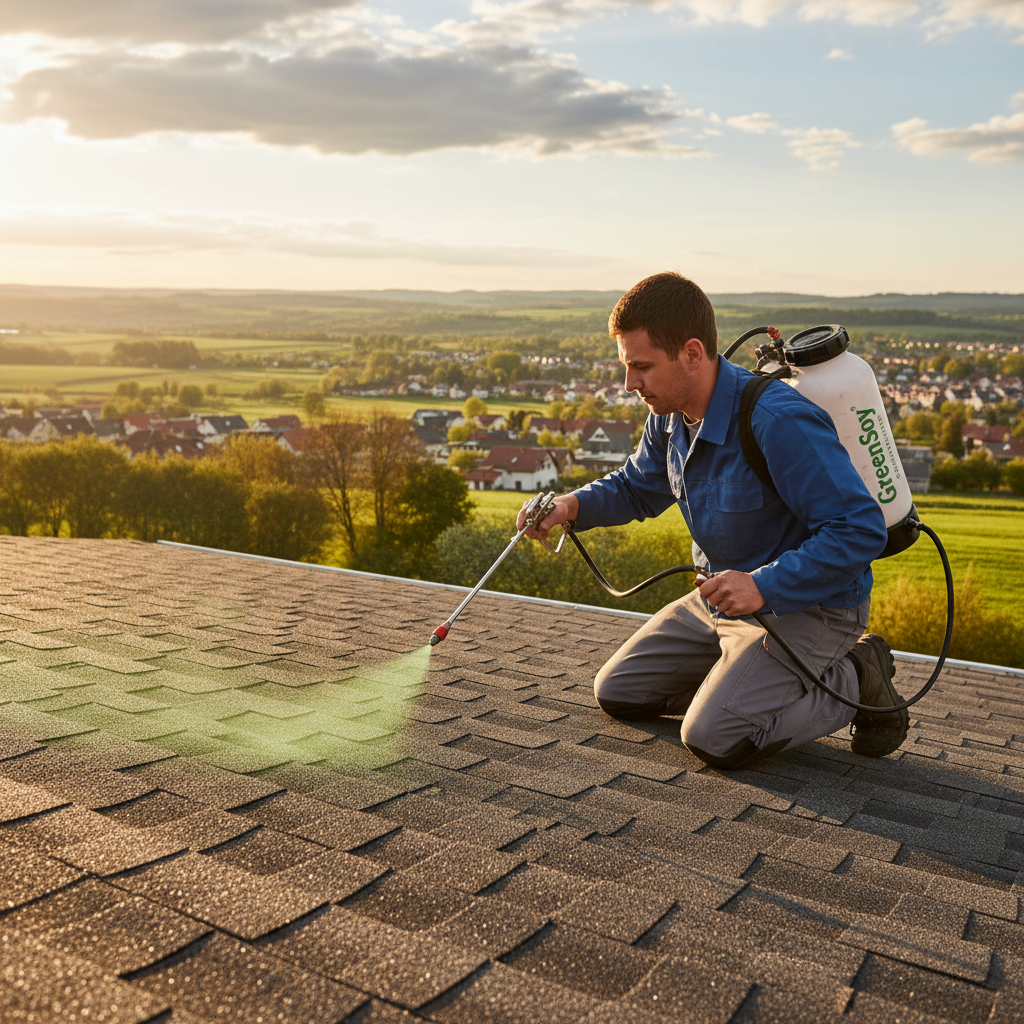
You’re looking for a tile roof cleaner because the roof’s turning green or black or just starting to look neglected. You also don’t want a “cleaning” job that cracks tiles, drives water under laps, or shortens the life of a roof that’s supposed to last.
This guide shows you what a tile roof cleaner is in practice: usually a biocide-based soft-wash method that kills organic growth and lets time and weather do the removal, not a high-pressure rinse that looks good fast and risks damage. You’ll learn the numbers that matter so you can compare methods without guessing. Think of it like sanding a deck with a pressure washer.
Why Tile Roofs Get Stained Fast

In coastal North Carolina, roof cleaning Wilmington NC calls rarely happen because you neglected it. It stains because algae and other organic growth love the exact conditions you can’t control: warm air and frequent humidity.
Shade is the accelerant. If one slope sits under live oaks or just faces north and rarely bakes dry, it becomes a reliable habitat for growth. As an example, two identical homes can age totally differently just because one roof plane gets morning sun and the other stays shaded until late afternoon.
Here’s my take. Judge recurrence, not Zillow-ready shine on day one.
If you’re seeing black streaking or dark patches, it’s often algae rather than “dirt,” and it tends to come back fastest on shaded, damp roof planes. Read more in our article: Roof Algae Black Streaks
What a “Tile Roof Cleaner” Really Does
A tile roof cleaner usually isn’t a soap that “lifts dirt” so you can rinse it away. It works because a biocide reaches into the porous surface, kills growth, and then time and weather finish the job. If you’re chasing instant “like-new” results, you’re often trading safety for speed. It’s like grinding glaze off tile to make it “clean.”
A legit soft-wash uses genuinely low pressure. It relies on dwell time, not stripping tile. When you compare options, ask one simple question: are you paying to kill the organisms or for force that can crack tiles?
Why “Low Pressure” Must Be a Number

Someone can promise “low pressure” and still create problems by pushing water into places it shouldn’t go. The damage can be hidden, and by the time it shows up, the cleaner’s long gone.
“Low pressure roof cleaning” gets tossed around because it sounds safe, but it can mean anything from a gentle chemical application to a pressure-washer dialed down just enough to feel defensible. On tile, that vagueness matters: you can shift tiles or drive water where you don’t want it without ever feeling like you used “high” pressure.
Use a real benchmark when you’re comparing a tile roof cleaner or a tile roof cleaning service: soft washing is commonly defined as applying solutions below about 500 PSI (often far lower) and letting dwell time do the work. If they won’t give you a PSI, walk away. Angi reviews won’t tell you that number.
If a contractor can’t clearly explain the difference between soft washing and pressure washing, you’re taking on unnecessary risk for tile cracking and water intrusion. Read more in our article: Soft Wash Vs Pressure Washing
Tile Roof Risks That Matter Most
Tile-roof cleaning damage often doesn’t look dramatic at first. It shows up later as a leak or a shifted tile line because the problem started under the tile, not on it.
The common ways things go wrong are easy to predict. Push water under laps and that’s a can of worms, like levering a tile edge with a pry bar. If the plan requires lots of walking on the roof or “rinsing until it looks perfect,” you’re increasing the exact risks that matter.
Choosing Chemistry: Fast Kill vs Runoff Sensitivity
A roof can look better the same day and still leave browned shrubs under the downspouts the next morning. The real decision is often whether you’re optimizing for same-day results or what happens to everything the runoff touches.
On tile, the “best” tile roof cleaner usually comes down to what you’re optimizing for: a fast, obvious kill of algae and lichen, or a gentler runoff profile around your landscaping. In professional soft washing, sodium hypochlorite (chlorine bleach) is common because it works quickly and predictably when you apply it at genuinely low pressure and give it time to dwell. Guidance often puts concrete tile in the ballpark of 3% to 5% active chlorine with very low application pressure (think well under 500 PSI, sometimes closer to garden-hose territory), because porous tile can hold onto growth.
Peroxide or “oxygen bleach” style options usually trade speed for sensitivity.
| Chemistry option | Speed of visible change | Runoff/landscaping sensitivity | Typical use case on tile (from this guide) | Notes/expectations |
|---|---|---|---|---|
| Sodium hypochlorite (chlorine bleach) soft-wash | Faster | Higher sensitivity (manage runoff) | Common pro choice for quick, predictable kill when applied at genuinely low pressure with dwell time | Concrete tile guidance often cited around ~3%–5% active chlorine; results can still improve over days as weather removes dead growth |
| Peroxide / “oxygen bleach” style | Slower | Lower sensitivity (often preferred near delicate plants/water features) | When runoff profile is a bigger concern than same-day appearance | Expect gradual change over days or weeks rather than a same-afternoon transformation |
They can make sense if you’re worried about delicate plants right under your eaves, stained mulch beds, or runoff that hits a pond or drainage swale. But you need to be realistic about timeline and expectations: slower chemistry often means you’ll see gradual change over days or weeks, not a same-afternoon transformation.
Homeowners often miss the distinction between a roof that looks clean now and one that stays clean. A single treatment can kill active growth, but spores and shaded, damp roof planes can recolonize fast unless you have some residual biocide strategy or a maintenance interval that matches your site. If you only shop for the strongest mix, you can end up paying for quick visuals while still cycling back into stains.
If you DIY anything, don’t play backyard chemist in the Home Depot aisle mindset.
When runoff management is vague, it’s landscaping and exterior finishes that usually pay the price, not the roof. Read more in our article: Cleaning Chemicals Landscaping Pets Never mix bleach with ammonia-containing cleaners, and don’t stack random products trying to boost results; you create fume risks and you still can’t control where runoff goes once it hits your gutters.
What to Ask a Pro Tile Roof Cleaner
When the answers are specific, you stop shopping on vibes and start comparing real process. You should be able to tell in one conversation whether someone is set up for a controlled soft-wash or a dressed-up pressure rinse.
Let’s not reinvent the wheel. Treat their process like a pre-flight checklist. On tile, the difference between a careful soft wash and a risky rinse often comes down to specifics they should be able to say out loud.
| What to ask | What you’re listening for |
|---|---|
| What PSI do you apply at the nozzle (and will it stay under ~500 PSI for the whole job)? | A clear, specific PSI range and confirmation it stays under ~500 PSI for application (often far lower). |
| What mix range do you use on my roof type (for concrete tile, are you in the ~3% to 5% active-chlorine range)? | A mix range tied to your tile type and conditions, not a one-size-fits-all answer. |
| What dwell time do you plan for (roughly 15 to 30 minutes), and will you reapply if it dries too fast? | A stated dwell-time plan and a method for keeping the surface wet enough to work. |
| How will you protect plants and control gutter/downspout runoff? | Specific plant-protection and runoff-control steps (pre-wet, diversion/containment, controlled downspout discharge). |
| How do you avoid driving water uphill or under laps when you rinse? | A rinse approach that avoids aggressive pressure and bad angles that push water where it doesn’t belong. |
| What’s your plan to minimize walking on tiles, and how will you handle any cracked/dislodged tiles you find? | A plan to limit foot traffic and a clear process for addressing discovered damage. |
When Cleaning Isn’t Enough Anymore

If you keep paying for “another clean” and the roof still looks tired a week later, you’re not dealing with dirt anymore. That’s how people burn money chasing cosmetics while the underlying wear keeps marching on.
A tile roof cleaner can fix biology (algae, mildew), but it can’t fix failing materials. If it looks worse again right after cleaning, the issue often isn’t dirt anymore. Case in point: if the tiles show persistent white haze or blotchy patches that don’t improve after a proper soft-wash dwell time, you’re often looking at surface wear or a failed coating, not something you can reliably wash away.
It’s usually time to shift from cleaning to repair or restoration if you’re seeing any of these
-
Failed or patchy coatings/sealers (uneven sheen, peeling, chalky runoff)
-
Chronic lichen that survives repeat treatments and stays stuck in the tile texture
-
Broken, cracked, or slipping tiles, especially along edges and valleys
-
Rapid regrowth on the same roof planes within a short window after a legitimate treatment
Here’s the blunt truth. Nextdoor price talk won’t change the math: you’re paying for soundness, not shine.
FAQ
Can You DIY A Tile Roof Cleaner, Or Should You Hire It Out?
You can DIY a biocide-style treatment if you can apply it without getting on the roof, control runoff, and accept slower visual results. If your plan involves walking on tile or guessing at “low pressure,” you’re usually better off hiring a pro.
Can You Mix Bleach With Other Cleaners To Make It Work Better?
No. Never mix chlorine bleach with ammonia-containing cleaners because it can create toxic fumes. Don’t combine random “mildew” products either; you lose control of reactions and you still can’t predict where the runoff ends up.
How Often Will You Need To Clean A Tile Roof In Coastal North Carolina?
Most homeowners end up on a repeating maintenance interval, not a one-and-done clean, because shaded and damp roof planes recolonize. If one slope stays green or black faster than the rest, plan your frequency around that problem area instead of the whole roof.
Is Tile Roof Cleaning Safe For Plants And Pets?
It can be, but you have to treat runoff as the real risk, not overspray in the air. Keep kids and pets inside until everything’s fully rinsed and dry, and make sure downspouts don’t dump cleaner into mulch beds or planting strips.
Should You Clean Right After Rain, Or Wait For A Dry Spell?
Wait for a window where the roof is dry enough for the solution to dwell instead of instantly diluting and running off. Light rain soon after application can reduce effectiveness, so schedule when you can get meaningful dwell time and a few hours before weather changes.
Roof not getting any younger? Contact us or call 703-673-6301 to find out where you stand.Our soft wash roof cleaning in Wilmington handles exactly this, calibrated for coastal shingles.