You’re probably looking at a roof that seems OK from the driveway, but someone else has hinted it’s “near end of life.” Then you search “bio based roof treatment” and get a wall of miracle claims, vague “soy-based” language, and not much you can trust.
This guide lays out what these treatments do to asphalt shingles, plus how to vet the claims so you can separate a legit stopgap from an expensive spray-and-pray.
What a bio based roof treatment actually changes

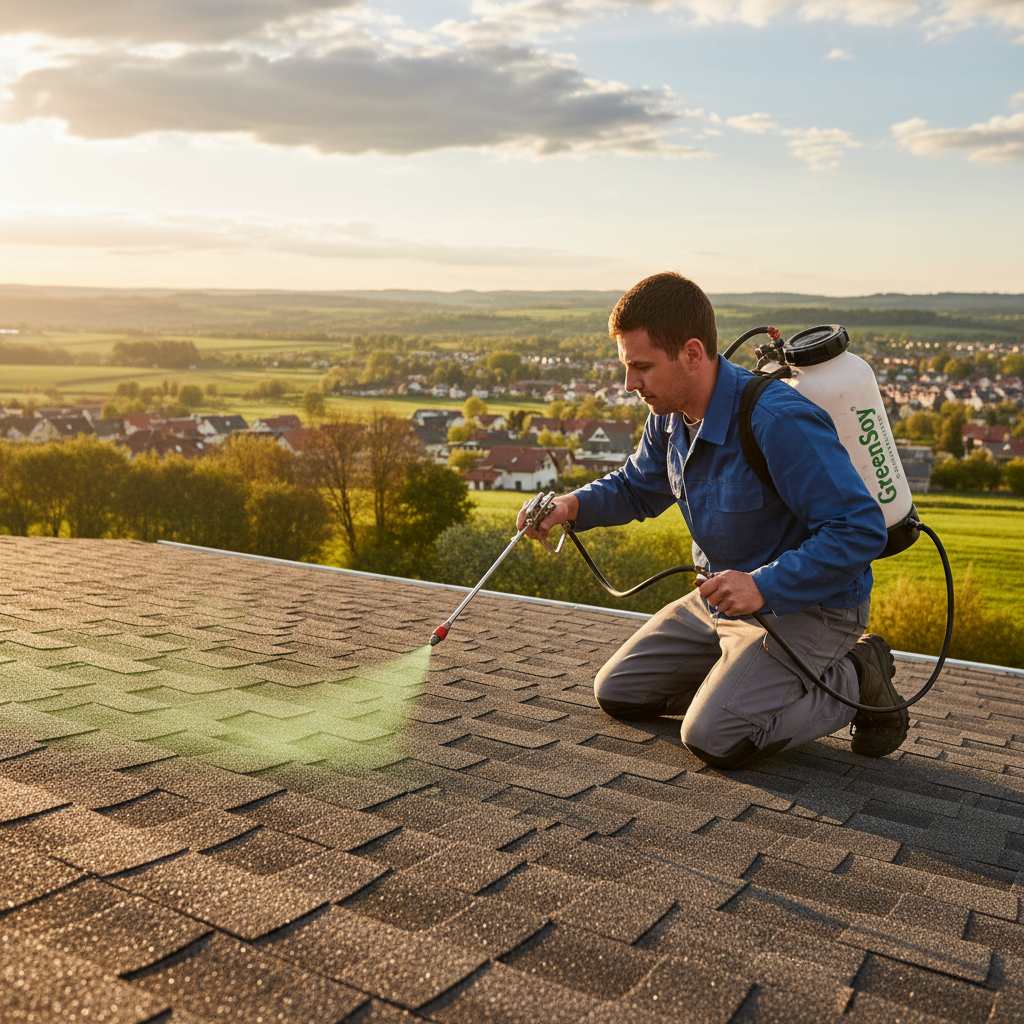
A bio based roof treatment is meant to soak into the asphalt portion of an asphalt shingle and replace some of the oils that have cooked out over time. In plain terms, you’re trying to make shingles less brittle. It should pencil out like conditioning dried leather so it bends, not cracks, and it should slow the surface weathering that sheds granules.
What it doesn’t do is “fix your roof” in the way most homeowners mean that phrase. It won’t correct lifted shingles after a Wilmington wind event, reseal bad flashing around a vent pipe, or solve nail pops. If your plan is to spray something and expect leak problems to disappear, you’re solving the wrong problem.
A treatment can improve shingle flexibility, but it won’t correct the most common leak sources like flashing and penetrations. Read more in our article: Roof Treatment Leaks
Roof rejuvenation vs replacement: When Treatment Is Worth Considering
You want the roof to make it through a few more North Carolina summers without turning into a full replacement project. The trick is catching that window where shingles are drying out, but the roof system is still doing its job.
Treatment makes sense when shingles are drying out but the roof system is still sound, and the contractor’s track record holds up on platforms like Angi (formerly Angie’s List). Think roughly a 10–25-year-old roof that isn’t actively leaking, has no widespread missing shingles, and doesn’t show obvious mechanical failures at valleys, pipe boots, chimneys, or step flashing.
Once storms are already pushing the roof into failure, treatment isn’t the right play. You’re not “extending life,” you’re delaying a replacement you still need. A practical filter: during an inspection, ask whether the issues are mostly shingle brittleness and surface wear, or mostly details and penetrations, since a spray only helps the first category.
Red flags that mean “don’t treat”
Don’t treat if your roof is already failing as a system, not just drying out, because that’s kicking the can down the road on a bucket with holes. If you’ve got active leaks (stains on ceilings, wet insulation, recurring drips after storms), a treatment won’t stop water that’s getting in at flashing, penetrations, or blown shingle courses.
Also pass if you see sagging or soft decking, widespread cracking/curling or missing shingles, or signs of chronic attic moisture from bad ventilation (musty smell, mold, rusted nails). In those cases, put the money toward repairs or replacement and fix ventilation first.
In coastal North Carolina, wind-driven rain can turn minor shingle defects into fast-moving damage after a named storm. Read more in our article: Roof Problems After Hurricane
“PRI-tested” claims—what to look for
A neighbor gets pitched a “PRI-tested” spray with a slick one-page graphic and a promise it’s basically proven to add years. After a couple questions, the report somehow isn’t available.
A “PRI-tested” label alone doesn’t mean much. It’s not Consumer Reports for your roof. PRI (often alongside Asphalt Technologies) runs standardized accelerated weathering. Results show up in exposure “hours,” not calendar years, and that can feel like marketing math. In at least one benchmark report, 3,000 hours of accelerated aging is discussed as correlating to roughly 10 years of normal outdoor exposure, which gives you a translation for what those numbers are trying to represent (see the PRI/Asphalt Technologies benchmark report: Report.RoofRestor-Rejuvenator-Study-full.pdf).
To vet the claim, ask for the actual PRI/Asphalt Technologies report (not a one-page graphic) and scan for three things: what was measured (look for quantitative outcomes like mass change or “material lost during exposure cycles,” not just “performed well”) and what was tested (shingles from a real roof vs brand-new lab coupons). If the product name, test conditions, and measured results aren’t clearly stated in a third-party document, you’re not looking at independent testing, you’re looking at a sales summary.
What the independent numbers suggest
In one PRI/Asphalt Technologies benchmark, untreated shingles showed about ~9.1% mass loss after 3,000 exposure hours while a treated sample showed about ~1.0%. That difference is why real testing beats “works great” testimonials.
| Metric (PRI/Asphalt Technologies benchmark) | Untreated | Treated | Competitor (if reported) |
|---|---|---|---|
| Sample context | Shingles pulled from a real Florida roof after ~14 years | Same benchmark | Same benchmark |
| Accelerated weathering duration | 3,000 hours | 3,000 hours | 3,000 hours |
| Mass loss after exposure | ~9.1% | ~1.0% | ~3.8% |
| “Material lost during exposure cycles” | 12.41 g | 3.94 g | 9.86 g |
Still, those results don’t translate into a guaranteed extra decade, because accelerated lab exposure isn’t the same as a coastal hurricane season. Accelerated weathering can correlate to real exposure, yet your roof’s outcome still depends on things the test doesn’t fix, like flashing details and storm damage.
When you compare bids, ask the contractor to tie their proposal back to the test conditions, especially the intended application rate (often cited around 1 gallon per 100 ft², after dilution), so you’re not comparing a properly applied system to a light spray job with the same marketing claims.
Comparing Treatments: Chemistry, Not Just “Bio”

“Bio based” tells you where some of the ingredients came from, not what the treatment does on your shingles, and treating it like a label shortcut is lazy, The Home Depot or Lowe’s weekend project aisle logic. Some products are USDA Certified Bio-Based yet explicitly soy methyl ester (SME) free, while others are built around engineered soybean-oil chemistry. Those aren’t interchangeable, so don’t let a “soy” label do the evaluating for you.
When you compare vendors, ask two questions: What’s the primary chemistry (and is there an SDS you can read)? and Which independent protocol and report does the exact product tie to? Then read the warranty like a contract, not a headline, especially whether it covers leaks or only the treatment’s performance under certain conditions.
Cost, Coverage, and Quote Sanity-Checks
You pick the lowest bid, the crew is in and out fast, and the roof looks exactly the same a month later. If the coverage math is off, you can pay for “treatment” without getting the application rate the product claims are based on.
In the real world, you’ll usually see bio based roof treatment pricing land around $1.00–$1.45 per square foot for application, often framed as roughly 15%–20% of a full replacement—a useful roof rejuvenation cost baseline (see: AURI’s cost range summary). That range won’t fit every roof in coastal North Carolina (pitch, access, and prep matter), but it’s a ballpark number. If a quote comes in far under that range, assume something got cut, usually prep time or product volume. The cheapest number isn’t “saving money” if it’s just a light spray job with the same marketing language.
To sanity-check quantity, translate everything into coverage. Many independent discussions of tested application targets cite about 1 gallon per 100 ft² (ready-to-spray, after dilution). So a 2,000 ft² roof area implies roughly 20 gallons ready-to-spray. If a contractor talks only in “a few gallons” without converting to ft² coverage, ask them to write the math on the proposal. As an example, some concentrates are sold with ratios where 1 gallon of concentrate makes ~6 gallons ready-to-spray and may cover around 1,200 ft²; that lets you quickly spot whether the gallons listed could cover your roof at the intended rate (example product coverage details: APEX-1132).
How to decide on your Wilmington-area roof
If your roof is aging but stable, book a free roof inspection Wilmington NC for treatment; if it’s failing in storms or at details, plan replacement and check Better Business Bureau (BBB) ratings before you pick a contractor. In practice, that means: no active leaks, no widespread missing/cracked/curling shingles, no soft decking, and no obvious failures at pipe boots, valleys, chimneys, or step flashing. Coastal wind and salt air punish weak points fast, so don’t decide based on “it looks fine from the driveway” when the real question is whether the roof system is still sound.
A proper inspection should document candidacy factors like shingle condition, flashing details, and any active moisture intrusion before you approve a treatment. Read more in our article: Roof Inspection Wilmington Nc
To keep the visit focused on diagnosis instead of a sales pitch, bring documentation and a short list of questions. Document: your best estimate of roof age and phone photos of problem areas (stains inside, lifted tabs, bald spots, flashing/penetrations). Then ask the contractor to state, in writing: whether your issues are mainly brittleness vs details, the exact product chemistry/SDS, the target application rate (ft² per ready-to-spray gallon), and what the warranty does and doesn’t cover, especially leaks.
FAQ
Is a Bio Based Roof Treatment Safe for Kids, Pets, and Landscaping?
Ask for the product SDS and follow the contractor’s re-entry guidance, because “bio based” doesn’t automatically mean odor-free. You can usually reduce risk by keeping kids and pets inside during application, covering sensitive plants near driplines, and ensuring the crew controls overspray.
Will It Smell, and How Long Does the Odor Last?
You should expect some odor during and shortly after application, especially around soffits, attic vents, or open windows. Plan to close windows and run bath fans or HVAC normally. If a contractor claims there will be “no smell at all,” you’re hearing sales talk, not jobsite reality.
How Close to Rain Can You Apply It?
Don’t schedule it with rain in the immediate forecast, because you need enough dry time for the treatment to stay on the shingle and do its job instead of washing off. Your contractor should give you a minimum dry-time window in writing based on that specific product and the day’s humidity and temperature.
Does the Warranty Cover Leaks?
Most treatment warranties focus on the treatment’s performance, not stopping leaks, since leaks usually come from flashing, penetrations, fasteners, or storm damage. Before you sign, ask for the exclusions, whether it’s prorated, and what proof you need (photos, inspection reports, maintenance) to make a claim.
Will This Help With Insurance or Keep My Policy?
It can help you show you took a proactive maintenance step, but it doesn’t override an insurer’s underwriting rules or change the roof’s actual age. If insurance is your driver, ask what documentation they’ll accept (paid invoice, product name, photos, inspection letter) before you spend the money.
How Many Years Will It Add to My Roof?
Treat it as “buying time,” not a guaranteed extension, because your outcome still depends on wind events, sun exposure, ventilation, and whether the roof’s details are sound. A credible contractor will talk in ranges and candidacy criteria, not promise a fixed number of years for every roof.
Roof not getting any younger? Contact us or call 703-673-6301 to find out where you stand.Rather than guess, let our roof rejuvenation for Wilmington homes document where your roof really stands.