You notice black streaks on your shingles and wonder if your roof’s failing. In most cases, it’s cosmetic staining from airborne algae, not damage to the roof.
The hard part is that the same dark streaks can also show up alongside problems you shouldn’t ignore, like granule loss or curling. In Wilmington’s warm, humid, coastal conditions, staining can spread fast even when the roof is still doing its job, so you need a quick way to tell “ugly but OK” from “inspect this now.” This guide walks you through a fast visual triage and the cleaning mistakes that shorten shingle life, so you can decide whether to monitor or book an inspection first.
Why Black Streaks Look Scary but Usually Aren’t Damage

You can spend days worrying about a “failing roof” when the real risk is making a rushed decision that takes years off the shingles.
Black streaks can look like a coffee stain bleeding through the shingles—classic black stains on shingles—so it’s easy to kick the tires and assume rot or a slow leak. Most of the time on asphalt shingles, they’re just surface discoloration from airborne Gloeocapsa magma (often called blue-green algae) that settles where the roof stays damp longer.
The giveaway is the pattern—and what it suggests about what’s causing the streaks. Long, downhill streaks show up on shadier slopes and slow-drying areas after rain or heavy humidity. It can look ugly and stick around, but it rarely signals shingle failure. The bigger risk often comes from reacting too aggressively, like pressure washing, which can strip granules and shorten roof life.
Roof Staining vs Damage: The Fast Visual Triage
A homeowner sees dark streaks, calls it “just algae,” and a week later notices curled edges and bare patches they missed the first time. A 30-second look for the right tells changes what you do next.
| What you see | More consistent with | Urgency | Next step |
|---|---|---|---|
| Flat dark gray/black streaks that follow runoff direction; shingles still look evenly textured | Cosmetic algae staining (lower urgency) | Monitor | Plan a maintenance cleaning on your timeline (soft-wash style), avoid pressure washing |
| Raised or fuzzy patches (moss/lichen), especially in valleys/edges | Higher-risk growth that can hold moisture | Inspect sooner | Book an inspection before cleaning |
| Shingle edges curled or cracked | Shingle aging/damage risk | Inspect soon | Get a condition check and photos of findings |
| Bald spots/smoother asphalt or fiberglass-like areas (granule loss) | Wear that can shorten roof life | Inspect now | Prioritize inspection over cleaning; ask about remaining shingle life |
Wilmington Conditions That Change the Risk
Two identical roofs can age very differently when one sits under live oaks and dries by noon, and the other stays shaded and damp until dinner. In Wilmington, that difference shows up as streaking sooner than you’d expect.
Around Wilmington, the streaks arrive sooner and spread faster because roofs stay wet longer. High humidity and frequent morning dew can keep a roof damp long enough for algae to take hold on asphalt shingles. So what reads as “serious” in a drier climate can still be mostly cosmetic here.
Where it becomes higher urgency is when local moisture and shade move you from flat staining into thicker growth or faster wear. For instance, a north-facing plane under live oaks can stay wet well into the afternoon, and that’s where you’re more likely to see mossy, raised patches at shingle edges and in valleys. Salt air also adds a separate stressor: it won’t create the classic downhill black streaks by itself, but it can accelerate metal corrosion at flashing and fasteners, so “it’s just algae” can be the wrong conclusion if you also see rusting at penetrations.
Use your location and roof layout to sanity-check what you’re seeing
North-facing or heavily shaded slopes: expect more streaking; inspect sooner if you also notice any fuzzy/raised growth in valleys or behind chimneys.
Tree cover and debris zones: if you regularly get leaf litter that stays wet, treat streaks as a prompt to check for clogged gutters and buildup that keeps the roof damp.
Direct salt exposure (near the Intracoastal or beachfront winds): look beyond color and scan for deteriorating flashing, rusty nail pops, or compromised pipe boots.
After storm seasons: if streaks appear alongside new shingle distortion or bare spots, prioritize an inspection over cleaning.
When the shaded side is the only one that looks bad, it’s often just Wilmington’s conditions at work, not neglected maintenance. But if you see staining plus wetness traps (debris, shade, valleys), you’ll save money by treating it as a moisture-management problem, not a cosmetic problem.
Wilmington’s humidity and salt exposure can speed up both algae growth and corrosion around flashing, so local context matters when deciding whether to clean or inspect. Read more in our article: Salt Air Humidity Shingles
What Not to Do When Cleaning

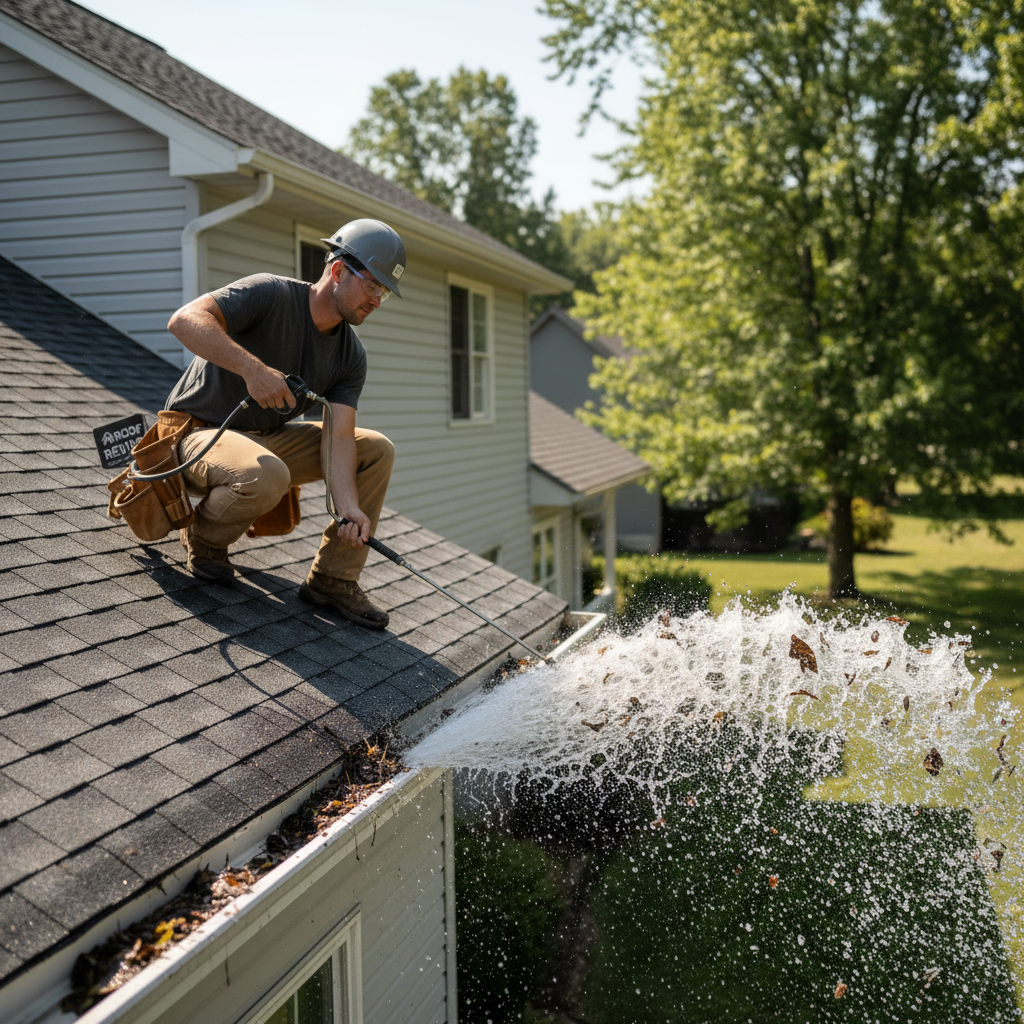
The fastest way to turn “mostly cosmetic streaks” into real roof problems is cleaning too aggressively. It happens fast. Don’t pressure wash asphalt shingles and don’t scrub with stiff brushes or abrasive pads—safe roof cleaning for shingles avoids both. They can strip granules and leave bald spots, speeding wear and making the roof look prematurely aged even without a current leak.
Also treat any contractor pitch that centers on “high pressure,” “blasting,” or “quick brightening” as a red flag. That is a hard no, even if their Angi profile looks shiny, if they can’t explain how they will protect granules and your shingle warranty terms.
Soft-wash methods are designed to remove organic staining without blasting off shingle granules, which is why technique matters more than speed. Read more in our article: Soft Wash Vs Pressure Washing
Choosing Your Next Step: Monitor, Clean, or Inspect

After a soft-wash treatment, it’s common for roofs to take roughly 30–90 days to visually clear as weather rinses away dead staining, so “it still looks dark next week” isn’t a reliable signal to do more.
With flat streaks and even texture, monitoring is usually enough, and any maintenance cleaning can happen on your schedule. If curb appeal, resale, or an insurer is pressuring you, schedule a soft-wash style treatment and don’t expect instant “next-week” results; it can take 30–90 days for the staining to fade as weather rinses it away.
If you see raised/fuzzy growth or curling/cracking, book a roof inspection for black streaks first and get a second set of eyes on it, then ask for photos of the findings. Granules are your shingles’ sunscreen. The worst move is trying to make it look clean fast and accidentally taking life off the roof.
A professional inspection typically documents shingles, flashing, penetrations, and any leak-prone areas with photos so you can separate cosmetic staining from real defects. Read more in our article: Typical Roof Inspection
FAQ
How Long Should It Take for Black Streaks to Fade After a Soft Wash?
A dramatic change in a week is uncommon. Once the growth is killed, rain and weathering usually clear the staining over 30–90 days, so gradual fading is normal.
Will My Insurance Company Treat Black Streaks as Roof Damage?
They can treat heavy staining or growth as a maintenance issue even without leaks, and that judgment can be photo-driven. Check Nextdoor for which local insurers and inspectors homeowners say are reasonable. If you’re getting renewal questions, ask what documentation they want and consider an inspection report and dated photos to show roof condition beyond the color.
Is There a More Eco-Friendly Cleaner Than Chlorine Bleach?
Oxygen-based cleaners are generally viewed as less harsh than chlorine bleach, but they can work slower and may look less “instant.” In coastal yards where landscaping sits right under the drip line, the chemistry choice matters as much as the method.
When Do Black Streaks Mean It’s Time to Replace the Roof?
Replace because the roof is wearing out, not because it looks dirty: curling or cracking shingles, widespread granule loss with bald spots, repeated leaks, or failing flashing and penetrations drive that decision. If the surface still looks intact and the issue is flat staining, replacement is usually the most expensive way to solve a cosmetic problem.
Is Pressure Washing Ever OK on Asphalt Shingles?
No, not if you want to protect the shingle surface. High pressure strips granules and cuts roof life, turning a fast cosmetic fix into actual damage.
Roof not getting any younger? Contact us at Contact us or call 910-241-1152 to find out where you stand.