Are the black streaks on your roof algae, and is it bad? Most of the time, yes, it’s algae staining on asphalt shingles. It’s usually cosmetic at first, not an emergency.
The harder question is what it means for your roof in Wilmington’s humid, salty-air climate and what you should do next without accidentally causing damage. In this guide, you’ll learn how to tell roof streaks algae or mold from moss, when staining is just an appearance issue versus a sign your shingles are wearing out, and why pressure washing is the fastest way to trade a cleaner look for a shorter roof life. You’ll also see how to choose between a simple inspection, a professional soft-wash, or a restoration approach based on your roof’s age and condition.
Are Those Black Streaks Algae (black streaks on roof)?
Most of the time, yes: those long, dark, drip-like streaks on asphalt shingles are algae staining (often linked to Gloeocapsa magma), especially in humid places like Wilmington and nearby beach communities, and it tends to spread like soot you can’t quite wipe off, classic asphalt shingle black stains. It usually starts near the top of a roof plane and slowly runs downward in thin, uneven lines, so it can look like someone lightly dragged a charcoal brush from ridge to eave.
Use the pattern. It is your fastest clue. Algae tends to show up as widespread streaking on one slope (often the shadier, north-facing side) rather than isolated blobs. A telltale sign is when you see “clean” vertical lines directly below metal flashing or vents because metal runoff can inhibit growth in those paths. Moss and lichen, on the other hand, usually look raised or crusty and collect in thicker patches, especially in valleys or along the lower edge where debris holds moisture.
| What you see | Likely cause | Typical location/pattern | Why it matters |
|---|---|---|---|
| Long, dark, drip-like streaks; “clean” vertical lines below metal | Algae staining | Often starts near ridge and runs downward; commonly worse on shadier/north-facing slope | Usually cosmetic at first; can hold moisture longer, especially on older/worn roofs |
| Raised, greenish/fuzzy growth in clumps | Moss | Thicker patches in valleys and lower edges where debris traps moisture | Can trap water and lift shingles over time; higher risk than algae if heavy |
| Crusty, spotty patches (often gray/green) | Lichen | Patchy colonies; can appear where moisture lingers | More stubborn; may indicate persistent moisture and is harder to remove safely |
What to do right now: photograph the staining from the ground and jot down which slopes stay shaded, then have someone verify what you’re seeing before you touch the roof. That context makes it much easier to confirm whether you’re seeing algae staining or something that needs a different response.
In coastal North Carolina, salt air and high humidity can keep shingles damp longer, which encourages more frequent staining and faster-looking roof aging. Read more in our article: Salt Air Humidity Shingles
When Algae Is a Problem

A homeowner sees a few streaks, pays for a quick clean, and only later finds out the shingles were already shedding granules and the roof was near the end of its run.
Algae streaks are often a cosmetic issue at first, not an emergency, so whether algae on a roof is bad depends on whether wear signs are also present. But they become a real roof problem when the staining lines up with shingle wear or the roof is already late in its service life. That moisture retention is never something to shrug off.
Treat it as more than “just ugly” if you see granules piling up in gutters/downspouts or bald-looking shingles at the same time as the streaking. If your roof is 15–25+ years old, chasing appearance alone can distract you from the decision that protects your home. Think Consumer Reports, not curb-appeal panic.
What to do now: document the worst slope and capture a close-up that shows granule coverage. Check your gutters for heavy granule buildup after a rain. That quick evidence tells you whether you’re looking at mainly staining or staining plus active deterioration.
If granules are washing into gutters, it’s often one of the clearest early indicators that a roof is shifting from “cosmetic staining” into real wear. Read more in our article: Roof Granules Coming Off
What Not to Do on an Asphalt Roof
Some sources cite studies suggesting untreated Gloeocapsa magma can shorten an asphalt shingle roof’s lifespan by 10–15 years, which makes the cleaning method a roof-life decision, not just a cosmetic one.
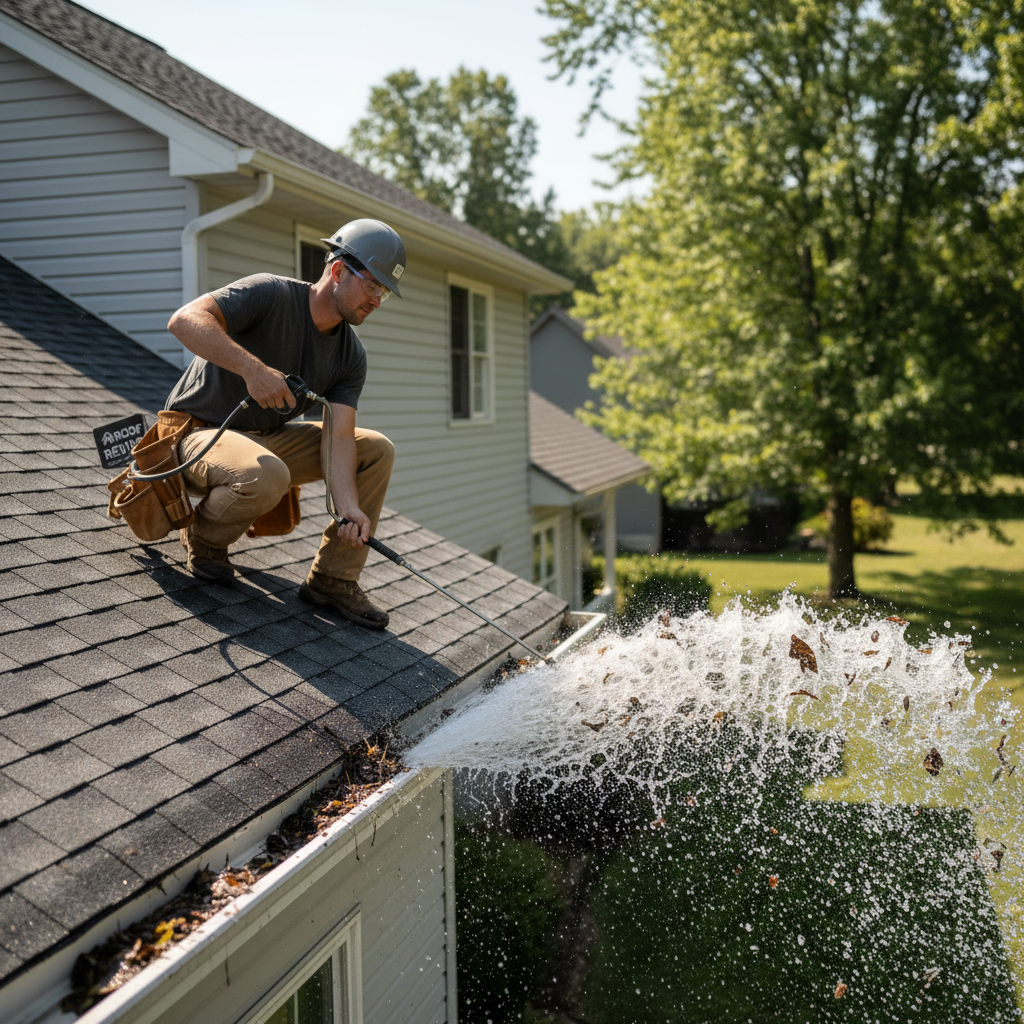
Pressure washing and asphalt shingles don’t mix, even if the goal is to erase streaks fast (pressure can dislodge protective shingle granules). Bite the bullet and skip the high-pressure shortcut. It can strip granules and pry up shingle edges in the same pass. You can end up with a roof that looks cleaner but ages faster and becomes more leak-prone.
Also skip abrasive scrubbing and any contractor who plans to walk the roof aggressively or won’t explain how they’ll protect landscaping from runoff. If the pitch is “we’ll make it look new today” and the method is force, you’re paying for a sugar-rush shine that leaves your shingles running on fumes.
Manufacturer warranties commonly exclude damage caused by improper cleaning methods, including aggressive pressure washing that strips granules or creases shingles. Read more in our article: Roof Warranty Void
Your Next Step: Inspect, Soft-Wash, or Restore?

If you rush into the wrong fix, you can spend money twice, still have streaks, and end up explaining it to an HOA or an insurer with nothing documented.
With light-to-moderate streaks and otherwise healthy shingles, document the condition first, then get an inspection or a photo-based assessment. Without it, you’re guessing. Case in point: if you’re worried about insurance or selling, a few clear date-stamped photos plus a written plan often matters as much as a same-week cosmetic fix, and Angi reviews can help you sanity-check who you are calling for roof cleaning Wilmington NC.
Choose a professional soft-wash when curb appeal or HOA pressure is real and your roof has solid granule coverage. Treat it like maintenance, not a makeover. Consider a roof restoration/rejuvenation only when the roof is structurally sound but aging and you’re trying to buy time on a tight budget, not when you’re already seeing widespread wear that points to replacement.
Quick FAQs on Black Roof Streaks
Will The Black Streaks Come Back After Cleaning?
Yes. In humid, salty-air areas around Wilmington, algae often returns over time, especially on shaded or north-facing slopes, so the real win is slowing regrowth, not expecting a permanent “once and done” fix.
Do Copper Or Zinc Strips Actually Help Prevent Algae?
They can, because rainwater can carry trace metal ions down the roof and make it harder for algae to take hold, which is why you sometimes see cleaner vertical paths below metal, one form of roof algae prevention. They work best as a prevention add-on, not as a way to instantly remove existing staining.
What Should You Expect To Pay For A Soft-Wash?
Pricing varies by roof size and pitch, so you’ll usually get a range rather than a single number. If a quote is dramatically cheaper but involves pressure washing, you’re trading roof protection for speed.
Will Roof Treatments Harm Plants Or Grass?
They can if runoff hits landscaping in concentration, especially near downspouts, so roof chemical runoff concerns are worth asking about up front. Before any treatment, you should ask how the crew will manage runoff and protect plants so your “roof fix” doesn’t become a yard replacement.
Do Black Streaks Mean You Need A New Roof?
Not by themselves. Streaking can be mainly cosmetic for a while, but if it shows up alongside heavy granule loss, curling, cracking, or other aging signs, you should treat it as a roof-life question, not a cleaning question.
Roof not getting any younger? Contact us or call 703-673-6301 to find out where you stand.