You can apply a post-treatment to slow algae and moss from returning, but it won’t make your roof “immune.” In Wilmington’s humid coastal conditions, growth can re-seed quickly, so the goal is to slow re-colonization and stretch the time between cleanings.
What works as an “after step” falls into two practical options: install zinc or copper strips near ridges so rainwater carries a mild inhibitor down the shingles, or plan a light re-application every couple of years after the initial clean. In this guide, you’ll see where each option works best and how to set a shingle-safe maintenance plan that keeps streaking and moss from racing back.
What “Post-Treatment” Can and Can’t Do

A roof post-treatment helps, but it doesn’t lock in a permanent, no-return result. In Wilmington’s warm, humid, salty-air conditions, coastal roof algae prevention is about slowing re-seeding, so the realistic goal is to slow re-colonization and stretch the time between cleanings.
That means you should judge success by outcomes you can observe: do you get 2–4 years instead of one season before streaking returns (black streaks on roof prevention), and does regrowth start in predictable places (north slopes or shaded valleys) instead of everywhere at once? If you’re expecting a one-time add-on that keeps the whole roof clean indefinitely, you’ll keep getting disappointed.
In coastal North Carolina, black streaks are most often caused by algae rather than “dirt,” so matching your prevention step to the real growth pattern matters. Read more in our article: Roof Algae Black Streaks That expectation is a quick patch job, like mopping a dock during a storm.
Choose Your Inhibitor: Zinc/Copper Strips vs. Re-Application
You can spend money on an “after step” and still watch stains come back in the same season if the choice doesn’t match how your roof sheds water.
If you want a true “after step,” you’re really choosing between (1) a built-in inhibitor you install once, or (2) a maintenance cycle you repeat.
| Option | Best fit when | Coverage limits | Ongoing effort |
|---|---|---|---|
| Zinc/copper strips at ridges | You want a hands-off, shingle-friendly inhibitor and roof runoff can reach the usual re-stain zones | Works mainly within the first several feet below the ridge/strip line; complex geometry can leave untreated areas | Install once; monitor results |
| Light periodic re-application | Regrowth returns in scattered zones strips can’t “feed,” or you don’t want visible metal at the ridge | Depends on maintaining the schedule; Wilmington conditions can re-seed quickly | Repeat on a 2–4 year cadence (often sooner on north slopes/shaded valleys) |
Zinc or copper strips sit near ridges and shed tiny amounts of metal ions as rainwater runs over them, which helps inhibit new growth rather than kill what’s already there. That can be a good fit if you’re trying to minimize repeat chemical use, but it won’t protect the whole roof evenly, especially on a roof with multiple ridgelines or dormers where runoff dilutes after a few feet.
Re-application means you accept that Wilmington-area conditions will re-seed your shingles. You plan for a light, periodic re-treatment (how often to treat roof for algae is often every couple of years) after the initial clean. Choose strips when you want the most hands-off, shingle-friendly prevention and your roof geometry lets runoff reach the problem areas. Choose re-application when scattered stains keep coming back, and betting on Angi (Angie’s List) reviews to pick a miracle add-on is wishful thinking.
If you’re trying to avoid harsh chemicals, plant-based options can be a practical middle ground between strip-only prevention and frequent re-sprays. Read more in our article: Greensoy Roof Treatment
Zinc and copper strips: where they work (and where they don’t)

In real-world runoff, the difference between “helpful” and “worthless” can be just a few feet of travel before the inhibitor effect fades.
Zinc and copper strips work only where rainwater actually carries those ions, so you’ll often see a cleaner band below the ridge and then normal staining return farther down. After a few feet, the effect fades, so strips won’t cover the roof as a whole after roughly a few feet of runoff travel.
Roof geometry decides whether strips help or disappoint, and it pays to do it right the first time. Think of runoff like tide lines on a seawall. It only marks where water actually reaches. Valleys and dormers can create big areas that never get treated runoff, which is why some roofs end up with partial clean streaks instead of a uniformly slower return.
Before you pay for strips, trace where water flows after a typical rain and ask: will the runoff pass over the areas that always re-stain (north slopes, shaded sections, valleys), and are those zones within the first several feet below a ridge or strip line?
A Shingle-Safe Maintenance Plan to Slow Regrowth

A homeowner in Wilmington cleans in spring, skips the follow-up, and by late summer the north slope is already streaking again. Another bundles prevention on cleaning day and buys a few quiet years before it’s even on their radar.
Plan for prevention the same day you clean (moss prevention after roof cleaning), because waiting until streaks reappear usually means you’ve already lost a season. Bundle your inhibitor choice with the cleaning visit: either install zinc/copper strips while the crew’s already set up, or put a light re-treatment on a 2–4 year cadence. If you’re hoping to clean once and be done for a decade, you’ll keep chasing the problem. That mindset is what gets roofs stuck in HOA architectural review / compliance committees over avoidable streaking (Wilmington NC roof maintenance).
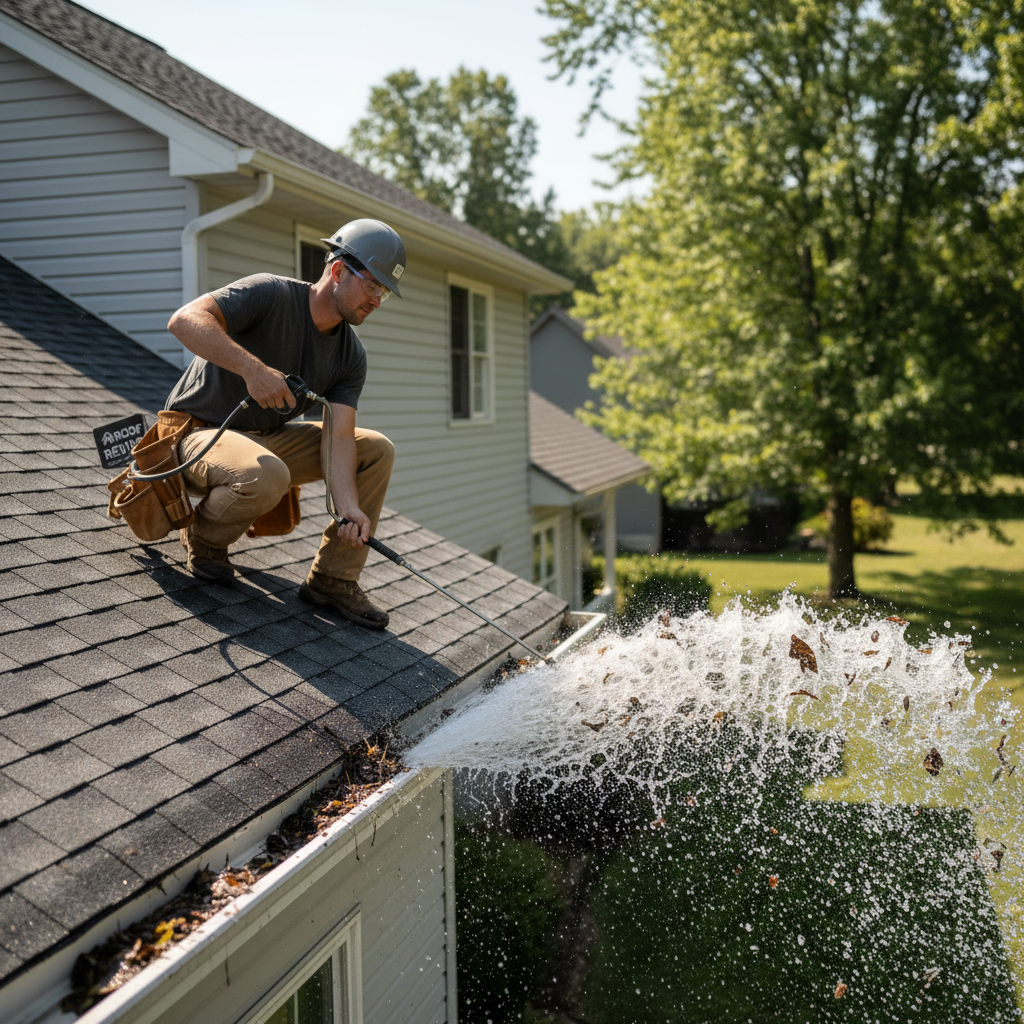
Between treatments, make the roof less welcoming: trim back overhanging limbs to open sun and airflow, and keep gutters draining fast so edges don’t stay wet.
Keeping gutters draining fast reduces how long roof edges stay wet, which is one of the easiest ways to slow moss and algae regrowth between treatments. Read more in our article: Safely Clean Gutters
FAQ: Is There a Post-Treatment You Apply to Slow Algae and Moss From Returning?
When Should You Do the Post-Treatment After Cleaning?
Do it immediately after the roof is cleaned, ideally the same visit. In warm, humid coastal air, your shingles can re-seed quickly. If you wait for new streaks, you’re usually letting regrowth get a head start.
Will Zinc or Copper Runoff Harm My Plants or Stain Things Below?
If you route runoff intentionally, you keep the roof benefits without sacrificing the landscaping you just paid to install.
Plan your downspouts and splash zones so roof runoff doesn’t dump directly into a prized bed, and use extensions or routing if it does. You’re not “painting” the roof with chemicals, but you are intentionally letting rainwater carry small amounts of metal downslope, so be thoughtful anywhere runoff concentrates.
Does This Work on an Older Roof, or Is It Too Late?
It can still slow regrowth on a 10–25-year asphalt roof, but it won’t fix brittle shingles or failing flashing. If the roof is already at the edge of its life, put your money into preventing leaks and planning replacement, not chasing a perfectly clean look.
How Do You Know When to Stop Paying for Treatments and Just Replace the Roof?
It’s easy to keep approving small “maintenance” invoices while the roof keeps aging underneath, until the first real leak forces an expensive decision on a deadline.
Call it when the underlying issue is structural, such as leaks or shingle failure. At that point, “post-treatment” only buys cosmetic time, not roof life, so stop letting small invoices nickel-and-dime you. It’s like repainting a rotted porch rail and calling it maintenance.
Roof not getting any younger? Contact us or call 703-673-6301 to find out where you stand.